Brown Leaf Tips: What They Mean
Brown tips are common on peace lilies. They can happen because of dry air, inconsistent watering, too much fertilizer, mineral-heavy water, root stress, or direct sun.
Trim brown tips with clean scissors if they bother you. Cut along the natural leaf shape so the leaf still looks neat.
To reduce new brown tips, improve humidity, avoid overfeeding, use filtered water if possible, and keep watering consistent.
Yellow Leaves on Peace Lilies
Yellow leaves can mean several things. Older leaves may yellow naturally. But many yellow leaves at once may signal overwatering, poor drainage, low light, or root problems.
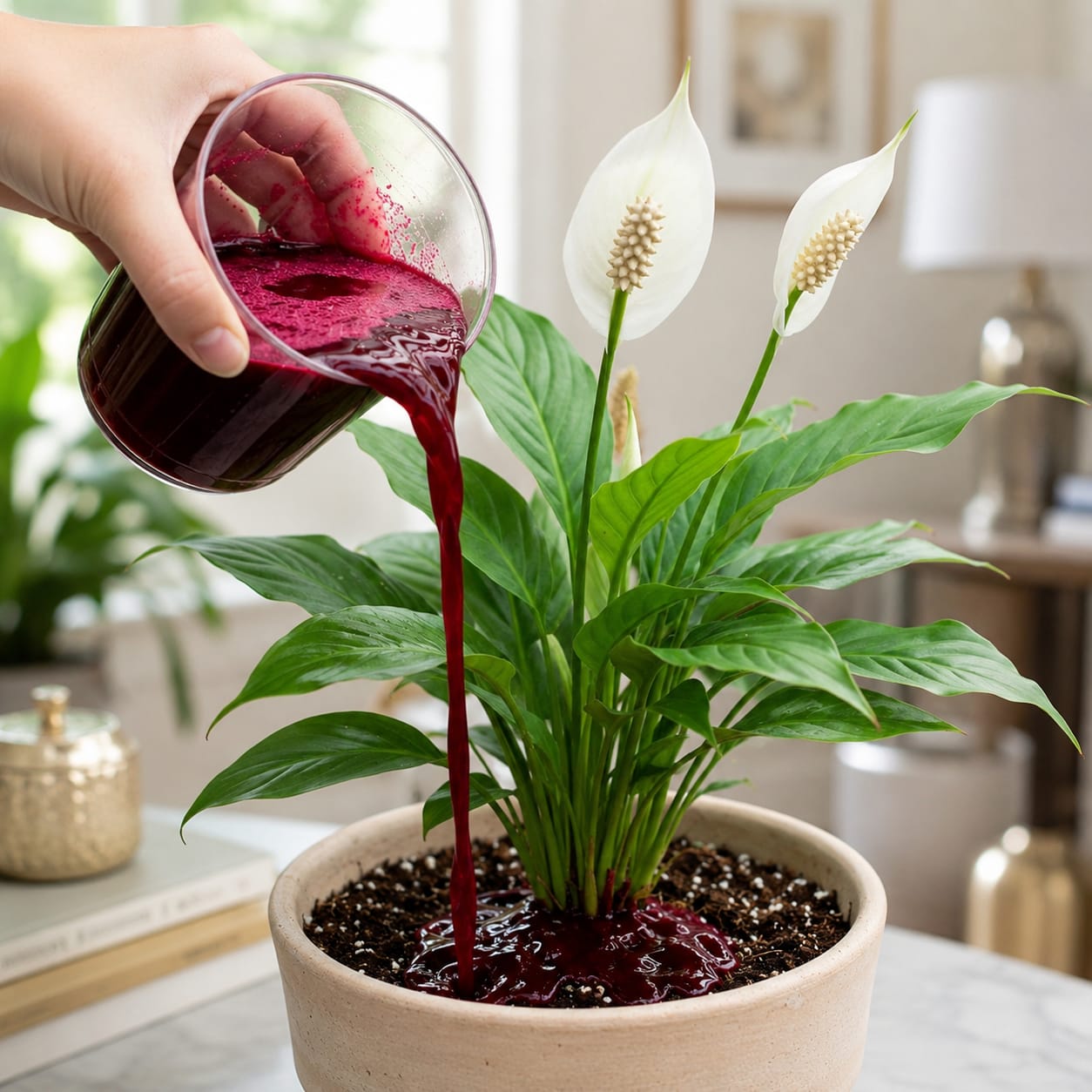
Before applying beetroot tonic, check the soil. If it is wet and heavy, wait before watering again. If it smells bad, inspect the roots.
Adding more liquid to a yellowing overwatered peace lily can make the problem worse.
Feeding Peace Lilies Properly
Beetroot tonic is not a complete fertilizer. Peace lilies need balanced nutrition during active growth.
Use a balanced houseplant fertilizer at half strength once a month during spring and summer. Avoid strong feeding because peace lilies can develop brown tips from excess fertilizer.
During winter, reduce feeding or stop completely if the plant is not actively growing.
How to Combine Fertilizer and Beetroot Tonic
Do not use beetroot tonic and fertilizer on the same day. This can be too much for the soil and roots.
Use beetroot tonic only as an occasional separate routine. For example, fertilize lightly one month, then use a weak beetroot tonic several weeks later if the plant is healthy.
Always observe the plant after any treatment. If leaves yellow or soil smells strange, stop using homemade mixtures.
Storing Beetroot Tonic
Fresh beetroot tonic is best. Because it contains organic matter, it can ferment quickly.
If you prepare extra, store it in the refrigerator for no more than 24 hours. If it smells sour, fizzy, or rotten, throw it away.
Never pour fermented liquid into an indoor plant pot.
Common Mistakes With Beetroot Tonic
Avoid these mistakes:
- Using thick beetroot juice
- Skipping the straining step
- Applying it every week
- Pouring it into soggy soil
- Using it in a pot without drainage
- Adding sugar or other ingredients
- Expecting instant flowers
- Using it on a plant with root rot
Simple, diluted, and occasional use is safest.
Best Places to Display Peace Lilies
Peace lilies are beautiful decor plants. Their white blooms and deep green leaves work well in many spaces.
Good locations include:
- Bright living room corners
- Bedroom plant stands
- Home office shelves
- Entryway tables
- Bathrooms with natural light
- Kitchen corners away from harsh sun
- Covered balconies with shade
Keep the plant away from cold drafts, heating vents, and harsh direct sun.
Decor Styling With Peace Lilies
Peace lilies look elegant in white ceramic pots, terracotta containers, matte black planters, stone-textured pots, and woven baskets. Their clean white flowers match almost any interior style.
For a calm modern look, place a peace lily in a simple white pot on a wooden stand. For a natural look, use a woven basket cover. For a bold contrast, use a dark pot against a light wall.
Peace lilies also pair beautifully with pothos, ferns, calatheas, philodendrons, snake plants, and ZZ plants.
A Simple Peace Lily Care Routine
For steady growth and healthy blooms, follow this routine:
- Place in bright indirect light
- Water when the top inch of soil dries
- Use a pot with drainage holes
- Keep soil airy and fresh
- Wipe leaves regularly
- Remove faded blooms
- Improve humidity if tips turn brown
- Feed lightly during active growth
- Use beetroot tonic rarely and only diluted
This routine supports long-term health better than relying on one dramatic trick.
Final Thoughts
The beetroot peace lily tonic can be used as a gentle natural routine only when it is prepared properly, strained well, diluted heavily, and applied rarely. It should never be used as a thick juice, frequent treatment, or replacement for balanced fertilizer.
The true secret to a beautiful peace lily is bright indirect light, correct watering, drainage, fresh soil, humidity, clean leaves, and patience. Beetroot tonic can be a small optional support step, but it is not a miracle solution.
With careful use and steady care, your peace lily can stay glossy, full, and elegant, producing fresh green leaves and graceful white blooms that bring natural beauty into any indoor space.