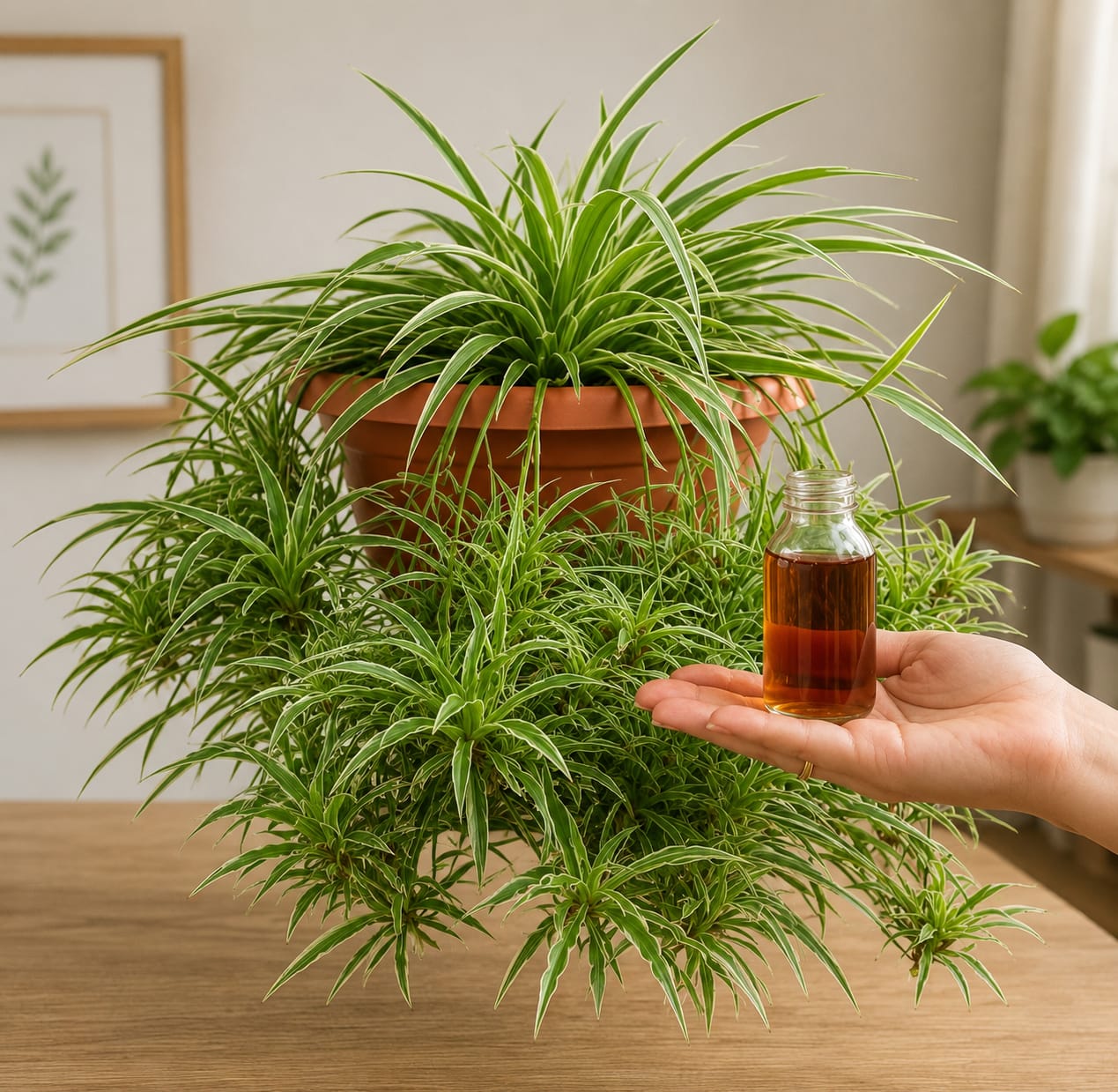
Cleaning Spider Plant Leaves
Spider plant leaves are narrow and numerous, so they collect dust. Dusty leaves look dull and reduce light absorption.
Gently rinse the plant in the sink or wipe leaves with a damp cloth. Let the plant dry in a bright airy spot afterward.
Clean leaves make the whole plant look fresher and healthier.
Humidity and Airflow
Spider plants appreciate moderate humidity but do not require very high humidity. They adapt well to normal indoor conditions.
Good airflow helps prevent fungal problems, especially in hanging baskets where leaves can grow thick and crowded.
Do not keep the plant pressed tightly against a wall if the foliage stays damp.
Repotting Spider Plants
Spider plants can become root-bound. Their thick roots may fill the pot over time. If the plant dries out very quickly, pushes itself upward, or stops growing, it may need repotting.
Choose a pot only one size larger. Too much extra soil can hold too much moisture.
Repot during spring or summer for the fastest recovery.
When Not to Use Brown Liquid Tonic
Avoid using any tonic if the plant has:
- Soggy soil
- Root rot
- Fungus gnats
- Fresh repotting stress
- Very low light
- Cold damage
- Bad soil smell
Fix the main problem first. Feeding a stressed plant can make things worse.
Styling Spider Plants Indoors
Spider plants look beautiful in hanging baskets because their leaves and babies naturally spill over the sides. They create movement and softness in a room.
Good styling ideas include:
- Hang one near a bright window
- Place several on a balcony wall
- Use terracotta pots for a natural look
- Use white ceramic pots for a clean modern style
- Place babies in small matching pots
- Mix with pothos, ferns, and trailing succulents
The plant’s arching shape makes it perfect for vertical decor.
Best Places to Display Spider Plants
Spider plants work well in many spaces:
- Kitchen windows
- Living room shelves
- Bedroom corners
- Home offices
- Bathrooms with natural light
- Covered balconies
- Porches and patios in mild weather
Keep them away from harsh direct sun, cold drafts, and heating vents.
A Simple Monthly Spider Plant Routine
For a full and healthy spider plant, follow this routine:
- Check soil moisture weekly
- Water when the top inch dries
- Provide bright indirect light
- Trim brown tips if needed
- Remove dead leaves
- Rotate the pot for even growth
- Feed lightly during active growth
- Use brown liquid tonic only occasionally
- Propagate baby plants when ready
This simple rhythm keeps the plant healthy without overcomplicating care.
Final Thoughts
A mild brown liquid tonic can be a gentle support routine for spider plants when it is clean, strained, diluted, and used sparingly. It may help support greener leaves and active growth, but it is not a miracle solution and should not replace good plant care.
The real secret to a beautiful spider plant is bright indirect light, proper watering, drainage, airy soil, occasional feeding, and patience. When these basics are in place, the plant can become full, lush, and covered with graceful baby plantlets.
With steady care and a gentle touch, your spider plant can become one of the most decorative and rewarding plants in your indoor garden.