Can Cinnamon Kill Fungus Gnats?
Cinnamon may make the soil surface less inviting, but it will not fully eliminate fungus gnats if the soil stays wet. Fungus gnats are usually a moisture problem. This natural fungus gnat deterrent for houseplants works best alongside moisture control.
To control fungus gnats:
- Let the top layer of soil dry slightly
- Use yellow sticky traps
- Remove dead leaves from soil
- Improve airflow
- Avoid overwatering
- Use fresh soil if infestation is heavy
Cinnamon can support the routine, but moisture control is the real solution.
Can Cinnamon Burn Plant Roots?
A tiny surface dusting is usually safe for many plants, but large amounts can irritate sensitive roots or change the soil surface. Calatheas are delicate, so moderation is essential. This safe application of cinnamon on sensitive plants requires restraint.
Do not:
- Mix tablespoons of cinnamon into the soil
- Pack cinnamon around stems
- Use cinnamon every week
- Apply it after every watering
- Cover the entire pot with a thick layer
Use the smallest amount possible.
Should You Water After Adding Cinnamon?
Do not water immediately if the soil is already moist. Watering right after adding cinnamon can wash powder into the root zone and create clumps.
Best method:
- Apply cinnamon to a slightly moist or lightly dry soil surface
- Wait until the plant naturally needs water
- Water gently around the edges next time
If the plant is thirsty, water first and use cinnamon later only if needed.
Calathea Cinnamon Care Table
| Care Step | Safe Method | Why It Matters |
|---|---|---|
| Cinnamon amount | Tiny pinch only | Prevents residue and irritation |
| Application area | Soil surface only | Protects leaves and crown |
| Frequency | Only when needed | Avoids buildup |
| Water | Filtered or distilled | Reduces crispy edges |
| Light | Bright indirect | Prevents sunburn |
| Humidity | Moderate to high | Prevents curling and browning |
| Soil | Moist but airy | Protects roots |
Simple Cinnamon Soil Method
Ingredients
- Plain ground cinnamon
- Small spoon
Instructions
- Remove dead leaves from the soil surface.
- Check soil moisture.
- If the soil is soggy, inspect roots before using anything.
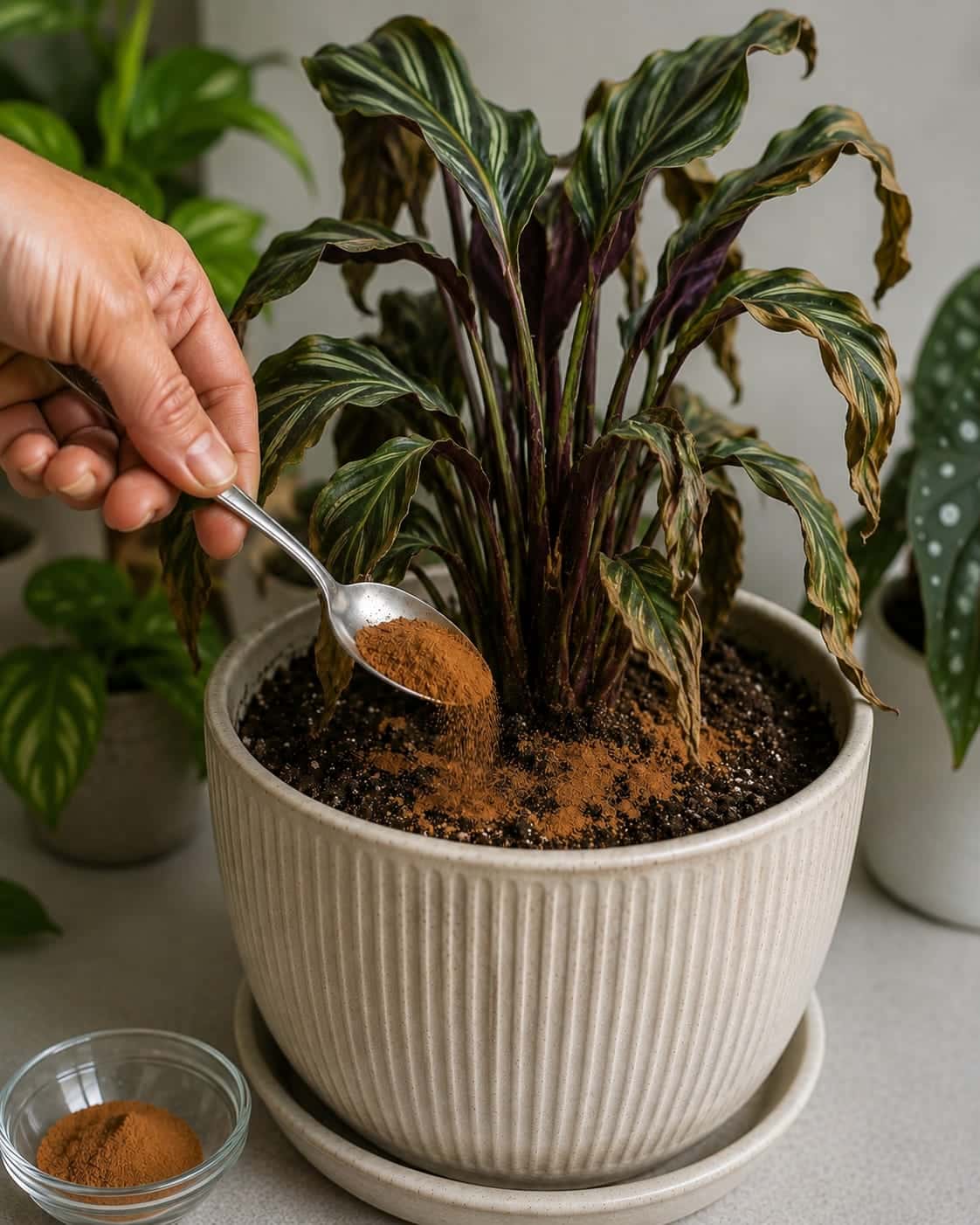
- If there is only mild surface mold or dampness, sprinkle a tiny pinch of cinnamon on the soil.
- Keep it away from stems and the crown.
- Do not mix it deeply into the pot.
- Improve airflow and adjust watering.
- Repeat only if truly needed, not as a routine fertilizer.
Common Mistakes to Avoid
- Using cinnamon as fertilizer
- Adding too much powder
- Sprinkling cinnamon into the crown
- Using cinnamon on bone-dry soil instead of watering
- Ignoring low humidity
- Using hard tap water repeatedly
- Keeping the plant in direct sun
- Leaving dead leaves on the soil
- Overwatering after applying cinnamon
- Expecting brown edges to turn green
Signs the Cinnamon Trick Is Helping
Watch the plant over the next 1 to 2 weeks. Cinnamon will not create instant new leaves, but it may help keep the soil surface cleaner. These are positive signs of calathea recovery.
- Surface mold reduces
- Soil smells fresher
- No new fungal spots appear near the crown
- The plant stops declining
- New leaves emerge cleaner
- Fungus gnat activity does not increase
The real improvement in leaf health will come from better water, humidity, and light.
Signs You Should Stop Using Cinnamon
Stop using cinnamon if you notice:
- Soil surface becoming too dry and crusty
- Leaves curling more
- Stems looking irritated at the base
- Powder clumping around the crown
- More browning after repeated use
- Plant continuing to decline despite correct care
If the plant keeps declining, inspect the roots instead of adding more powder.
Short Caption for This Trick
“For calatheas, cinnamon should be used only as a light soil-surface support, not fertilizer. Sprinkle a tiny pinch on the top layer if there is mild mold or dampness, keep it away from the crown, and fix the real causes of curling leaves: water quality, humidity, light, and watering consistency. This natural antifungal is a helpful tool, not a miracle cure.”
Frequently Asked Questions
Is cinnamon good for calatheas?
Cinnamon can be used lightly on the soil surface for mild mold or dampness, but it is not fertilizer and will not fix curling leaves by itself.
Can cinnamon stop calathea leaves from browning?
No. Brown edges are usually caused by low humidity, water quality, inconsistent watering, or sun stress. Cinnamon cannot reverse brown tissue.
How much cinnamon should I use on plant soil?
Use only a tiny pinch or about ¼ teaspoon for a medium pot. Do not create a thick layer.
Can cinnamon harm calathea roots?
Too much cinnamon may irritate sensitive roots or dry the soil surface. Use it sparingly and only on the top layer.
Should I mix cinnamon into the soil?
No. For calatheas, keep cinnamon on the surface only and away from the crown.
Does cinnamon kill fungus gnats?
It may help slightly with surface conditions, but fungus gnats are controlled mainly by moisture management, sticky traps, and removing decaying matter.
Why are my calathea leaves curling?
Common causes include dry soil, low humidity, poor water quality, too much sun, cold drafts, or root stress.
What water is best for calatheas?
Filtered water, distilled water, rainwater, or reverse osmosis water is usually better than hard tap water.
Can I use cinnamon after cutting dead leaves?
Yes, a tiny amount can be applied to a fresh cut if the area is damp, but do not pack it into the crown.
What is the best way to revive a crispy calathea?
Improve humidity, use better water, keep soil evenly moist, move to bright indirect light, remove dead leaves, and inspect roots if the plant keeps declining.
Final Thoughts
The cinnamon soil trick can be useful for a stressed calathea, but only when it is used correctly. The brown powder in the image suggests a common natural plant care method, especially for damp soil and surface mold. But cinnamon is not a cure-all. It will not repair crispy leaves, reverse brown edges, or save roots that are rotting. This natural calathea care method works best as a supplement to proper care.
The safest method is to sprinkle only a tiny pinch of plain ground cinnamon on the soil surface, away from the stems and crown. Use it only when there is a reason, such as mild mold or dampness. Do not use it as fertilizer, do not apply it weekly, and do not mix large amounts into the roots. Following this complete calathea care guide will keep your plant thriving.
For real calathea recovery, focus on the essentials: bright indirect light, high humidity, clean filtered water, evenly moist soil, good drainage, and gentle pruning. These are the conditions that create healthier leaves and stronger roots. These professional indoor plant care secrets will help you succeed with even the most sensitive calatheas.
Used wisely, cinnamon can support cleaner soil. Used too heavily, it can become another stress factor. With calatheas, gentle consistency always works better than strong homemade treatments. Enjoy your beautiful, healthy calathea for years to come.