Why Orchids Get Rotten Roots – Common Causes
Root rot is usually caused by too much moisture and not enough air. Orchids need water, but their roots cannot sit in soggy material for long periods. This orchid root rot prevention guide is essential.
Common causes of root rot include:
- Watering too often
- Old decomposed bark
- Pot with poor drainage
- Too much sphagnum moss packed tightly
- Cold temperatures
- Low light
- Standing water in decorative pots
If you only trim roots but do not fix the cause, rot can return. Fresh bark, better airflow, and proper watering are essential.
How to Water Orchids After Repotting – Proper Moisture Management
After repotting, orchids need careful watering. Fresh bark dries differently than old bark. Bark may dry faster at first, especially if it is chunky. This orchid watering guide after repotting will help you.
A simple rule:
Water when the bark is nearly dry and the roots look silvery, not when the pot still feels wet.
When roots are wet, they often turn green. When dry, they become silver or gray. Use the roots as your guide.
Water thoroughly with plain water, then let the pot drain completely. Do not leave the orchid sitting in water.
Should You Fertilize After This Treatment? – Wait for Recovery
Do not fertilize immediately after root trimming and repotting. The plant needs time to recover. Wait 3 to 4 weeks before feeding, and only fertilize if the orchid looks stable. The best fertilizer for recovering orchids is used gently and after roots are established.
When you begin feeding again, use a weak orchid fertilizer. Many growers use quarter-strength fertilizer during active growth.
Do not mix fertilizer with cinnamon water. Use plain water between treatments.
Can Cinnamon Make Orchids Bloom? – No, Focus on Root Health
Cinnamon does not directly make orchids bloom. It may help protect cuts during rescue, but flowering depends on plant strength and growing conditions. For guaranteed orchid reblooming tips, focus on overall care.
To bloom, orchids need:
- Healthy roots
- Bright indirect light
- Proper watering
- Fresh airy bark
- Weak regular feeding during growth
- Good temperature conditions
- Patience after recovery
If the orchid has just lost many roots, focus on root growth first. Blooms come later.
Best Light for Recovering Orchids – Optimal Placement
After rescue, place the orchid in bright indirect light. Avoid direct hot sun, especially if using a humidity dome. Providing optimal light for orchid recovery accelerates healing.
Good locations include:
- East-facing window
- Bright shaded patio
- Near a south window with sheer curtain
- Greenhouse shelf with filtered light
- Grow light area with gentle distance
Too little light slows recovery. Too much direct sun burns leaves. Bright indirect light is the sweet spot.
Should You Spray Orchid Leaves With Cinnamon Water? – No, Soil Only
No. Do not spray cinnamon water over orchid leaves as a routine treatment. It can leave residue and may dry tissue. Also, water trapped in the crown can cause rot.
If you need to clean leaves, use plain water and a soft cloth. Keep cinnamon for cut areas only.
Can You Use Cinnamon Sticks Instead of Powder? – Yes, but Not Necessary
Cinnamon sticks can be used to make a very mild infusion, but they are not necessary. Ground cinnamon is easier for treating cut ends. If using sticks, soak one small stick in warm water for 30 minutes, then dilute the liquid heavily before use.
Do not place cinnamon sticks inside the orchid pot. They can trap moisture and decay over time.
Can You Use Cinnamon Essential Oil? – Never
No. Do not use cinnamon essential oil on orchids. Essential oils are too concentrated and can damage plant tissue. Use only plain kitchen cinnamon powder in tiny amounts.
Common Mistakes With Cinnamon Orchid Care – What to Avoid
Coating All the Roots
This is the biggest mistake. Cinnamon can dry healthy roots. Apply only to cut ends.
Using Strong Cinnamon Water
A thick cinnamon solution can irritate roots. Always dilute and strain.
Soaking Too Long
Orchid roots should not soak in cinnamon water for hours. A brief rinse is enough.
Using Cinnamon Instead of Repotting
If the bark is old and rotten, repotting is necessary.
Burying the Crown
The crown must stay above the bark. A buried crown can rot.
Using a Pot Without Drainage
No treatment works if the orchid sits in trapped water.
Putting the Dome in Sun
A humidity dome in direct sun can overheat the orchid.
How to Know the Orchid Is Recovering – Positive Indicators
After treatment, look for slow but steady signs of improvement. These are signs of successful orchid root recovery.
Good signs include:
- Leaves stop wrinkling further
- Roots remain firm
- New green root tips appear
- The plant feels more stable
- No sour smell returns
- New leaf emerges from the crown
Do not expect immediate flowers. Root recovery comes first.
How to Know the Orchid Is Still in Trouble – Warning Signs
If problems continue, you may need to inspect again.
Warning signs include:
- Leaves becoming softer
- Crown turning black or mushy
- Roots becoming slimy again
- Strong sour smell
- Mold spreading in the pot
- Plant collapsing
If the crown is rotting, the orchid may be difficult to save. Remove wet material, improve airflow, and avoid getting water in the crown.
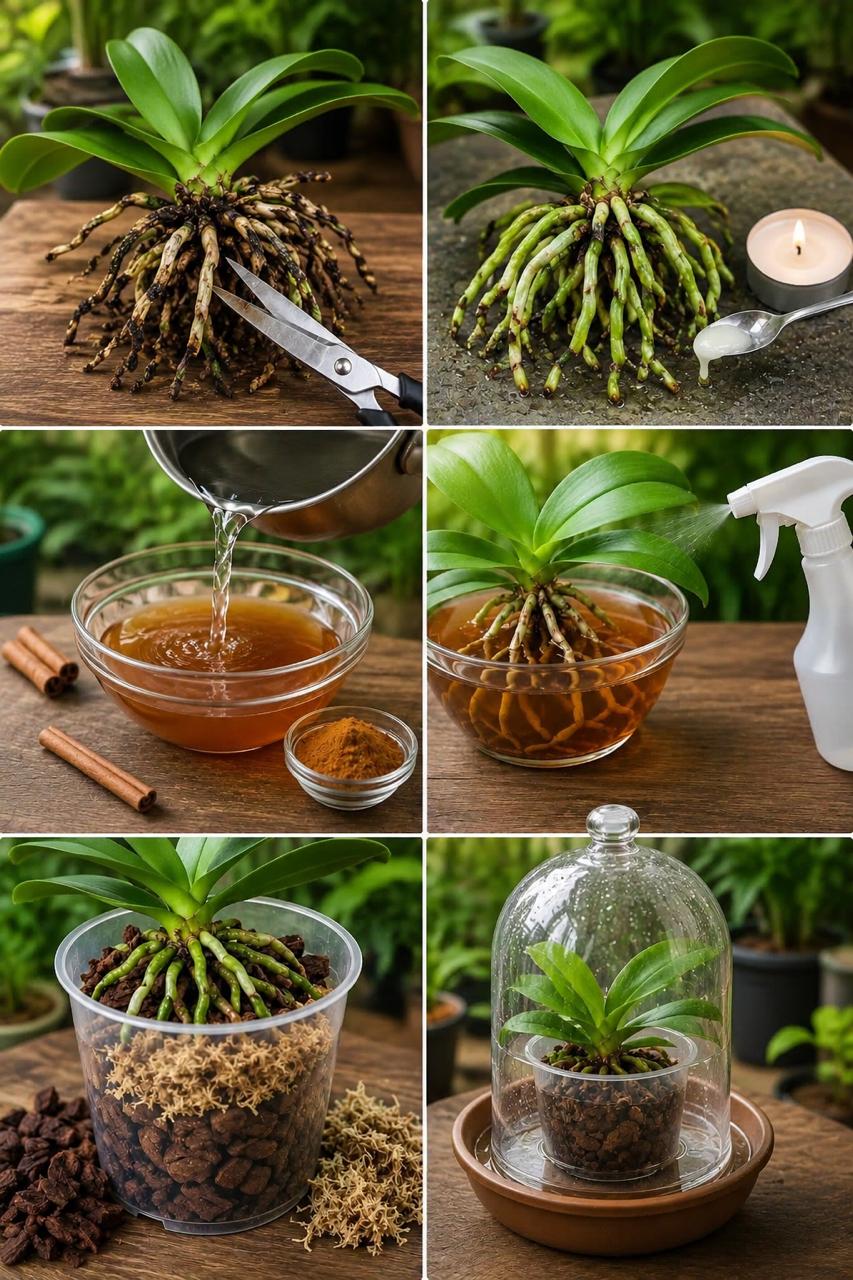
Quick Cinnamon Orchid Rescue Recipe – Step-by-Step Summary
For Cut Roots
- Remove the orchid from old bark.
- Trim only dead, hollow, or mushy roots.
- Sterilize scissors before cutting.
- Apply a tiny amount of plain cinnamon only to cut ends.
- Let the plant rest for 20 to 30 minutes.
- Repot into fresh orchid bark.
For Mild Cinnamon Water
- Mix ¼ teaspoon cinnamon with 1 liter warm water.
- Let sit for 20 to 30 minutes.
- Strain very well.
- Dilute 1 cup cinnamon water with 3 cups plain water.
- Use as a brief 2 to 5 minute root rinse only.
- Do not soak for hours.
Short Caption for This Trick
“To use cinnamon safely on orchids, trim only dead or rotten roots with sterilized scissors, then apply a tiny amount of plain cinnamon only to the fresh cut ends. For a mild rinse, mix ¼ teaspoon cinnamon with 1 liter water, strain well, dilute heavily, and use briefly before repotting into fresh orchid bark. Never coat healthy roots with dry cinnamon – this natural orchid rescue method gently protects trimmed roots.”
Frequently Asked Questions – Cinnamon Orchid Rescue Q&A
Is cinnamon good for orchid roots?
Cinnamon can be useful on freshly cut root ends, but it should not be spread heavily over healthy roots because it can dry them out.
Can I sprinkle cinnamon in orchid bark?
It is not recommended. Cinnamon should be used only in small amounts on cut areas, not mixed heavily into the potting medium.
Can cinnamon water cure root rot?
Cinnamon water cannot cure severe root rot by itself. Rotten roots must be trimmed away, and the orchid must be repotted into fresh airy bark.
How long should orchid roots soak in cinnamon water?
If using cinnamon water, keep it very weak and soak only 2 to 5 minutes. Long soaking is not recommended.
Can cinnamon make orchids bloom?
No. Cinnamon does not force blooms. It helps with cut protection during rescue. Blooms require healthy roots, good light, proper watering, and nutrition.
Can I use cinnamon after cutting an orchid flower spike?
Yes. You can dab a tiny amount of cinnamon on the cut end of a flower spike to help dry the cut.
Can I use cinnamon essential oil?
No. Cinnamon essential oil is too strong and may damage orchids.
Should I water immediately after repotting?
You can water lightly with plain water after repotting, then let the pot drain completely. Avoid fertilizer for a few weeks.
Why are my orchid roots black?
Black roots are often rotten, especially if they feel soft or slimy. Remove rotten roots and improve drainage and airflow.
What is the best potting mix after root rescue?
Fresh medium orchid bark with a little sphagnum moss, perlite, or charcoal is usually best for common Phalaenopsis orchids.
Final Thoughts – The Best Natural Orchid Root Rescue Method
The cinnamon water orchid trick can be helpful, but only when used correctly. Cinnamon is not a fertilizer and not a miracle bloom booster. Its best use is as a light drying and protective ingredient for freshly cut plant tissue after trimming damaged roots. This natural orchid root treatment has helped many gardeners save their plants.
The safest method is simple: remove the orchid from old bark, inspect the roots, trim only dead or rotten parts, dab a tiny amount of cinnamon on cut ends, and repot into fresh airy orchid bark. If you use cinnamon water, make it weak, strain it well, dilute it heavily, and use it only as a brief rinse. Following this complete orchid root care guide will keep your plant thriving.
Never cover healthy orchid roots with dry cinnamon powder. Never soak roots in strong cinnamon water for hours. Never use cinnamon oil. And never rely on cinnamon to fix old soggy bark or poor drainage. These professional orchid care secrets will help you succeed.
Orchid recovery depends on the basics: healthy roots, clean tools, fresh bark, good airflow, bright indirect light, careful watering, and patience. Cinnamon can support that process, but it cannot replace it.
When used gently, this natural method can help your orchid recover from root problems and begin rebuilding strength. With time, new green root tips may appear, leaves may become firmer, and the plant may eventually reward you with fresh flower spikes again. Start your orchid rescue journey today with the right fundamentals.