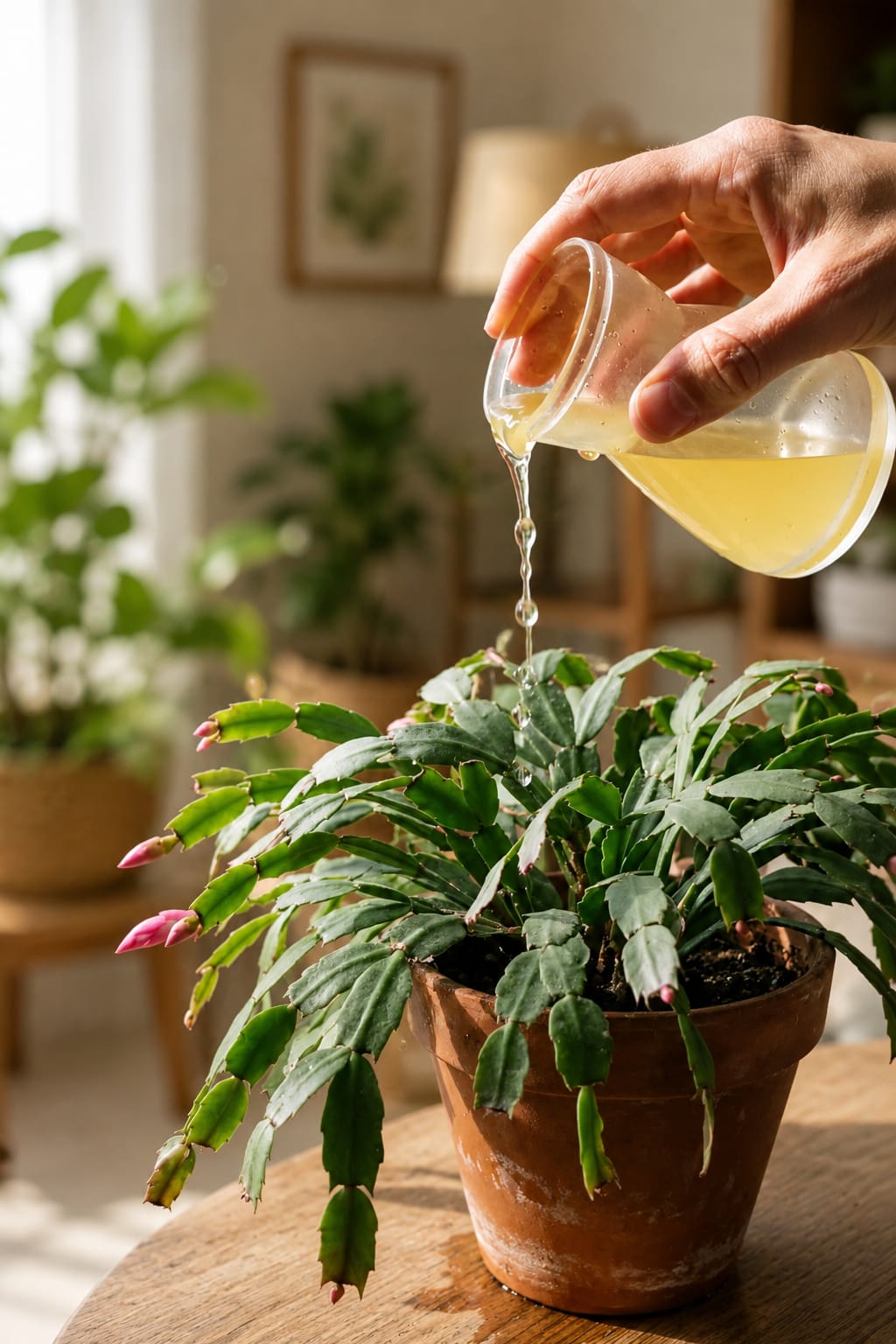
Christmas cactus is one of the most loved indoor plants because it brings color and life into the home during the colder months. Its soft green segmented stems, graceful arching growth, and bright flower buds make it perfect for windowsills, shelves, plant stands, kitchen corners, and cozy holiday displays. When it is healthy, a Christmas cactus can bloom beautifully year after year, often becoming one of those special plants people keep for a long time.
One simple care idea that often gets attention is using a gentle golden liquid tonic for Christmas cactus. This may be a mild natural liquid made from diluted banana peel water, weak compost tea, rice water, or another light plant-safe homemade tonic. The golden color can look impressive, but the color itself is not what matters. What matters is whether the liquid is safe, diluted, clean, and used at the right time.
Christmas cactus is not a desert cactus. It is a tropical forest cactus. That means it enjoys more moisture than desert cactus, but it still needs airy soil and careful watering. Its roots need oxygen. If the pot stays wet, the roots can rot. For this reason, any liquid tonic must be used gently. A little can support growth. Too much can damage the plant.
What Is the Golden Water Trick?
The golden water trick is a gentle feeding routine where a light yellow or golden plant tonic is poured into the soil of a Christmas cactus. Many plant lovers use mild homemade liquids to give plants a small nutrient boost. For Christmas cactus, this can work only when the mixture is weak and the plant is already healthy.
The best golden liquid options are usually mild and plant-safe, such as diluted banana peel water, weak rice water, or very diluted organic fertilizer. These liquids may contain small amounts of nutrients that support growth, but they are not miracle solutions. They should never replace proper light, soil, drainage, and watering.
A Christmas cactus grows best when the entire care routine is balanced. The golden liquid is only a small extra step.
Why Christmas Cactus Needs Gentle Feeding
Christmas cactus has sensitive roots. In nature, it grows in loose organic material, often where water drains quickly and air reaches the root system. In a pot, the roots depend completely on the soil mix and your watering routine.
If you use strong fertilizer or thick homemade liquid, the roots can become stressed. This may lead to limp stems, yellowing segments, bud drop, or root rot. The plant does not need heavy feeding to bloom. It needs steady care.
Gentle feeding during active growth can help the plant build energy. But strong feeding during the wrong season can do more harm than good.
Best Golden Liquid Options
The safest golden liquid for Christmas cactus should be thin, mild, and well diluted. It should not smell bad or contain solid pieces.
Good options include:
- Diluted banana peel water
- Very weak rice water
- Diluted organic houseplant fertilizer
- Weak compost tea
- Filtered water with a small amount of plant-safe liquid feed
The liquid should be light and watery. If it is thick, sticky, sour, or fermented, do not use it indoors.
What Not to Use
Some homemade liquids can harm Christmas cactus. Avoid anything that is sugary, salty, oily, fermented, or strong.
Do not use:
- Undiluted banana peel water
- Milk
- Sweet drinks
- Cola
- Cooking water with salt
- Oil-based mixtures
- Vinegar mixtures
- Strong compost tea
- Fermented liquids with a bad smell
- Random kitchen liquids
Christmas cactus roots need clean moisture and airflow. Sticky liquids can attract fungus gnats, mold, and bacteria.
How to Make a Mild Banana Peel Water
Banana peel water is one common golden liquid used by plant lovers. It may contain small amounts of potassium and other minerals. For Christmas cactus, it must be weak.
To make a gentle version:
- Use a small piece of clean banana peel.
- Place it in 2 cups of water for a few hours.
- Strain the liquid completely.
- Dilute the liquid with 2 to 4 more cups of clean water.
- Use only a small amount when the plant is due for watering.
Do not let the peel sit for many days until the liquid smells sour. Fresh and mild is safer.
How Often to Use Golden Water
Use golden water only once every 4 to 6 weeks during active growth. Spring and summer are the best seasons because the plant is producing new segments and storing energy.
Do not use it every week. Do not use it every time you water. Indoor pots do not flush naturally like outdoor soil. Repeated homemade liquids can build up and cause problems.
During fall and winter, stop or reduce the tonic, especially when the plant is preparing to bloom. At that time, stable moisture and proper darkness matter more than extra feeding.
When Not to Use Golden Water
Do not use any tonic if the plant is stressed. A weak plant needs correct care first, not extra liquid.
Avoid golden water if you notice:
- Wet soil for many days
- Limp stems with damp soil
- Yellowing segments
- Soft or mushy base
- Sour smell from the pot
- Fungus gnats
- Mold on the soil
- Recent heavy repotting
- Root rot
If these signs appear, stop all tonics and check the roots, soil, drainage, and watering routine.
The Right Way to Apply It
Apply golden water only when the Christmas cactus is already ready for watering. The top inch of soil should feel dry or close to dry.
Pour the liquid slowly around the soil, not directly over the stems or buds. Let the liquid move through the potting mix. If water drains from the bottom, empty the saucer right away.
Do not let the pot sit in golden water. Standing liquid can suffocate roots and encourage rot.
Why Drainage Is Essential
Christmas cactus needs a pot with drainage holes. This is especially important when using any liquid tonic. Without drainage, extra moisture collects at the bottom of the pot and creates a wet zone where roots can rot.
If you use a decorative pot, keep the Christmas cactus inside a nursery pot with holes. Place that inside the decorative pot, then remove extra water after watering.
Good drainage protects roots and keeps the plant healthier long term.
Best Soil for Christmas Cactus
Christmas cactus needs a soil mix that holds light moisture but still drains well. Heavy soil can stay wet too long. Very gritty soil can dry too quickly. The best mix is balanced.
A good Christmas cactus mix can include:
- Indoor potting mix
- Perlite
- Fine orchid bark
- Coco coir
- A small amount of compost or worm castings
This gives the roots both moisture and air. The plant should never sit in dense, muddy soil.
How Soil Affects Blooming
Healthy roots support healthy blooms. If the soil is old, compacted, or soggy, the plant may struggle to produce buds. It may also drop buds before they open.
Fresh airy soil helps the Christmas cactus absorb water evenly. It also keeps roots from suffocating.
If your plant has not been repotted for years and the soil looks hard or broken down, refresh the mix after the bloom season.
Watering Christmas Cactus Correctly
Christmas cactus likes more moisture than desert cactus, but it still should not stay wet all the time. Water when the top inch of soil feels dry.
When watering, pour slowly until water drains from the bottom. Then empty the saucer. Let the soil dry slightly before watering again.
The watering schedule changes with season, light, temperature, pot size, and soil type. Always check the soil before watering.
Signs Your Christmas Cactus Needs Water
A thirsty Christmas cactus may show wrinkled or limp segments. The pot may feel lighter, and the soil will feel dry.
After watering, the stems should gradually firm up again. If the plant is limp while the soil is wet, the problem is likely root stress, not thirst.
Checking the soil prevents both underwatering and overwatering.
Signs of Overwatering
Overwatering is one of the biggest Christmas cactus problems. It can happen when the soil is too heavy, the pot has poor drainage, or the plant is watered too often.
Signs include:
- Limp stems with wet soil
- Yellow or pale segments
- Soft dark base
- Rotten smell
- Fungus gnats
- Black or brown roots
- Bud drop
If you see these signs, stop using tonics and allow the plant to recover. Repot if roots are damaged.
Light for Healthy Growth
Christmas cactus grows best in bright indirect light. It can handle gentle morning sun, but harsh afternoon sun can burn the stems.
A bright window with filtered light is ideal. East-facing windows often work well. South or west windows may need a sheer curtain.
Good light helps the plant build energy for future blooms. Low light may keep the plant alive, but it often reduces flowering.
How to Encourage More Blooms
Golden water can support growth, but it does not force blooms by itself. Christmas cactus needs seasonal signals to bloom.
To encourage flowers:
- Give bright indirect light during the day.
- Provide longer dark nights in fall.
- Keep the plant slightly cooler at night.
- Avoid moving it after buds form.
- Water consistently during bud development.
- Stop heavy feeding before blooming.
Once buds appear, keep the plant stable. Sudden changes can cause bud drop.
Why Buds Drop
Bud drop can happen even on healthy plants. Christmas cactus can drop buds when conditions change suddenly.
Common causes include:
- Moving the plant to a new spot
- Dry soil during bud formation
- Overwatering
- Cold drafts
- Hot dry air
- Low humidity
- Too much fertilizer
- Too much artificial light at night
During bud season, stable care is more important than extra feeding.
Should You Feed While It Is Blooming?
It is better to avoid strong feeding while the plant is blooming. During bloom time, focus on steady moisture, bright indirect light, and stable temperature.
After flowering ends, let the plant rest for a short time. Then resume light feeding when new growth appears.
This rhythm supports the plant naturally.
Pruning for a Fuller Christmas Cactus
Pruning helps Christmas cactus become bushier. The best time to prune is after blooming. Twist off one to three segments from long stems. This encourages branching and gives the plant a fuller shape.
The removed pieces can be propagated. Let them dry for a day or two, then place them in a light potting mix.
Do not prune heavily during bud formation.
Propagating Christmas Cactus
Christmas cactus is easy to propagate. Take a cutting with two to four segments. Let the cut end dry slightly for a day or two. Then plant it in a light, well-draining mix.
Keep the soil lightly moist but not wet. Place the cutting in bright indirect light. Roots will form with time.
Do not use golden water or fertilizer on fresh cuttings until they are rooted and growing.
Humidity for Christmas Cactus
Christmas cactus appreciates moderate humidity. Dry air can cause wrinkled stems, dry buds, or bud drop.
You can improve humidity by grouping plants together, using a pebble tray, or placing the plant in a bright kitchen or bathroom. A small humidifier can also help.
Good airflow matters too. Humidity without airflow can encourage fungal problems.
Temperature Needs
Christmas cactus likes mild indoor temperatures. It does not like freezing cold or harsh heat. Keep it away from cold windows, heaters, and strong drafts.
Cooler nights in fall can help trigger buds, but the plant should not be exposed to damaging cold.
Stable temperatures help flowers last longer.
Cleaning the Segments
The flat green segments can collect dust over time. Dust blocks light and makes the plant look dull. Wipe the segments gently with a damp cloth or rinse the plant lightly with lukewarm water.
Let the pot drain well afterward. Do not leave the plant sitting wet in a dark corner.
Clean segments look brighter and support better photosynthesis.
Continue to Page 2
Continue to page 2 for more details about this article and the key points many readers miss on the first page.