Can You Use Sugar Water?
No. Sugar water should not be used on Christmas cactus. Plants create their own sugars through photosynthesis. Pouring sugar into the soil does not help the plant bloom and can attract ants, mold, and fungus gnats.
A healthy Christmas cactus needs light, proper watering, cool nights before bloom season, and breathable soil. It does not need sweet soil.
Best Soil for Christmas Cactus
Christmas cactus needs soil that holds some moisture but drains well. It is not a desert cactus, so it should not be planted in extremely dry sand. At the same time, heavy potting soil can stay too wet and cause root problems.
A good Christmas cactus soil mix can include:
- 2 parts indoor potting mix
- 1 part orchid bark
- 1 part perlite or pumice
- 1 part coco coir or fine bark
This mix gives the roots moisture, oxygen, and drainage. It also helps prevent compacted soil, one of the biggest causes of root stress in holiday cactus plants.
Best Pot for Christmas Cactus
Use a pot with drainage holes. A ceramic pot is beautiful, but if it has no drainage, water can collect at the bottom and damage the roots.
Christmas cactus often blooms better when slightly root-bound, so do not rush to move it into a huge pot. Choose a pot only slightly larger than the root ball when repotting.
A pot that is too large holds too much wet soil, which can slow growth and increase the risk of root rot.
How to Water Christmas Cactus Correctly
Christmas cactus likes more frequent watering than desert cactus, but it still does not want soggy soil. Water when the top inch of soil feels dry. Pour water through the potting mix until excess drains out, then empty the saucer.
During active growth, the plant may need more regular watering. During cooler months or after blooming, it may need less.
Do not let the soil dry bone-hard for too long, especially when buds are forming. Dry stress can cause bud drop.
How to Make Christmas Cactus Bloom
Feeding can support blooming, but Christmas cactus needs a special seasonal signal to set buds. The two biggest triggers are cooler nights and longer darkness.
To encourage blooms:
- Give bright indirect light during the day
- Provide cooler nights in fall
- Allow 12 to 14 hours of darkness each night for several weeks
- Reduce watering slightly during bud formation
- Avoid moving the plant once buds appear
- Do not overfeed during bud setting
A white rice-aloe tonic can support plant strength before the bloom season, but the bloom trigger comes from light and temperature changes.
Best Light for Christmas Cactus
Christmas cactus grows best in bright indirect light. Near an east-facing window is ideal. A north-facing window can work if it is bright enough. A south or west window should have filtered light to prevent scorching.
Too little light can cause weak, stretched growth and fewer flowers. Too much direct sun can make segments look red, pale, or scorched.
For glossy green segments and better blooms, give steady filtered light.
Why Buds Drop Before Opening
Bud drop is a common Christmas cactus problem. It can happen when the plant experiences sudden changes in care or environment.
Common causes include:
- Moving the plant after buds form
- Overwatering
- Underwatering
- Low humidity
- Cold drafts
- Hot air from heaters
- Too much fertilizer
- Not enough light
If your plant has buds, do not experiment with strong tonics or heavy fertilizer. Keep care stable until flowering finishes.
When to Feed Christmas Cactus
The best time to feed Christmas cactus is after flowering and during active growth. This helps the plant build strong segments before the next blooming season.
A simple feeding routine is:
- After blooming: begin light feeding when new growth appears
- Spring: feed gently once every four to six weeks
- Summer: continue light feeding if the plant is growing
- Fall: reduce feeding as buds begin to form
- Winter bloom period: avoid heavy feeding
The white tonic should count as one feeding. Do not combine it with strong commercial fertilizer on the same day.
Can This Trick Help a Limp Christmas Cactus?
It depends on why the plant is limp. A Christmas cactus may become limp from underwatering, overwatering, root rot, low humidity, or heat stress. If the soil is very dry and the stems are slightly wrinkled, a small amount of water may help. If the soil is wet and the plant is limp, the roots may be damaged.
Do not use the white tonic on a limp plant until you check the soil. If the soil is wet, inspect the roots. If the soil is dry, water lightly with plain water first. Save the tonic for when the plant is stable.
Can This Trick Help Yellow Segments?
Yellowing segments can come from overwatering, low nutrients, too much direct sun, old soil, or root stress. A diluted rice-aloe tonic may help if the plant is mildly nutrient-stressed and the roots are healthy.
However, yellow segments caused by rot or sunburn will not turn green again. The goal is healthier new growth.
Always correct light and watering before using any homemade fertilizer.
Can This Trick Help Cuttings Root?
Aloe water can be used very lightly for plant cuttings, but Christmas cactus cuttings usually root easily without any special tonic. The most important step is to let the cut end dry and callus before planting.
Simple Christmas Cactus Propagation Method
- Take a cutting with two to four healthy segments.
- Let the cut end dry for 24 to 48 hours.
- Place it into lightly moist, airy soil.
- Keep it in bright indirect light.
- Water lightly only when the soil begins to dry.
Do not soak fresh cuttings in rice water. Too much moisture can cause rot before roots form.
How to Prune Christmas Cactus
Pruning helps Christmas cactus become fuller and bushier. The best time to prune is after flowering. Twist or cut off a few segments from long stems to encourage branching.
You can root the removed segments to create new plants. This is one reason Christmas cactus often becomes a shared family plant.
After pruning, wait a little before feeding. Let the plant settle, then resume gentle care.
How to Keep Christmas Cactus Glossy and Green
Healthy Christmas cactus segments should look firm, green, and slightly shiny. To keep them that way:
- Use bright indirect light
- Water when the top inch dries
- Keep the soil airy
- Avoid hot direct sun
- Maintain moderate humidity
- Feed lightly during active growth
- Keep the plant away from heaters
Do not use leaf shine products. The segments do not need polish. Good care creates the best natural shine.
Signs the White Tonic Is Helping
Christmas cactus responds slowly, so look for gradual improvement over several weeks.
Good signs include:
- New green segments
- Firmer stems
- Less wrinkling
- Clean soil smell
- No mold on the surface
- No fungus gnats
- Better growth during spring and summer
- More stable buds in the next bloom season
Old damaged segments may not fully recover, but new growth should look healthier.
Signs You Used Too Much
Stop using the tonic if you notice:
- Mold on the soil
- Sour smell from the pot
- Fungus gnats
- Sticky soil surface
- Soft or mushy stems
- Yellowing that gets worse
- Soil staying wet too long
These signs mean the mixture may be too strong, used too often, or applied to soil that was already too wet. Stop feeding and let the soil dry slightly. If the plant keeps declining, inspect the roots.
How to Fix an Overwatered Christmas Cactus
If the plant becomes limp while the soil is wet, remove it from the pot and check the roots. Healthy roots are firm. Rotten roots are mushy, dark, or sour-smelling.
Trim away rotten roots with clean scissors. Repot into fresh airy soil with perlite and bark. Wait a few days before watering if many roots were removed.
Do not use rice water, aloe tonic, or fertilizer until the plant begins to recover.
Best Indoor Conditions for Christmas Cactus
| Care Factor | Best Setup | Why It Matters |
|---|---|---|
| Light | Bright indirect light | Supports strong segments and future blooms |
| Watering | When top inch feels dry | Prevents both shriveling and root rot |
| Soil | Airy mix with perlite and bark | Gives roots moisture and oxygen |
| Feeding | Light feeding during active growth | Supports new segments without burn |
| Humidity | Moderate humidity | Helps prevent limp, dry segments |
| Bloom Trigger | Cool nights and long darkness | Encourages flower bud formation |
| Pot | Drainage holes, slightly snug | Prevents soggy soil and supports blooming |
Simple White Tonic Routine
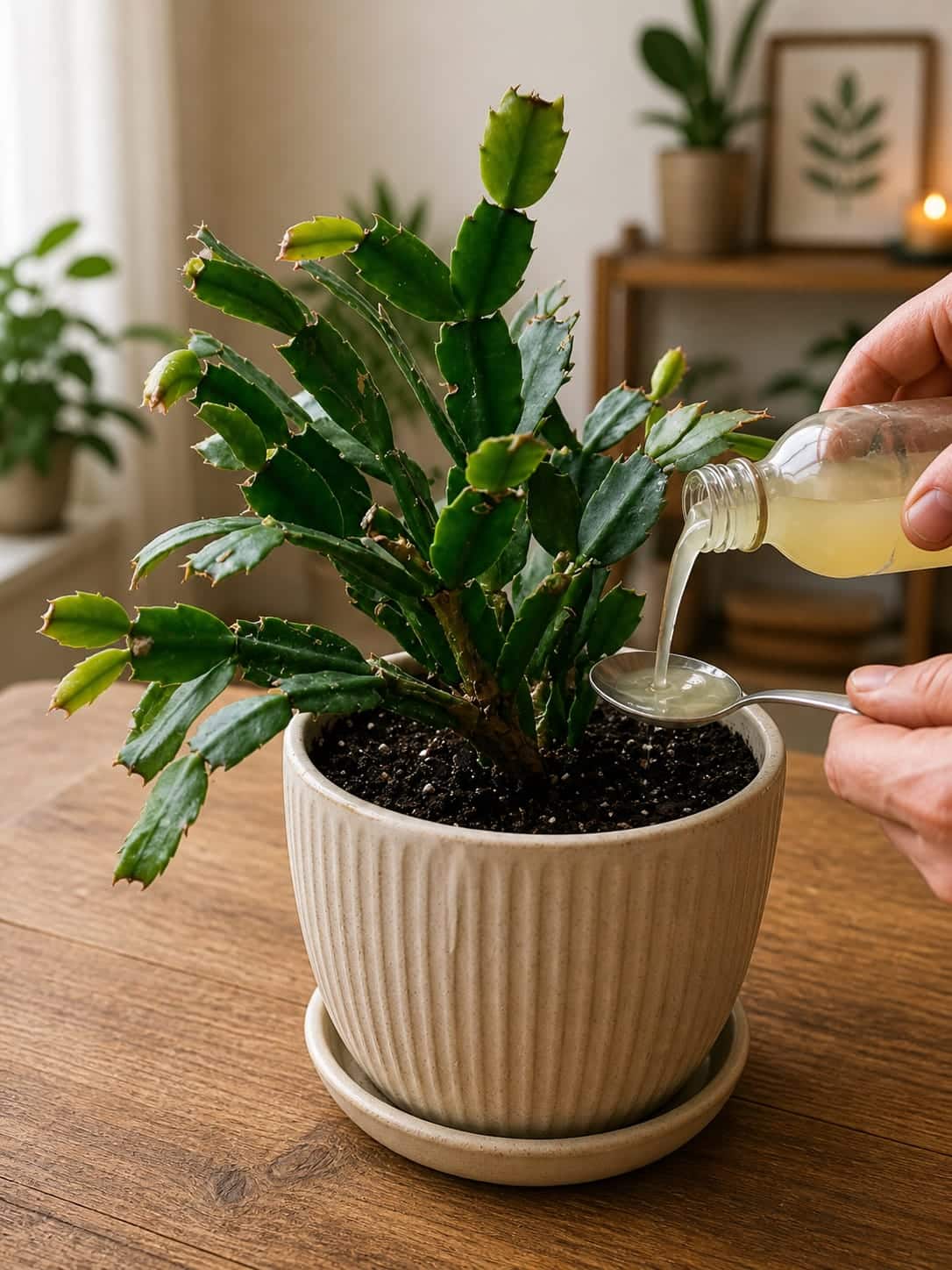
- Rinse 1 tablespoon uncooked rice in 1 cup water.
- Let it sit for 10 minutes.
- Strain out the rice.
- Add ¼ teaspoon fresh aloe gel.
- Stir well.
- Dilute 1 part tonic with 3 parts clean water.
- Check that the top inch of soil is slightly dry.
- Apply one to three spoonfuls around the outer soil.
- Let excess liquid drain.
- Use once every four to six weeks during active growth.
Common Mistakes to Avoid
- Using thick cooked rice water
- Using milk instead of rice water
- Adding sugar or honey
- Using too much aloe gel
- Applying the tonic every week
- Pouring it on wet soil
- Soaking the plant during bud formation
- Using a pot without drainage
- Keeping the plant in harsh direct sun
- Expecting instant blooms
Short Caption for This Trick
“For a Christmas cactus or Thanksgiving cactus, use a gentle white tonic made from fresh diluted rice water and a tiny amount of aloe gel. Apply only one to three spoonfuls around slightly dry soil during active growth. Keep it weak, fresh, and occasional to support healthy roots, stronger green segments, and better future blooms.”
Frequently Asked Questions
What is the white liquid for Christmas cactus?
The safest version is a diluted rice water and aloe tonic. It should be thin, fresh, and applied only in small amounts.
Can rice water help Christmas cactus bloom?
Rice water may support plant health, but blooms depend mostly on bright indirect light, cool nights, long darkness, and stable care.
How often should I use the white tonic?
Use it once every four to six weeks during active growth. Do not use it weekly.
Can I use milk on Christmas cactus?
No. Milk can spoil in soil, smell bad, attract pests, and cause mold. Diluted rice water is safer.
Can aloe help Christmas cactus roots?
A tiny amount of diluted aloe may support gentle root care, but it should not be used thick or concentrated.
Should I apply the tonic while the plant has buds?
It is better to avoid extra feeding during bud formation and flowering. Sudden changes can cause bud drop.
Why is my Christmas cactus not blooming?
Common reasons include too much light at night, warm nights, low daytime light, overwatering, or lack of a cool rest period.
Why are the stems limp?
Limp stems can be caused by underwatering, overwatering, root rot, heat stress, or low humidity. Check the soil and roots before feeding.
What is the best soil for Christmas cactus?
Use an airy mix with indoor potting soil, perlite, orchid bark, and coco coir. It should hold light moisture but drain well.
Can I use this trick on Thanksgiving cactus?
Yes, the same gentle tonic can be used on Thanksgiving cactus, Christmas cactus, and Easter cactus when diluted and applied sparingly.
Final Thoughts
The white tonic trick can be a gentle way to support Christmas cactus care when it is used correctly. A weak mixture of fresh rice water and a tiny amount of aloe gel can help refresh the soil and support healthy roots during active growth. Applied by spoon, it gives the plant a controlled boost without soaking the pot.
But this trick works only when the basics are right. Christmas cactus needs bright indirect light, airy soil, a pot with drainage holes, careful watering, moderate humidity, and a proper fall rest period to bloom. Homemade fertilizer cannot replace those conditions.
Use the tonic sparingly. Keep it fresh. Dilute it well. Apply only a few spoonfuls to slightly dry soil. Avoid milk, sugar, thick aloe, and fermented mixtures. With patient care, your Christmas cactus can grow firm green segments and reward you with a beautiful display of holiday blooms year after year.