How to Water Orchids Correctly
Water when the roots look silvery gray and the pot feels lighter. After watering, the roots should turn green. Always let the water drain fully.
Do not water on a fixed calendar without checking the plant. Some orchids need water once a week, while others need water every 10 to 14 days depending on light, temperature, potting mix, and humidity.
Never leave water sitting in the decorative pot or saucer.
Should You Pour This Mixture on Orchid Leaves?
No. Do not pour ginger-garlic rice water over orchid leaves. Garlic and ginger residue can leave marks, create odor, or irritate leaf tissue. It can also get trapped in the crown.
Use this mixture only as a diluted root-zone rinse through the potting mix.
Should You Spray It on Orchids?
No. Do not use this mixture as a leaf spray. Spraying garlic or ginger water indoors can leave smell and residue. It may also damage flowers or buds.
If you want to clean orchid leaves, use plain water on a soft cloth. If there are mineral marks, use a very weak lemon-water wipe instead, keeping the crown dry.
Can Garlic Water Kill Orchid Pests?
Garlic water is sometimes used in homemade pest routines, but it is not the safest or most reliable orchid pest treatment. Orchids can have pests such as mealybugs, scale, aphids, and spider mites. These pests need targeted treatment.
If you see pests, isolate the plant and identify the pest first. For mealybugs, many growers use a cotton swab with rubbing alcohol directly on the pests. For larger infestations, use an orchid-safe insecticidal soap or horticultural treatment.
Do not rely on a strong garlic mixture because it may stress the orchid before it solves the pest problem.
Can Rice Water Attract Fungus Gnats?
Yes, if it is too strong or used too often. Rice water contains starch, and starch residue can feed microbes in the potting mix. In a small indoor orchid pot, too much organic liquid can create fungus gnat problems.
To reduce risk:
- Use fresh rice rinse water only
- Dilute well
- Strain the mixture completely
- Apply only when the orchid needs water
- Let the pot drain fully
- Do not use weekly
- Do not leave residue in the saucer
Can This Mixture Smell Bad?
Yes, if it is too strong, poorly strained, or left sitting. Garlic and rice water can sour quickly. Always use the mixture fresh and discard leftovers.
Do not store the tonic for days. Do not ferment it indoors unless you are experienced with controlled plant ferments. For orchids, fresh and weak is safest.
Can You Store the Mixture?
It is best not to store it. Make a small batch and use it immediately. Homemade plant liquids can change quickly, especially when they contain garlic, ginger, and rice water.
If you must store it, keep it in the refrigerator for no more than 24 hours. Throw it away if it smells sour, rotten, or very strong.
Can You Use Cooked Rice Water?
Use only plain unsalted rice water. Do not use water from rice cooked with salt, oil, spices, butter, broth, or seasoning.
The safest option is rice rinse water: rinse plain rice in water, collect the cloudy water, and dilute it. This is gentler than thick cooked rice water.
What If You Accidentally Poured Thick Paste Into the Pot?
If you poured thick ginger-garlic paste into the orchid bark, remove it as soon as possible.
Fix Steps
- Scoop out visible paste from the bark surface.
- Flush the pot thoroughly with plain water.
- Let the pot drain completely.
- Check for lingering smell over the next few days.
- If the bark smells sour, repot into fresh orchid mix.
- Do not fertilize for several weeks.
Orchid roots need oxygen. If the bark is clogged, repotting is usually the safest solution.
Signs the Tonic Is Helping
This trick should produce subtle improvements, not overnight miracles. Look for steady signs of plant health over several weeks.
Good signs include:
- Firm green leaves
- New root tips
- Fresh root growth
- No sour smell in the pot
- Potting mix drains normally
- No fungus gnats
- Stable leaves after treatment
- Healthy new growth during active season
If the plant remains stable and clean, the mixture was mild enough.
Signs the Mixture Is Too Strong
Stop using it immediately if you notice:
- Sour smell
- Sticky bark
- Mold in the pot
- Fungus gnats
- Yellowing leaves
- Wrinkled leaves after watering
- Root browning
- Bud drop
- Soft crown area
If these signs appear, flush with plain water or repot if necessary.
Orchid Care Table
| Care Factor | Best Setup | Why It Matters |
|---|---|---|
| Light | Bright indirect light | Supports reblooming and strong leaves |
| Watering | When roots turn silvery | Prevents dehydration and rot |
| Potting mix | Chunky orchid bark | Keeps roots airy |
| Drainage | Required | Stops standing water |
| Ginger-garlic tonic | Very weak and strained | Occasional root-zone refresh |
| Rice water | Fresh and diluted | Light organic support |
| Fertilizer | Weak orchid fertilizer | Balanced long-term nutrition |
Simple Safe Recipe
Use this quick version when you want the easiest safe method.
Ingredients
- 1 thin ginger slice
- ¼ small garlic clove
- ½ cup plain rice rinse water
- 2 cups clean water
Instructions
- Blend the ingredients briefly.
- Strain through a fine cloth.
- Take ¼ cup of the strained liquid.
- Mix it with 1 cup clean water.
- Pour only through the orchid bark.
- Keep it away from the crown and leaves.
- Let the pot drain completely.
- Use once every six to eight weeks at most.
Common Mistakes to Avoid
- Using thick paste directly in the orchid pot
- Using too much garlic
- Using salted rice water
- Applying the mixture every week
- Pouring it on leaves or flowers
- Letting it sit in the crown
- Using it on rotten roots
- Using it in a pot without drainage
- Storing it until it ferments
- Thinking it replaces proper orchid fertilizer
Best Orchid Bloom Routine
If your goal is more orchid flowers, combine gentle root care with the right bloom conditions.
During Active Growth
- Give bright indirect light
- Water when roots turn silvery
- Use weak orchid fertilizer
- Keep leaves clean
- Watch for new root tips
Before Blooming
- Provide a slight nighttime temperature drop
- Keep light bright but indirect
- Avoid overwatering
- Do not repot unless necessary
- Keep care consistent
During Blooming
- Do not move the orchid too often
- Avoid strong homemade treatments
- Keep water away from flowers
- Maintain gentle humidity
- Let the pot drain fully after watering
Can This Tonic Replace Orchid Fertilizer?
No. Ginger, garlic, and rice water do not provide complete orchid nutrition. Orchids still benefit from a balanced orchid fertilizer during active growth. Use fertilizer weakly and according to label instructions.
The homemade tonic is only an occasional supplement. It may support the root zone, but it cannot provide all the nutrients an orchid needs for long-term growth and reblooming.
Can You Use This on Other Houseplants?
A very weak version may be used on some hardy houseplants, but not all plants need it. Avoid using it on plants that hate wet soil, plants with root rot, seedlings, or plants in poorly draining pots.
It may be tested carefully on:
- Pothos
- Philodendron
- Peace lily
- Anthurium
- Outdoor container plants
But always dilute heavily and test on one plant first.
Short Caption for This Trick
“For orchids, blend one thin ginger slice, ¼ small garlic clove, ½ cup plain rice rinse water, and 2 cups clean water. Strain very well, then dilute 1 part tonic with 4 parts water. Pour only through the orchid bark when the plant needs watering. Keep it away from leaves, flowers, and the crown, and use only once every six to eight weeks.”
Frequently Asked Questions
Is ginger good for orchids?
Ginger may be used in a very weak homemade tonic, but it must be diluted and strained. Strong ginger mixtures can stress orchid roots.
Is garlic water safe for orchids?
Only in tiny amounts and only when diluted well. Strong garlic water can be harsh and may smell bad indoors.
Can rice water help orchids grow?
Fresh diluted rice water may provide mild organic support, but it should not be used often because starch residue can attract pests.
Can this mixture make orchids bloom?
It may support root health, but it does not directly force blooms. Orchids bloom from healthy roots, bright indirect light, and proper seasonal care.
Can I pour the blended paste into the pot?
No. Thick paste can clog orchid bark and suffocate roots. Always strain and dilute the liquid.
How often should I use it?
Once every six to eight weeks during active growth is enough. Do not use it weekly.
Can I spray it on orchid leaves?
No. Keep it off leaves, flowers, buds, and the crown. Use it only as a diluted root-zone rinse.
Can I store the mixture?
Fresh is best. Do not store for more than 24 hours in the refrigerator. Discard it if it smells sour or strong.
Can I use cooked rice water?
Only if it is plain, unsalted, and very diluted. Rice rinse water is safer than thick cooked rice water.
What should I do if the pot smells bad after using it?
Flush the pot with plain water. If the smell remains, repot the orchid into fresh bark mix.
Final Thoughts
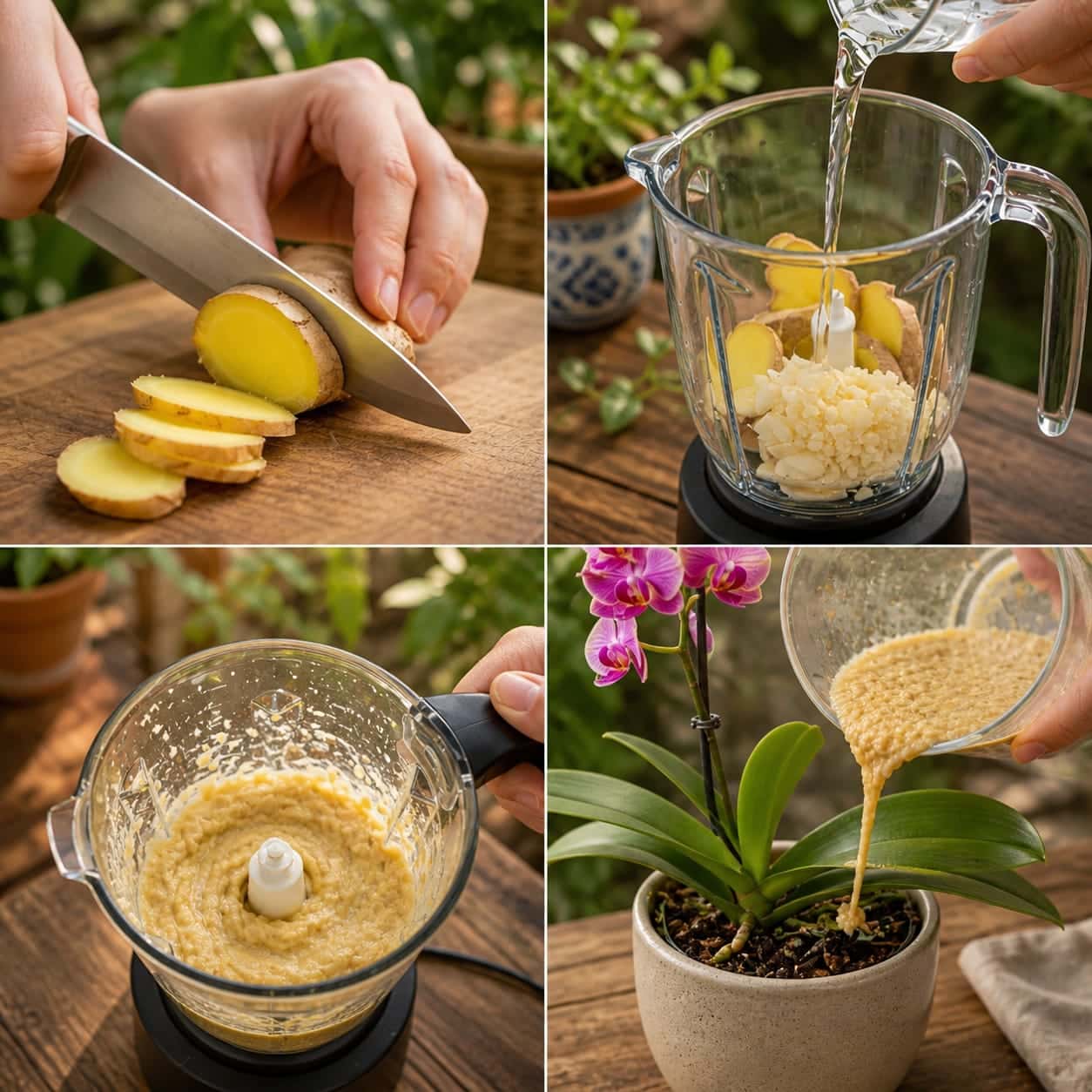
The ginger-garlic rice water orchid trick can be an interesting natural plant care method when it is prepared correctly. The ingredients in the image suggest a strong homemade root tonic, but orchids need a much gentler version. Thick paste and strong kitchen mixtures can damage the root environment, especially in a small indoor pot.
The safe method is simple: use tiny amounts, blend briefly, strain thoroughly, dilute heavily, and apply only through a draining orchid pot. Keep the mixture away from leaves, flowers, buds, and the crown. Use it rarely, and never use it on rotten roots or soggy bark.
For the best orchid results, focus first on the basics: bright indirect light, healthy roots, fresh chunky orchid mix, proper drainage, careful watering, and weak balanced feeding during active growth. This homemade tonic can be a small support step, but it should never replace proper orchid care.
When used wisely, the ginger-garlic rice water trick may help refresh the root zone and support stronger orchid growth, giving your plant a better foundation for future leaves, roots, and flower spikes.