Signs Your Jade Plant Is Overwatered
Overwatering is more dangerous than underwatering for jade plants. A jade plant can recover from slight dryness, but root rot can kill it quickly.
Signs of overwatering include:
- Yellow leaves
- Mushy leaves
- Leaves dropping easily
- Soft stems
- Black spots near the base
- Sour-smelling soil
- Fungus gnats
- Soil staying wet too long
If you see these signs, stop watering and do not apply the golden tonic. Check the roots and repot if needed.
Best Light for Jade Plants
Jade plants need bright light to stay compact and healthy. A sunny window is usually best. Without enough light, the stems stretch, leaves become smaller, and the plant loses its strong shape.
Place jade plants near a bright window with several hours of light. Morning sun is excellent. Strong afternoon sun can be fine if the plant is gradually adapted, but sudden harsh sun may scorch leaves.
If your jade plant is stretching, fertilizer will not fix it. It needs more light.
How to Keep Jade Leaves Glossy
Jade leaves naturally look glossy when the plant is healthy. Dust can dull the leaves, so wipe them gently with a soft dry or slightly damp cloth. Avoid leaf shine sprays, cooking oil, or milk.
Good leaf shine comes from:
- Bright light
- Proper watering
- Clean leaves
- Fast-draining soil
- Healthy roots
- Occasional light feeding
Do not apply the golden tonic directly to the leaves. It belongs in the soil.
Can the Golden Tonic Make a Jade Plant Grow Faster?
It may support growth during the growing season, but jade plants are naturally slow growers. A healthy jade plant does not need to grow quickly to be successful. In fact, slow compact growth is usually stronger and more attractive.
If you want faster healthy growth, focus first on light. Bright light is more important than any tonic. Then use well-draining soil, correct watering, and occasional light feeding.
The golden drop trick is a support method, not a growth shortcut.
Can This Trick Help a Leggy Jade Plant?
Not directly. A leggy jade plant is usually caused by low light. The stems stretch because the plant is reaching for brightness. Feeding a leggy plant can make it stretch even more if light is still poor.
To fix legginess:
- Move the plant to brighter light
- Prune long weak stems
- Rotate the pot regularly
- Propagate healthy cuttings
- Feed lightly only after light improves
Use the golden tonic only once the plant is growing in better conditions.
Can This Trick Help Jade Cuttings Root?
Jade cuttings root easily, but they must be handled like succulents. The cut end needs time to dry and callus before planting. Too much moisture too soon can cause rot.
If using the golden tonic for cuttings, wait until roots begin forming. Do not apply it to a fresh cutting on the first day.
Simple Jade Propagation Method
- Cut a healthy stem with clean scissors.
- Let the cut end dry for 2 to 5 days.
- Place it in dry succulent soil.
- Wait several days before watering lightly.
- Keep it in bright indirect light.
- Apply a very weak tonic only after roots begin growing.
Fresh jade cuttings need dryness first, not liquid.
When to Fertilize Jade Plants
Jade plants can be fed lightly during spring and summer. Use either a diluted succulent fertilizer or a mild homemade tonic, but do not overdo both.
A simple feeding schedule:
- Spring: light feeding once when new growth begins
- Summer: feed once every four to six weeks if actively growing
- Fall: reduce feeding
- Winter: stop feeding unless under strong grow lights
The golden tonic should count as one feeding. Do not apply it right after using commercial fertilizer.
Best Indoor Conditions for Jade Plants
| Care Factor | Best Setup | Why It Matters |
|---|---|---|
| Light | Bright window light | Keeps growth compact and strong |
| Watering | Only when soil is dry | Prevents root rot |
| Soil | Fast-draining succulent mix | Protects roots from excess moisture |
| Pot | Terracotta with drainage | Helps soil dry properly |
| Feeding | Light feeding in spring and summer | Supports steady growth |
| Humidity | Normal indoor humidity | Jade plants do not need high humidity |
| Pruning | Occasional shaping | Encourages fuller growth |
How to Prune Jade Plants for Fuller Growth
Pruning helps jade plants become bushier and stronger. If a stem is too tall or leaning, cut just above a leaf pair. New branches often grow from the nodes below the cut.
Always use clean scissors or pruners. Let cuts dry naturally. Do not water heavily right after pruning. Jade plants heal best when kept dry for a short period.
You can propagate the pieces you remove and grow new jade plants.
Can Cinnamon Be Used With This Trick?
Cinnamon can be used separately on fresh cuts if you prune the jade plant, but it should not be mixed into the golden tonic. Cinnamon is drying, while the tonic is a liquid feeding support. They serve different purposes.
If you cut a jade stem, let the wound dry and optionally dust a tiny amount of plain cinnamon on the cut. Then wait before watering.
Do not pour cinnamon water into succulent soil.
Can Coffee or Tea Be Used Instead?
Used coffee and tea can be risky for jade plants because they may hold moisture, affect soil balance, or attract pests if applied incorrectly. Jade plants prefer mineral, fast-draining soil rather than rich damp organic soil.
If you want a gentle homemade tonic, diluted banana peel and aloe water is safer than coffee grounds for jade plants.
Can Eggshell Water Help Jade Plants?
Eggshell water is sometimes used for calcium support, but jade plants do not need frequent calcium treatments. Crushed eggshells break down slowly and may not provide quick benefits.
If you use eggshell water, keep it weak and occasional. Do not combine multiple homemade treatments at the same time. Too many kitchen remedies can disturb the soil.
Signs the Golden Drop Trick Is Helping
Jade plants respond slowly, so look for gradual improvement over several weeks.
Good signs include:
- Leaves becoming firmer
- New small leaves appearing
- Stems staying upright
- Soil drying normally
- No sour smell
- No fungus gnats
- Compact new growth
- Glossy leaf surface
Do not expect overnight growth. Jade plants reward patience.
Signs You Used Too Much
Stop using the tonic if you notice:
- Sticky soil surface
- Fungus gnats
- Mold
- Yellow leaves
- Mushy leaves
- Soft stems
- Soil staying wet too long
- Bad smell from the pot
These are signs that the soil is too wet or the homemade liquid is too strong. Let the plant dry, improve light, and check the roots if the problem continues.
How to Rescue an Overwatered Jade Plant
If your jade plant has soft stems or mushy leaves, remove it from the pot and check the roots. Healthy roots are firm. Rotten roots are dark, mushy, or smelly.
Rescue Steps
- Remove the plant from wet soil.
- Trim rotten roots with clean scissors.
- Let the plant dry for a day if needed.
- Repot into dry fast-draining succulent mix.
- Use a pot with drainage holes.
- Wait several days before watering.
- Place in bright indirect light.
- Do not fertilize until new growth appears.
Do not use the golden tonic during active rot. Wait until the plant is stable.
Simple Golden Drop Routine for Jade Plants
- Soak a small piece of banana peel in 1 cup water for 2 to 4 hours.
- Remove the peel.
- Add ¼ teaspoon fresh aloe gel.
- Stir and strain well.
- Dilute 1 part tonic with 5 parts clean water.
- Check that jade plant soil is dry.
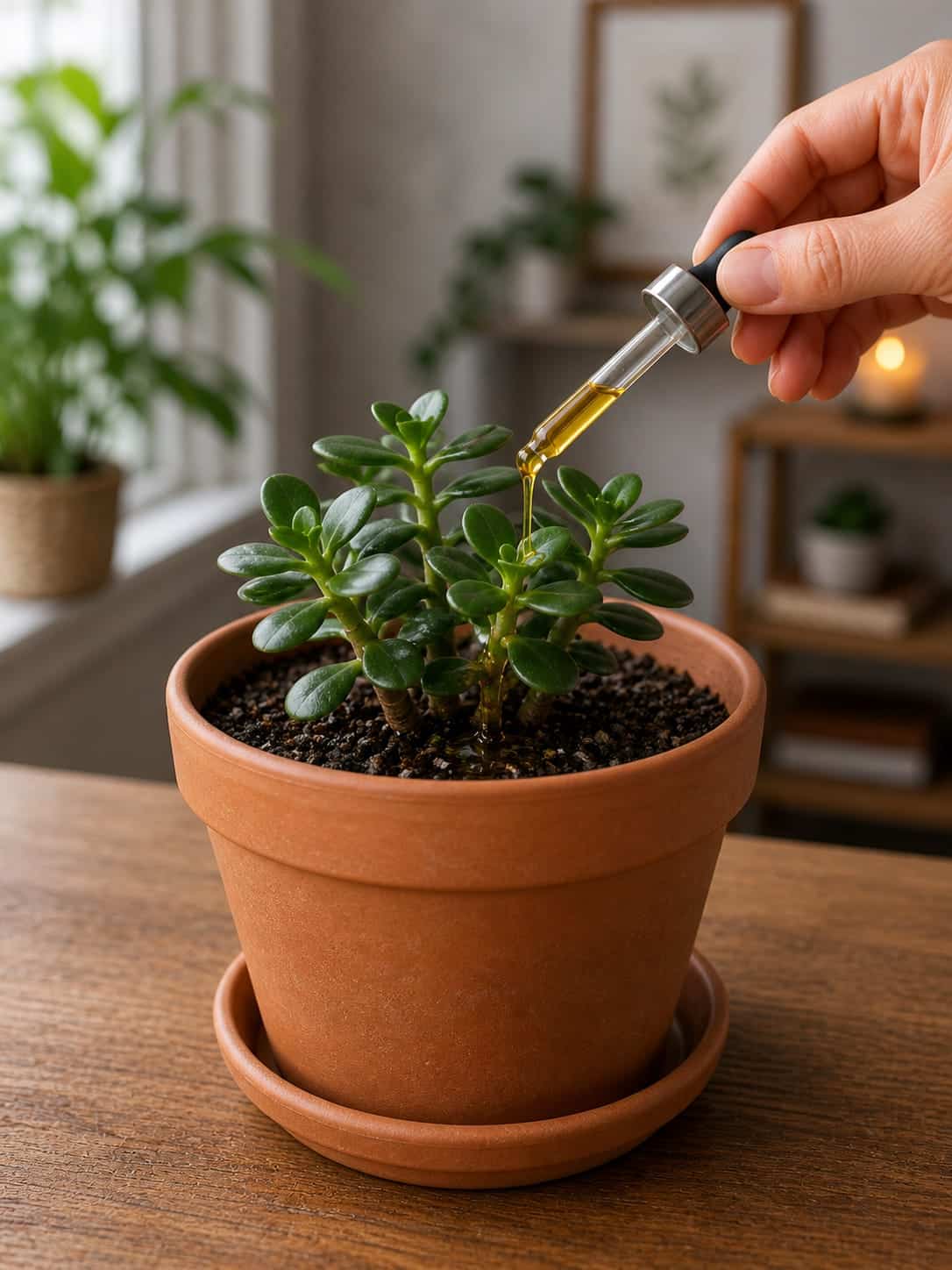
- Apply 5 to 10 drops around the soil near the roots.
- Keep liquid off the leaves.
- Use once every four to six weeks in spring or summer.
- Stop during winter or if the plant shows stress.
Common Mistakes to Avoid
- Using oil instead of watery tonic
- Applying the tonic to wet soil
- Using too much banana peel water
- Adding honey, sugar, or molasses
- Feeding every week
- Growing jade plants in heavy potting soil
- Using a pot without drainage
- Keeping the plant in low light
- Watering on a fixed schedule
- Trying to force fast growth
Short Caption for This Trick
“For a jade plant, use a gentle golden tonic made from a tiny piece of banana peel soaked briefly in water and a small amount of diluted aloe gel. Strain it, dilute it heavily, and apply only 5 to 10 drops to completely dry soil during spring or summer. Never use oil, sugar, or thick mixtures on jade plant roots.”
Frequently Asked Questions
What is the golden liquid for jade plants?
The safest version is a diluted banana peel and aloe water tonic. It should be thin, fresh, strained, and applied in tiny amounts.
Can I use oil on a jade plant?
No. Oil can coat roots, block airflow, attract pests, and damage succulent soil. Use a watery diluted tonic instead.
How often should I use the golden drop trick?
Use it once every four to six weeks during active growth in spring and summer. Do not use it weekly.
Can banana peel water help jade plants?
In very diluted amounts, banana peel water may support general plant strength. It should not be concentrated or used too often.
Can aloe help jade plant roots?
A tiny amount of diluted aloe water may support gentle root care, but thick aloe gel should not be poured into the soil.
Should I apply the tonic to wet soil?
No. Apply only when the soil is dry. Wet soil plus extra liquid can cause root rot.
Why are my jade plant leaves falling off?
Common causes include overwatering, low light, sudden temperature changes, poor drainage, or root rot.
Why are jade plant leaves wrinkled?
Wrinkled leaves usually mean the plant is thirsty, but check that the soil is dry and the roots are healthy before watering.
What is the best soil for jade plants?
Use a fast-draining succulent mix with perlite, pumice, coarse sand, or lava rock. Avoid heavy moisture-retaining soil.
Can this trick make jade plants grow faster?
It may support growth, but jade plants naturally grow slowly. Bright light, correct watering, and good soil are more important than any tonic.
Final Thoughts
The golden drop trick is a gentle way to support jade plant growth when used with care. A diluted banana peel and aloe tonic can provide a mild boost during the growing season, helping support firm leaves, strong stems, and healthy roots. The dropper method makes the trick safer because it prevents overwatering and gives the plant only a tiny amount at a time.
But jade plants do not need heavy feeding. They need bright light, dry periods between watering, fast-draining succulent soil, and a pot with drainage. Homemade plant food only helps when these basics are already correct.
Use the golden liquid sparingly. Keep it fresh, strain it well, dilute it heavily, and apply only a few drops to dry soil. Avoid oil, sugar, honey, thick banana mixtures, and frequent feeding. With patience and balanced care, your jade plant can grow into a glossy, sturdy, long-lived indoor succulent that looks better every year.