Can Green Tablet Water Fix Brown Leaf Tips?
No. Brown tips will not turn green again. Brown tips on anthuriums are often caused by inconsistent watering, low humidity, fertilizer burn, mineral buildup, or root stress. For healthy anthurium leaf care, address the underlying cause.
To reduce brown tips:
- Use filtered or rested water if tap water is harsh
- Keep humidity moderate
- Avoid overfertilizing
- Water when the top inch dries
- Use airy soil
- Flush the pot occasionally
Trim brown tips only for appearance, using clean scissors.
Can Green Tablet Water Replace Fertilizer?
No. Spirulina water is not a complete fertilizer. It can be a gentle supplement, but anthuriums may still benefit from a balanced houseplant fertilizer or anthurium fertilizer at low strength. For best anthurium feeding routine, use a combination approach.
A good routine is:
- Use balanced liquid fertilizer at quarter strength every 4 to 6 weeks during active growth
- Use green tablet water occasionally instead of fertilizer, not on the same day
- Flush soil with plain water from time to time to reduce buildup
- Stop feeding during low-light winter periods
Never combine several feeding tricks at once.
How to Combine Green Tablet Water With Regular Fertilizer
If you already use a commercial fertilizer, keep the green tonic separate. This balanced indoor plant feeding plan prevents nutrient overload.
Safe Feeding Rotation
- Week 1: plain water
- Week 3 or 4: weak fertilizer
- Week 6 or 8: green tablet water
- Next watering: plain water
This prevents nutrient overload and keeps the roots safer.
What If the Soil Smells Bad After Using It?
If the pot smells sour or unpleasant after using green tablet water, the mixture may have been too strong or the soil may be staying too wet. Quick action protects your anthurium investment.
Fix Steps
- Stop using the green tonic.
- Remove any residue from the soil surface.
- Let the soil dry slightly.
- Improve airflow.
- Check for fungus gnats.
- If smell continues, inspect the roots.
- Repot if the soil is sour or compacted.
Healthy anthurium soil should smell earthy, not sour or rotten.
How to Repot an Anthurium With Root Problems
If your anthurium has yellow leaves, wet soil, and root rot, repotting may be necessary. This emergency anthurium rescue method saves many plants.
- Remove the plant gently from the pot.
- Shake away old wet soil.
- Cut off mushy brown roots with clean scissors.
- Keep firm white, tan, or light brown roots.
- Prepare a chunky airy soil mix.
- Repot at the same depth.
- Water lightly after repotting.
- Keep in bright indirect light.
Do not use green tablet water immediately after repotting. Let the plant recover first.
Humidity for Anthuriums
Anthuriums appreciate moderate to high humidity. Dry air can cause crispy edges and dull leaves. Maintaining optimal humidity for anthuriums is key to vibrant foliage.
Ways to improve humidity:
- Group plants together
- Use a humidifier
- Place the plant away from heaters
- Use a pebble tray carefully
- Keep consistent watering
Misting can help briefly, but it does not replace stable humidity. Avoid misting flowers heavily.
Temperature for Anthuriums
Anthuriums prefer warm indoor temperatures. Keep them away from cold drafts, air conditioners, open winter windows, and sudden temperature swings. Proper temperature is a basic anthurium care requirement.
Best temperature range:
- 65°F to 80°F
- 18°C to 27°C
Cold stress can cause yellowing, drooping, and fewer blooms.
How to Keep Anthurium Flowers Longer
Anthurium blooms can last a long time when the plant is stable. To keep flowers looking fresh, follow these long-lasting anthurium bloom tips:
- Provide bright indirect light
- Avoid direct hot sun
- Keep soil lightly moist
- Avoid overfeeding
- Do not spray flowers with tonics
- Remove fading blooms
- Maintain warm temperatures
When a spathe turns brown or green with age, cut the flower stem near the base.
How to Prune Anthuriums
Pruning keeps anthuriums clean and helps direct energy toward fresh growth. This anthurium pruning guide keeps your plant tidy.
Remove:
- Dead leaves
- Yellow leaves
- Brown flower stems
- Damaged foliage
- Rotting stems
Pruning Steps
- Use clean sharp scissors.
- Cut damaged leaves near the base.
- Remove old flower stems after they fade.
- Do not cut healthy leaves unnecessarily.
- Keep the crown clean and dry.
Green Tablet Anthurium Care Table
| Care Factor | Safe Method | Why It Matters |
|---|---|---|
| Green tablet tonic | 1 tablet per 1 liter water | Gentle organic support |
| Application | Soil only | Prevents leaf residue |
| Frequency | Every 4 to 6 weeks max | Avoids buildup |
| Light | Bright indirect | Supports blooms |
| Watering | When top inch dries | Prevents root rot |
| Soil | Chunky airy mix | Protects roots |
| Humidity | Moderate to high | Reduces crispy edges |
Simple Green Tablet Anthurium Recipe
Ingredients
- 1 plain spirulina or chlorella tablet
- 1 liter clean water
Instructions
- Crush the green tablet into powder.
- Mix it into 1 liter of water.
- Stir until lightly green.
- Strain if gritty.
- Apply a small amount to the outer soil edge.
- Keep away from leaves, flowers, and crown.
- Let the pot drain fully.
- Use once every 4 to 6 weeks during active growth.
Common Mistakes to Avoid
- Putting whole tablets directly into the pot
- Using too many tablets
- Making a dark concentrated mixture
- Applying it every week
- Pouring it on flowers
- Spraying it on leaves
- Using tablets with sugar or additives
- Using it on wet soil
- Feeding a plant with root rot
- Combining it with strong fertilizer
Signs the Green Tablet Trick Is Helping
Anthuriums do not transform overnight. Look for gradual improvement. These are positive indicators of anthurium health.
Good signs include:
- Leaves stay glossy
- New leaves emerge strong
- Roots remain healthy
- No sour smell
- No fungus gnats
- Flowers last longer
- New blooms appear during active growth
- Soil dries at a normal pace
Signs You Should Stop Using It
Stop using green tablet water if you notice:
- Mold on soil
- Fungus gnats
- Sour smell
- Sticky residue
- Yellow leaves after feeding
- Brown tips spreading
- Soil staying wet too long
- Root rot symptoms
Return to plain water and check the roots if the plant declines.
Short Caption for This Trick
“For anthuriums, use green tablets only as a diluted soil tonic: crush 1 plain spirulina or chlorella tablet into 1 liter of water, stir well, and apply a small amount around the outer soil edge. Keep it away from leaves, flowers, and crown. Use once every 4 to 6 weeks during active growth.”
Frequently Asked Questions
Are green tablets good for anthuriums?
Plain spirulina or chlorella tablets can be used as a mild natural soil tonic when diluted properly. They should not be placed directly into the pot.
Can spirulina water make anthuriums bloom?
It may support plant health, but it does not directly force blooms. Bright indirect light, healthy roots, humidity, and balanced feeding are more important.
How do I make green tablet fertilizer for plants?
Crush 1 plain green tablet into 1 liter of water, stir well, strain if needed, and apply lightly to the soil.
How often should I use green tablet water?
Use it once every 4 to 6 weeks during spring and summer. Avoid frequent use.
Can I put spirulina tablets directly in the soil?
No. Whole tablets may clump, smell, attract pests, or create concentrated spots. Dissolve them in water first.
Can I spray green tablet water on leaves?
It is better not to. It may leave residue on glossy leaves. Use plain water and a soft cloth for leaf cleaning.
Can green tablet water fix yellow leaves?
Only if yellowing is related to mild nutrient weakness. If the cause is overwatering or root rot, it will not help and may make things worse.
Is spirulina a complete fertilizer?
No. It is a natural supplement, not a complete fertilizer. Anthuriums may still need balanced fertilizer at low strength.
Can I use chlorella tablets instead of spirulina?
Yes, if they are plain and free from additives, sweeteners, salt, or flavoring.
Should I use this trick in winter?
Usually no. Avoid feeding during winter unless the plant is actively growing in warm bright conditions.
Final Thoughts
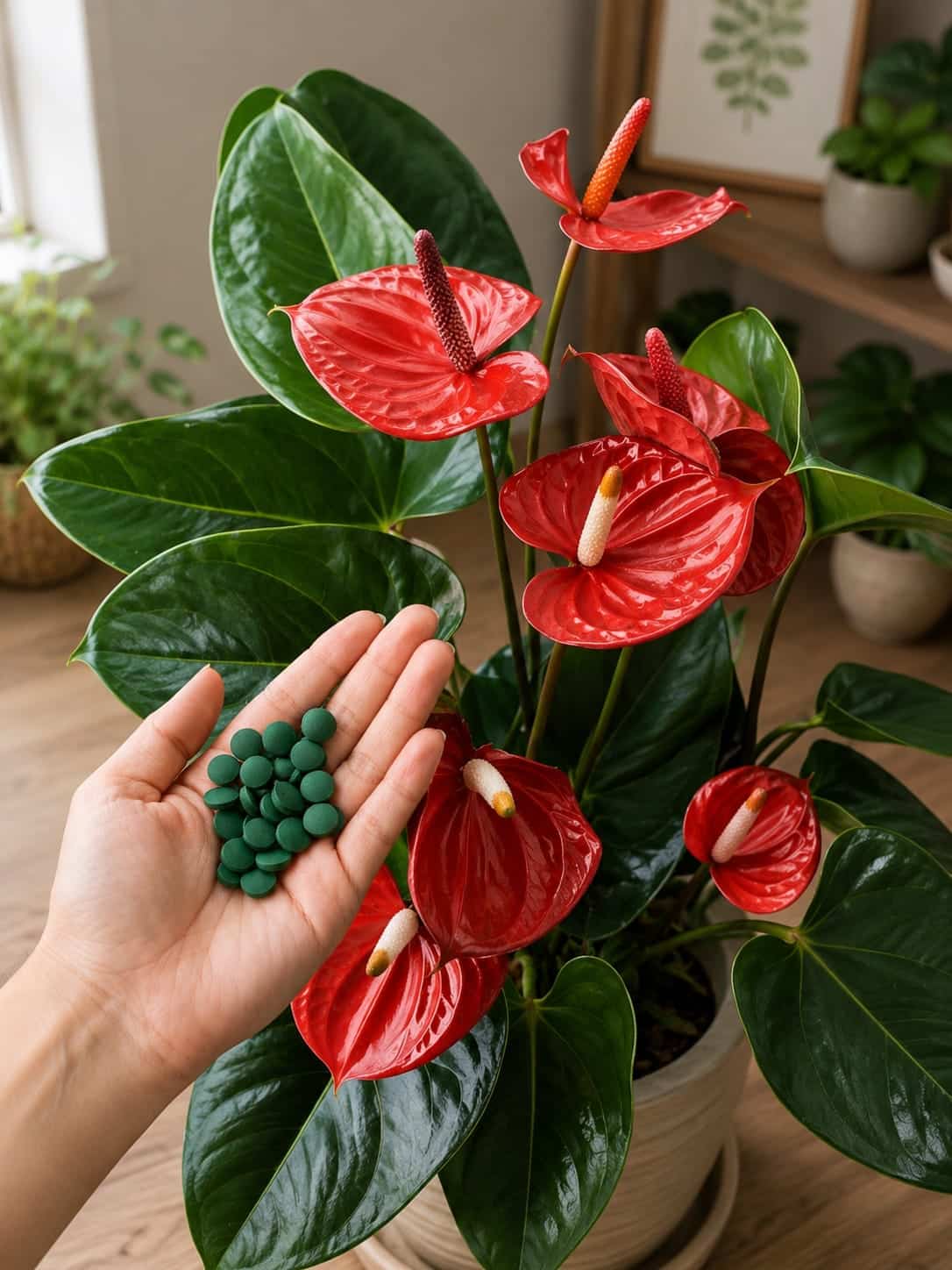
The green tablet trick can be a useful natural support method for anthuriums when it is used carefully. The tablets in the image are best treated as spirulina or chlorella tablets, which can be dissolved into water to create a mild green plant tonic. This natural anthurium fertilizer alternative is gaining popularity among indoor gardeners.
The safe method is simple: crush one plain green tablet into one liter of water, stir well, dilute if needed, and apply only a small amount to the soil. Keep it away from flowers, leaves, and the crown. Do not bury whole tablets in the pot, and do not use the tonic too often. Following this complete anthurium care guide will keep your plant thriving.
Anthuriums bloom best when their roots are healthy, their soil is airy, their light is bright but indirect, and their moisture stays balanced. A green tonic can support glossy leaves and steady growth, but it cannot replace proper care. These professional indoor plant care secrets will help you succeed.
Used wisely, this gentle green tablet method may help your anthurium maintain strong roots, shiny foliage, and long-lasting red blooms. Used too heavily, it can create residue, odor, pests, and root stress. With anthuriums, the secret is always gentle feeding, clean soil, and steady tropical care. Enjoy your beautiful, flowering anthurium for years to come.