Can Honey Water Replace Fertilizer?
No. Honey water is not a complete fertilizer. It does not provide balanced nutrients for long-term jade plant growth. It may support soil activity in small amounts, but jade plants still need minerals that honey does not provide. For best jade plant feeding routine, use a dedicated succulent fertilizer.
For regular feeding, use a diluted succulent fertilizer during active growth.
Safe Fertilizer Routine
- Use half-strength succulent fertilizer
- Feed once in spring
- Feed once in summer if needed
- Do not fertilize in winter
- Do not fertilize a sick or rotting plant
Do not use honey water and fertilizer at the same time. Alternate them if needed.
How to Make Jade Plants Bushier
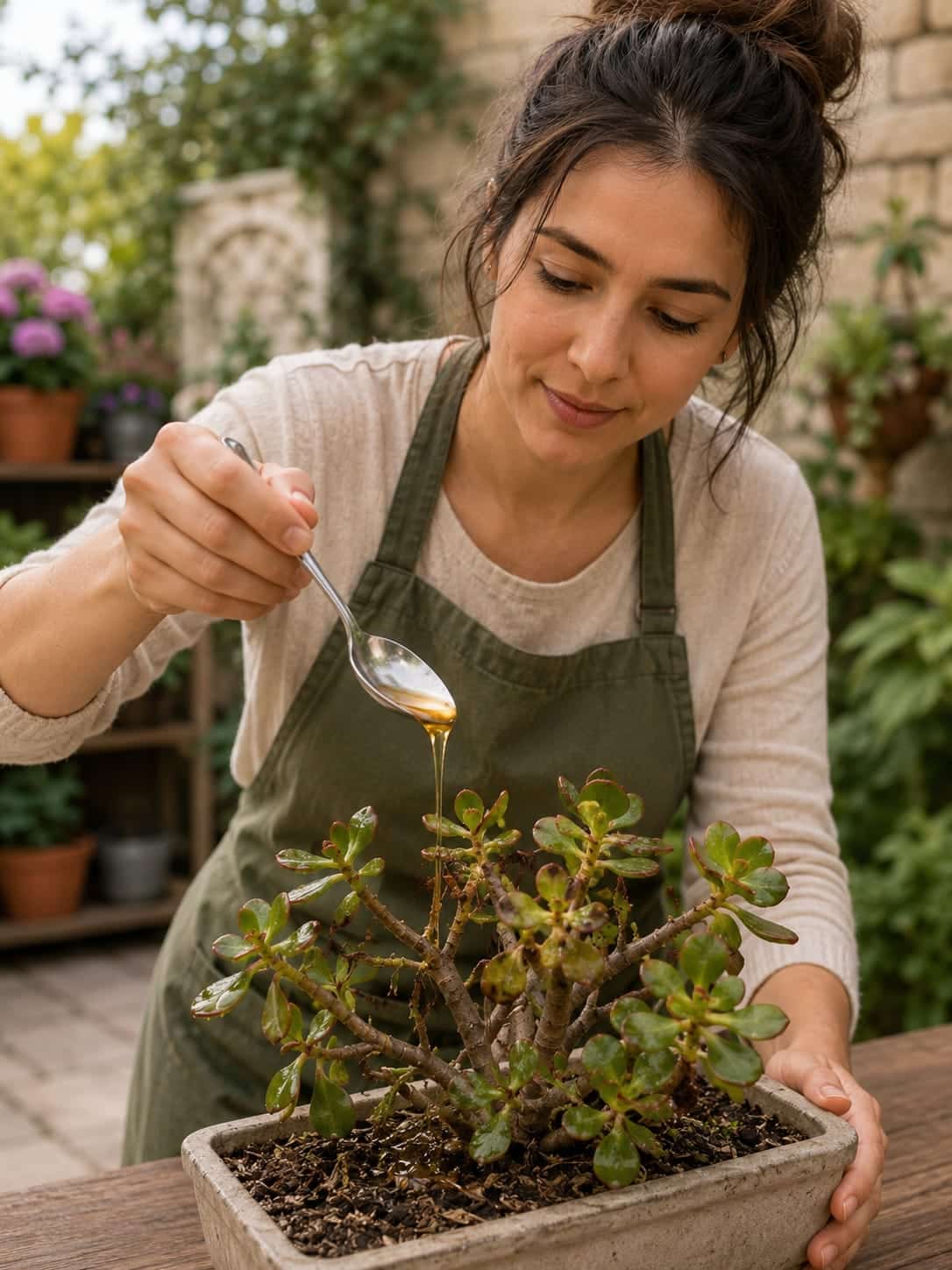
The jade plant in the image has woody stems and a somewhat open structure. To make a jade plant fuller, pruning is often more effective than feeding. This jade plant pruning guide will help you shape your plant.
Pruning Tips
- Prune in spring or early summer
- Cut above a leaf node
- Remove leggy stems
- Keep healthy cuttings for propagation
- Provide bright light after pruning
- Do not overwater after cutting
Jade plants usually branch from below the cut, creating a fuller shape over time.
How to Clean Jade Plant Leaves
Jade leaves look best when they are clean and glossy. Dust can block light and reduce shine. Regular jade plant leaf cleaning improves photosynthesis and appearance.
Leaf Cleaning Method
- Use a soft damp cloth.
- Support the stem gently.
- Wipe each leaf carefully.
- Do not use oily leaf shine products.
- Keep water out of crowded stem joints.
Clean leaves help the plant absorb light more efficiently.
Common Jade Plant Problems
| Problem | Likely Cause | Best Fix |
|---|---|---|
| Wrinkled leaves | Underwatering or root damage | Check soil and roots |
| Mushy leaves | Overwatering | Dry soil and inspect roots |
| Leaf drop | Water stress or low light | Improve light and watering |
| Leggy stems | Not enough light | Move to brighter location |
| Brown spots | Sunburn, pests, or rot | Inspect plant carefully |
| Sticky soil after tonic | Too much honey | Remove top soil and stop use |
When Not to Use Honey Water
Do not use honey water if the jade plant is already stressed by moisture problems or pests. Avoid these common succulent care mistakes.
Avoid honey water if:
- The soil is wet
- The plant has root rot
- The stem base is soft
- Ants are present
- Fungus gnats are present
- Mold is on the soil
- The pot has no drainage
- The room is cold
- The plant is in low light
- It is winter
In these cases, honey water is more likely to cause problems than help.
Honey Water vs. Aloe Water for Jade Plants
Both honey water and aloe water are used as natural plant tonics, but they serve slightly different purposes. This natural plant tonic comparison helps you choose.
| Tonic | Best Use | Main Risk |
|---|---|---|
| Honey water | Occasional root-zone support | Ants, mold, sticky soil |
| Aloe water | Cuttings and stress support | Residue if too thick |
| Succulent fertilizer | Balanced seasonal feeding | Burn if too strong |
For regular jade plant care, a diluted succulent fertilizer is more reliable. Honey water should remain occasional.
Simple Honey Water Jade Plant Recipe
Ingredients
- ¼ teaspoon honey
- 1 cup water
Instructions
- Dissolve honey fully in water.
- Use only when the soil is dry.
- Apply 1 to 2 tablespoons around the outer soil edge.
- Keep away from the stem base.
- Let the pot drain if extra moisture reaches the bottom.
- Wait until soil dries completely before watering again.
- Use only once every 2 to 3 months during spring or summer.
Common Mistakes to Avoid
- Pouring pure honey onto the soil
- Using honey water weekly
- Applying it to wet soil
- Pouring it against the stem base
- Using it on root rot
- Using too much in a small pot
- Leaving sticky liquid on leaves
- Using it in winter
- Combining it with strong fertilizer
- Ignoring light and drainage problems
Signs the Honey Water Trick Is Helping
Jade plants respond slowly. Do not expect overnight growth. Look for gradual improvement. These are positive indicators of jade plant health.
Good signs include:
- Leaves remain firm
- New growth appears during spring or summer
- Stems stay strong
- No mold appears
- No ants or gnats appear
- Soil dries normally
- Plant looks more stable over time
Signs You Should Stop Using Honey Water
Stop immediately if you notice:
- Ants in the pot
- Fungus gnats
- White mold on soil
- Sticky soil surface
- Sour smell
- Yellowing leaves after use
- Mushy stems
- Soil staying wet too long
Remove the top layer of soil if needed and return to plain water only.
Short Caption for This Trick
“For jade plants, never pour pure honey into the pot. Make a safe honey tonic by mixing ¼ teaspoon honey with 1 cup water. Apply only 1 to 2 tablespoons around the dry outer soil edge, keep it away from the stem base, and use rarely during spring or summer.”
Frequently Asked Questions
Is honey good for jade plants?
Diluted honey water can be used occasionally as a gentle root-zone tonic, but pure honey should never be poured directly into jade plant soil.
Can honey water make jade plants grow faster?
Not directly. Jade plants grow faster with bright light, fast-draining soil, correct watering, and warm temperatures. Honey water is only a mild support trick.
How much honey should I use for plants?
For jade plants, use only ¼ teaspoon honey mixed into 1 cup water. Apply a small amount, not the whole cup.
Can honey attract ants in plant pots?
Yes. If the mixture is too strong or spilled on the soil surface, honey can attract ants and pests.
Can I use honey on jade cuttings?
Yes, but only lightly and after the cutting has callused. Do not put fresh wet cuttings into honey or wet soil.
How often should I use honey water?
Use it once every 2 to 3 months during spring or summer at most. Do not use it weekly.
Can honey water fix root rot?
No. Root rot must be fixed by removing rotten roots, drying the plant, and repotting into fast-draining soil.
Why are my jade plant leaves falling off?
Leaf drop usually comes from overwatering, underwatering, low light, sudden temperature changes, or root problems.
Does a jade plant need direct sunlight?
Jade plants like bright light and can handle gentle direct sun, especially morning sun. Introduce stronger sun gradually.
What is the best fertilizer for jade plants?
A diluted succulent fertilizer used once or twice during spring and summer is usually the safest regular feeding option.
Final Thoughts
The honey water trick can be useful for jade plants only when it is done carefully. The golden liquid in the image may look like a powerful natural fertilizer, but pure honey is too sticky and concentrated for succulent soil. Used incorrectly, it can attract ants, fungus gnats, mold, and root problems. This natural succulent care method works only with restraint.
The safe method is to dilute honey heavily: ¼ teaspoon honey in 1 cup water. Apply only a small amount around the outer soil edge when the soil is dry, keep it away from the stem base, and use it rarely during active growth. Never use honey water on wet soil, root rot, or a plant with pests. Follow this complete jade plant care guide for long-term success.
For long-term jade plant health, the real secrets are bright light, gritty soil, drainage holes, careful watering, and occasional pruning. Honey water can be a gentle bonus, but it should never replace proper succulent care. These professional indoor plant care secrets will keep your jade thriving for decades.
Used wisely, this simple golden tonic may support healthy roots, firm leaves, and steady growth. Used too often, it can create sticky soil and pest problems. With jade plants, the best approach is always light feeding, dry soil cycles, and patience. Enjoy your beautiful, long-lived jade plant.