How Often to Use the Lemon Trick – Best Feeding Schedule for Snake Plants
This is not a weekly treatment. Snake plants do not need frequent acidic water. Too much lemon water can disturb the soil and stress the roots. Following a natural snake plant feeding schedule prevents overuse.
Use this method no more than once every 6 to 8 weeks. For many plants, once or twice during the growing season is enough.
Do not use lemon water in winter unless the plant is actively growing in a warm, bright room. In winter, snake plants use less water and nutrients, so extra treatments are more likely to cause problems.
What Results Should You Expect? – Realistic Snake Plant Recovery
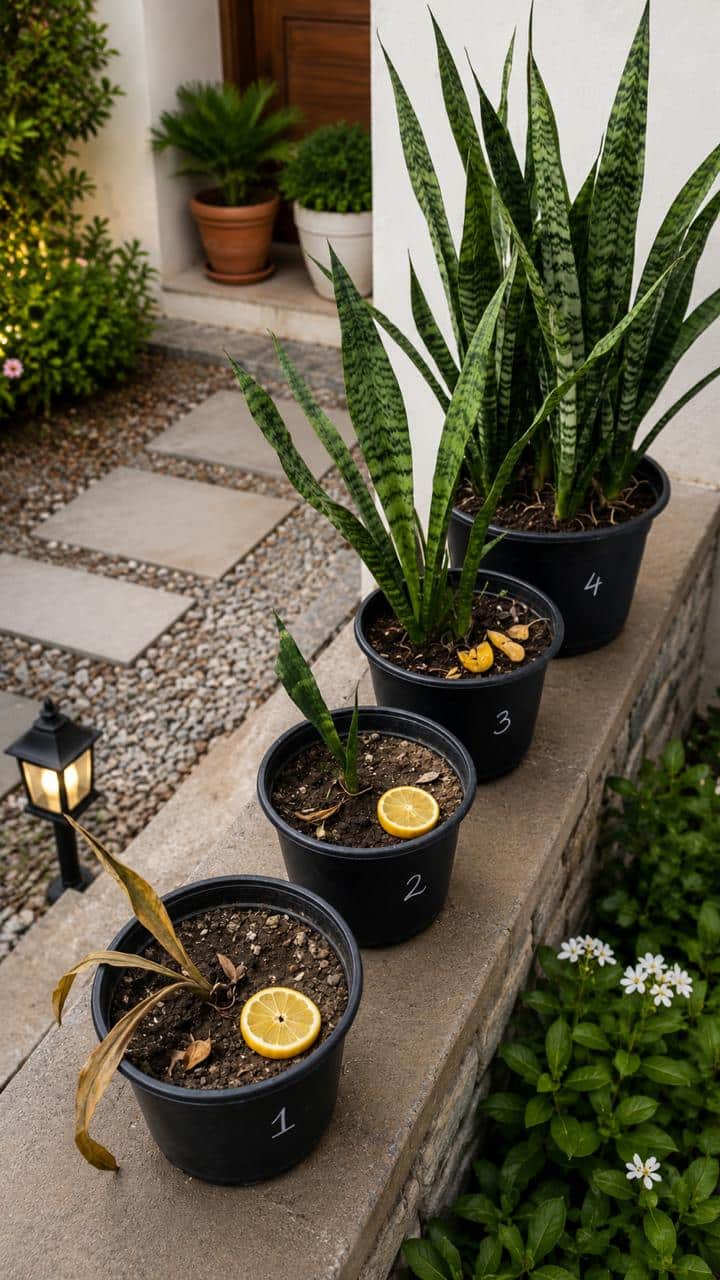
The image suggests a dramatic transformation from a weak snake plant to a full healthy one. In real plant care, recovery depends on the original problem. If the plant is yellow because of old leaves or root damage, lemon water will not reverse the old damage. If the plant is weak because of poor soil, it may need repotting more than any liquid trick. This realistic snake plant recovery expectations guide will help you stay patient.
Realistic results include:
- The plant may stop declining
- The soil may feel fresher
- Leaves may stay firmer after proper watering
- New growth may appear later if care improves
- The plant may look stronger over several months
Do not expect yellow leaves to turn green again. Snake plant recovery is about future growth, not repairing dead tissue.
Why the First Plant in the Image Looks Weak – Diagnosing Severe Decline
The first pot in the image shows a snake plant that appears dry, yellow, and nearly dead. This could be caused by several problems, including underwatering, long-term neglect, root damage, old soil, or heat stress. It could also be a plant with damaged roots that can no longer absorb water properly. Understanding why snake plants turn yellow and dry helps you choose the right action.
For a plant in that condition, the lemon trick alone is not enough. You should first check whether any rhizomes are still firm. If the base of the plant is completely dried or rotten, you may need to propagate healthy pieces or replace the plant.
If the rhizome is still firm, remove dead leaves, repot into fresh cactus mix, water carefully, and place it in bright indirect light.
Why the Fourth Plant Looks Healthy – The Result of Consistent Care
The fourth plant in the image is full, upright, and green. That kind of growth usually comes from good long-term care, not from lemon alone. A healthy snake plant has strong rhizomes below the soil. It has enough light, enough root space, and a watering routine that allows the soil to dry between waterings.
To get your plant from stage one to stage four, focus on these basics:
- Fresh fast-draining soil
- Correct pot size
- Proper drainage
- Bright indirect light
- Careful watering
- Light seasonal feeding
- Patience
The lemon trick is only a small optional step.
Best Soil Mix for Snake Plants – Fast-Draining Recipe
If your snake plant is struggling, soil may be the real issue. Snake plants need a loose, gritty, fast-draining mix. Regular indoor potting soil can hold too much moisture, especially in deep ceramic pots. Choosing the best potting mix for snake plants is half the battle.
Simple Snake Plant Soil Recipe
- 2 parts cactus or succulent mix
- 1 part perlite or pumice
- 1 part coarse sand or orchid bark
This mixture improves drainage and airflow around the roots. Healthy roots are the foundation of healthy leaves.
When to Repot Instead of Using Lemon Water – Signs You Need Fresh Soil
Sometimes the best trick is not lemon. It is fresh soil. If the soil is old, compacted, salty, moldy, or water-repellent, repotting will help more than any homemade liquid. This when to repot a snake plant guide helps you decide.
Repot your snake plant if:
- The soil is hard and crusty
- Water does not soak in evenly
- The pot has no drainage
- The roots are crowded
- The plant has not been repotted for years
- The soil smells sour
- You see fungus gnats often
- The leaves keep yellowing despite careful watering
When repotting, remove old compacted soil from around the roots gently. Cut away any rotten roots. Let damaged rhizomes dry before replanting.
How to Water Snake Plants Correctly – The Most Important Skill
Most snake plant problems come from watering mistakes. Some people overwater because they treat snake plants like tropical foliage plants. Others underwater for too long because they hear snake plants like neglect. This snake plant watering guide for beginners will help you find the right balance.
The best method is balanced: water deeply, then let the soil dry well before watering again.
Watering Guide
- Spring and summer: water when soil is dry halfway down
- Fall and winter: water when soil is almost completely dry
- Low light rooms: water less often
- Bright warm rooms: water slightly more often
- Small pots: check more often
- Large pots: check carefully because the bottom stays wet longer
Always empty the saucer after watering.
Best Light for Snake Plant Growth – Optimal Placement
Snake plants can survive in low light, but survival is not the same as strong growth. If you want fuller leaves and new shoots, give your snake plant bright indirect light. Providing optimal light for snake plant health is essential.
Good locations include:
- Near an east-facing window
- A few feet from a south-facing window
- Bright room with filtered sunlight
- Covered patio with shade
- Bright office window
- Under a grow light
Avoid suddenly placing a weak snake plant in harsh afternoon sun. The leaves can scorch, especially if the plant was grown indoors.
Should You Fertilize Along With Lemon Water? – Keep Them Separate
No, do not use fertilizer and lemon water at the same time. Snake plant roots can be sensitive when stressed. Combining multiple treatments may create soil imbalance. This best fertilizer for snake plants should be used separately.
If you want to fertilize, use a diluted cactus fertilizer or balanced houseplant fertilizer during spring or summer. Use it at half strength or quarter strength. Snake plants do not need heavy feeding.
Safe Feeding Routine
- Feed only during active growth
- Use diluted fertilizer
- Apply only to moist soil
- Do not fertilize sick roots
- Do not feed in winter in low light
- Do not combine with lemon water
Natural Alternatives That Are Safer Than Lemon – Better Soil Amendments
If your goal is soil improvement, there are safer natural options than lemon slices. This natural snake plant care guide offers gentle alternatives.
Worm Castings
A thin layer of worm castings on top of the soil can gently improve nutrition without burning roots. Use only a small amount.
Fresh Cactus Mix
Sometimes replacing old soil is the best solution. Fresh soil improves drainage and root oxygen.
Perlite or Pumice
Adding perlite or pumice improves airflow and prevents soil from staying wet too long.
Filtered Water
If your tap water is very hard, using filtered water occasionally may reduce mineral buildup.
Bottom Watering
If the soil is extremely dry and repels water, bottom watering for 15 to 20 minutes can help rehydrate the root zone.
Common Mistakes With the Lemon Trick – What to Avoid
Many people damage plants by using home remedies too strongly. With snake plants, less is usually better. Avoid these common snake plant care mistakes for success.
Mistake 1: Using Pure Lemon Juice
Pure lemon juice is too acidic for snake plant roots. Never pour it directly into the pot.
Mistake 2: Leaving Lemon Slices on Soil
This can attract pests and mold. Remove lemon pieces after preparing the infusion.
Mistake 3: Using It on Wet Soil
If soil is wet, adding more liquid increases the risk of root rot.
Mistake 4: Repeating Weekly
Snake plants do not need frequent acidic treatments. Use rarely.
Mistake 5: Ignoring Drainage
No trick can save a snake plant in a pot without drainage if watering is not controlled.
Mistake 6: Expecting Instant Results
Snake plants grow slowly. Recovery takes time.
How to Rescue a Snake Plant That Looks Like Stage 1 – Emergency Plan
If your snake plant looks like the first pot in the image, follow this rescue plan before trying any lemon trick. This how to save a dying snake plant guide is your first step.
- Remove all fully dead leaves.
- Check whether the base is firm or mushy.
- Remove the plant from the pot if you suspect root rot.
- Cut away rotten roots or rhizomes.
- Let healthy rhizomes dry for 24 hours.
- Repot into fresh cactus mix.
- Use a pot with drainage holes.
- Place in bright indirect light.
- Wait several days before watering if roots were cut.
- Water lightly only when the soil is dry.
After the plant stabilizes, you may use a very weak lemon peel water once, but it is optional.
How to Encourage New Snake Plant Shoots – Growing Pups
New snake plant shoots, also called pups, grow from underground rhizomes. To encourage pups, the plant needs steady care, not constant disturbance. This how to get snake plant pups guide will help.
Encourage new growth by:
- Providing bright indirect light
- Using a snug pot, not an oversized pot
- Keeping soil fast-draining
- Watering properly
- Feeding lightly during spring and summer
- Keeping temperatures warm
- Avoiding repeated stress treatments
Snake plants often grow better when slightly root-bound. Do not move them into a huge pot too early.
Can Lemon Water Kill Fungus Gnats? – No, Use Better Methods
Lemon scent may seem like it would repel pests, but lemon slices in soil can actually attract fungus gnats if they begin to decay. Fungus gnats love moist organic matter. For natural fungus gnat control for snake plants, use targeted methods.
If you have fungus gnats, use better methods:
- Let soil dry more between waterings
- Use yellow sticky traps
- Remove rotting organic matter
- Replace the top layer of soil
- Use mosquito bits if needed
- Improve drainage
Do not rely on lemon slices for pest control.
Can Lemon Water Change Soil pH? – Possible but Unnecessary
Lemon is acidic, so strong lemon water can temporarily lower pH near the soil surface. Snake plants generally prefer neutral to slightly acidic or slightly alkaline conditions and are not plants that require strong acidity.
Using too much lemon can disturb the potting mix. That is why the infusion must be weak, diluted, and used rarely.
Safe Lemon Trick Summary – Quick Reference Table
| Step | Safe Method | Why It Matters |
|---|---|---|
| Check soil | Use only when dry | Prevents overwatering |
| Use lemon | Peel or thin slice only | Avoids strong acidity |
| Soak time | 2 to 4 hours | Keeps infusion mild |
| Dilution | 1 cup infusion + 2 cups water | Protects roots |
| Application | Outer soil edge only | Keeps crown dry |
| Frequency | Every 6 to 8 weeks at most | Avoids soil stress |
Quick Step-by-Step Recipe Card – How to Make Safe Lemon Water
Ingredients
- 1 liter water
- 1 small lemon peel or 1 thin lemon slice
- Extra plain water for dilution
Method
- Check that your snake plant soil is dry enough to water.
- Add the lemon peel or thin slice to 1 liter of water.
- Let it sit for 2 to 4 hours.
- Remove and discard the lemon piece.
- Strain the water.
- Mix 1 cup of the lemon water with 2 cups of plain water.
- Pour a small amount around the outer soil edge.
- Keep the plant crown dry.
- Let the pot drain completely.
- Repeat only rarely.
Short Caption for This Trick
“To use the lemon trick safely on a snake plant, do not bury lemon slices in the soil. Make a weak lemon peel water by soaking one small peel or thin slice in 1 liter of water for 2 to 4 hours, dilute it again, and apply a small amount only around the outer edge of dry soil. Keep the crown dry and repeat rarely – this natural snake plant tonic is gentle when done correctly.”
Frequently Asked Questions – Lemon Water for Snake Plants Q&A
Can I put lemon slices directly in snake plant soil?
It is better not to leave lemon slices in the soil. They can rot, attract pests, and create mold. Use a weak lemon peel water instead.
Is lemon water good for snake plants?
Only when it is extremely diluted and used rarely. Strong lemon water can stress roots and disturb the soil.
Can lemon revive a dying snake plant?
Lemon alone cannot revive a dying plant. A snake plant needs healthy roots, proper watering, drainage, light, and fresh soil if the old soil is damaged.
How often should I use lemon water?
No more than once every 6 to 8 weeks, and only when the soil is dry enough to water.
Can lemon water replace fertilizer?
No. Lemon water is not a fertilizer. It does not provide complete nutrients for snake plant growth.
Will yellow snake plant leaves turn green again?
No. Fully yellow leaves usually do not turn green again. Look for new healthy growth instead.
What should I do if my snake plant is mushy?
Do not use lemon water. Remove the plant from the pot, inspect the roots, cut away rot, and repot into dry cactus mix.
Can lemon water attract bugs?
Lemon slices left in soil can attract pests as they decay. A strained, diluted lemon water used rarely is safer.
What is the best soil for snake plants?
A fast-draining cactus or succulent mix with added perlite, pumice, coarse sand, or orchid bark is best.
What is the real secret to a healthy snake plant?
The real secret is fast-draining soil, drainage holes, bright indirect light, and watering only when the soil dries well.
Final Thoughts – The Best Way to Use Lemon for Snake Plants
The lemon slice trick is eye-catching, simple, and easy to understand, but it must be used carefully with snake plants. Fresh lemon slices should not be buried or left on the soil because they can rot, attract insects, and disturb the root zone. The safer method is a weak lemon peel water, diluted again, applied only occasionally, and only when the soil is dry enough to water. This natural snake plant revival guide emphasizes gentleness over gimmicks.
For real snake plant recovery, focus on the basics first. Check the roots. Use a pot with drainage holes. Replace compacted soil with a cactus mix. Give the plant bright indirect light. Water deeply but rarely. Avoid heavy fertilizer and strong homemade mixtures. Following this complete snake plant care guide will keep your plant thriving for years.
If your snake plant is weak like the first pot in the image, lemon alone will not create the full plant shown in the fourth pot. But when used gently as part of a complete care routine, the mild lemon water method can be a small natural step in refreshing the soil and supporting a healthier indoor plant care routine. These professional indoor plant care secrets will help you succeed.
The best results come from patience. Snake plants grow slowly, but when their roots are healthy and their environment is stable, they can produce strong upright leaves, fresh pups, and beautiful green growth that lasts for years.