Why Orchid Roots Matter More Than Flowers – Root Health First
An orchid blooms from stored energy. That energy comes from healthy leaves and roots. If the root system is weak, the plant may survive but refuse to flower. This orchid root care guide is essential before any bloom booster.
Healthy orchid roots are:
- Firm
- Plump
- Silver when dry
- Green when wet
- Not mushy
- Not hollow
- Not foul-smelling
Before using potato water or any flowering method, check the roots. If roots are rotting, focus on repotting and recovery first.
When Not to Use Potato Water – Orchid Health Warnings
Do not use potato water on every orchid situation. Sometimes it can make problems worse. Knowing when to avoid homemade orchid tonics is as important as knowing how to use them.
Avoid potato water if:
- The orchid has root rot
- The potting mix smells sour
- The bark is broken down and soggy
- Fungus gnats are present
- The orchid is sitting in a pot without drainage
- The plant was recently overwatered
- The crown has water sitting inside it
- The leaves are yellowing from root damage
- The potato liquid smells fermented
- The mixture is thick or sticky
In these cases, plain water, fresh orchid bark, and root cleanup are safer.
How to Check If Your Orchid Needs Repotting – Signs of Old Bark
Many orchids fail to bloom because their potting medium has broken down. Old bark becomes compacted, wet, and low in oxygen. Roots begin to suffer. This orchid repotting guide is critical for blooming success.
Signs Your Orchid Needs Repotting
- Bark looks like soil
- Pot smells sour
- Roots are mushy
- Water drains slowly
- Fungus gnats appear
- Leaves become limp despite watering
- Roots are crowded and circling tightly
- The plant has not been repotted for 1 to 2 years
If these signs are present, repot first. Do not pour potato water into old rotten bark.
Best Orchid Potting Mix – Airy Bark Essentials
Most indoor Phalaenopsis orchids grow best in an airy orchid mix. Regular potting soil is too dense and can suffocate roots. Using the best orchid potting mix is half the battle.
Good Orchid Mix Ingredients
- Orchid bark
- Chunky perlite
- Charcoal
- Coconut husk chips
- A small amount of sphagnum moss if your home is very dry
The mix should hold some moisture while allowing airflow. Orchid roots should never be buried in heavy garden soil.
Best Pot for Orchids – Drainage and Visibility
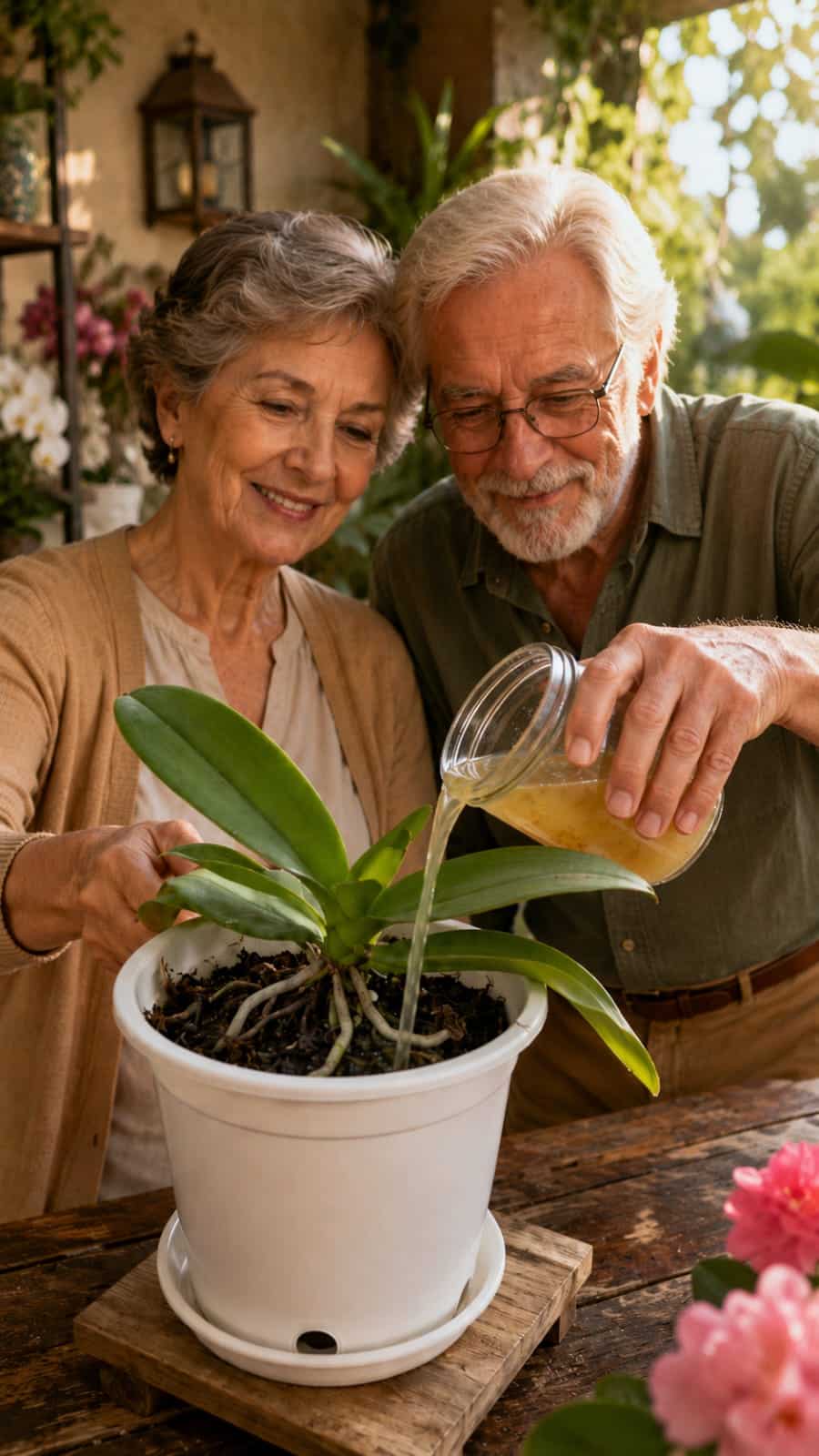
The orchid in the image is in a white pot with drainage. Drainage is essential. Many orchid growers prefer clear pots because they make root inspection easier. Using a pot with drainage for orchids is non-negotiable.
A good orchid pot should have:
- Drainage holes
- Side ventilation if possible
- A size close to the root mass
- No standing water at the bottom
- A saucer that can be emptied
Orchids do not need oversized pots. A pot that is too large holds too much moisture.
How to Water Orchids Correctly – Root-Color Method
Correct watering is more important than any homemade flowering tonic. Orchids should be watered when the roots and bark are approaching dryness, not on a rigid calendar. This orchid watering guide for beginners will prevent root rot.
Watering Signs
- Silver roots: usually ready for water
- Green roots: still moist
- Heavy pot: still wet
- Light pot: may need water
- Condensation inside clear pot: wait
Safe Watering Method
- Use room-temperature water.
- Water the bark and roots thoroughly.
- Avoid filling the crown with water.
- Let excess drain fully.
- Empty the saucer.
- Allow the bark to dry slightly before watering again.
If using potato water, treat it as a watering session, not an extra drink between waterings.
Can Potato Water Be Sprayed on Orchid Leaves? – No, Soil Only
No. It is better not to spray potato water on orchid leaves. Starchy residue can leave spots, attract dust, and encourage microbial growth. Apply only to the root zone, and only in diluted form. For shiny orchid leaves naturally, use a soft cloth with plain water.
To clean orchid leaves, use a soft damp cloth with plain water. Avoid oils, sugar water, milk, or starchy sprays.
Can Potato Water Touch Orchid Aerial Roots? – Yes, Lightly
Yes, diluted potato water can touch the roots during watering, but it should drain away quickly. Do not soak aerial roots in thick potato liquid or leave residue on them. After applying potato water, you can rinse lightly with plain water during the next watering to prevent buildup.
Can You Use Potato Peel Water? – Only Clean Peels
Potato peel water can be used only if the peels are clean and free from pesticides, dirt, mold, or green skin. Potato skins can carry residue, so many indoor growers prefer peeled potato slices for a cleaner tonic. For safe homemade orchid fertilizer, always use fresh, clean ingredients.
Avoid using:
- Green potato skins
- Rotten potato pieces
- Moldy peels
- Salted cooking water
- Water from potatoes cooked with oil or seasoning
Never use salty potato cooking water on orchids. Salt can damage roots.
Can You Use Leftover Potato Boiling Water? – Only Unsalted
Only if it is unsalted, unseasoned, cooled, strained, and diluted heavily. Most kitchen potato water is too starchy, especially if potatoes were boiled for a long time. For orchids, fresh mild potato water is better than thick leftover cooking water.
Can You Mix Potato Water With Orchid Fertilizer? – No, Keep Separate
No. Do not mix potato water with orchid fertilizer. Combining homemade tonics and fertilizer can create too much nutrient or organic buildup. This balanced orchid feeding plan will prevent overfeeding.
A safer schedule is:
- Week 1: plain water
- Week 2: weak orchid fertilizer
- Week 3: plain water
- Week 4 or later: diluted potato water, only if roots are healthy
Keep the routine light and simple.
Can You Mix Potato Water With Rice Water? – Not Recommended
It is better not to combine potato water with rice water. Both can contain starch. Too much starch in orchid bark may encourage mold, sour smell, and fungus gnats. Use one mild homemade method at a time, and use it rarely.
Can Potato Water Attract Fungus Gnats? – Yes, If Overused
Yes, if it is too strong, too frequent, or not strained well. Fungus gnats are attracted to moist organic material. Orchid bark that stays wet and starchy can become a breeding area. Follow these pest prevention tips for orchids to avoid problems.
How to Reduce Gnat Risk
- Strain potato water very well
- Dilute heavily
- Use only fresh liquid
- Do not leave potato pieces in the pot
- Let bark dry slightly between waterings
- Keep airflow around the orchid
- Do not use potato water weekly
If gnats appear, stop all homemade tonics and let the potting mix dry more between waterings.
Orchid Flowering Care Table – Quick Reference
| Care Factor | Best Practice | Why It Matters |
|---|---|---|
| Potato water | Fresh, strained, diluted | Prevents sticky buildup |
| Light | Bright indirect | Supports flower spike formation |
| Watering | When roots turn silver | Prevents rot and dehydration |
| Potting mix | Chunky orchid bark | Gives roots oxygen |
| Drainage | Required | Stops standing water |
| Temperature | Slightly cooler nights | Can encourage blooming |
| Fertilizer | Weak orchid fertilizer | Supports long-term growth |
Step-by-Step Potato Water Bloom Support Routine
Use this routine only for a healthy orchid with firm roots. Follow this natural orchid bloom support protocol for best results.
Step 1: Check the Roots
Make sure roots are firm, not mushy or rotten.
Step 2: Prepare Mild Potato Water
Soak clean potato slices for a few hours or simmer lightly, then cool and strain.
Step 3: Dilute the Liquid
Use 1 part potato water with 3 to 4 parts clean water.
Step 4: Apply Around Roots
Pour slowly through the potting mix, avoiding the crown.
Step 5: Drain Completely
Never let the orchid sit in the liquid.
Step 6: Return to Normal Care
Use plain water next time and keep the orchid in bright indirect light.
Common Mistakes to Avoid – Orchid Potato Water Don’ts
- Using thick potato paste
- Pouring potato water into the orchid crown
- Using salted potato cooking water
- Using fermented potato liquid
- Leaving potato pieces in the pot
- Applying potato water weekly
- Using it on rotten roots
- Mixing it with fertilizer
- Using regular potting soil for orchids
- Expecting instant blooms from one homemade tonic
Signs the Potato Water Method Is Safe for Your Orchid – Positive Indicators
After using diluted potato water, observe the orchid for several weeks. These are positive signs of orchid health.
Good signs include:
- Roots remain firm
- No sour smell
- No fungus gnats
- Leaves stay firm
- No yellowing after application
- Potting mix dries normally
- New root tips appear
- New leaf growth continues
Do not expect flowers immediately. Orchids need time to build energy.
Signs You Should Stop Immediately – Orchid Stress Warnings
Stop using potato water if you notice:
- Sour smell from the pot
- Mold on bark
- Fungus gnats
- Mushy roots
- Yellowing leaves
- Sticky residue
- Slow drainage
- Crown rot
- Leaves becoming limp
If these signs appear, flush gently with plain water, improve airflow, and repot if the bark is breaking down.
How to Encourage an Orchid to Bloom Again – Complete Reblooming Guide
Potato water may be part of a gentle care routine, but the real flowering method is a complete orchid care system. This ultimate orchid reblooming checklist will help you succeed.
Bloom Routine
- Place the orchid in bright indirect light.
- Water only when roots turn silver and bark is nearly dry.
- Use airy orchid bark.
- Feed weakly during active growth.
- Keep leaves clean.
- Provide slightly cooler nights for a few weeks.
- Do not cut a green healthy flower spike too early.
- Repot when bark breaks down.
This routine gives the orchid the conditions it needs to bloom naturally.
Should You Cut the Old Flower Spike? – Post-Bloom Orchid Care
After an orchid finishes blooming, the flower spike may stay green or turn brown. This orchid pruning guide for more blooms will help you decide.
- If the spike is brown and dry, cut it near the base.
- If the spike is green, you can cut above a node or leave it.
- If the plant is weak, cut the spike to let it focus on roots and leaves.
A strong root system is more important than forcing another bloom too soon.
How Long Until an Orchid Blooms Again? – Realistic Timeline
Most Phalaenopsis orchids bloom once or twice a year, depending on care and variety. After flowers fade, the plant often spends time growing leaves and roots before making another spike. Understanding the orchid reblooming timeline sets realistic expectations.
Typical rebloom timeline:
- Root and leaf growth: several months
- Flower spike formation: often in cooler season
- Bud development: several weeks
- Bloom display: weeks to months
Patience is part of orchid growing. A healthy orchid may take time, but it can bloom beautifully again.
Short Caption for This Trick
“To use potato water for orchids, soak clean potato slices in water for a few hours, strain the liquid, dilute it with 3 to 4 parts clean water, and pour lightly through the orchid bark. Use only on healthy roots, avoid the crown, and let the pot drain fully. Never use thick, salty, or fermented potato water – this gentle natural orchid tonic can support blooming when combined with proper light and care.”
Frequently Asked Questions – Orchid Potato Water Q&A
Is potato water good for orchids?
Diluted potato water can be used occasionally as a gentle homemade tonic, but it is not a complete orchid fertilizer and should not be used too often.
Can potato water make orchids bloom?
Potato water alone will not force blooms. Orchids need bright indirect light, healthy roots, proper watering, airy bark, and sometimes cooler nights to flower well.
How often should I use potato water on orchids?
Use it no more than once every 4 to 6 weeks during active growth, and only if the roots are healthy.
Can I use boiled potato water?
Yes, only if it is unsalted, cooled, strained, and heavily diluted. Avoid thick starchy water.
Can I pour potato water on orchid leaves?
No. Apply it to the root zone only. Starchy liquid can leave residue on leaves.
Can potato water cause root rot?
Yes, if it is too strong, used too often, or applied to orchids in soggy old bark.
Should I use potato peels?
You can use clean peels only if they are free from dirt, mold, pesticides, and green skin. Peeled potato slices are safer for indoor orchid care.
Can I store potato water?
It is best used fresh the same day. Stored potato water can ferment and smell sour.
What is the best fertilizer for orchid blooms?
A weak balanced orchid fertilizer used during active growth is more reliable than homemade tonics. Potato water can only be occasional support.
Why is my orchid not flowering?
The most common reasons are low light, weak roots, old potting mix, no temperature shift, or not enough recovery time after the last bloom.
Final Thoughts – Gentle Care Always Wins
The potato water orchid method can be a gentle homemade plant care trick when it is prepared correctly. The image shows a pale golden liquid being poured around orchid roots, suggesting a natural bloom-support tonic. This method may help support root health and future flowering, but only when used lightly. This natural orchid bloom booster has helped many indoor gardeners achieve stunning results.
The safest way is to soak or lightly simmer clean potato slices, strain the liquid completely, dilute it heavily, and pour it through healthy orchid bark while avoiding the crown. The pot must drain fully, and the orchid should never sit in starchy liquid. Following this complete orchid care guide will keep your plant thriving.
For real orchid flowering success, focus on the essentials: bright indirect light, healthy roots, airy orchid bark, proper watering, weak regular feeding, and a slight night temperature drop when the plant is mature enough to bloom. Potato water can support the routine, but it cannot replace good orchid care. These professional orchid growing secrets will help you succeed.
Used wisely, this simple homemade tonic may become a gentle part of your orchid care routine. Used too strong or too often, it can cause mold, gnats, sour bark, and root problems. With orchids, gentle care always wins. Enjoy your beautiful, blooming orchid for years to come.