How to Check If the Peace Lily Needs Water or Root Rescue
Before applying anything, check the soil and roots. This peace lily diagnosis guide for drooping leaves will help you decide.
If the Soil Is Dry
If the soil is dry and the leaves are limp, the plant may be thirsty. Water first with plain water. Let the pot drain completely. If the plant perks up within a few hours, dehydration was likely the issue.
If the Soil Is Wet
If the soil is wet and the leaves are limp, the plant may have root stress or root rot. Do not add rice water. Remove the plant from the pot and inspect the roots.
If the Soil Is Hard and Compacted
Old soil can become dense and block oxygen. In this case, repotting may be more helpful than feeding.
How to Inspect Peace Lily Roots
Healthy peace lily roots should be firm and light-colored. Rotten roots are dark, mushy, and may smell bad. This peace lily root health check is essential for diagnosis.
Healthy Roots
- Firm texture
- White, cream, or tan color
- No bad smell
- Not slimy
Rotten Roots
- Black or dark brown
- Mushy texture
- Slimy surface
- Sour smell
- Break apart easily
If roots are rotten, remove the damaged roots and repot into fresh well-draining soil. Do not use rice water until the plant stabilizes.
How to Rescue a Peace Lily With Root Rot
If the peace lily is drooping badly while the soil is wet, root rot is possible. This emergency peace lily root rot treatment can save your plant.
Root Rot Rescue Steps
- Remove the plant from the pot.
- Shake away wet old soil.
- Cut off black, mushy, or slimy roots.
- Keep only firm healthy roots.
- Choose a pot with drainage holes.
- Repot in fresh airy soil.
- Water lightly with plain water.
- Place in bright indirect light.
- Wait for recovery before feeding.
Do not use rice water, eggshell water, milk, compost tea, or fertilizer during active root rot recovery.
Best Soil Mix for Peace Lilies
Peace lilies need soil that holds moisture but does not stay soggy. Dense soil is one of the main reasons peace lilies decline indoors. Choosing the best potting mix for peace lilies is half the battle.
Good Peace Lily Soil Mix
- 2 parts indoor potting mix
- 1 part perlite or pumice
- 1 part coco coir or peat moss
- A small amount of orchid bark
This mix keeps moisture available while allowing oxygen to reach the roots.
Best Light for Variegated Peace Lilies
Variegated peace lilies need bright indirect light to maintain their beautiful leaf patterns. Low light can weaken growth and reduce variegation. Providing optimal light for variegated peace lilies is essential for recovery.
Best light conditions include:
- Bright indirect window light
- East-facing window
- Filtered south or west light
- Near a bright north-facing window
- Grow light support in dark rooms
Avoid harsh direct afternoon sun. Variegated leaves can scorch more easily than dark green leaves.
How to Water Peace Lilies Correctly
Peace lilies like evenly moist soil, but they do not like standing water. The best rule is: water when the top inch of soil feels slightly dry. Proper watering is a critical peace lily maintenance skill.
When you water, water thoroughly until liquid drains from the bottom. Then empty the saucer. Do not let the pot sit in water.
If the plant droops often, do not automatically water. Check the soil first.
Can This Mix Fix Brown Leaf Edges?
No homemade tonic can turn brown leaf edges green again. Brown tissue is already damaged. Rice water and eggshells may support future growth, but they will not repair old leaves. This is why realistic expectations for peace lily recovery are important.
To reduce future brown edges:
- Keep watering consistent
- Avoid overfertilizing
- Improve humidity
- Use filtered or rested water if tap water is harsh
- Keep the plant away from direct sun
- Trim damaged leaves cleanly
Should You Cut Off Damaged Peace Lily Leaves?
Yes, if the leaves are badly yellow, brown, or crispy. Damaged leaves will not fully recover. Proper peace lily pruning for damaged leaves keeps the plant tidy.
How to Prune
- Use clean scissors.
- Cut the damaged stem near the base.
- Remove leaves that are mostly brown or yellow.
- Keep leaves that are still mostly green.
- Remove fallen leaf pieces from the soil.
Do not remove all leaves at once. The plant still needs green foliage for energy.
Can You Pour the Mixture on Leaves?
No. Apply it to the soil only. Rice water can leave residue on leaves, and eggshell particles can dry into white spots. Peace lily leaves should be cleaned with plain water. For shiny peace lily leaves naturally, stick to gentle wiping.
Leaf Cleaning Method
- Dampen a soft cloth with clean water.
- Support each leaf with one hand.
- Wipe gently from base to tip.
- Dry with a clean cloth if needed.
- Avoid oily leaf shine products.
Clean leaves look glossier and absorb light more efficiently.
Can You Use Cooked Rice Water?
Fresh rice rinse water is safer than cooked rice water. Cooked rice water can be too starchy and may spoil quickly in indoor soil. For safe rice water for houseplants, always use fresh rinse water.
Avoid rice water that contains:
- Salt
- Oil
- Butter
- Sauce
- Spices
- Sugar
- Fermented smell
Use only plain fresh rice rinse water.
Can You Add Milk to This Mix?
It is better not to add milk. Milk can spoil in indoor soil, especially if the pot stays moist. It may cause odor, mold, or fungus gnats. For peace lilies, diluted rice water and eggshell tea are gentler than milk-based mixtures.
Can You Add Banana Peel Water?
Banana peel water is another homemade plant trick, but do not combine many tricks at once. Rice water, eggshell tea, banana peel water, compost tea, and fertilizer should not all be used together. Too many ingredients can overload the soil and stress the roots. This simple approach to natural peace lily care works best.
Rice Water and Eggshell Care Table
| Care Factor | Safe Method | Why It Matters |
|---|---|---|
| Rice water | Fresh and diluted | Prevents starch buildup |
| Eggshells | Fine powder or tea | Avoids large shell residue |
| Application | Soil edge only | Protects crown and leaves |
| Frequency | Every 4 to 6 weeks max | Prevents mold and gnats |
| Soil | Moist but airy | Protects roots |
| Light | Bright indirect | Supports recovery |
| Drainage | Required | Prevents root rot |
Simple Rice Water and Eggshell Rescue Recipe
Ingredients
- ½ cup fresh rice rinse water
- ½ cup clean water
- ¼ teaspoon fine clean eggshell powder
Instructions
- Rinse uncooked rice in clean water.
- Collect the cloudy water.
- Dilute it with equal parts clean water.
- Add fine eggshell powder.
- Stir well.
- Apply ¼ cup around the outer soil edge.
- Avoid leaves, stems, and crown.
- Let the pot drain fully.
- Repeat only after 4 to 6 weeks if the plant responds well.
Common Mistakes to Avoid
- Using thick cooked rice water
- Adding large dirty eggshell pieces
- Applying the mixture weekly
- Pouring it onto leaves
- Using it on wet soil
- Ignoring root rot
- Leaving water in the saucer
- Using salty rice water
- Combining it with strong fertilizer
- Expecting brown leaves to turn green
Avoid these common DIY plant tonic mistakes for success.
Signs the Trick Is Helping
Watch the peace lily for 7 to 14 days. The old damaged leaves may not improve, but the plant’s overall posture may look better. These are positive indicators of peace lily recovery.
- Leaves stand more firmly
- New growth looks healthier
- Soil smells fresh
- No mold appears
- No fungus gnats appear
- Drooping happens less often
- New leaves open with better color
- The plant stops declining
Signs You Should Stop Immediately
Stop using the mixture if you notice:
- White mold on soil
- Fungus gnats
- Sour smell
- Sticky soil
- More yellow leaves
- More drooping after application
- Soil staying wet too long
- Root rot symptoms
Return to plain water and check the root system if the plant worsens.
Short Caption for This Trick
“For drooping peace lilies, use rice water and eggshells only as a gentle soil tonic. Mix ½ cup fresh rice rinse water with ½ cup clean water and ¼ teaspoon fine eggshell powder. Apply a small amount around the outer soil edge when the top inch is slightly dry. Avoid the crown, leaves, and wet soil.”
Frequently Asked Questions
Is rice water good for peace lilies?
Fresh diluted rice water can be used occasionally as a mild soil tonic. It should not be thick, salty, fermented, or used too often.
Are eggshells good for peace lilies?
Clean fine eggshell powder or eggshell tea can provide slow calcium support, but large shell pieces break down very slowly and may attract pests if dirty.
Can rice water and eggshells save a drooping peace lily?
They may support recovery if the roots are healthy, but they will not fix root rot, soggy soil, or severe damage.
How often should I use this mixture?
Use it once every 4 to 6 weeks during active growth at most. For a stressed plant, use it once and wait.
Can I pour rice water on peace lily leaves?
No. Apply it to the soil only. Wipe leaves with plain water instead.
Why is my peace lily drooping after watering?
If the soil is wet and the plant is drooping, the roots may be stressed or rotting. Check the roots before adding more water.
Can brown peace lily leaves turn green again?
No. Brown tissue is dead. Remove badly damaged leaves and focus on healthier new growth.
Can this mixture attract fungus gnats?
Yes, if it is too thick or used too often. Dilute it well and let the top inch of soil dry between waterings.
Can I use cooked rice water?
Fresh rice rinse water is safer. Cooked rice water is usually too starchy and may spoil faster.
Should I fertilize a drooping peace lily?
Not until you know why it is drooping. If the problem is root rot or wet soil, fertilizer can make it worse.
Final Thoughts
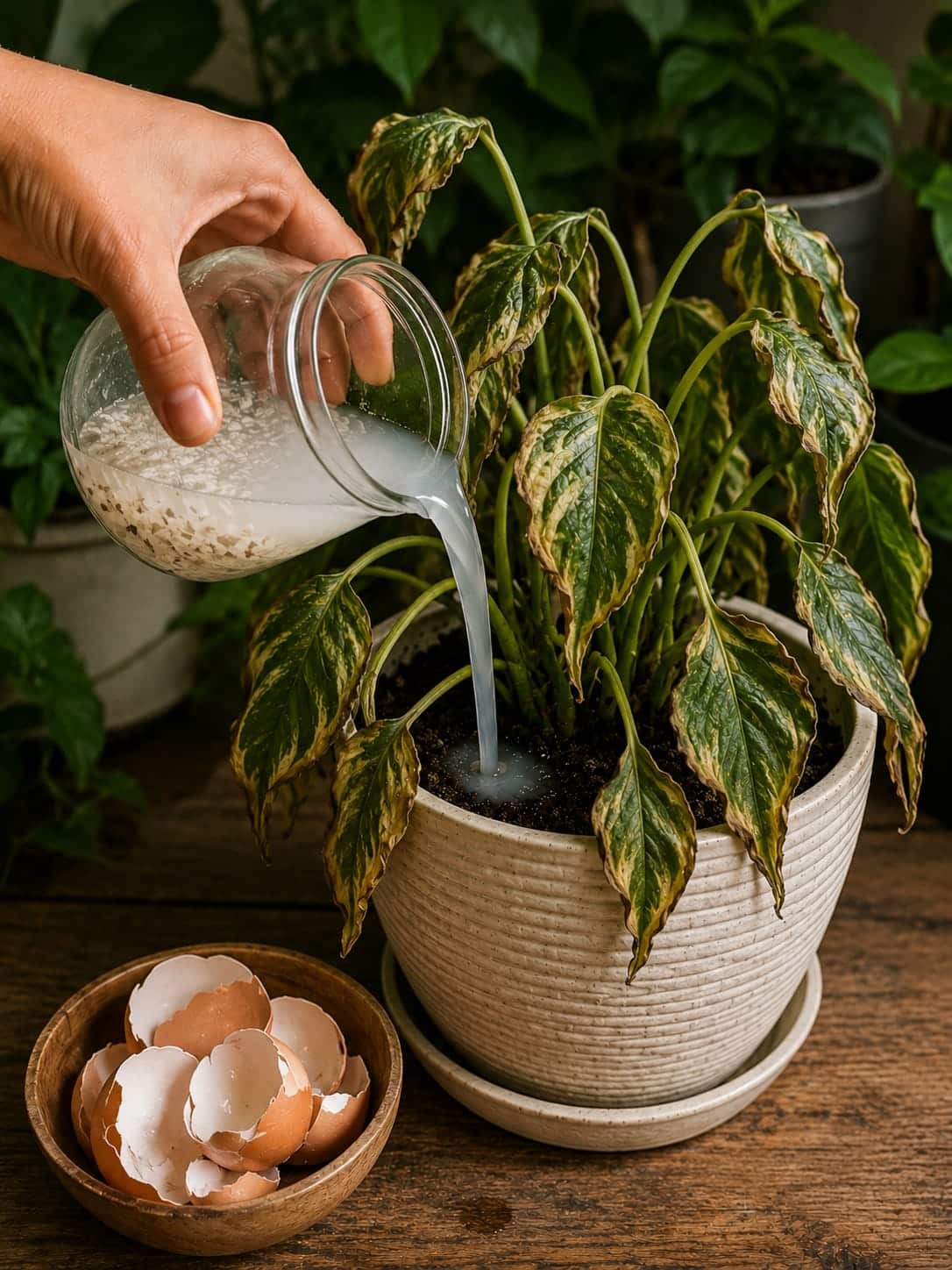
The rice water and eggshell rescue mix can be a gentle support method for peace lilies, especially when the plant has tired leaves, dull growth, or slightly depleted soil. The cloudy liquid and eggshells in the image suggest a homemade tonic designed to refresh the root zone naturally. This natural peace lily recovery method has helped many indoor gardeners save their plants.
The safest method is to keep the mixture light: fresh rice rinse water diluted with clean water, plus a tiny amount of fine eggshell powder or eggshell tea. Apply only a small amount to the outer soil edge when the top inch of soil is slightly dry. Never pour it onto leaves, never use it on soggy soil, and never apply it too often. Following this complete peace lily care guide will keep your plant thriving.
For real recovery, combine the tonic with correct peace lily care: bright indirect light, good drainage, airy soil, consistent watering, clean leaves, and root inspection when needed. Homemade plant tricks work best when they support good care — not when they replace it. These professional indoor plant care secrets will help you succeed.
Used wisely, rice water and eggshells may help your peace lily produce healthier new growth and stronger roots. Used too heavily, they can cause mold, pests, sour soil, and more stress. With peace lilies, gentle care always gives the best results. Enjoy your revived, beautiful peace lily for years to come.