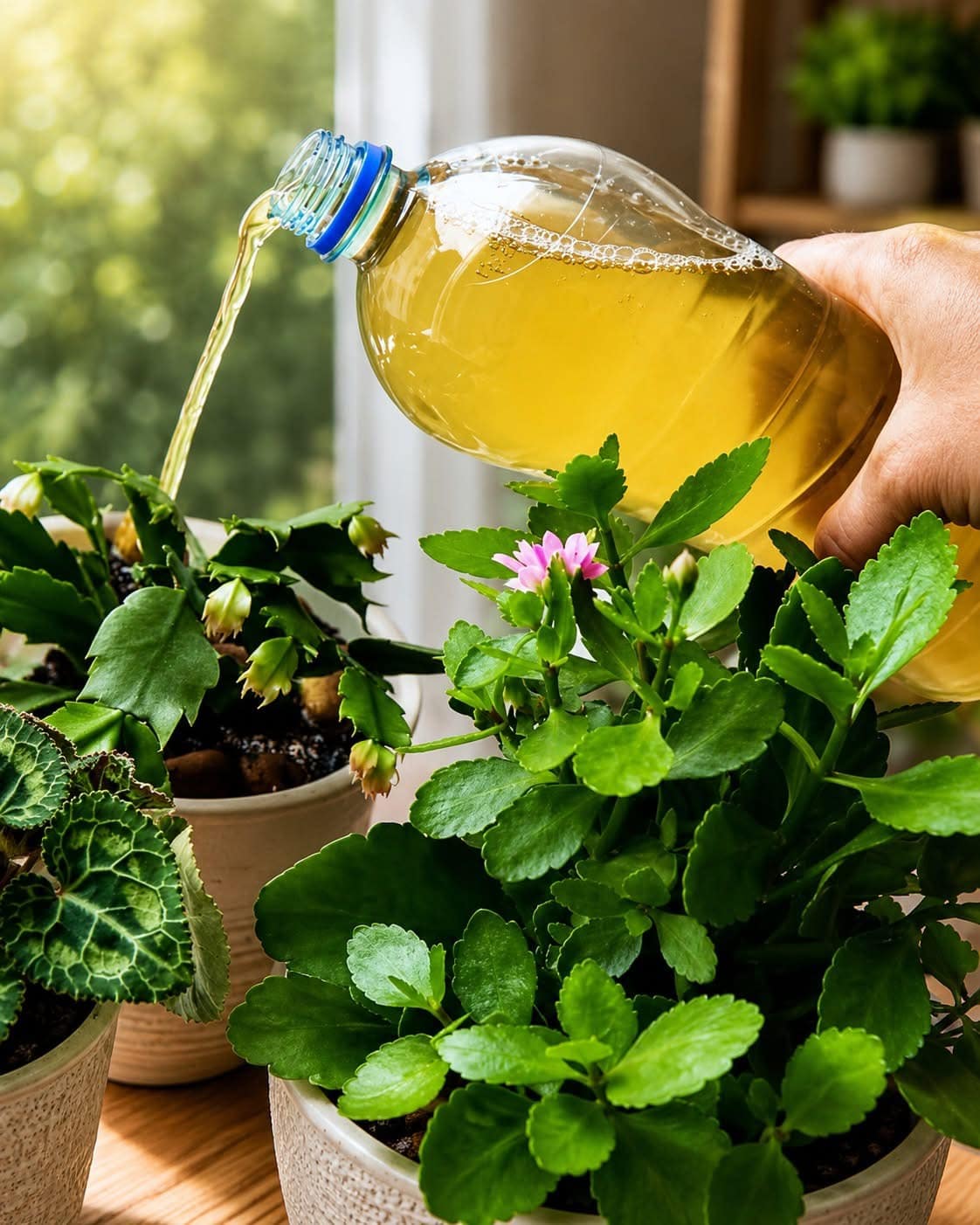
Healthy houseplants do not need mystery mixtures, strong homemade liquids, or daily feeding to look beautiful. The most reliable way to support fuller leaves, stronger roots, and better flowering is to use a suitable labeled houseplant fertilizer at the correct dilution, combined with proper watering, good light, and well-draining soil.
It is easy to see a yellow liquid in a bottle and assume it will solve every plant problem. But no fertilizer can fix poor drainage, root rot, lack of light, pest damage, or a plant that is being watered too often. Fertilizer is only one part of a healthy houseplant routine.
When used correctly, a balanced plant food can support steady growth during the active growing season. It gives plants access to key nutrients that may gradually become limited in potting soil. When used too often or too strongly, however, fertilizer can cause brown leaf tips, weak roots, yellowing, and a white crust of mineral salts on the soil.
This guide explains how to fertilize indoor plants safely, which plants benefit most, when to feed them, and how to avoid common mistakes.
Why Houseplants Need Fertilizer
Plants growing outdoors have access to a large volume of soil and natural nutrient cycles. Indoor plants live in containers, where the available soil is limited. Over time, watering can wash some nutrients out through the drainage holes, and active roots gradually use what is available.
A suitable fertilizer replaces nutrients that support leaves, stems, roots, and flowers. The three main nutrients are nitrogen, phosphorus, and potassium.
Nitrogen supports green leafy growth. It is especially useful for foliage plants such as pothos, philodendrons, spider plants, peace lilies, and many palms.
Phosphorus supports root development and is involved in flowering. Plants that bloom indoors, including African violets, orchids, Christmas cactus, and flowering kalanchoe, need balanced nutrition during their active growth period.
Potassium supports overall plant functions and helps plants build strong, healthy growth. A complete fertilizer also includes small amounts of trace nutrients, such as iron, magnesium, calcium, and manganese.
The goal is not to force rapid growth. The goal is to support slow, steady, healthy growth that matches the plant’s natural needs.
Choose a Fertilizer Made for Houseplants
The simplest option is a balanced liquid fertilizer labeled for indoor plants. Look for a product that clearly provides instructions for dilution and frequency.
A balanced fertilizer may show equal or similar N-P-K numbers on the label, such as 10-10-10 or 20-20-20. The numbers represent nitrogen, phosphorus, and potassium. Different plants have different needs, but a general-purpose houseplant fertilizer is suitable for many common indoor plants when used carefully.
For flowering houseplants, choose a fertilizer designed for blooming plants if you prefer. Use it during the season when that plant is naturally growing and preparing to flower.
Slow-release fertilizer pellets can also work, but they must be measured carefully. They release nutrients over time, so it is important not to add liquid fertilizer at the same time unless the product instructions specifically allow it.
Avoid making a fertilizer from food scraps, garlic, banana peels, coffee, milk, tea, sugary water, or unknown powders. These materials are not balanced for indoor plants and may cause mold, fungus gnats, unpleasant smells, or poor soil conditions.
When to Fertilize Your Indoor Plants
Most houseplants benefit from fertilizer during spring and summer, when days are longer and plants are actively producing new leaves or flowers.
For many common houseplants, feeding once every four to six weeks is enough. Always follow the label directions, because products vary in strength.
In fall and winter, many indoor plants grow more slowly because daylight is weaker. During this period, reduce feeding or pause it completely unless the plant is actively growing under strong grow lights.
Never fertilize a plant that is severely stressed. If it is wilted from underwatering, sitting in soggy soil, suffering from pests, or recovering from root damage, correct those issues first. Fertilizer is not medicine, and adding it to damaged roots can make the problem worse.
A newly repotted plant usually does not need fertilizer right away. Fresh potting mix often contains some nutrients already. Wait about four to six weeks before beginning a gentle feeding routine.
How to Apply Liquid Fertilizer Safely
Always read the instructions on the fertilizer label. More is not better. For indoor plants, it is often safest to use fertilizer at half the recommended strength unless the product is specifically made for regular full-strength indoor use.
Start by watering the plant lightly if the soil is very dry. Applying fertilizer to bone-dry soil can burn the roots.
Mix the fertilizer with water in a clean watering can according to the label. Use room-temperature water when possible. Slowly pour the diluted solution onto the soil around the base of the plant, keeping it away from the crown and leaves.
Water only enough to moisten the root zone. Do not flood the pot. Make sure the container has drainage holes so excess water can escape.
After watering, empty any water that collects in the saucer or cachepot. Roots should not sit in fertilizer water for long periods.
Keep notes if you care for many plants. A simple calendar reminder can help you remember the last feeding date and prevent accidental overfeeding.
A Simple Fertilizer Routine for Beginners
A beginner-friendly routine can be very simple:
- Check whether the plant is actively growing.
- Confirm the plant is receiving appropriate light.
- Feel the soil before watering.
- Water only when the plant needs water.
- Feed with a diluted labeled fertilizer every four to six weeks in spring and summer.
- Reduce or pause fertilizer in winter.
- Watch the leaves and adjust slowly if needed.
This routine gives your plants support without overwhelming them. Indoor gardening is usually more successful when changes are small and consistent.
Which Houseplants Benefit from Regular Feeding?
Pothos are easy-care trailing plants that benefit from gentle feeding during active growth. They often respond with fuller vines and fresh leaves when they receive bright indirect light and a modest fertilizer routine.
Peace lilies can benefit from balanced fertilizer, especially when they are producing healthy new leaves. Do not fertilize a drooping or yellowing peace lily until you have checked the soil and corrected watering issues.
Spider plants grow quickly in bright indirect light and appreciate occasional fertilizer during spring and summer. Avoid overfeeding, which can contribute to brown tips.
Philodendrons and monsteras are foliage plants that can grow larger leaves when given good light, proper watering, and light feeding. They prefer consistency rather than heavy doses of fertilizer.
Flowering kalanchoe, Christmas cactus, African violets, and orchids have more specific seasonal needs. Use a fertilizer designed for flowering plants or the plant type, and follow the label carefully.
Snake plants and ZZ plants need very little fertilizer. These slow-growing plants can be fed lightly once or twice during their active season, but they are more likely to suffer from overwatering than from a lack of fertilizer.
Light Matters More Than Many People Realize
Fertilizer cannot replace sunlight. Plants use light to make energy, and fertilizer only provides nutrients to support that process.
Most common houseplants do best in bright indirect light. This means a bright room near a window without harsh direct sun burning the leaves.
Flowering plants typically need more light than foliage plants. A flowering kalanchoe, for example, will need a brighter location than a snake plant.
If a plant is in a very dark corner, move it closer to a window before increasing fertilizer. A plant with insufficient light may not use extra nutrients efficiently, and the fertilizer can build up in the soil.
Rotate plants every week or two so each side receives light. Wipe dust from leaves with a soft, damp cloth so they can receive light more effectively.
Watering and Fertilizer Must Work Together
One of the biggest mistakes in houseplant care is fertilizing on a fixed schedule while ignoring the soil. Every home has different light, temperature, humidity, and airflow, so plants dry out at different speeds.
Check the soil before watering. For many houseplants, water when the top inch or two feels dry. Plants such as succulents, snake plants, and ZZ plants need the soil to dry more deeply between waterings.
Watering too often can lead to weak roots, yellow leaves, and fungus gnats. Fertilizer will not correct these problems. In fact, fertilizer added to wet, damaged roots can create additional stress.
A pot with drainage holes is essential. If your plant is in a decorative pot without a drainage hole, keep it in a nursery pot inside the decorative container. Remove it for watering, let it drain fully, then return it to the outer pot.
Signs of Overfertilizing
Too much fertilizer can harm a houseplant. Watch for these warning signs:
- Brown, crispy leaf tips
- Yellow leaves with no clear watering issue
- A white or yellowish crust on top of the soil
- Leaves that look scorched around the edges
- Slow growth despite regular feeding
- Wilting even though the soil is moist
- Roots that look dry, dark, or damaged during repotting
If you think you have overfertilized, stop feeding the plant. Flush the soil gently with plain water by allowing water to run through the pot for several minutes, then let it drain completely.
If the plant is severely affected, repot it into fresh, well-draining houseplant soil. Remove only clearly rotten or dead roots, and allow the plant time to recover before fertilizing again.
How to Encourage More Flowers Safely
A fertilizer may support flowering, but it does not guarantee blooms. Flowering depends on light, plant maturity, temperature, season, pruning, and the plant’s natural cycle.
For flowering houseplants, start with proper light. Many blooming plants need bright indirect light or gentle morning sun. Use a fertilizer labeled for flowering plants during the active growing period, but avoid using it more often than recommended.
Remove spent flowers when appropriate. This keeps the plant looking tidy and may help it direct energy toward new growth.
Do not expect instant flowers after feeding. Healthy plants develop gradually. A stable routine over several weeks or months is much