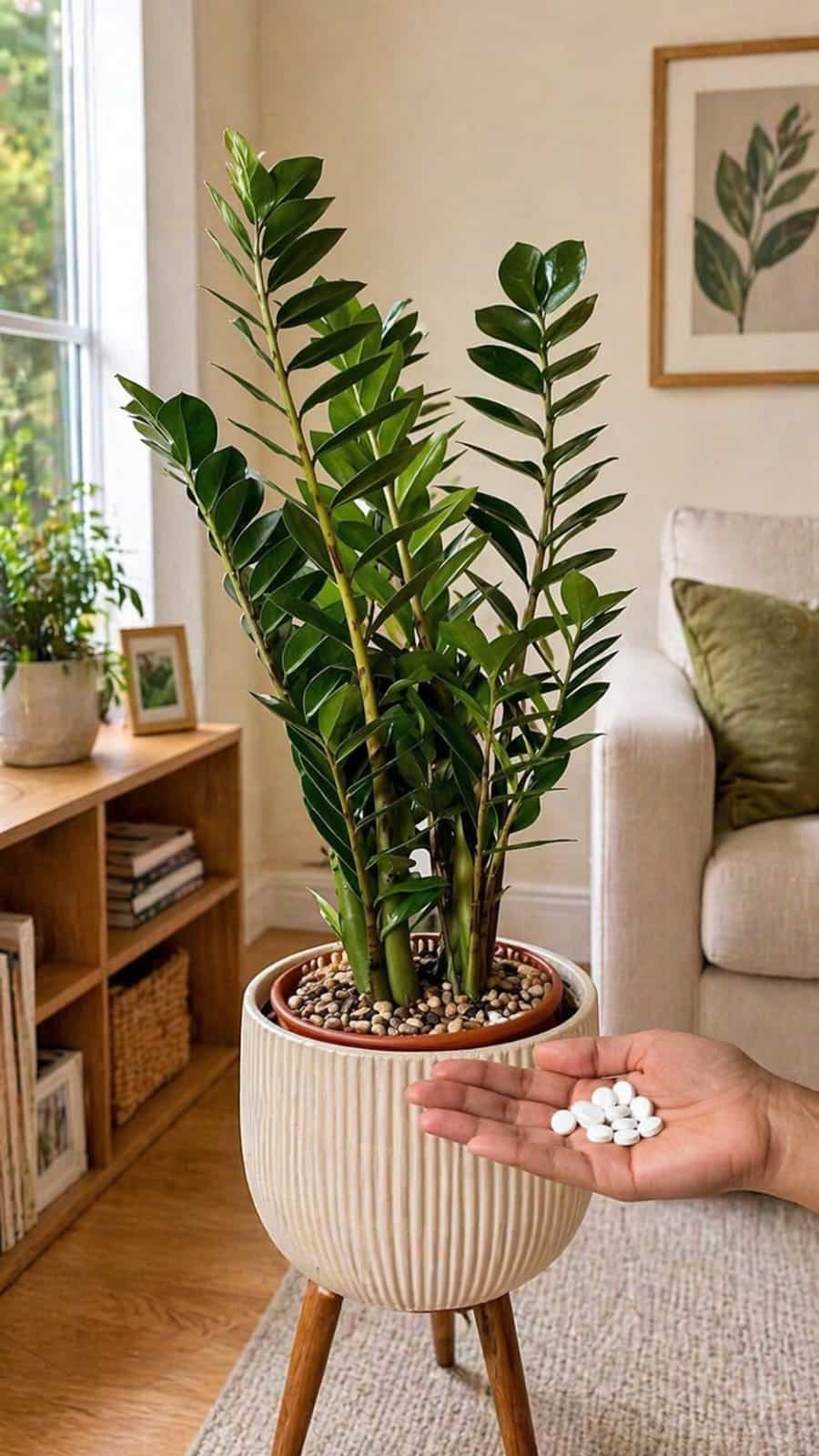
ZZ plants have become one of the most loved houseplants for modern homes. They look sleek, architectural, and expensive without being difficult to care for. Their glossy dark leaves, upright stems, and low‑maintenance nature make them perfect for living rooms, offices, and indoor corners that need a little life.
So when people see photos of someone holding a few white tablets next to a big, healthy ZZ plant, it instantly grabs attention. The promise is always the same: drop these pills in the pot, watch your ZZ plant grow faster, see stronger stems and fuller growth.
It sounds easy. But the truth is much simpler. ZZ plants do not thrive because of mystery pills. They thrive because their roots stay healthy and their care stays consistent.
In this guide, you will learn why these “pill” tricks go viral, the risks of using unknown tablets, what actually makes a ZZ plant grow taller and fuller, and a proven, safe routine that will give you the lush, architectural plant you want — no magic required.
Why These “Pill” Plant Tricks Go Viral
They are:
· Easy to copy – Just drop and forget.
· Dramatic in photos – Before‑and‑after shots look convincing.
· Cheap‑looking – Pills are inexpensive and seem like a “secret.”
· Exciting because they promise fast results – Instant gratification.
And with ZZ plants, that promise is especially tempting because they grow slowly. When a plant grows slowly, people are more likely to believe that one special ingredient caused the change. In reality, ZZ plants are naturally slow growers. A sudden growth spurt is usually the result of improved conditions (better light, proper watering, warmer temperatures) – not a pill.
But with most of these posts, the “pill” could be:
· A fertilizer tablet – Slow‑release plant food.
· A vitamin tablet – Human supplements like B‑complex or C.
· Calcium supplement – Antacid or calcium carbonate.
· Aspirin – Salicylic acid.
· Random medication – Anything from the medicine cabinet.
· Simply a prop – Used for attention, with no real plant benefit.
That is what makes these tricks risky.
Why You Should Not Use Unknown Pills in a ZZ Plant Pot
A ZZ plant (Zamioculcas zamiifolia) grows from thick underground rhizomes that store water and energy. Those rhizomes are one of the reason the plant survives neglect so well. But they are also easy to stress when the soil environment becomes unbalanced.
Unknown tablets can:
· Burn the roots – Concentrated chemicals damage delicate root hairs.
· Create salt buildup – A white crust on the soil surface blocks water and air.
· Change the soil chemistry – Sudden pH shifts or nutrient overload stress the plant.
· Leave residue in the pot – Organic binders and fillers can rot.
· Slow growth instead of helping it – A stressed ZZ plant will stop producing new stems.
So even if the plant in the picture looks amazing, that does not mean the pills are what made it that way. Often, the plant was already healthy, or other care improvements happened at the same time.
What Actually Makes a ZZ Plant Grow Better (No Pills Required)
If you want a bigger, healthier ZZ plant, focus on the things that really matter. These are the proven factors that turn a surviving ZZ into a thriving one.
- Bright Indirect Light
ZZ plants tolerate low light, but stronger growth usually comes from brighter conditions. They stay sturdier, fuller, and more active when they get good indirect light. An east window or a south/west window with a sheer curtain is ideal. If your ZZ has been in a dark corner for years, move it closer to light – you may see new shoots within a few months.
- Careful Watering (The #1 Factor)
This is the big one. ZZ plants hate staying wet too long. Their rhizomes hold moisture, so overwatering is one of the fastest ways to weaken them. Water only after the soil has dried completely. In most homes, this means every 2–4 weeks in spring/summer and once a month or less in winter. When in doubt, wait another week.
- Well‑Draining Soil
A loose, airy mix helps the roots breathe. Dense, soggy soil leads to stress and rot. Use a cactus or succulent potting mix. If you only have regular potting soil, mix it with 30% perlite or coarse sand. Repot every 2–3 years to refresh the soil.
- Pot with Drainage Holes
A healthy ZZ plant almost always starts with healthy roots. Drainage protects the rhizomes from sitting in excess moisture. Terracotta pots are excellent because they wick away water. Never use a pot without drainage holes.
- Light Feeding During Active Growth
If you want to feed the plant, use a real houseplant fertilizer at a light dose during spring and summer. That is much safer than random tablets. Use a balanced, water‑soluble fertilizer (10‑10‑10 or 20‑20‑20) diluted to half strength. Apply once in spring and once in midsummer. Do not fertilize in fall and winter.
Why Some ZZ Plants Suddenly Improve (The Real Reason)
Sometimes people use a pill or powder and then notice better growth later. But the improvement usually happens because something else changed too:
· The plant was moved closer to a window – More light, more energy.
· Watering became less frequent – Healthy roots, not rot.
· The soil dried more properly – Better oxygen around rhizomes.
· The growing season started – Spring warmth triggers growth.
· The plant was simply mature enough to grow more strongly – Older plants produce more stems.
The mystery ingredient gets the credit because it looks dramatic, not because it was truly responsible. In controlled conditions, no pill has been shown to make a ZZ plant grow faster without the proper environment.
Signs Your ZZ Plant Is Actually Happy (No Pills Needed)
A healthy ZZ plant usually shows:
· Firm, upright stems – No drooping or leaning.
· Glossy, dark green leaves – Rich color, no yellowing.
· Steady new shoots – Fresh light‑green stems emerging from the soil.
· No mushy base – The plant feels solid.
· No yellowing from overwatering – Leaves are uniform in color.
· Strong overall structure – The plant looks robust and architectural.
These are the results of good root health, not quick tricks. If you see new shoots, your care routine is working. Do not change it.
Continue to Page 2
Continue to page 2 for more details about this article and the key points many readers miss on the first page.