Snake plants are among the most popular houseplants in the world, and it’s easy to understand why. Their striking upright leaves, impressive drought tolerance, and ability to thrive in a variety of indoor conditions make them a favorite among both beginner and experienced plant enthusiasts. Whether displayed in a modern living room, cozy bedroom, office corner, or bright entryway, a healthy snake plant adds structure, elegance, and year-round greenery to any space.
One of the most common questions snake plant owners ask is how to encourage fuller growth and maintain those beautiful deep green leaves with vibrant yellow edges. While snake plants are known for surviving neglect, they still benefit from occasional feeding and proper care. A balanced nutrition routine, combined with the right lighting and watering habits, can help support healthier growth and encourage the plant to produce new pups over time.
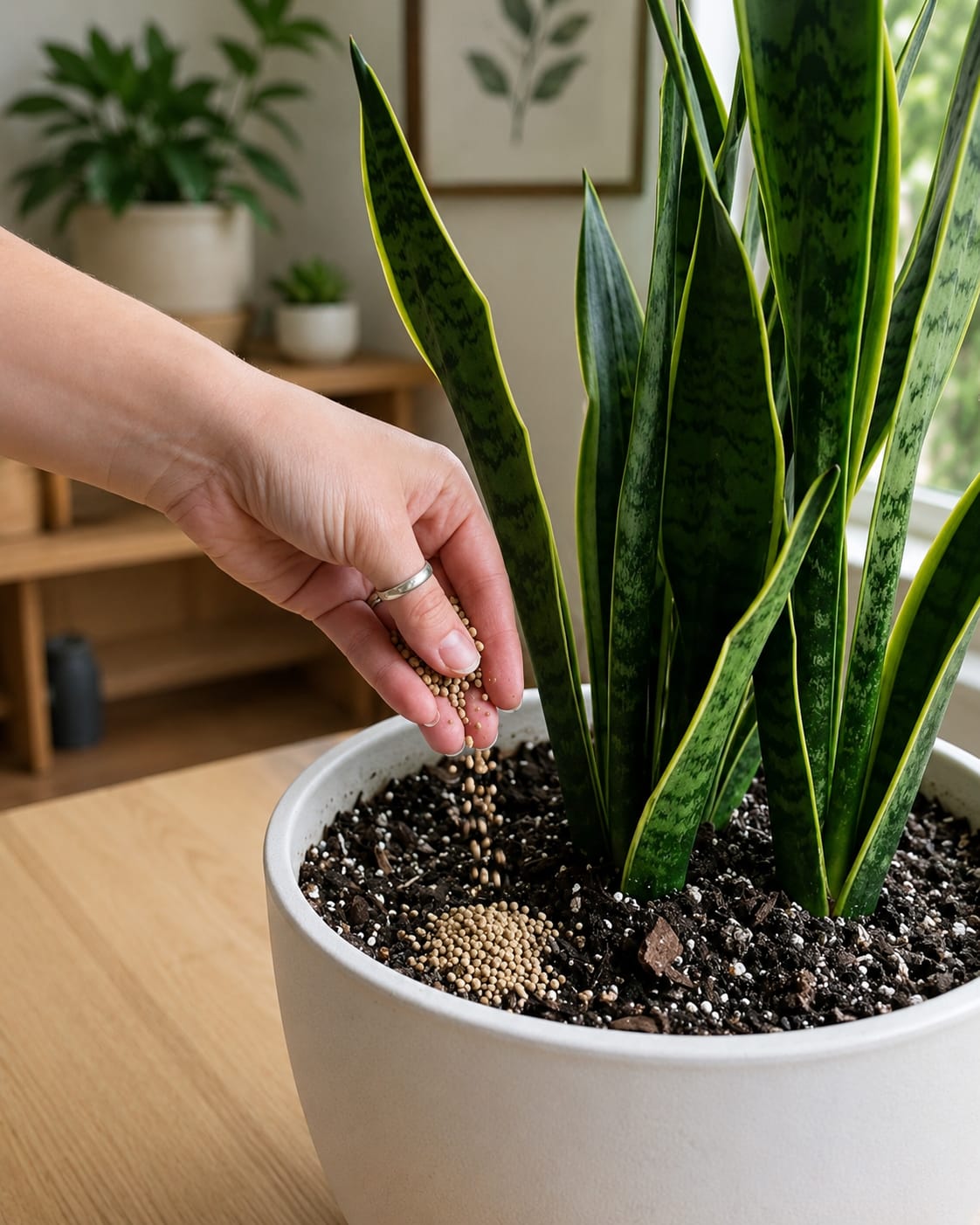
Many indoor gardeners use slow-release plant food granules as part of their regular maintenance routine because they provide nutrients gradually over an extended period. Unlike liquid fertilizers that require frequent applications, slow-release products release nutrients slowly whenever the soil receives moisture, helping maintain a steady supply of essential elements.
Why Snake Plants Grow So Well Indoors
Snake plants, also known as Sansevieria or Dracaena trifasciata, are native to regions of Africa where they have adapted to periods of drought and challenging growing conditions. Their thick upright leaves store moisture, allowing them to survive when water is scarce.
This natural resilience is one reason they perform so well indoors. They tolerate lower humidity levels, infrequent watering, and varying light conditions better than many other houseplants.
However, surviving and thriving are not the same thing. A snake plant may survive for years with minimal care, but proper maintenance can help it develop stronger roots, richer foliage, and a fuller appearance.
Understanding Snake Plant Growth
Snake plants grow from underground rhizomes that gradually spread beneath the soil surface. These rhizomes eventually produce new shoots, often called pups, which emerge around the base of the parent plant.
The appearance of new pups is one of the clearest signs that a snake plant is healthy and actively growing.
Several factors influence pup production, including light exposure, root health, container size, watering practices, and nutrient availability.
While no fertilizer can instantly create dozens of new pups, providing balanced nutrition can support the plant’s natural growth processes.
What Slow-Release Fertilizer Does
Slow-release fertilizer consists of small granules that gradually release nutrients into the soil over weeks or months. Each granule contains essential plant nutrients that become available when moisture reaches the coating.
This slow feeding method offers several advantages for snake plants. It reduces the risk of nutrient spikes, minimizes the chance of overfeeding, and provides a steady supply of nourishment over time.
Many plant owners appreciate the convenience because applications are usually needed only a few times each year rather than every week.
When used correctly, slow-release fertilizers can help support healthy root development, leaf production, and overall plant vigor.
Important Nutrients Snake Plants Need
Like most houseplants, snake plants rely on three primary nutrients:
- Nitrogen (N) for leaf growth and foliage development.
- Phosphorus (P) for root support and energy transfer.
- Potassium (K) for overall plant health and stress tolerance.
In addition to these major nutrients, snake plants also benefit from smaller amounts of calcium, magnesium, sulfur, and trace minerals.
A balanced fertilizer formulated for houseplants generally provides everything the plant needs without requiring complicated feeding schedules.
How to Apply Slow-Release Granules Correctly
The safest way to use slow-release fertilizer is to follow the manufacturer’s instructions carefully. More fertilizer does not automatically mean faster growth.
Scatter the recommended amount evenly across the soil surface, keeping the granules a few inches away from the base of the leaves. Avoid piling fertilizer directly against the plant crown.
After application, water lightly so moisture can begin activating the nutrient coating.
Over time, nutrients gradually move through the root zone as the soil receives water.
Why Overfeeding Can Be Harmful
Snake plants are not heavy feeders. In fact, excessive fertilization can cause more problems than insufficient feeding.
Too much fertilizer may lead to root burn, salt accumulation, leaf damage, and unnecessary stress. In severe cases, overfertilized plants may develop brown leaf tips or show signs of root decline.
This is why gentle, consistent feeding is preferable to aggressive fertilization.
Many successful indoor gardeners use less fertilizer than product labels suggest, especially when growing slow-growing plants like snake plants.
The Best Time to Feed Snake Plants
Snake plants typically grow most actively during spring and summer. These warmer months are usually the best time to apply fertilizer.
As temperatures rise and daylight hours increase, the plant naturally enters a more active growth phase.
During autumn and winter, growth often slows significantly. At this time, feeding requirements decrease as well.
Applying large amounts of fertilizer during winter may provide little benefit because the plant is not actively using those nutrients.
Choosing the Right Potting Mix
Healthy growth depends not only on nutrients but also on soil quality. Snake plants prefer well-draining potting mixes that allow excess moisture to escape quickly.
Heavy soils that remain wet for long periods can contribute to root rot.
A good snake plant mix often contains ingredients such as:
- Cactus soil
- Perlite
- Pumice
- Coarse sand
- Orchid bark
These materials improve drainage and help create a healthier root environment.
The Relationship Between Water and Fertilizer
Water and fertilizer work together. Nutrients move through the soil solution and become available to roots when adequate moisture is present.
However, snake plants prefer relatively dry conditions compared to many tropical houseplants.
The goal is to maintain a balance. Water thoroughly when the soil becomes dry, then allow excess moisture to drain away completely.
Avoid keeping the soil constantly wet, even after fertilizer applications.
How Light Influences Growth
Light is often more important than fertilizer when it comes to encouraging fuller snake plant growth.
While snake plants tolerate low-light environments, they generally grow faster and produce stronger foliage when placed in bright indirect light.
A location near a sunny window with filtered light often produces excellent results.
Plants grown in brighter conditions typically use nutrients more efficiently and maintain better overall vigor.
Signs Your Snake Plant Is Healthy
A healthy snake plant usually displays upright leaves, strong coloration, and steady new growth.
New pups emerging around the base are particularly encouraging signs.
The leaves should feel firm and sturdy rather than soft or floppy.
Healthy roots support healthy foliage, so visible growth is often an indication that conditions are favorable below the soil surface as well.
Common Problems That Fertilizer Cannot Fix
Many plant owners hope fertilizer will solve every problem, but nutrition is only one part of plant care.
If a snake plant is suffering from root rot, poor drainage, insufficient light, pest issues, or severe overwatering, fertilizer alone will not resolve those challenges.
In fact, adding fertilizer to an already stressed plant can sometimes worsen the situation.
Always identify the underlying cause of plant problems before adjusting feeding routines.
Repotting for Better Growth
Snake plants often enjoy being slightly root-bound, but eventually they outgrow their containers.
When roots become extremely crowded or begin pushing against the pot walls, repotting may become necessary.
Choose a container only slightly larger than the current one. Excessively large pots can hold too much moisture and increase the risk of root issues.
Fresh potting mix and additional growing space can sometimes stimulate renewed growth and pup production.
Continue to Page 2
Continue to page 2 for more details about this article and the key points many readers miss on the first page.