Can You Use Organic Fertilizer Pellets?
Yes, but use them carefully. Organic fertilizer pellets can be gentle, but they may also smell or attract pests if used too heavily indoors. Some organic pellets are designed for outdoor garden soil, not indoor pots. For organic ZZ plant care, proceed with caution.
If using organic pellets:
- Use a very small amount
- Keep them away from stems
- Do not pile them on the soil
- Watch for odor
- Watch for fungus gnats
- Use only during active growth
For indoor ZZ plants, clean slow-release houseplant fertilizer is often easier to manage. This organic vs synthetic fertilizer advice applies to many sensitive indoor plants.
What About the Decorative Bird in the Image?
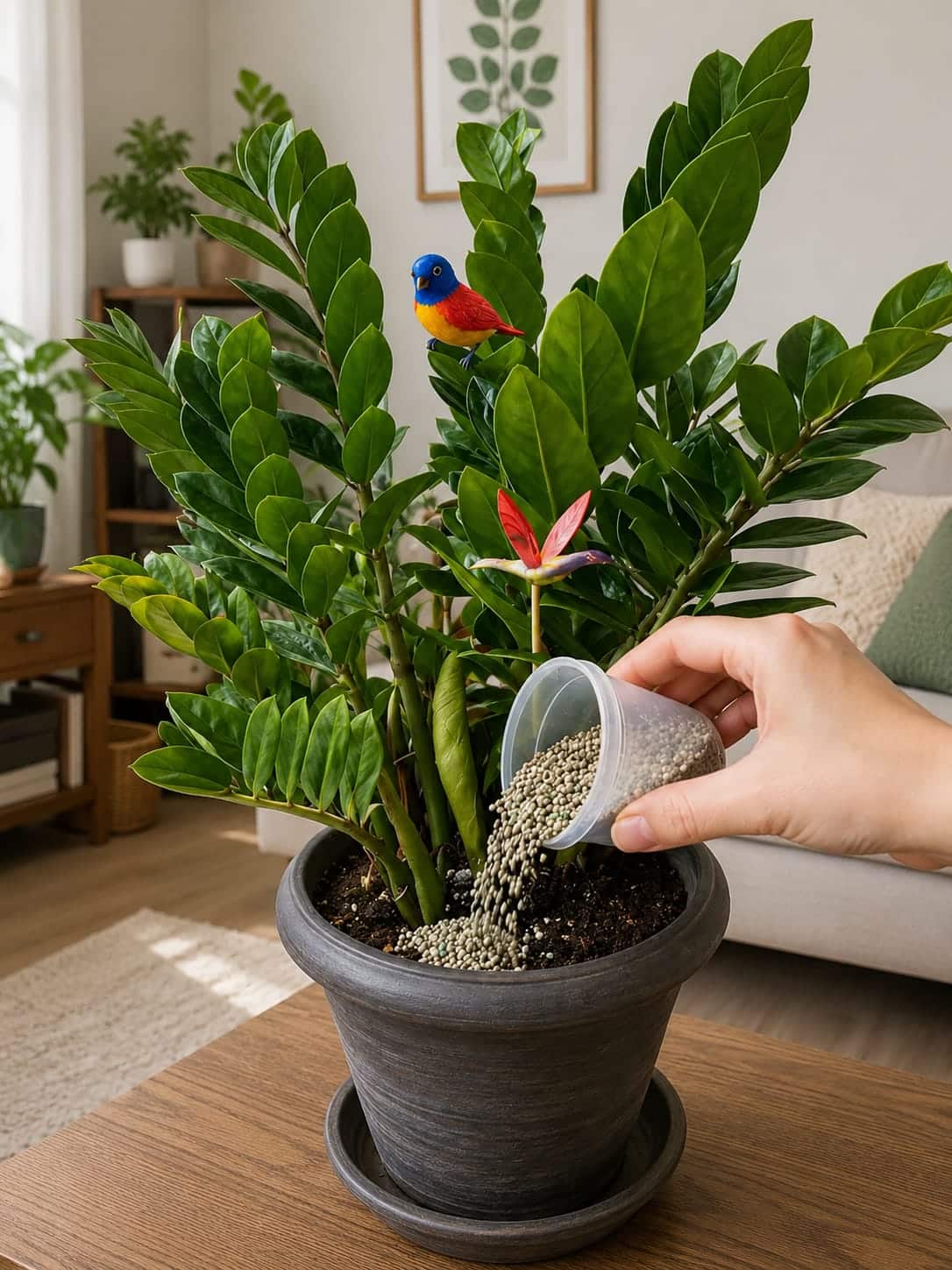
The colorful bird in the image appears decorative. It does not affect the plant care method. Decorative stakes, birds, and plant ornaments are fine as long as they do not damage roots, block airflow, or trap moisture around the stems. Adding plant decor accents is a fun way to personalize.
If using decorations in ZZ plant pots, make sure they are clean and do not cover the soil so heavily that the soil cannot dry.
When Not to Fertilize a ZZ Plant
Do not fertilize a ZZ plant that is stressed. Fertilizer is not medicine for root rot, yellowing from overwatering, or poor light. Knowing when to avoid fertilizing ZZ plants prevents further damage.
Avoid fertilizing if:
- The soil is wet
- The plant has yellow leaves from overwatering
- The stems are mushy
- The rhizomes are soft
- The pot has no drainage holes
- The plant was recently repotted
- The room is cold
- The plant is in very low light
- It is winter
- There is white crust on the soil
Fix the growing conditions first. Feed only healthy, actively growing plants. This houseplant health checklist is essential for successful indoor gardening.
Signs Your ZZ Plant Needs Fertilizer
ZZ plants rarely show dramatic hunger signs, but a light feeding may help when the plant is otherwise healthy and growing slowly during spring or summer. Recognizing ZZ plant nutrient deficiency signs helps you time feeding.
Possible signs include:
- Very slow new growth during active season
- Pale leaves despite good light
- Older soil that has not been refreshed
- Small weak new shoots
- Plant has not been fed for a long time
These signs can also come from low light or root problems, so always check care conditions first.
Signs You Used Too Much Fertilizer
If your ZZ plant reacts badly after feeding, fertilizer may be too strong or too frequent. Watch for ZZ plant overfertilization symptoms to act fast.
Signs of overfertilizing include:
- Brown leaf tips
- Yellowing leaves
- Leaf edge burn
- White crust on soil
- Drooping stems
- Slow growth after feeding
- Soil staying too rich or damp
- Roots looking dry or damaged
If this happens, remove visible granules and flush the soil if the pot drains well.
What to Do If You Added Too Many Granules
If you accidentally poured too much fertilizer onto the soil, remove the excess immediately. This fertilizer overdose fix can save your plant.
Fix Steps
- Scoop off visible fertilizer pellets.
- Remove the top layer of soil if needed.
- Move the pot to a sink or tub.
- Flush the soil with clean water if the pot has drainage holes.
- Let the pot drain completely.
- Empty the saucer.
- Do not fertilize again for several months.
If the plant is in a pot without drainage, do not flush heavily. Instead, remove as many granules as possible and consider repotting into a draining pot. This emergency plant care procedure works for many overfed houseplants.
Can Slow-Release Fertilizer Cause Fungus Gnats?
Slow-release synthetic granules usually do not attract fungus gnats directly. However, organic pellets and constantly wet soil can increase pest problems. Fungus gnats are more likely when soil stays moist and rich. Follow pest prevention for indoor plants to keep your ZZ safe.
To avoid fungus gnats:
- Let soil dry between watering
- Use a well-draining mix
- Avoid overfeeding
- Remove dead leaves from soil
- Keep saucers empty
- Use sticky traps if gnats appear
How to Clean ZZ Plant Leaves
ZZ plants look best when their glossy leaves are clean. Dust can block light and reduce shine. Regular ZZ plant leaf cleaning improves photosynthesis and appearance.
Leaf Cleaning Method
- Use a soft damp cloth.
- Support each stem gently.
- Wipe each leaflet carefully.
- Do not use oily leaf shine products.
- Let leaves dry naturally.
Clean leaves can make a ZZ plant look healthier instantly, even without fertilizer. This houseplant grooming tip enhances any indoor garden.
Should You Prune a ZZ Plant?
ZZ plants do not need frequent pruning. Remove only damaged, yellow, or dead stems. Proper ZZ plant pruning techniques keep the plant tidy.
How to Prune
- Use clean sharp scissors or pruners.
- Cut yellow stems at soil level.
- Remove dead leaflets.
- Do not cut healthy stems just to force growth.
- Keep cuts clean and dry.
Pruning does not make a ZZ plant branch from the cut stem like some houseplants. New growth comes from the rhizomes.
Can Fertilizer Help a ZZ Plant Grow New Stems?
Fertilizer can support new stems, but only if the plant has enough light and healthy rhizomes. New ZZ shoots usually appear from the soil as thick green spears, then slowly unfold into leafy stems. This ZZ plant propagation and growth knowledge is useful.
To encourage new stems:
- Move the plant to brighter indirect light
- Use well-draining soil
- Water correctly
- Feed lightly in spring
- Avoid oversized pots
- Keep the plant warm
Be patient. ZZ plants may take weeks or months to produce new growth.
Is Coffee Good for ZZ Plants?
Coffee grounds are not ideal for ZZ plants. They can hold moisture, compact the soil, and encourage fungus gnats. ZZ plants prefer dry, airy soil, so coffee grounds are risky in indoor pots. Avoid coffee grounds for ZZ plants and stick to proper fertilizer.
If you want to feed a ZZ plant, use a controlled fertilizer instead of kitchen scraps.
Are Eggshells Good for ZZ Plants?
Eggshells provide calcium slowly, but they are not a complete fertilizer. Clean finely powdered eggshell can be used lightly, but it is not necessary for most ZZ plants. Eggshell fertilizer for ZZ plants is not recommended as a primary feed.
Do not bury raw eggs or dirty eggshells in the pot. They can smell and attract pests.
Is Banana Peel Water Good for ZZ Plants?
Banana peel water is often promoted as a potassium booster, but it can ferment, smell, or attract insects if used indoors. ZZ plants do not need frequent organic tonics. A balanced slow-release fertilizer is cleaner and more predictable. Skip the banana peel water for ZZ plants and use a reliable product.
ZZ Plant Care Table
Care Factor Best Method Why It Matters
Light Bright indirect light Encourages new stems Watering When soil is dry Prevents rhizome rot Soil Fast-draining mix Keeps roots airy Pot Drainage holes Prevents standing water Fertilizer Low-dose slow-release granules Supports steady growth Season Spring and summer only Feeds during active growth Pruning Remove dead stems only Keeps plant healthy
Simple Slow-Release Fertilizer Recipe for ZZ Plants
What You Need
- Balanced slow-release houseplant fertilizer
- Measuring spoon
- Clean water
Instructions
- Choose a balanced slow-release fertilizer.
- Use only half or quarter of the label amount.
- Sprinkle lightly around the outer soil edge.
- Keep pellets away from the stem bases.
- Water lightly to activate the granules.
- Let the pot drain completely.
- Do not apply again for several months.
Common Mistakes to Avoid
- Pouring a large amount of pellets into the pot
- Fertilizing in winter
- Feeding a sick plant
- Adding granules to wet soil
- Placing fertilizer directly against stems
- Using fertilizer in a pot without drainage
- Combining slow-release and liquid fertilizer
- Watering too often after fertilizing
- Using outdoor fertilizer too strongly indoors
- Expecting instant growth
Signs the Fertilizer Trick Is Working
ZZ plants respond slowly. Do not expect overnight changes.
Good signs include:
- New shoots emerging from the soil
- Leaves staying glossy
- Stems remaining firm
- No yellowing after feeding
- Soil drying normally
- No white crust on soil
- Healthy upright growth
Signs You Should Stop Fertilizing
Stop feeding if you notice:
- Yellow leaves after fertilizing
- Brown tips
- Drooping stems
- Soft rhizomes
- White crust on soil
- Soil staying wet too long
- Fungus gnats
- No drainage from the pot
Return to plain water and basic care until the plant stabilizes.
Short Caption for This Trick
“For ZZ plants, use slow-release fertilizer lightly: sprinkle only a small measured amount around the outer soil edge during spring or summer, keep pellets away from the stems, water lightly, and let the pot drain fully. Do not overfeed — ZZ plants grow best with gentle nutrition and dry soil cycles.”
Frequently Asked Questions
Is slow-release fertilizer good for ZZ plants?
Yes, slow-release fertilizer can be good for ZZ plants when used lightly during active growth. Use less than the full label amount because ZZ plants are slow growers.
How often should I fertilize a ZZ plant?
Once in spring and optionally once in summer is usually enough. Do not fertilize in winter.
Can fertilizer make a ZZ plant grow faster?
It can support growth, but bright indirect light, healthy rhizomes, and proper watering are more important.
How much slow-release fertilizer should I use?
Use a small amount: about ¼ teaspoon for a small pot, ½ teaspoon for a medium pot, and 1 teaspoon for a large pot, depending on the product label.
Can too much fertilizer hurt a ZZ plant?
Yes. Too much fertilizer can cause yellow leaves, brown tips, root burn, and mineral buildup.
Should I fertilize a ZZ plant with yellow leaves?
No. Yellow leaves often come from overwatering or root problems. Check the soil and rhizomes first.
What is the best soil for ZZ plants?
A fast-draining mix with succulent soil, perlite, and orchid bark works well.
Does a ZZ plant need a drainage hole?
Yes. Drainage holes are very important because ZZ plants can rot if water sits around the roots.
Can ZZ plants grow in low light?
Yes, they can tolerate low light, but they grow faster and fuller in bright indirect light.
Can I use coffee grounds on a ZZ plant?
Coffee grounds are not recommended because they can hold moisture, compact soil, and attract pests.
Final Thoughts
The slow-release fertilizer trick can be useful for ZZ plants when it is done carefully. The image shows fertilizer pellets being poured onto the soil of a healthy ZZ plant. The safe version is to use only a small measured amount, keep it away from the stems, and apply it only during spring or summer. This easy ZZ plant fertilizing method is perfect for busy plant owners.
ZZ plants do not need heavy feeding. Their thick rhizomes store water and nutrients, making them naturally low-maintenance. Too much fertilizer can cause more harm than good, especially if the soil stays wet or the pot has poor drainage. Follow this complete ZZ plant care guide for long-term success.
For the best results, combine light feeding with bright indirect light, fast-draining soil, proper watering, and a pot with drainage holes. Let the soil dry between waterings and avoid fertilizing during winter or when the plant is stressed. These professional indoor plant care secrets will keep your ZZ thriving.
Used correctly, a small amount of slow-release fertilizer can support glossy leaves, strong stems, healthy rhizomes, and steady indoor growth. Used too heavily, it can damage the roots. With ZZ plants, the secret is always the same: less is more. Enjoy your beautiful, low-maintenance ZZ plant for years to come.