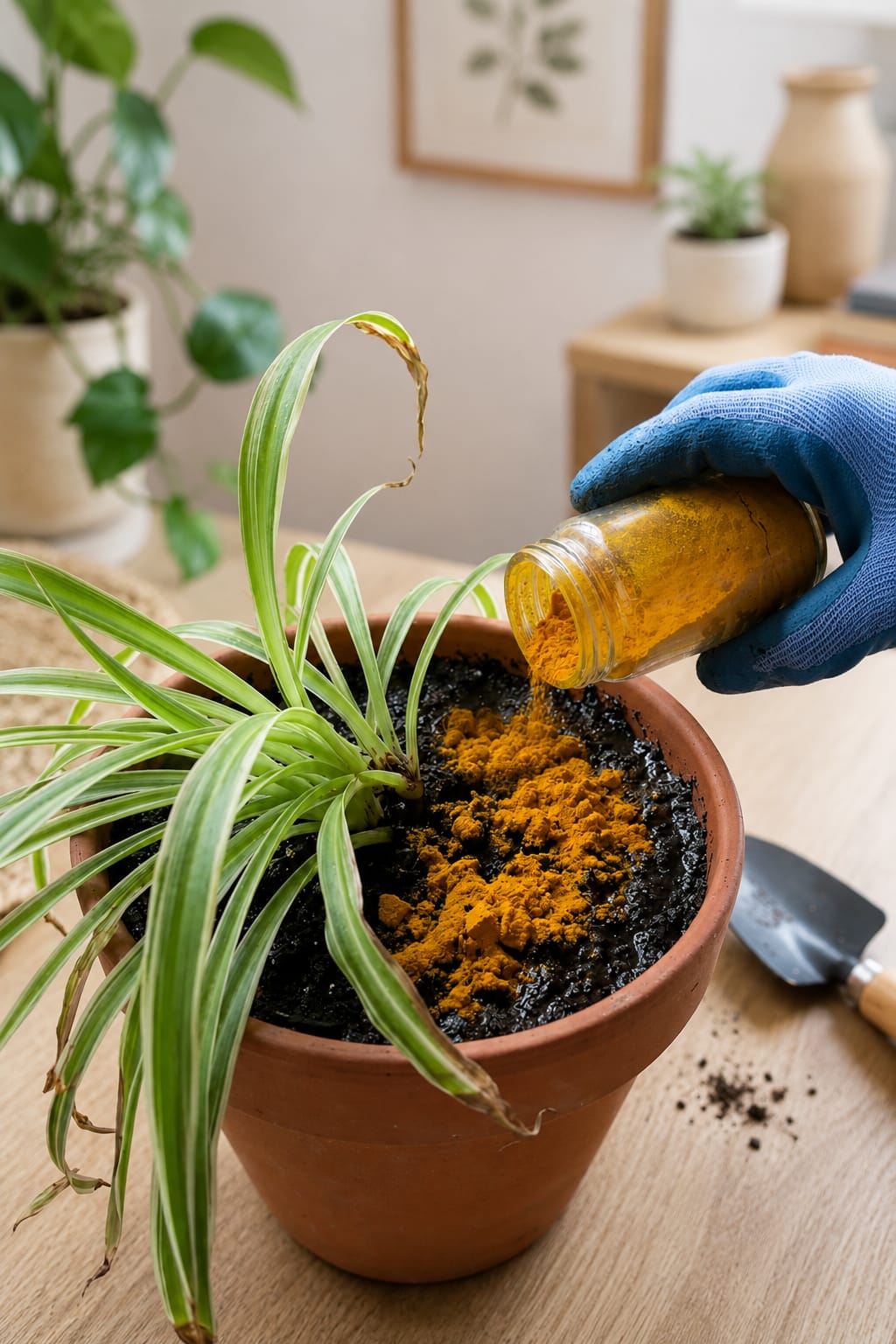
Spider plants are some of the easiest and most charming houseplants to grow indoors. Their long arching leaves, soft green-and-white stripes, and baby plantlets make them perfect for windowsills, hanging baskets, kitchen counters, plant shelves, and bright corners. A healthy spider plant can look like a living fountain, spilling gracefully over the edge of a terracotta pot or basket.
But even easy plants can struggle. Spider plants may develop brown tips, pale leaves, weak growth, dry edges, or tired-looking foliage when their care routine becomes unbalanced. Sometimes the problem is watering. Sometimes it is old soil, too much fertilizer, poor drainage, dry air, or low light. Many plant lovers look for natural tricks to refresh their plants, and one popular idea is using turmeric powder as a gentle soil-care support.
Turmeric powder is bright yellow, natural, and commonly found in the kitchen. In gardening routines, it is often discussed as a mild natural powder used around soil or plant wounds. However, it must be used very carefully. Turmeric is not a complete fertilizer, and it should never be piled heavily on the soil. A large amount can create buildup, stain surfaces, hold moisture, and disturb the soil balance.
The safest way to use turmeric around a spider plant is as a tiny, occasional soil-supporting sprinkle, not a heavy treatment. The real secret to a full spider plant is still proper light, correct watering, drainage, fresh soil, and gentle feeding.
Why Spider Plants Start Looking Tired
Spider plants are forgiving, but they are also expressive. When something is wrong, they show it through their leaves. Brown tips, curling edges, pale stripes, drooping leaves, and slow growth are all signals that the plant’s environment needs attention.
Common reasons include underwatering, overwatering, mineral-heavy tap water, too much fertilizer, compacted soil, low humidity, direct hot sun, or a pot that does not drain well.
Before adding any powder, always check the basics first. A natural trick works best when the plant already has healthy roots and suitable growing conditions.
What Turmeric Powder Can and Cannot Do
Turmeric powder is often used in natural plant-care discussions because it is dry, aromatic, and traditionally associated with cleanliness. Some gardeners use a tiny amount on cut stems or around the soil surface after pruning. Others use it as a very light soil sprinkle.
But turmeric does not replace fertilizer. It does not provide all the nutrients spider plants need. It also will not instantly revive dead leaves or repair rotten roots.
Turmeric should be treated as a small optional support step. If the spider plant is suffering from wet soil, root rot, or poor light, turmeric will not solve the problem.
How Much Turmeric to Use
Use only a tiny pinch. For a small spider plant, a dusting smaller than one-eighth teaspoon is enough. For a medium pot, one-quarter teaspoon is usually the maximum.
Never pour a thick mound of turmeric onto the soil. A heavy pile can sit wet after watering, stain the pot, attract curiosity from pets, and create an unpleasant crust on the surface.
Less is safer. A light dusting around the outer soil surface is enough.
How to Apply Turmeric Safely
Apply turmeric only when the soil is not soggy. Sprinkle a tiny amount around the outer edge of the pot, away from the center crown of the spider plant.
Use a small spoon, wooden stick, or plant tool to gently mix it into the top layer of soil. Do not pack it tightly around the base of the plant.
After applying, do not water heavily unless the plant is already due for watering. If the soil is wet, wait until it dries slightly.
How Often to Repeat the Routine
This routine should be rare. Once every 2 to 3 months is more than enough. Many spider plants will not need turmeric at all.
Using turmeric weekly is not recommended. Indoor pots are small environments, and repeated powders can build up quickly.
When caring for spider plants, simple and steady care is better than constant treatments.
When Not to Use Turmeric
Do not use turmeric if the plant has soggy soil, fungus gnats, mold, root rot, a bad smell from the pot, or a soft crown. Adding powder to unhealthy wet soil can make the environment worse.
Also avoid turmeric right after repotting if the roots were damaged. Give the plant time to settle first.
If the plant is severely stressed, focus on water, roots, soil, and light before using any homemade routine.
Check the Soil First
Spider plants like soil that is lightly moist but not constantly wet. Push your finger into the top inch of soil. If it feels wet, do not water. If it feels dry, water thoroughly and allow excess water to drain.
If the soil stays wet for many days, the mix may be too heavy or the pot may not drain well. In that case, turmeric is not the answer. Fresh airy soil is more important.
Best Soil for Spider Plants
Spider plants grow best in a light, well-draining potting mix. They do not like soil that becomes muddy and compacted.
A good mix may include:
- Indoor potting soil
- Perlite
- Coco coir
- Fine bark chips
- A small amount of compost
This type of mix holds enough moisture for the roots while still allowing oxygen to move through the pot.
Drainage Is Essential
Every spider plant pot should have drainage holes. Without drainage, water collects at the bottom and can damage the roots.
If you use a decorative pot without holes, keep the spider plant in a nursery pot with drainage and place it inside the decorative container. After watering, remove any extra water.
Good drainage prevents most spider plant problems before they begin.
Watering Spider Plants Correctly
Spider plants prefer deep watering followed by a partial drying period. Water until moisture drains from the bottom of the pot, then let the top inch of soil dry before watering again.
Avoid tiny daily splashes. They keep the surface damp and may encourage fungus gnats while deeper roots stay unevenly watered.
Consistent watering is one of the best ways to keep leaves full and flexible.
Brown Tips on Spider Plants
Brown tips are common. They may appear because of dry air, inconsistent watering, too much fertilizer, mineral-heavy tap water, or stress from heat and direct sun.
Trim brown tips with clean scissors if they bother you. Cut at an angle to match the natural leaf shape.
To reduce new brown tips, use filtered or rested water, avoid overfeeding, keep watering consistent, and protect the plant from hot direct sun.
Light for Fuller Growth
Spider plants grow best in bright indirect light. They can survive in lower light, but growth becomes slower and the plant may produce fewer baby plants.
Place the plant near a bright window with filtered light. Morning sun is usually gentle. Harsh afternoon sunlight can scorch the leaves, especially on variegated varieties.
If the leaves look pale or weak, move the plant gradually to a brighter spot.
Feeding Spider Plants
Turmeric is not fertilizer. Spider plants need balanced nutrition during active growth, especially if they are producing many baby plants.
Use a balanced houseplant fertilizer at half strength once a month during spring and summer. Do not overfeed. Too much fertilizer can cause brown tips and weak growth.
During winter, reduce or stop feeding because growth slows down.
How to Encourage Baby Spider Plants
Spider plants produce babies when they are mature, healthy, and growing in good conditions. Bright indirect light, steady watering, and light feeding help encourage spiderettes.
A slightly snug pot may also help. If the pot is too large, the plant may focus on roots instead of producing long stems with babies.
Do not force the plant with too much fertilizer. Balanced care works better.
Pruning Tired Leaves
Dead or badly damaged leaves will not turn green again. Remove them with clean scissors near the base. This makes the plant look cleaner and allows you to monitor new growth.
Do not remove too many healthy leaves at once. The plant needs green leaves to make energy.
Regular light pruning keeps the spider plant fresh and attractive.
Cleaning the Leaves
Spider plant leaves are narrow and can collect dust. Dust makes the plant look dull and reduces light absorption.
Gently wipe leaves with a damp cloth or rinse the plant lightly in the sink. Let it dry in a bright airy place afterward.
Clean leaves instantly make the plant look healthier and more decorative.
Repotting a Struggling Spider Plant
If the spider plant is root-bound, dries out too quickly, or sits in compacted soil, repotting may help more than any powder routine.
Choose a pot only one size larger. Spider plants have thick storage roots, and they do not need a huge container.
Repot during spring or summer for the fastest recovery.
Humidity and Airflow
Spider plants adapt well to normal indoor humidity, but very dry air can contribute to crispy tips.
Group plants together, place the pot near other houseplants, or use a pebble tray to create a slightly more humid microclimate.
Good airflow also matters. Avoid keeping the plant in a stagnant, damp corner.
Continue to Page 2
Continue to page 2 for more details about this article and the key points many readers miss on the first page.