Signs Your ZZ Plant Needs Fertilizer
A ZZ plant may benefit from light feeding if it is in good light, has healthy roots, and has not been fertilized for many months. Slow growth alone is not always a sign of nutrient deficiency because ZZ plants naturally grow slowly.
Possible signs of low nutrients include:
- Pale new growth that does not darken
- Weak new shoots
- Very slow growth in bright conditions
- Older soil that has not been refreshed in years
Even then, feed lightly. Do not add a heavy dose of crystals.
Signs You Overfertilized a ZZ Plant
Overfertilizing can cause more damage than underfeeding. Watch for:
- Yellowing leaves
- Brown leaf tips
- White crust on soil
- Drooping stems
- Root burn
- Wilting after feeding
- Sudden leaf drop
- Slow decline despite watering correctly
If you suspect fertilizer burn, flush the soil with plain water if the pot drains well. Let it drain fully. If the pot does not drain or the soil is heavily contaminated, repot into fresh mix.
What to Do If You Added the Wrong Crystals
If you added unknown white crystals to a ZZ plant, remove as much as possible from the soil surface. Do not water them in until you know what they are.
If the crystals were salt, sugar, baking soda, cleaning powder, or an unknown household product, remove the top layer of soil. If some dissolved into the pot, consider repotting the plant into fresh mix.
If the pot has drainage and the product was mild fertilizer used slightly too heavily, you can flush the soil with plain water. Let the pot drain completely afterward.
What to Do If the Crystals Were Salt
Remove the salt immediately. If it has already dissolved, flush the soil thoroughly with plain water if the pot drains well. If the plant is in a non-draining pot, repot into fresh soil.
Salt can damage ZZ roots and rhizomes. Do not wait for symptoms to appear.
What to Do If the Crystals Were Sugar
Remove sugar from the soil surface. If it has dissolved, repotting may be safest because sugar can create sticky conditions, feed microbes, and attract pests.
Watch for fungus gnats, ants, mold, or sour smell.
What to Do If the Crystals Were Baking Soda
Remove the baking soda and the top layer of soil. If a lot was used, repot the plant. Baking soda can affect the soil and add sodium, which ZZ plants do not need.
Do not try to “balance” baking soda with vinegar or lemon juice. That can make the situation worse. Fresh soil is safer.
What to Do If the Crystals Were Water Beads
If water-retaining crystals or water beads were added, remove them if possible. ZZ plants do not need soil that holds extra water. If they were mixed into the soil heavily, repotting into a better-draining mix may be necessary.
Water-retaining products can keep the root zone too damp, especially in low light.
Should You Repot a ZZ Plant After a Crystal Mistake?
Repot if the crystals were harmful, unknown, or already dissolved into the soil. Repotting is also wise if the soil smells odd, becomes sticky, forms a crust, or stays wet too long.
When repotting, inspect the rhizomes. Healthy ZZ rhizomes are firm and potato-like. Rotten rhizomes are soft, mushy, dark, or foul-smelling.
How to Repot a ZZ Plant Safely
Remove the plant gently from the pot. Shake away old soil. Inspect roots and rhizomes. Trim any rotten or mushy sections with clean tools. Let cut areas dry briefly if needed.
Repot into a container with drainage holes and a well-draining mix. Do not bury the rhizomes too deeply. Water lightly after repotting if the roots are healthy and the soil is dry. If you removed rot, wait a few days before watering.
How Often Should You Repot ZZ Plants?
ZZ plants do not need frequent repotting. Repot every two to three years, or when the plant is root-bound, the soil is old, or the pot is crowded with rhizomes.
Choose a pot only slightly larger than the current one. A pot that is too large holds extra moisture and increases the risk of rot.
Do ZZ Plants Like Being Root-Bound?
ZZ plants can tolerate being somewhat root-bound. In fact, a slightly snug pot can help prevent overwatering because there is less excess soil holding moisture.
However, if the rhizomes are deforming the pot, pushing out of the soil, or causing the plant to dry too quickly, repotting is a good idea.
How to Tell If a ZZ Plant Is Overwatered
Overwatering is the most common ZZ plant problem. Signs include:
- Yellow leaves
- Soft stems
- Mushy rhizomes
- Wet soil that does not dry
- Blackened stem bases
- Foul smell from the pot
- Leaves dropping from stems
If you see these signs, stop watering and inspect the roots. Do not add fertilizer or crystals to an overwatered ZZ plant.
How to Save an Overwatered ZZ Plant
Remove the plant from the pot. Discard wet soil. Trim rotten roots and mushy rhizomes. Keep only firm healthy sections. Repot into dry, airy mix and a pot with drainage.
Wait before watering if rot was present. Keep the plant in bright indirect light and allow it to recover slowly.
A ZZ plant can often regrow from healthy rhizomes, but recovery takes time.
How to Tell If a ZZ Plant Is Underwatered
Underwatered ZZ plants may have wrinkled stems, curling leaves, dry soil, and drooping growth. The pot may feel very light.
Water thoroughly with plain water and let it drain completely. Do not add crystals or fertilizer to a severely dry plant right away. Rehydrate first.
ZZ plants can tolerate drought, but they still need water eventually.
Why ZZ Leaves Turn Yellow
Yellow ZZ leaves can be caused by several things:
- Overwatering
- Poor drainage
- Root rot
- Natural aging
- Too much fertilizer
- Sudden light change
- Cold stress
- Underwatering after a long drought
Before adding white crystals, identify the cause. Fertilizer will not fix root rot or poor drainage.
Why ZZ Leaves Turn Brown
Brown tips or edges can come from underwatering, fertilizer burn, salt buildup, low humidity, direct sun scorch, or root stress. Brown patches may also appear if leaves are damaged by strong sunlight.
If brown areas are dry and crispy, review watering and light. If they are soft or blackened, check for rot.
Why ZZ Stems Lean or Fall Over
ZZ stems may lean because of low light, uneven growth, weak roots, overwatering, or natural weight. Rotate the pot regularly so all sides receive light. Give brighter indirect light if stems stretch toward the window.
If stems are soft at the base, inspect for rot immediately.
How to Clean ZZ Plant Leaves
ZZ plant leaves are naturally glossy. Dust can reduce their shine and block light. Clean leaves with a soft damp cloth.
Do not use oils, mayonnaise, milk, or leaf-shine sprays. These can clog leaf surfaces or attract dust. Plain water is enough.
Can White Crystals Make Leaves Shinier?
No. Leaf shine comes from healthy leaves and cleaning. Crystals in the soil will not polish the foliage.
To keep ZZ leaves glossy, provide good light, avoid overwatering, and wipe dust from the leaves occasionally.
Can ZZ Plants Grow in Low Light?
Yes, ZZ plants can survive in low light, but they grow much more slowly. If you want new shoots, bright indirect light is better.
A ZZ plant in a dark corner may stay alive but barely change for months. That does not mean it needs crystals. It likely needs more light.
Can ZZ Plants Take Direct Sun?
ZZ plants can tolerate some gentle morning sun, but harsh direct afternoon sun can burn leaves. If moving a ZZ plant into brighter light, do it gradually.
Bright indirect light is safest for strong growth.
Should You Mist ZZ Plants?
No. Misting is not necessary. ZZ plants tolerate normal indoor humidity well. Misting can leave water spots on leaves and does not meaningfully improve growth.
If the plant is dusty, wipe leaves instead of misting.
Are ZZ Plants Toxic?
ZZ plants contain calcium oxalate crystals and should not be eaten by people or pets. Keep them away from curious cats, dogs, and children. Wear gloves if you have sensitive skin when pruning or repotting.
This is another reason not to add random edible-looking crystals or powders to the pot. Keep plant care products clearly separated from household items.
Can You Propagate a ZZ Plant?
Yes. ZZ plants can be propagated by division, stem cuttings, or leaf cuttings. Division is the fastest method. Leaf cuttings are slow and can take months to form rhizomes.
When dividing, separate healthy rhizome sections with roots and stems attached. Repot each section into a well-draining mix.
No white crystals are needed for propagation.
When Should You Divide a ZZ Plant?
Divide a ZZ plant when it is crowded, root-bound, or too large for its pot. Spring or early summer is best because the plant is entering active growth.
Avoid dividing a stressed or overwatered plant unless you are trying to remove rot and save healthy sections.
How to Use Slow-Release Granules Safely
If the white crystals are slow-release fertilizer, use them carefully:
- Check that the product is labeled for houseplants.
- Read the dose for your pot size.
- Use less than the maximum amount.
- Apply only during active growth.
- Keep granules on the soil, not on leaves.
- Water normally, not excessively.
- Do not combine with liquid fertilizer.
- Do not reapply until the product’s release period ends.
ZZ plants are light feeders, so gentle feeding is enough.
How to Use Liquid Fertilizer Instead
Liquid fertilizer is often easier to control than granules. Use a balanced houseplant fertilizer diluted to half strength or quarter strength. Apply after watering or during a normal watering when the plant is not bone dry.
Feed once every one to two months in spring and summer. Stop in winter unless the plant is actively growing under strong light.
Should You Fertilize New ZZ Shoots?
New shoots show that the plant is active. A light feeding may support growth, but it is not required every time a shoot appears.
If the plant has not been fed for months and is in bright light, a diluted fertilizer can be used. If it was recently fertilized or repotted into fresh soil, skip it.
Common Mistakes With the White Crystal ZZ Plant Trick
Using Unknown Crystals
This is the biggest mistake. Never add anything unless you know exactly what it is.
Using Table Salt
Salt can damage roots and should never be used as plant food.
Sprinkling Epsom Salt Dry
Dry Epsom salt can create concentrated spots. It is not needed for most ZZ plants.
Using Water-Retaining Crystals
ZZ plants do not want extra water held around their roots.
Overfertilizing
ZZ plants are slow-growing and light-feeding. Too much fertilizer can burn roots.
Ignoring Low Light
A slow ZZ plant often needs brighter indirect light, not more fertilizer.
Using a Pot Without Drainage
Poor drainage can cause rhizome rot. No additive can fix that.
A Safe White Crystal Routine for ZZ Plants
If you want to use a white crystal or granule product on your ZZ plant, follow this safety checklist:
- Identify the product clearly.
- Use only plant-safe products.
- Read the label carefully.
- Apply lightly.
- Keep crystals off leaves and stems.
- Do not pile them around the rhizomes.
- Do not use on a stressed or overwatered plant.
- Do not combine with other fertilizers.
- Water only when the soil is dry enough.
- Stop if you see yellowing, crust, or root stress.
This keeps the plant safer and avoids the most common problems.
Frequently Asked Questions
What are the white crystals being added to the ZZ plant?
They could be slow-release fertilizer, perlite, pumice, Epsom salt, water-retaining crystals, or another product. They should only be used if clearly identified and safe for houseplants.
Can white crystals make a ZZ plant grow faster?
Not by themselves. ZZ plants grow faster in bright indirect light with healthy roots and proper watering. Fertilizer can support growth, but it cannot force fast growth.
Is salt good for ZZ plants?
No. Table salt is harmful to ZZ plants and should never be added to the soil.
Is Epsom salt good for ZZ plants?
Most ZZ plants do not need Epsom salt. If used, it should be very diluted in water and used rarely, not sprinkled dry.
Are water crystals good for ZZ plants?
No. Water-retaining crystals can keep the soil too wet and increase the risk of rhizome rot.
How often should I fertilize a ZZ plant?
Feed lightly once every one to two months during spring and summer with diluted houseplant fertilizer. Do not overfeed.
Why is my ZZ plant not growing?
ZZ plants naturally grow slowly. Low light, cold temperatures, poor roots, or lack of active growing season can slow them even more.
Why are my ZZ leaves turning yellow?
Yellow leaves are often caused by overwatering, poor drainage, root rot, or fertilizer stress. Check the soil and roots before feeding.
Do ZZ plants need special soil?
They need well-draining soil. A mix with potting soil, perlite, pumice, cactus mix, or bark works well.
Should ZZ plants be in pots with drainage?
Yes. Drainage is essential. ZZ rhizomes can rot if water sits in the pot.
Final Thoughts
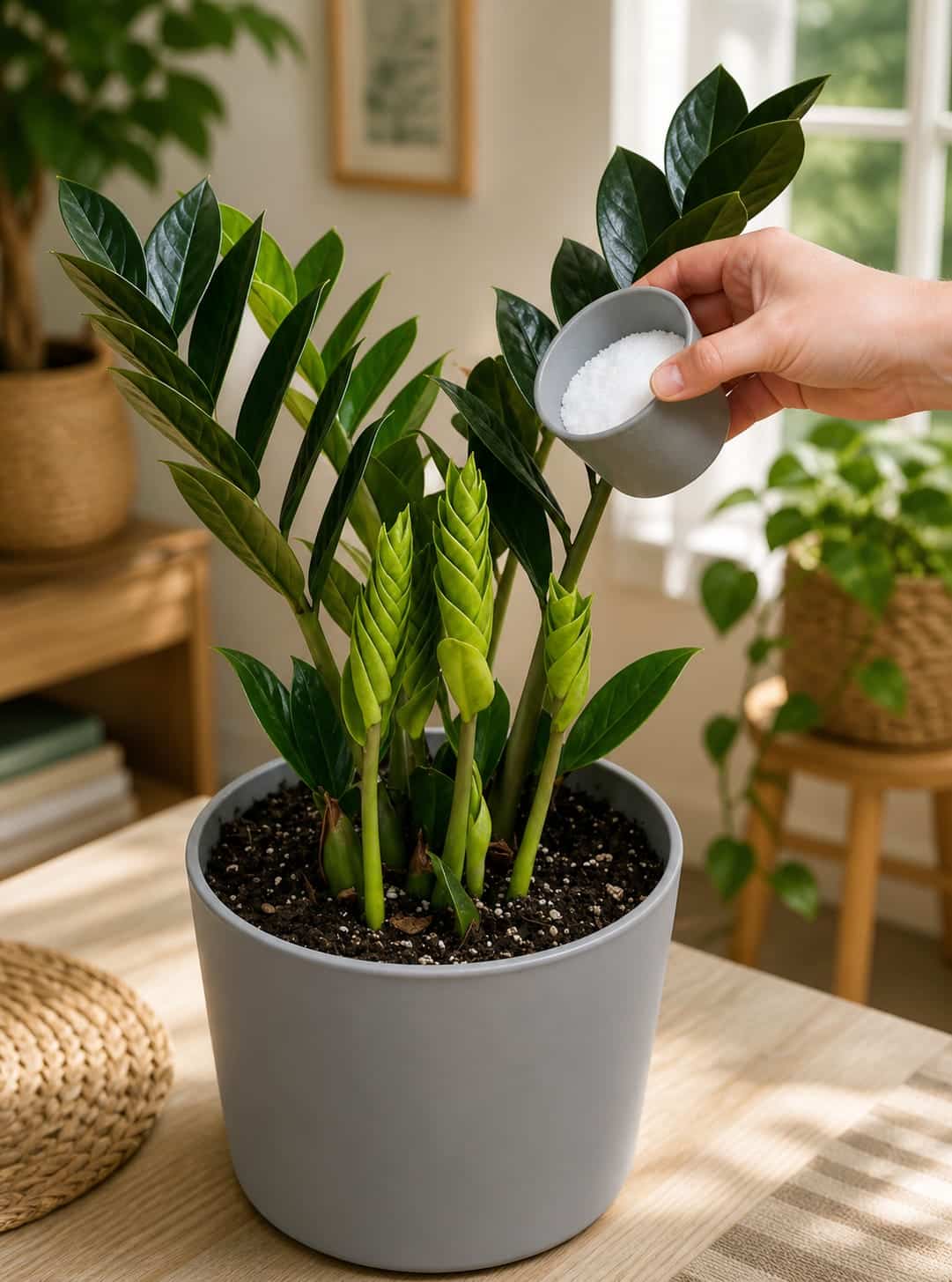
The white crystal ZZ plant trick looks simple and convincing. A small cup of white granules seems like an easy way to wake up new shoots and make glossy leaves even stronger. But ZZ plants do not need mystery crystals to thrive.
If the crystals are a labeled slow-release fertilizer, they may be useful in a small amount during active growth. If they are perlite or pumice, they are better mixed into the soil during repotting. If they are salt, sugar, baking soda, water-retaining crystals, cleaning powder, or anything unknown, they should not be used.
The ZZ plant in the image already looks healthy, with fresh new shoots and strong glossy leaves. That means the care routine is likely working. Instead of adding unnecessary products, keep the plant in bright indirect light, water only when the soil dries, use a well-draining mix, and feed lightly during spring and summer.
ZZ plants reward patience. They grow slowly, store energy underground, and send up new shoots when they are ready. The real secret is not a cup of white crystals. It is stable care, drainage, light, and restraint.
Use plant products only when you know what they are and why your ZZ plant needs them. With simple care, your ZZ plant can stay glossy, upright, and beautiful for many years.