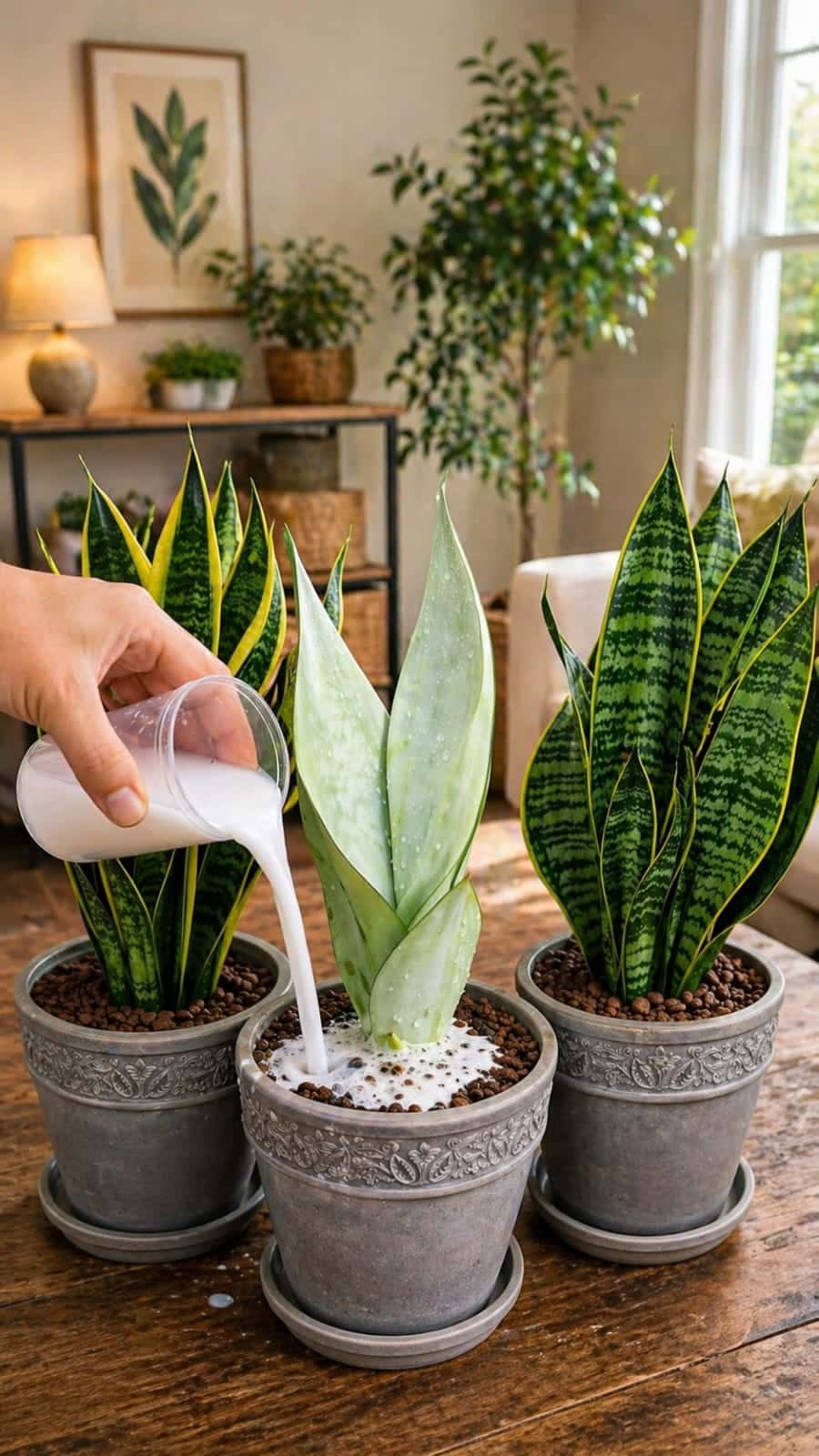
Snake plants are already known as some of the easiest and most dependable houseplants you can grow. They stand tall, look elegant, tolerate dry indoor air, and forgive missed watering better than most plants. Their sword-like leaves bring instant structure to a room, whether they are dark green with yellow edges, pale silver-green, compact, tall, or arranged in a modern decorative pot.
But even a tough snake plant can start to look tired. The leaves may lose their shine. Growth may slow down. The plant may sit in the same pot for months without producing new pups. Some leaves may wrinkle slightly, lean outward, or develop dry tips. When this happens, plant lovers often search for a simple natural method that can refresh the plant without complicated products.
One trick that has started getting attention is the “white liquid” snake plant method. In photos and videos, it looks dramatic: a creamy white liquid is poured around the base of the plant, soaking into the potting mix like a secret homemade tonic. The visual effect is strong, and it immediately makes people wonder what is inside the cup.
Is it milk? Is it rice water? Is it a fertilizer? Is it safe for snake plants?
The safest and most useful version of this trick is usually diluted rice water. Rice water is the cloudy white liquid left after rinsing uncooked rice. It looks milky, but it is not dairy. When used carefully, it can act as a very mild natural plant rinse. It may support the soil environment, gently refresh the root zone, and become part of a simple care routine for a healthy snake plant.
However, there is one important warning: snake plants do not like heavy, wet, sticky, or rich soil. They are drought-tolerant plants that prefer dry-down time between waterings. That means the white liquid trick must be used lightly and occasionally. It should never be thick, sugary, oily, or poured into an already wet pot.
In this complete guide, you will learn what the white liquid snake plant trick is, why people are using it, how to make the safest version, how often to apply it, what results to expect, and what mistakes to avoid. If you want a natural-looking way to support your snake plant’s growth without overcomplicating your routine, this method may be worth trying carefully.
What Is the White Liquid Snake Plant Trick?
The white liquid snake plant trick is a simple houseplant care method where a cloudy white liquid is poured into the soil around a snake plant. In most safe versions, this liquid is diluted rice water. It is made by rinsing plain uncooked rice in water until the water turns cloudy, then diluting that cloudy water before using it on the plant.
The method became popular because it looks unusual and satisfying. Clear water disappears into the soil without much visual effect, but white liquid creates a dramatic contrast against dark potting mix or clay pebbles. It looks like the plant is receiving a special treatment, almost like a homemade plant spa.
But the appearance is only part of the story. Rice water contains small amounts of starch and trace compounds from the surface of rice grains. When diluted, it can be used as a mild organic supplement for houseplants. It is not a complete fertilizer, and it will not magically transform a weak plant overnight, but it can be a gentle addition to a good care routine.
For snake plants, the key is moderation. These plants are not heavy feeders. They do not need frequent rich liquids. A light rice water rinse once in a while may be helpful, but overusing it can create mold, gnats, sour soil, or root stress.
Why People Are Starting to Notice This Trick
Plant lovers are drawn to simple tricks that use common kitchen ingredients. Rice water feels natural, affordable, and easy. Instead of throwing away the cloudy water after rinsing rice, people reuse it for plants. This makes the method feel sustainable and clever.
The white liquid effect also makes the trick highly shareable. It looks more interesting than ordinary watering. When poured around the base of a snake plant, it creates a bold visual moment that catches attention. That is why this trick spreads quickly on social media and plant blogs.
Another reason people like it is that snake plants often grow slowly indoors. A plant that looks healthy but produces no new leaves for months can make owners impatient. A gentle homemade tonic feels like a way to wake the plant up.
Still, the real reason the trick can seem effective is often the care routine around it. When people prepare rice water, check the soil, pour carefully, and observe the plant afterward, they become more consistent. That extra attention can make the plant look better over time.
The trick is not magic. It is a small plant-care ritual that encourages better observation and more intentional watering.
Is the White Liquid Milk?
Many people assume the white liquid is milk because of the color. But milk is not the best choice for snake plants. Pouring milk into houseplant soil can create problems, especially indoors. Milk can spoil, smell bad, attract pests, leave residue, and encourage fungal growth if the soil stays damp.
Some gardeners use very diluted milk on certain outdoor plants for specific purposes, but snake plants are different. They prefer a dry, airy root environment. A dairy-based liquid sitting in a pot can turn unpleasant quickly.
That is why rice water is a safer option. It gives the same cloudy white appearance without the risks of dairy. It is still organic and should still be diluted, but it is much cleaner than milk for a potted indoor snake plant.
If you see a white liquid being poured into a snake plant pot, do not assume you should use milk. For this trick, use fresh diluted rice water instead.
Why Rice Water Is Better Than Milk for Snake Plants
Rice water is lighter, cleaner, and easier to control than milk. It does not contain dairy fats or proteins that spoil quickly. It can be made fresh in less than a minute and diluted to a safe strength. It also does not leave the same sour smell that milk can create.
Snake plants need a potting mix that dries between waterings. Any liquid added to the soil should move through the mix easily and not leave sticky residue. Diluted rice water, when prepared correctly, behaves much more like water than a thick food product.
Milk, on the other hand, can cling to soil particles and break down in unpleasant ways. It may attract fungus gnats or create a sour odor. For indoor pots, this is not worth the risk.
The goal is to give the plant a gentle refresh, not to create a spoiled organic mess in the pot. That is why the best white liquid snake plant trick uses rice water, not dairy.
What Rice Water May Do for Snake Plants
Rice water may provide a small amount of organic material and trace nutrients. It may support beneficial microbial activity in the potting mix when used sparingly. It may also help create a more intentional watering routine, which is often the biggest benefit.
However, rice water is not a complete fertilizer. It does not provide a predictable balance of nitrogen, phosphorus, potassium, and micronutrients. If your snake plant truly needs nutrition, a diluted cactus or houseplant fertilizer may be more reliable.
Rice water should be viewed as a mild supplement. It may support a plant that is already healthy, but it cannot fix major problems. It cannot repair root rot. It cannot make a snake plant grow in a dark corner. It cannot replace good drainage. It cannot force blooms from a young plant.
Used correctly, it may help the plant look fresher over time. Used incorrectly, it can cause problems. The difference is in the dilution, timing, and drainage.
Why Snake Plants Need Careful Watering
Snake plants store water in their thick leaves and underground rhizomes. This is why they can survive dry conditions. It is also why overwatering is one of the fastest ways to damage them.
A snake plant does not want constantly wet soil. Its roots need oxygen. When the potting mix stays wet too long, the roots can suffocate and rot. A rotting snake plant may develop soft mushy leaves, yellowing, bad smells, or collapsing growth.
Because of this, the white liquid trick should never be treated as an extra watering. It should only replace a normal watering when the soil is already dry. If you watered your snake plant recently, wait. Do not pour rice water into damp soil just because the trick looks interesting.
The best rule is simple: only use the white liquid when the plant is actually ready for water.
The Safest White Liquid Recipe for Snake Plants
This recipe creates a light diluted rice water mixture that is safer for snake plants than thick rice water or milk. It should look lightly cloudy, not heavy or creamy.
Ingredients
- 1 tablespoon plain uncooked rice
- 1 cup clean room-temperature water
- 2 to 3 cups extra clean water for dilution
- A small bowl
- A strainer
- A watering cup or bottle
Instructions
- Place the uncooked rice in a clean bowl.
- Add 1 cup of clean water.
- Stir the rice for 30 to 60 seconds until the water turns cloudy white.
- Strain out all rice grains completely.
- Add 2 to 3 cups of fresh water to dilute the cloudy rice water.
- Use the diluted liquid immediately.
The final mixture should be thin and watery. If it looks thick, add more water. Snake plants do not need a strong mixture.
How to Apply the White Liquid Method
Before applying the rice water, check the soil. Push your finger or a wooden stick deep into the potting mix. If the soil is still moist, do not use the mixture yet. Wait until the soil is dry or nearly dry.
When the plant is ready, pour the diluted rice water slowly around the soil surface. Aim for the potting mix, not the leaves. Avoid pouring directly into the center of the leaf cluster because liquid trapped between the leaves can sometimes encourage rot.
Let the liquid drain through the pot. If your pot has drainage holes, you should see excess liquid come out of the bottom. Empty the saucer afterward. Do not let the plant sit in leftover liquid.
If your pot does not have drainage holes, do not use this method. Snake plants need drainage, especially when using any homemade organic liquid.
How Often Should You Use the White Liquid Trick?
For most snake plants, once every four to six weeks during spring and summer is enough. If your plant is in lower light, use it even less often. In winter, it is usually best to stop using rice water because the plant grows more slowly and the soil dries more slowly.
Using rice water too often can create organic buildup in the potting mix. This may lead to mold, fungus gnats, sour smells, or root stress. More is not better.
A good routine is:
- Use plain water most of the time.
- Use diluted rice water only occasionally.
- Apply it only when the soil is dry.
- Stop if you notice mold, gnats, or bad smells.
Snake plants are slow, steady growers. They do not need constant feeding or weekly treatments.
What Results Can You Expect?
The white liquid method will not make a snake plant double in size overnight. Snake plants grow slowly, and visible improvement takes time. After several weeks or months of proper care, you may notice firmer leaves, better color, and possibly new pups if the plant is mature and receiving enough light.
The most realistic benefit is a healthier-looking plant over time. If the plant was slightly undernourished or neglected, a gentle rice water routine may help as part of a broader care plan. If the plant already had good care, the change may be subtle.
Some people believe the trick makes leaves shinier. Usually, this happens because they also clean the leaves, improve watering, or move the plant to better light. Rice water should not be sprayed on the leaves for shine. It is better used on the soil only.
If you want quick visual improvement, wipe the leaves with a damp cloth. If you want long-term improvement, focus on light, drainage, watering, and gentle feeding.
Can This Trick Make a Snake Plant Bloom?
Snake plants can bloom, but blooms are not guaranteed. They usually appear on mature plants under the right conditions. Bright light, a slightly snug pot, healthy roots, and a proper dry-down watering routine are more important than rice water.
The white liquid trick may support plant health, but it does not force flowers. If your snake plant is young or sitting in low light, rice water will not make it bloom. If your plant is mature, healthy, and receiving bright indirect light, a gentle care routine may increase the chance of blooms over time.
Think of rice water as support, not a bloom command. The plant decides when it is ready.
The Real Secret Is Bright Light
Snake plants are often called low-light plants, but this can be misleading. They can survive in low light, but they grow better in bright indirect light. If your snake plant has not grown in months, light may be the real issue.
Place your snake plant near a bright window. An east-facing window is often ideal because it provides gentle morning sun. A south- or west-facing window can also work if the plant is not suddenly exposed to harsh direct sunlight.
If your plant has been in a dark room, move it gradually. Sudden strong sun can scorch leaves. Increase light slowly over one to two weeks.
Without enough light, no homemade liquid will produce strong growth. Light gives the plant energy. Rice water can only support what the plant is already able to do.
Continue to Page 2
Continue to page 2 for more details about this article and the key points many readers miss on the first page.