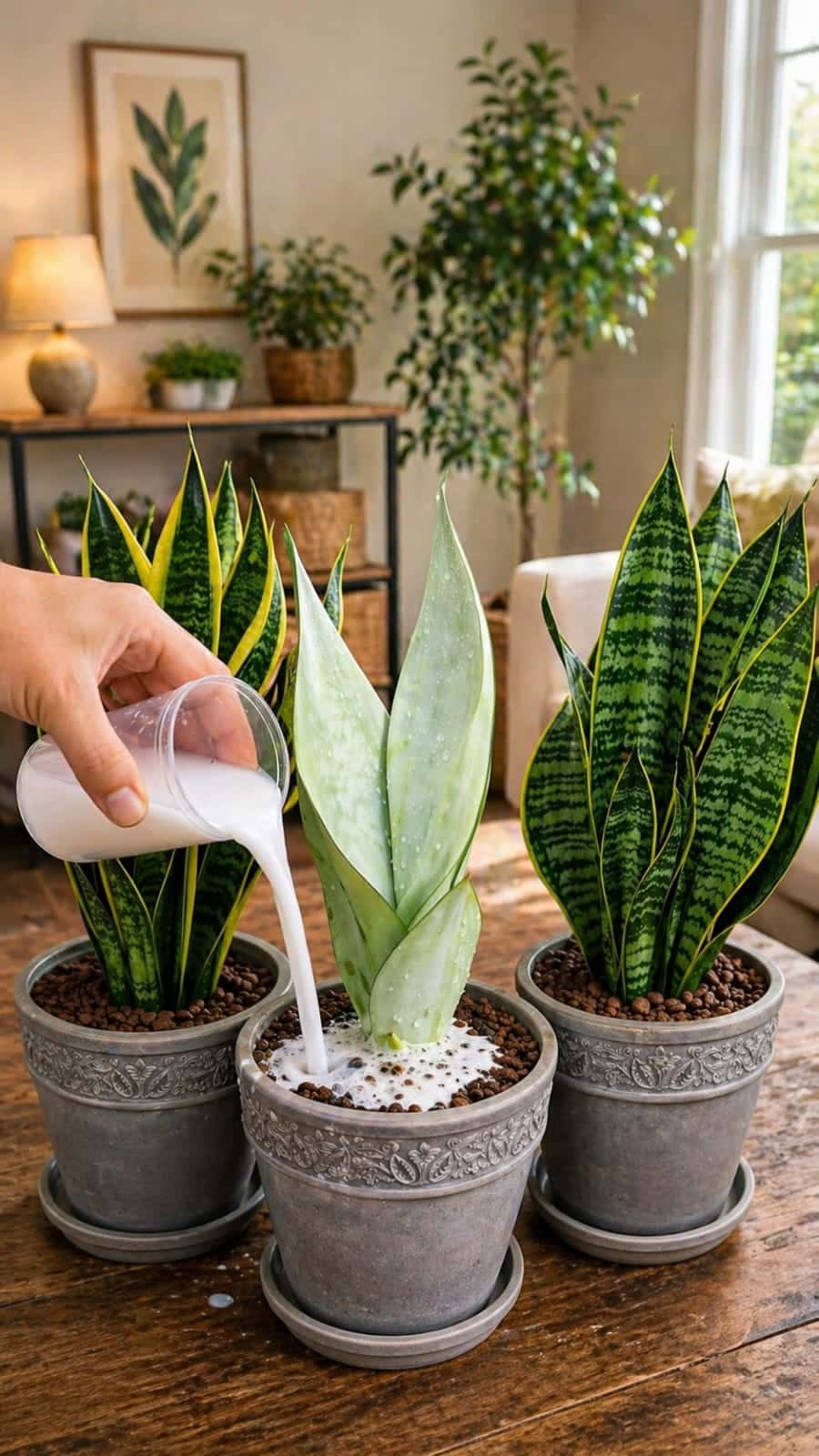
Best Soil for the White Liquid Method
The white liquid method works best when the snake plant is in fast-draining soil. Dense, heavy soil holds moisture too long and increases the risk of problems. A good snake plant mix should be gritty and airy.
A simple soil mix can include:
- 2 parts cactus or succulent mix
- 1 part perlite or pumice
- 1 part orchid bark or coarse sand
This kind of mix lets liquid drain quickly while still giving roots enough moisture during watering. It also helps prevent rice water from sitting too long around the roots.
If your snake plant is in compacted old soil, repotting may be more helpful than adding any white liquid. Fresh, well-draining mix can dramatically improve root health.
Why Drainage Is Non-Negotiable
A snake plant pot must have drainage holes. This is especially true if you are using rice water. Homemade organic liquids should never sit trapped at the bottom of a closed pot.
If your decorative planter has no holes, keep the snake plant in a nursery pot inside it. When watering, remove the nursery pot, let it drain fully, and then place it back inside the decorative pot. Always empty any collected liquid.
A beautiful pot without drainage may look stylish, but it can quietly damage the plant. Snake plants prefer dry roots between waterings, and drainage is what makes that possible.
Can You Spray the White Liquid on Leaves?
No, it is better not to spray rice water on snake plant leaves. Rice water can leave residue, attract dust, or create spots. Snake plant leaves do not need rice water on their surface.
If the leaves look dull, wipe them with a soft damp cloth. This removes dust and helps the plant absorb light better. Clean leaves often look instantly healthier.
Keep the white liquid method as a soil treatment only. Pour it around the base when the plant needs watering, then let it drain.
Can You Use Fermented Rice Water?
Some gardeners use fermented rice water for certain plants, but it is not the best choice for snake plants, especially indoors. Fermented rice water can smell sour, become too strong, attract insects, and create too much microbial activity in a small pot.
Snake plants prefer clean, dry, airy soil. A fresh diluted rice water rinse is safer than a fermented mixture. If you are a beginner, avoid fermentation completely for snake plants.
Fresh is best. Make the rice water, dilute it, use it immediately, and discard leftovers.
Can You Use Cooked Rice Water?
It is better to use rinse water from uncooked rice. Cooked rice water may be thicker and starchier. If salt, oil, butter, spices, or seasoning were added during cooking, it should never be used on plants.
Salt is especially harmful because it can build up in the soil and damage roots. Oil can coat soil particles and interfere with proper moisture movement. Seasonings can attract pests or create unpleasant smells.
Use only plain uncooked rice rinse water. It is simple, clean, and safer.
Can You Use Rice Milk?
Store-bought rice milk is not recommended for snake plants. It may contain sugar, oils, salt, stabilizers, or flavorings. Even unsweetened versions can include ingredients that are not meant for plant soil.
The white liquid trick should be made from plain rice and water only. Do not use beverages, flavored liquids, or processed plant milks.
Remember, the goal is not to pour something creamy onto the plant. The goal is to use a very light rice rinse as an occasional supplement.
Common Mistakes with the White Liquid Trick
Using It Too Often
This is the biggest mistake. Snake plants do not need frequent rice water. Once every four to six weeks during active growth is enough.
Using Thick Rice Water
Thick rice water can leave too much starch in the soil. Always dilute until the mixture is light and watery.
Using Milk Instead
Milk can spoil, smell, and attract pests. Use diluted rice water, not dairy milk.
Pouring It on Wet Soil
If the soil is already moist, wait. Snake plants need dry-down time.
Using a Pot Without Drainage
Rice water must be able to drain out. No-drainage pots are risky.
Expecting Instant Growth
Snake plants grow slowly. Give the plant weeks or months to respond.
Signs the Trick Is Working Well
If the trick is working as part of a good routine, your snake plant should remain firm, upright, and healthy. Over time, you may see deeper color, steadier growth, or new pups emerging from the soil. The potting mix should smell clean and dry normally between waterings.
The best sign is healthy root and rhizome activity. New pups are a strong indication that the plant is doing well. Leaves that remain firm and colorful are also a good sign.
Do not judge the result after one day. Snake plants are slow responders. Look for changes over a longer period.
Signs You Should Stop Using It
Stop using the white liquid trick if you notice mold on the soil, fungus gnats, sour smells, sticky residue, yellowing leaves, or soft mushy growth. These signs suggest too much moisture or organic buildup.
If this happens, return to plain water only. Let the soil dry properly. If the problem is severe, repot the plant into fresh fast-draining mix.
Do not keep applying rice water to a struggling plant. First identify the problem. Most snake plant issues come from overwatering, poor drainage, low light, or compacted soil.
How to Fix a Snake Plant That Reacts Badly
If your snake plant starts to decline after using the white liquid method, stop immediately. Check the soil moisture. If the soil is wet and smells sour, remove the plant from the pot and inspect the roots.
Healthy roots should be firm. Rotten roots are dark, mushy, and may smell bad. Trim away rotten roots with clean scissors. Let the plant dry briefly, then repot into fresh dry, well-draining soil.
If the problem is only minor mold on the surface, remove the top layer of soil and replace it with fresh mix. Improve airflow and water less often.
Once the plant recovers, keep care simple. Plain water, bright light, and good drainage are better than more treatments.
Should You Still Use Fertilizer?
Rice water is not a complete fertilizer. If your snake plant is actively growing, it may benefit from a diluted cactus or houseplant fertilizer once or twice during the growing season. Use fertilizer at half strength or weaker.
Do not use fertilizer and rice water too close together. Too many supplements can create buildup. A simple routine might be plain water most of the time, diluted rice water once in a while, and a weak fertilizer only during active growth.
Snake plants prefer less rather than more. If in doubt, underfeed slightly.
A Simple Monthly Snake Plant Routine
Here is an easy routine that includes the white liquid trick safely:
- Check soil dryness every week.
- Water only when the soil is dry.
- Use plain water for most waterings.
- Use diluted rice water once every four to six weeks in spring and summer.
- Stop rice water in winter unless the plant is actively growing.
- Keep the plant in bright indirect light.
- Wipe leaves with a damp cloth every few weeks.
- Repot if the soil becomes compacted or slow to dry.
This routine is gentle and realistic. It supports the plant without overwhelming it.
Why the Trick Looks So Powerful
The white liquid trick looks powerful because it is visual. Clear water does not show much, but cloudy white liquid makes the treatment visible. It spreads across the potting surface, contrasts with dark soil, and gives the impression of a rich plant tonic.
This visual effect is part of why the method is popular. It makes plant care feel special. It turns a normal watering moment into a ritual.
But the real power is not the color. The real power is careful timing. If you wait until the soil is dry, use a diluted mixture, provide bright light, and keep drainage excellent, your snake plant has a better chance of thriving.
The trick is not about pouring something dramatic. It is about building a better habit.
Can This Trick Help Pale or Silver Snake Plants?
Some snake plants naturally have pale silver-green leaves. These varieties should not be expected to turn dark green after rice water. Their color is genetic. A pale snake plant is not necessarily weak.
However, if the plant looks dull, dusty, wrinkled, or slow, improving care can help. Use bright indirect light, clean the leaves, avoid overwatering, and use rice water only occasionally.
Do not try to force color changes with homemade liquids. Healthy color depends on variety, light, and overall plant condition.
Can This Trick Help Yellowing Leaves?
Rice water will not fix yellowing leaves if the cause is overwatering or root rot. In fact, adding more liquid may make the problem worse. If your snake plant has yellow leaves, check the soil and roots first.
Yellowing can also happen from old age, cold stress, poor drainage, or fertilizer buildup. The solution depends on the cause. A homemade tonic is not always the answer.
If the soil is dry and the plant is otherwise healthy, one old yellow leaf may simply be natural aging. Remove it at the base with clean scissors if it is unattractive.
Can This Trick Help Wrinkled Leaves?
Wrinkled snake plant leaves can mean underwatering, but they can also mean root damage. If the plant has healthy roots and the soil has been dry for a long time, watering properly may help the leaves firm up. In that case, diluted rice water can be used only if the plant is otherwise stable.
If the soil is wet and leaves are wrinkled, the roots may be rotting and unable to absorb water. Do not add rice water. Inspect the roots instead.
Always diagnose before treating. Snake plants often show similar symptoms for opposite problems.
Best Plants to Try This Trick On
The white liquid rice water trick can be used carefully on several hardy houseplants, but snake plants need the lightest approach. Pothos, spider plants, and peace lilies may tolerate diluted rice water more often because they grow faster and like more moisture. Snake plants are slower and drier by nature.
If you try it on other plants, always adjust based on their watering needs. Never assume one method works the same for every houseplant.
For snake plants, occasional use is the safest rule.
Frequently Asked Questions
What is the white liquid used on snake plants?
The safest version is diluted rice water made from rinsing plain uncooked rice. It looks milky but contains no dairy.
Can I pour milk on my snake plant?
Milk is not recommended. It can spoil, smell, attract pests, and leave residue in the soil. Use diluted rice water instead.
How often should I use rice water on a snake plant?
Use it once every four to six weeks during spring and summer, and only when the soil is dry. Avoid using it in winter unless the plant is actively growing.
Can rice water make my snake plant grow faster?
It may support healthy growth, but light, drainage, and correct watering matter more. Snake plants naturally grow slowly.
Can I spray rice water on the leaves?
No. Use it on the soil only. Wipe leaves with plain water if they are dusty.
Can rice water cause mold?
Yes, if it is too strong, used too often, or poured into soil that stays wet. Always dilute it and use it sparingly.
Should I use cooked rice water?
No, especially if it contains salt, oil, or seasoning. Use fresh rinse water from plain uncooked rice.
Can I leave rice grains in the pot?
It is better not to. Rice grains can swell, mold, or attract pests. Strain them out completely.
Does the white liquid trick make snake plants bloom?
It may support overall health, but it cannot force blooms. Blooming depends on maturity, bright light, healthy roots, and proper watering.
What should I do if my plant smells bad after using it?
Stop using rice water, let the soil dry, and check for rot. If the smell continues, repot into fresh fast-draining soil.
Final Thoughts
The white liquid snake plant trick is getting attention because it looks dramatic, simple, and surprisingly natural. But the best version is not milk or a mystery mixture. It is fresh diluted rice water used carefully as an occasional soil rinse.
For snake plants, less is more. These plants prefer dry-down time, airy soil, and bright indirect light. A white liquid treatment should never be heavy, frequent, or poured into wet soil. It should be light, diluted, and used only when the plant is already ready for watering.
If used wisely, rice water can become a gentle part of your plant routine. It may support healthy growth, encourage more attentive care, and help your snake plant look fresher over time. But it is not a miracle cure. It cannot replace drainage, light, proper soil, or patience.
The real secret is balance. Give your snake plant a bright spot, a fast-draining potting mix, a container with drainage, and a careful watering schedule. Then, if you want to try the white liquid trick, use it as a small extra boost during the growing season.
With the right routine, your snake plant can stay firm, upright, and beautiful for years. And sometimes, the simplest little plant ritual is enough to make you notice your plant in a whole new way.