Can This Trick Help a Jade Plant Grow Faster?
It may help only a little if the plant was lacking minerals or if the soil surface needed refreshing. But jade plants are not extremely fast-growing indoors. They grow steadily when conditions are right.
If your jade plant is not growing, first check the light. Low light is the most common reason jade plants sit still. Then check the soil. If it is heavy or wet, roots may not be healthy. Then check the pot size. A huge pot can stay wet too long, while a slightly snug pot can suit jade plants well.
Light feeding during the growing season can help, but overfeeding can create weak growth. Use a balanced succulent fertilizer at half strength during spring and summer.
The white powder trick is a small support, not a growth accelerator.
Can This Trick Prevent Root Rot?
No powder can fully prevent root rot if the plant is watered too often or planted in heavy soil. Root rot happens when roots stay wet and oxygen-starved. The solution is fast-draining soil, drainage holes, and proper watering.
A light dusting of dry mineral powder on the surface may help keep the top layer drier, but it will not fix soggy soil underneath. If the pot has no drainage, root rot can still happen. If the soil is dense, root rot can still happen. If you water every few days, root rot can still happen.
To prevent root rot, use a cactus or succulent mix with added perlite or pumice. Use a pot with drainage. Water only when the mix is dry. Empty the saucer.
Root rot prevention is about moisture control, not white powder.
Best Soil for Jade Plants
Jade plants need fast-draining soil. Regular potting mix alone often holds too much moisture. A gritty succulent mix is much better.
A simple jade plant mix can include:
- 2 parts cactus or succulent mix
- 1 part perlite or pumice
- 1 part coarse sand, fine bark, lava rock, or small gravel
This creates air pockets and helps water move through the pot. Jade roots like oxygen. They do not like compacted wet soil.
If your jade plant is in dense soil and you are trying to fix it with powder, repotting is the better solution. A good soil mix will do more for your jade plant than any surface trick.
Best Pot for Jade Plants
Jade plants do best in pots with drainage holes. This is essential. A pot without drainage traps water at the bottom, even if the top looks dry. That hidden water can rot roots.
Terracotta pots are excellent because they breathe and dry faster. Heavy ceramic pots can also work if they have drainage. Jade plants can become top-heavy as they grow, so a sturdy pot is helpful.
Choose a pot that is only slightly larger than the root ball. A huge pot holds too much soil, and too much soil holds too much moisture. Jade plants often grow well when slightly snug.
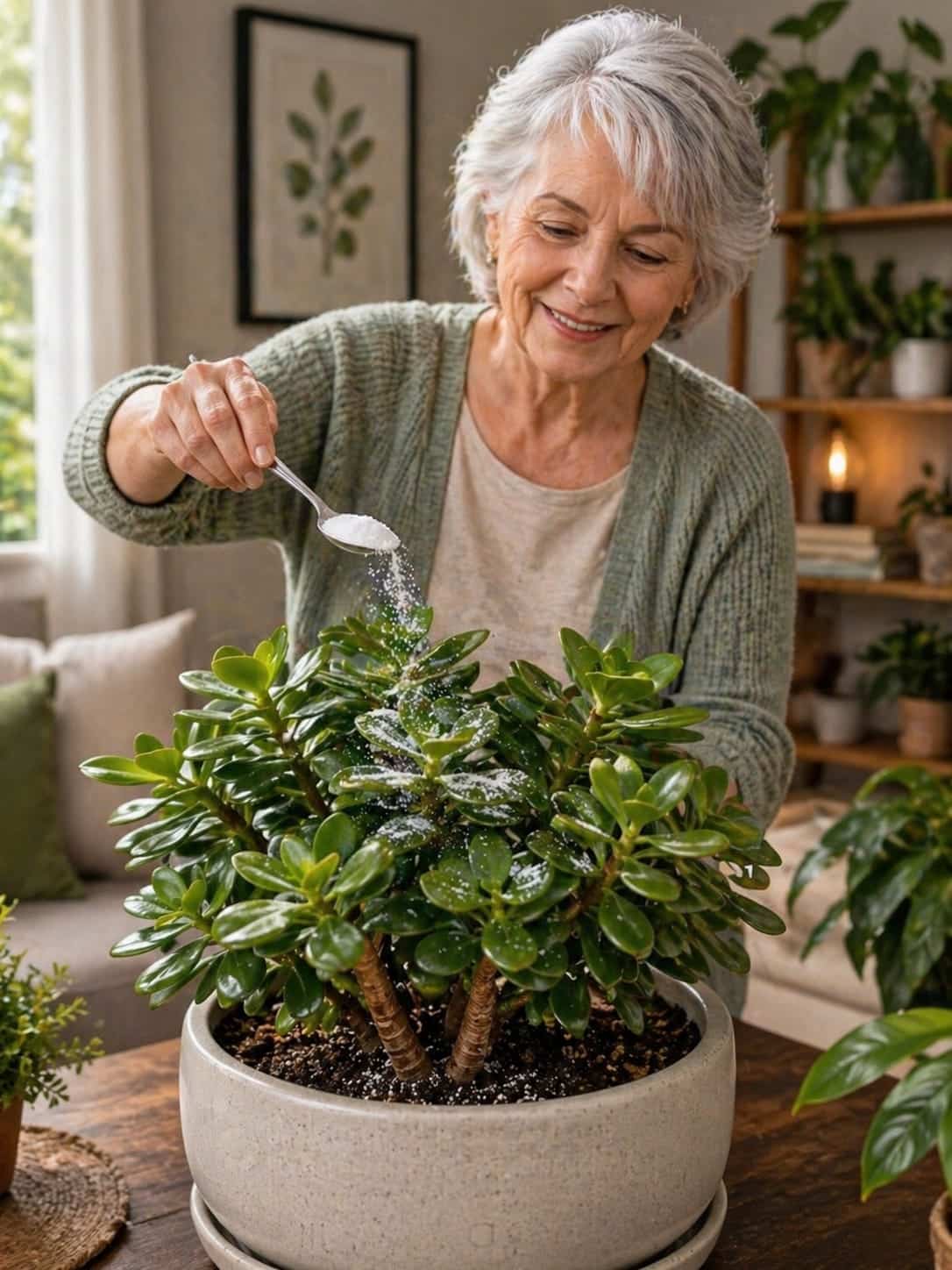
The pot in the image is broad and sturdy, which suits a mature jade plant, but the most important feature is drainage.
How to Water Jade Plants Correctly
Water jade plants deeply but infrequently. Let the soil dry out before watering again. When you water, water until excess drains from the bottom, then empty the saucer.
Do not water on a strict schedule without checking the soil. In summer, a jade plant in bright light may need water more often. In winter, it may need very little. A plant in a large pot may dry slowly. A plant in terracotta may dry faster.
Check the soil with your finger or a wooden skewer. If it is still damp below the surface, wait. If it is dry several inches down, water.
After using any powder, be extra careful not to overwater. Powder and water can create a surface paste if overdone.
Best Light for Jade Plants
Light is one of the biggest secrets to a strong jade plant. Jade plants need bright light to stay compact and sturdy. Without enough light, they stretch, lean, and produce weaker stems.
A bright window is ideal. Morning sun is excellent. A south or west window can work if the plant is gradually acclimated. If the leaves show sunburn spots, move the plant back slightly or use a sheer curtain.
If your home is dark, a grow light can help. Jade plants respond well to consistent bright light.
If you want a jade plant to look like a small tree, light matters more than any powder. The plant needs energy to build thick stems and dense leaves.
How to Prune Jade Plants for a Fuller Shape
Pruning is one of the best ways to shape a jade plant. If the plant becomes leggy, you can trim stems to encourage branching. Use clean sharp scissors or pruners. Cut just above a leaf node, where new growth can emerge.
Do not remove too much at once if the plant is weak. A healthy jade can handle pruning well, especially during active growth in spring or summer.
After pruning, let the cuts dry. Do not mist the plant heavily. Jade stems contain moisture, and fresh cuts need time to callus.
Pruned pieces can often be propagated, giving you new jade plants for free.
How to Propagate Jade Cuttings
Jade plants are easy to propagate from stem cuttings or leaves. Stem cuttings are faster and more reliable.
- Cut a healthy stem section.
- Remove a few lower leaves.
- Let the cutting dry for several days until the cut end calluses.
- Plant it in dry succulent mix.
- Wait a few days before watering lightly.
- Keep in bright indirect light.
Do not place fresh jade cuttings immediately into wet soil. They can rot. Letting the cut dry first is important.
Once rooted, the cutting can grow into a new plant. This is a great way to fill out a pot or share jade plants with friends.
Can the White Powder Help With Pests?
If the white powder is food-grade diatomaceous earth, it may help with some crawling pests when dry. It can also help reduce fungus gnat activity on the soil surface, but fungus gnats are usually a sign of soil staying too wet.
If your jade plant has mealybugs, scale, or spider mites, powder alone may not solve the issue. Mealybugs look like white cottony clusters and often hide in leaf joints. Scale insects look like small bumps on stems or leaves. Spider mites may cause fine webbing and speckled leaves.
For mealybugs or scale, use a cotton swab dipped in rubbing alcohol to remove pests carefully, then monitor the plant. For larger infestations, use insecticidal soap according to directions.
Keep the plant clean, avoid overwatering, and inspect regularly. Pest prevention is a routine, not one sprinkle.
Can the White Powder Cause Problems?
Yes, if used too heavily or if the wrong powder is chosen. Thick powder can create a crust on the soil. Food-based powders can mold. Baking soda can add sodium. Powdered milk can sour. Flour can turn sticky. Excess mineral salts can stress roots.
Problems may show up as mold, sour smell, fungus gnats, leaf drop, yellowing, or slow growth. If this happens, remove the top layer of soil and replace it with fresh succulent mix. If the plant continues to decline, check the roots.
Healthy jade roots should be firm and light-colored. Rotten roots may be dark, mushy, or smelly. If roots are rotten, trim damaged parts and repot.
The white powder trick should always be light and occasional.
What If Powder Gets All Over the Leaves?
If powder lands on the leaves, clean it off. Use a soft dry brush or a slightly damp cloth. Wipe gently so you do not break leaves. Jade leaves can snap if handled roughly.
Do not leave a thick coating on the leaves. It can block light and make the plant look dusty. If the powder is eggshell or diatomaceous earth, it may be harmless in tiny amounts, but it still looks better removed from the foliage.
After cleaning, let the leaves dry. Avoid leaving water trapped between dense leaf clusters.
For future applications, hold the spoon lower and aim at the soil.
What If the Soil Turns White and Crusty?
A white crust on soil may come from too much powder, mineral buildup from water, or fertilizer salts. If the surface becomes crusty, remove the top half inch of soil and replace it with fresh succulent mix.
Use filtered water if your tap water is very hard. Avoid overfertilizing. Use powder sparingly.
A little mineral residue on the soil surface is not always dangerous, but a thick crust can interfere with water movement and airflow.
Jade plants like clean, open soil surfaces. Do not let any amendment form a sealed layer.
How Often Should You Use the White Powder Trick?
Use it rarely. For eggshell powder, once every three to four months is enough. For diatomaceous earth, use only when needed for pest prevention and reapply only when the soil is dry. For any other mineral amendment, use even more cautiously.
Do not sprinkle powder every week. Jade plants do not need constant additions. Too many amendments can build up in the pot and create imbalance.
Most of the time, your jade plant only needs bright light, dry-down time, and occasional feeding during the growing season.
The white powder trick should feel like a small maintenance step, not a main care routine.
Can This Trick Be Used on Other Succulents?
A light eggshell powder sprinkle can be used on some succulents, but the same rules apply. Use very little, keep it mostly on the soil, and avoid heavy layers. Succulents generally prefer dry, gritty conditions.
Diatomaceous earth can also be used on dry soil for pest prevention, but it should not coat fuzzy succulents or delicate rosettes.
Avoid baking soda, flour, powdered milk, and thick kitchen powders on succulents.
Each plant has different needs. Jade plants are fairly tough, but some succulents are more sensitive to residue on leaves.
A Simple White Powder Jade Plant Routine
If you want to try this trick safely, follow this routine:
- Choose clean crushed eggshell powder or another safe plant-use powder.
- Make sure the soil surface is dry.
- Remove dead leaves and debris.
- Sprinkle a very small amount on the soil only.
- Keep powder off the leaves as much as possible.
- Gently mix eggshell powder into the top layer.
- Do not water unless the plant is already due.
- Clean any powder from leaves.
- Repeat only every few months if needed.
- Focus mainly on light, drainage, and watering.
This routine keeps the trick safe and simple.
The Real Secret to a Beautiful Jade Plant
The real secret is not a spoonful of white powder. It is the full care routine. Jade plants become strong and beautiful when they receive bright light, fast-draining soil, proper watering, and occasional pruning.
A jade plant with enough light will grow compact and sturdy. A jade plant in gritty soil will have healthier roots. A jade plant that dries between waterings will avoid rot. A jade plant that is pruned carefully can become fuller and more tree-like.
The white powder trick can support the surface of the soil or add a mild mineral touch, but it will not replace the basics.
If your jade plant is struggling, check the basics first. Is the soil wet? Is the room too dark? Does the pot drain? Are the stems stretching? Are there pests? Once those questions are answered, you can decide whether any small trick is useful.
Common Mistakes With the White Powder Jade Trick
Using Too Much Powder
A heavy layer can form a crust or make the plant look dusty. Use only a light sprinkle.
Putting Powder All Over the Leaves
The powder should go on the soil, not the foliage. Clean leaves if powder lands on them.
Using the Wrong Powder
Flour, cornstarch, powdered milk, and random kitchen powders should be avoided.
Using Baking Soda as Fertilizer
Baking soda is not plant food and can add sodium to the soil.
Watering Immediately Without Checking Soil
Jade plants should be watered only when dry, not automatically after applying powder.
Ignoring Light
White powder will not fix a jade plant growing in a dark corner.
Trying to Fix Rot With Powder
Root rot needs trimming, drying, and repotting, not surface powder.
Signs the Trick Is Safe and Helpful
If the trick is safe, the plant should remain firm, clean, and stable. There should be no sour smell, no sticky surface, no mold, no sudden yellowing, and no mushy stems. The soil should still dry normally between waterings.
Over time, if the rest of the care routine is good, the jade plant may produce fresh green growth. The leaves may look glossy after cleaning. The pot surface may look neater and fresher.
The improvement should be subtle. A healthy jade plant grows slowly and steadily. Do not expect overnight transformation.
Signs You Should Stop Using It
Stop using the white powder if the soil becomes crusty, mold appears, gnats show up, leaves start dropping, stems soften, or the pot smells bad. Remove the top layer of soil and replace it with fresh succulent mix.
If the plant continues to decline, remove it from the pot and inspect the roots. Trim any rotten roots or stems and repot into dry gritty soil.
Return to simple care: bright light, drainage, and careful watering.
Frequently Asked Questions
What is the white powder used on jade plants?
It may be crushed eggshell powder, food-grade diatomaceous earth, or another dry mineral amendment. The safest general version is finely crushed clean eggshell powder used lightly on the soil.
Can I sprinkle baking soda on my jade plant?
It is not recommended as a fertilizer. Baking soda contains sodium and can stress roots if overused.
Can eggshell powder help jade plants?
Eggshell powder can provide a slow, mild calcium source, but it is not a complete fertilizer and should be used sparingly.
Should the powder go on the leaves or soil?
Mostly on the soil. Avoid coating the leaves because it can block light and leave residue.
How often should I use eggshell powder?
Once every three to four months is enough. Use only a small amount.
Can this trick make jade plants grow faster?
Not by itself. Growth depends mainly on bright light, healthy roots, proper watering, and occasional feeding.
Can this trick stop pests?
If the powder is food-grade diatomaceous earth, it may help with some surface pests when dry. Eggshell powder is not a pest treatment.
Can I use flour or cornstarch?
No. They can turn sticky, mold, and attract pests.
Can I use powdered milk?
No. It can sour, smell, and attract insects.
What is better than the white powder trick?
Bright light, gritty succulent soil, drainage holes, careful watering, and proper pruning are more important for long-term jade plant health.
Final Thoughts
The white powder jade plant trick looks simple and powerful because it turns plant care into a visible ritual. A spoonful of white powder over a glossy jade plant makes it seem like a hidden secret for stronger stems and richer leaves. But the safest way to use this trick is gently and realistically.
The best white powder for most jade plant owners is clean, finely crushed eggshell powder used sparingly on the soil surface. It can act as a slow, mild mineral addition. Food-grade diatomaceous earth can be used lightly for pest prevention on dry soil. Baking soda, flour, cornstarch, powdered milk, and random kitchen powders should be avoided.
Keep the powder mostly off the leaves. Use only a thin sprinkle. Do not water automatically afterward. Do not repeat the trick too often. If the soil becomes crusty, moldy, or sour-smelling, stop immediately and refresh the top layer.
The real secret to a beautiful jade plant is not a powder. It is bright light, fast-draining soil, a pot with drainage holes, deep but infrequent watering, and careful pruning. When those basics are right, a jade plant can become thick, glossy, and tree-like over time.
Used wisely, the white powder trick can be a small part of that routine. It can refresh the pot surface, add a gentle mineral touch, or help with dry surface pest control depending on the powder used. Used heavily, it can create problems. Keep it light, clean, and occasional.
With steady care, your jade plant can reward you with firm green leaves, strong woody stems, and a full rounded shape that brings lasting beauty to your indoor garden.