Pothos is one of the easiest houseplants to love. It grows quickly, forgives small mistakes, looks beautiful in almost any room, and can be styled in so many different ways. Some people let pothos trail from a shelf. Others grow it in hanging baskets. But one of the most impressive ways to display pothos is to train it upward on a moss pole, wooden branch, coconut coir pole, or natural support.
When pothos climbs, it can look completely different from an ordinary trailing plant. The stems become stronger, the leaves face outward beautifully, and the whole plant starts to look like a tropical indoor vine. Some varieties, like golden pothos, marble queen, neon pothos, and manjula pothos, can look especially dramatic when trained upward because their variegated leaves become more visible and decorative.
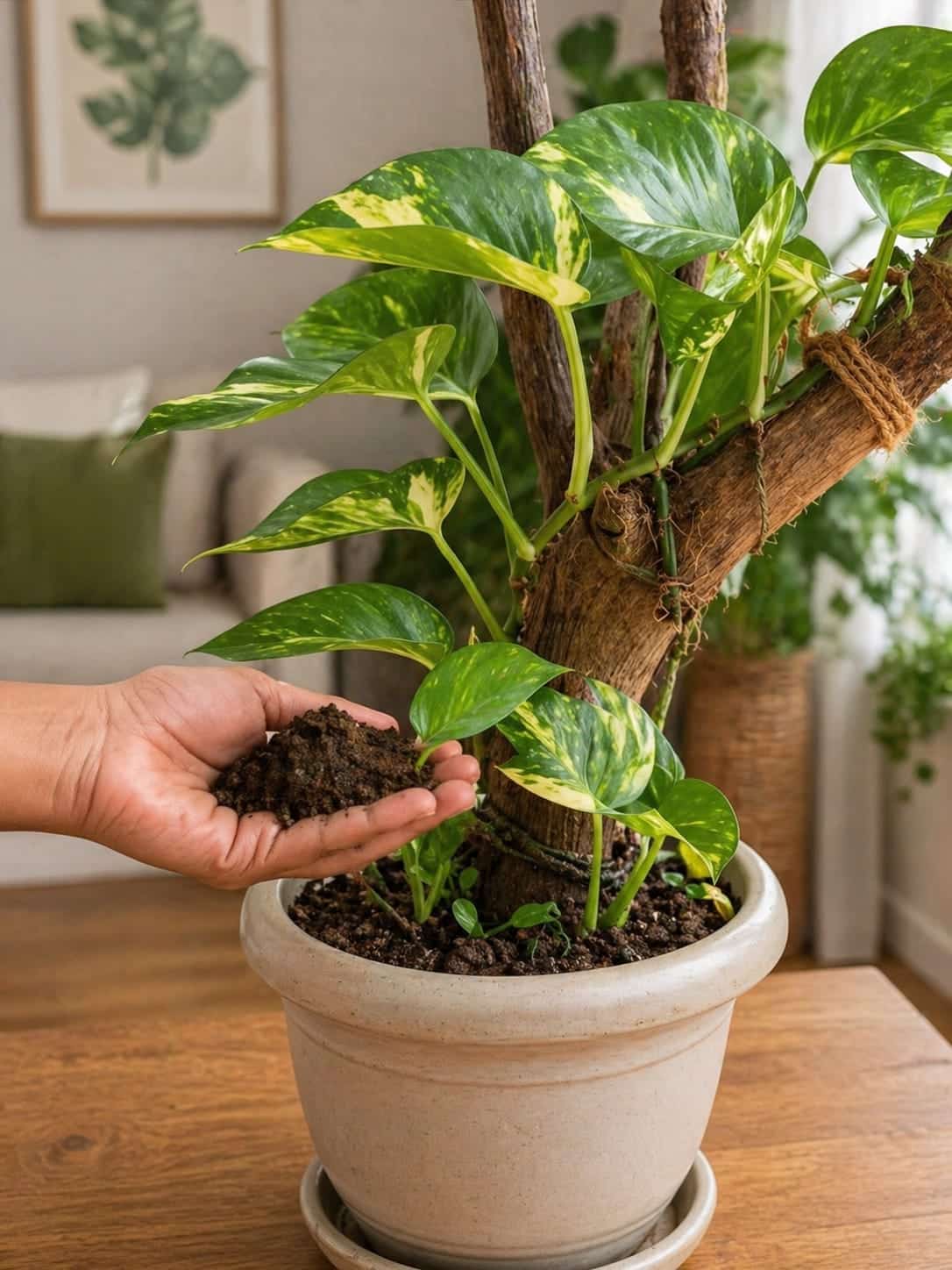
In the image, a variegated pothos is growing around a thick natural wooden support inside a large pot. The leaves are glossy, green, and splashed with yellow and cream. The stems are climbing and wrapping around the support, while a hand is adding a rich dark handful of soil or compost near the base of the plant. This simple action looks small, but it represents a very useful indoor plant care trick: refreshing the top layer of soil around a climbing pothos to support stronger roots, fuller vines, and healthier new growth.
This is often called the rich soil top-up trick, the compost handful trick, or the pothos climbing boost method. The idea is simple. Instead of repotting the entire plant every time it slows down, you add a small amount of fresh, airy, nutrient-rich material to the top of the pot. This refreshes the root zone, improves the surface layer, supports new feeder roots, and gives the plant a gentle growth push without disturbing the whole setup.
For a climbing pothos, this can be especially helpful. A large plant on a pole or branch can be difficult to repot often. The support may be tied in place. The stems may already be attached. The pot may be heavy. A full repot can be messy and stressful. A careful top-dressing with fresh soil or compost is an easier way to refresh the plant between repottings.
But there is a right way and a wrong way to do it. Pothos likes moisture, but it does not like dense, soggy soil. The handful you add should be light, clean, and well-draining. It should not be heavy garden mud. It should not be wet compost full of kitchen scraps. It should not bury the stems too deeply. The trick works best when the added material improves the soil instead of smothering the roots.
In this complete guide, you will learn what the rich soil pothos trick is, why it works, what kind of soil to use, how to apply it safely, how it helps climbing pothos, how to avoid overwatering afterward, and how to keep your pothos growing lush and tropical indoors.
What Is the Rich Soil Pothos Trick?
The rich soil pothos trick is a simple top-dressing method. Top-dressing means adding a thin layer of fresh growing material on top of the existing potting mix. For pothos, this material is usually fresh potting mix, worm castings, compost, coco coir, orchid bark, or a combination of light soil ingredients.
The goal is not to bury the plant or fill the pot with a thick heavy layer. The goal is to refresh the top inch of the soil, replace tired or compacted material, and provide gentle nutrition near the surface. Over time, indoor potting mix can settle, lose structure, or become crusty on top. Watering can wash nutrients downward. The surface can become dusty, dry, or compacted. A small top-up helps renew that area.
For pothos growing on a pole or branch, this trick can also encourage the plant to produce stronger base growth. The lower stems may send roots into the fresh layer, and the plant may feel more stable. If you use a chunky, airy mix, it can improve moisture balance around the root zone.
This trick is useful because it is gentle. You do not have to pull the plant out of the pot. You do not have to untie vines from the support. You do not have to disturb established roots. You simply remove a little old surface material and replace it with something fresh.
Think of it as giving your pothos a new surface blanket of nutrition and airflow.
Why Climbing Pothos Needs a Little Extra Support
A trailing pothos can grow beautifully with very simple care, but a climbing pothos has a slightly different goal. When you train pothos upward, you are asking the plant to behave more like it would in a tropical forest, where it climbs tree trunks and uses aerial roots to attach itself to surfaces.
As pothos climbs, it may produce larger leaves and stronger stems when conditions are right. The support gives the plant a structure to hold onto, while the roots in the pot provide moisture and nutrients. If the potting mix becomes tired, the climbing plant may slow down. The top leaves may still look good, but the base may become thin, dry, or weak.
A climbing pothos also uses more energy than a tiny tabletop plant. It is supporting longer vines, more leaves, and sometimes a heavier structure. That means the root zone must stay healthy. The plant does not need constant fertilizer, but it does benefit from fresh, breathable growing material.
The rich soil trick helps by refreshing the foundation. The support may be the visible part, but the roots are what keep the plant growing. A fresh top layer can help the whole display look healthier and fuller.
What Is the Best Material for This Trick?
The best material is not plain outdoor soil. Outdoor soil can be too heavy for pots, and it may contain pests, weed seeds, or disease. Indoor pothos needs a light potting mix that holds moisture but still drains well.
A good handful for this trick can be made from:
- Fresh indoor potting mix
- Worm castings
- Coco coir
- Perlite
- Fine orchid bark
- A small amount of finished compost
The best option is a light blend. If you use only compost, it may become dense. If you use only bark, it may not hold enough moisture. If you use only potting soil, it may compact over time. A balanced mixture gives the pothos both nutrition and airflow.
A simple top-dressing blend can be made with 2 parts indoor potting mix, 1 part worm castings or finished compost, and 1 part perlite or fine bark. This creates a rich but breathable layer.
The texture should be crumbly, not muddy. When you squeeze it in your hand, it should not turn into a sticky lump. It should fall apart easily.
Why Worm Castings Are Excellent for Pothos
Worm castings are one of the best gentle amendments for indoor pothos. They are mild, natural, and less likely to burn roots than strong fertilizer. They improve the texture of the soil and slowly release nutrients.
For this trick, worm castings work well because they can be mixed into the top layer without shocking the plant. A small amount can support steady growth and help the potting mix feel richer. They are especially useful for pothos that has been in the same pot for a long time.
However, worm castings should still be used in moderation. A thick layer can become dense and may hold too much moisture. Mix them with perlite, bark, or regular potting mix so the surface remains airy.
A good amount is a few tablespoons for a small pot or a small handful for a large pot. More is not always better. The goal is gentle enrichment, not heavy feeding.
Can You Use Compost?
Yes, but only if it is fully finished, clean, and used lightly. Finished compost should smell earthy, not sour or rotten. It should look dark and crumbly. It should not contain recognizable food scraps, fruit peels, eggshell chunks, or slimy material.
Indoor pots are not compost bins. If you add unfinished compost, it can smell, attract fungus gnats, grow mold, or create moisture problems. Pothos roots need oxygen, and heavy wet compost can suffocate them.
If you want to use compost, mix a small amount with potting mix and perlite. Do not pile a thick layer of pure compost around the stems. Do not use compost from an outdoor pile unless you are sure it is fully finished and pest-free.
For indoor plant safety, worm castings are often easier and cleaner than homemade compost.
Can You Use Garden Soil?
Garden soil is not recommended for indoor pothos pots. It may seem natural and rich, but it can become heavy and compacted in containers. It can also carry insects, fungi, weed seeds, or outdoor microbes that you do not want indoors.
Pothos prefers a light indoor potting mix. If garden soil is added to the top of a pot, it may form a dense crust after watering. This can reduce airflow and make the surface dry unevenly.
If the handful in the image looks like outdoor soil, the safer indoor version is a clean potting blend that looks rich but drains well. You can still get the same visual and practical effect without using actual garden dirt.
Use potting mix, worm castings, perlite, and bark instead.
How to Make the Perfect Pothos Top-Up Mix
Here is a simple blend that works well for most indoor pothos plants.
Ingredients
- 2 parts indoor potting mix
- 1 part worm castings or finished compost
- 1 part perlite
- 1 part fine orchid bark or coco chips
Instructions
- Add all ingredients to a small bowl or container.
- Mix until the texture is even.
- Moisten lightly if it is dusty, but do not make it wet.
- Use only enough to refresh the top layer of the pot.
This blend gives the pothos a little nutrition from the worm castings, moisture balance from the potting mix, and airflow from the perlite and bark. It is rich without being heavy.
If your home is very dry, you can use a little more coco coir. If your plant tends to stay wet, use more perlite and bark.
How to Apply the Rich Soil Trick Step by Step
This method is simple, but it should be done carefully to avoid damaging stems or burying the plant too deeply.
Step 1: Check the Soil First
Before adding anything, check the existing soil. If it smells sour, is full of gnats, or stays wet for too long, the plant may need a full repot instead of a top-up. The trick is best for plants with basically healthy soil that just needs refreshing.
Step 2: Remove Debris
Remove fallen leaves, old stems, dead roots, and any crusty material from the surface. This keeps the pot clean and reduces pest problems.
Step 3: Loosen the Top Layer
Use your fingers, a spoon, or a small hand rake to gently loosen the top half inch to one inch of soil. Be careful around stems and roots. Do not dig deeply.
Step 4: Remove Some Old Surface Mix
If the surface is compacted, remove a little of it. Do not remove so much that roots are exposed aggressively. Just take away the tired top layer.
Step 5: Add the Fresh Mix
Sprinkle the fresh rich soil blend around the base of the plant. Spread it evenly. Keep it away from directly burying stems too deeply.
Step 6: Press Very Lightly
Gently settle the mix with your fingers. Do not pack it down. Pothos roots need air.
Step 7: Water Lightly
If the plant is ready for watering, water gently to help the new layer settle. If the soil underneath is still damp, wait before watering.
How Thick Should the New Layer Be?
The new layer should usually be about half an inch to one inch thick. For a small pot, use less. For a large pot, you can use a little more. The goal is to refresh the surface, not bury the plant.
If you add too much, the pot may become overfilled and water may spill over the rim. The stems may also become buried, which can cause rot. Pothos stems should touch soil lightly if rooting is desired, but they should not be smothered under a heavy wet layer.
Leave a little space between the soil surface and the pot rim. This makes watering easier and prevents overflow.
A thin, even layer is better than a thick mound.
Should You Water Immediately After Adding It?
Only water immediately if the plant actually needs water. This is important. Many people add fresh soil and then automatically water, even when the potting mix underneath is still damp. That can lead to overwatering.
Before watering, push your finger into the existing soil. If the top couple of inches are dry, water gently. If the soil is still moist, wait a few days.
When you do water, pour slowly around the pot until water begins to drain from the bottom. Empty the saucer afterward. Do not let the pot sit in standing water.
After top-dressing, the fresh layer may hold moisture slightly differently than the old soil. Check the pot carefully for the next few waterings.
Why This Trick Helps a Climbing Pothos
A climbing pothos benefits from a strong root base and a stable surface layer. When fresh mix is added around the base, it can support small feeder roots near the surface. It can also help stabilize new shoots and keep the base from becoming bare or dry.
If the plant is climbing a wooden support, the surface refresh can also help maintain humidity around the lower stems. Pothos naturally uses aerial roots to grip surfaces. When the area around the support is healthy and slightly humid, the plant may attach more strongly and grow more confidently upward.
The trick also gives you a chance to inspect the plant. You can check ties, adjust stems, remove dead leaves, and make sure the support is stable. This kind of attention often leads to better growth because you catch problems early.
The soil handful is simple, but the routine around it is what makes it powerful.
Why Pothos Loves to Climb
Pothos is a natural climber. In its tropical environment, it climbs trees and other supports using aerial roots. As it climbs toward better light, its leaves can become larger and more mature. Indoors, pothos often stays smaller because it trails from shelves or baskets. When given a pole or branch, it may begin to show stronger climbing behavior.
A climbing pothos often looks fuller and more upright than a trailing one. The leaves can layer beautifully along the support. The plant becomes more architectural, almost like a small indoor jungle tree.
The support in the image appears to be a natural branch or wooden trunk. This creates a rustic tropical look. Pothos stems can be tied gently to the support with soft twine, plant ties, or clips. Over time, aerial roots may grip the surface.
When the plant has both a good support and a refreshed root zone, it has a better chance of producing strong new growth.
What Kind of Support Is Best for Pothos?
Pothos can climb several types of supports. Each has a different look and benefit.
Moss poles hold moisture and give aerial roots something to grow into. They are popular for larger leaves.
Coco coir poles are sturdy, natural-looking, and easy to find. They provide texture for roots to grip.
Wooden branches look rustic and decorative. They create a natural indoor jungle style.
Trellises are great for shaping vines across a wall or pot.
Bamboo stakes are simple and affordable but may not provide much grip unless stems are tied.
The best support depends on your style and care routine. If you want aerial roots to attach, a moss pole or rough natural support works better than a smooth stake.
How to Tie Pothos to a Support
Use soft ties, not tight wire. Pothos stems can be damaged if tied too tightly. Soft garden tape, jute twine, plant Velcro, or gentle clips work well.
Place the stem against the support and tie loosely. The tie should hold the stem in place but still allow growth. Check ties every few weeks and loosen them if the stem thickens.
Encourage the vine to follow the support upward. If the plant produces aerial roots, position them near the support so they can attach. If using a moss pole, keep it lightly moist to encourage rooting.
Do not force stiff stems to bend sharply. Train young flexible growth instead.
Continue to Page 2
Continue to page 2 for more details about this article and the key points many readers miss on the first page.