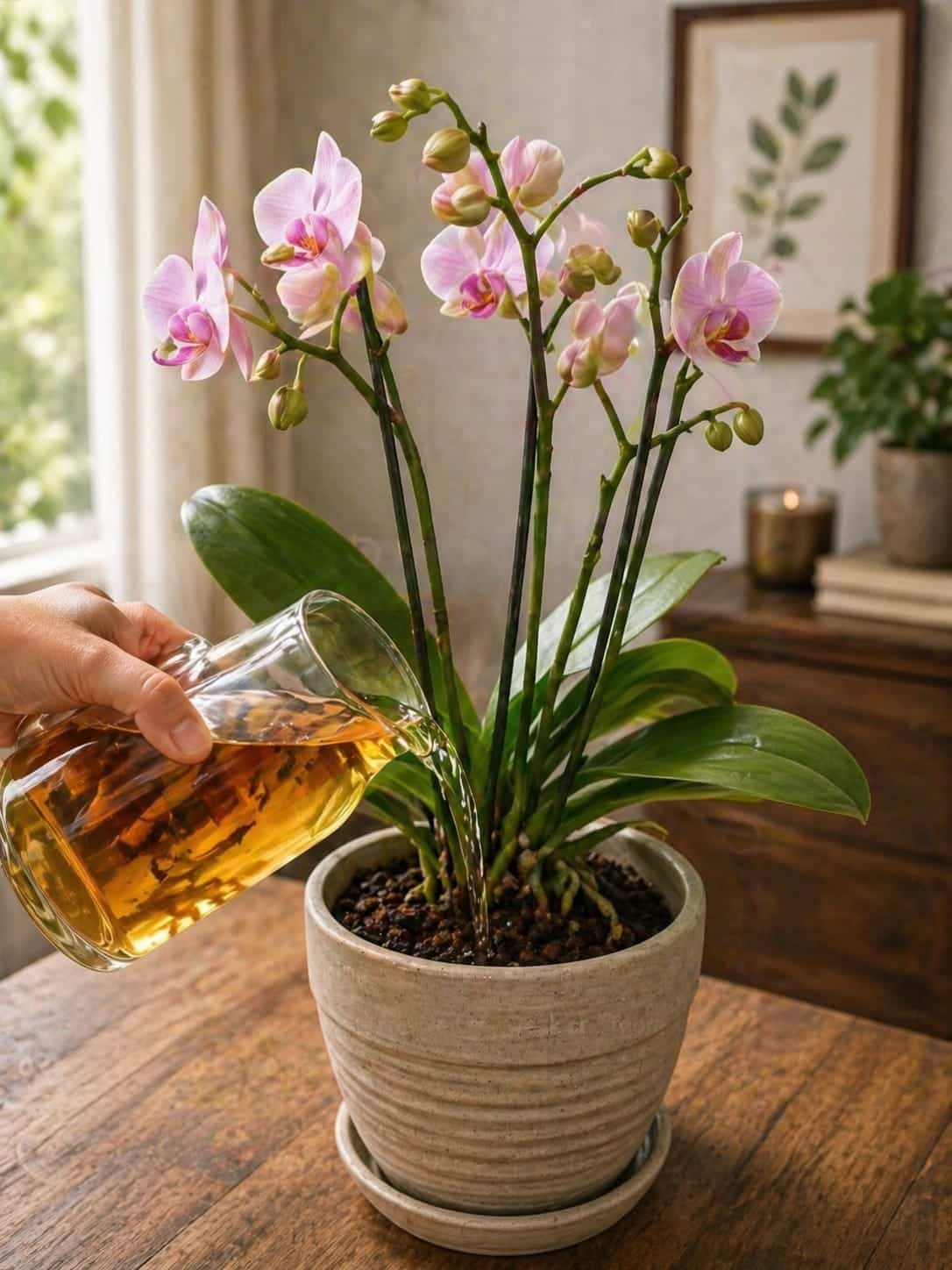
Orchids have a way of making any room feel elegant. One blooming orchid on a wooden table can make the whole space look softer, calmer, and more expensive. The tall flower spikes, glossy leaves, pale pink petals, and graceful buds create the feeling of a tiny tropical greenhouse right inside the home.
But orchids can also make people nervous. They look delicate, and many plant owners are never completely sure if they are watering correctly. One person says to water with ice cubes. Another says to soak the pot. Another says to mist the roots. Someone else says to feed weekly. Then the flowers fade, the roots look dry, the leaves lose shine, and the orchid seems to stop doing anything for months.
That is why simple orchid tricks always become popular. In this image, a warm golden liquid is being poured around the base of a blooming orchid. The liquid looks like tea, honey water, or a special homemade plant tonic. The orchid looks healthy, with glossy green leaves, strong flower stems, open pink blooms, and many buds still waiting to unfold. It looks like the kind of easy secret every orchid owner wants to know.
This method is often called the golden orchid tea trick, the amber water trick, or the banana peel orchid tonic. The idea is simple: instead of using plain water every time, you occasionally pour a very weak amber-colored plant rinse through the orchid mix to refresh the roots and support flowering energy.
The safest versions of this trick are diluted banana peel tea, weak unsweetened tea water, or a very diluted orchid fertilizer that naturally has a golden tint. The liquid should always be thin, fresh, strained, and pale. It should never be thick, sugary, fermented, sticky, or sour-smelling. Orchids are not plants that enjoy heavy homemade mixtures sitting around their roots. Their roots need air, drainage, and clean moisture.
Used correctly, the golden orchid tea trick can become a gentle part of your care routine. It may help support healthy roots, shiny leaves, and future blooms. Used incorrectly, it can attract fungus gnats, sour the potting mix, and damage roots. The difference is in the dilution, timing, and drainage.
In this complete guide, you will learn what this golden liquid can be, how to make a safe version at home, how to apply it correctly, when to use it, when to avoid it, and what your orchid truly needs if you want it to bloom beautifully again and again.
What Is the Golden Orchid Tea Trick?
The golden orchid tea trick is a gentle watering method where a pale amber liquid is poured through the orchid’s potting mix as an occasional supplement. The liquid may be made from banana peel water, weak plain tea, or diluted orchid fertilizer. It is used like a normal watering, meaning it should run through the pot and drain away completely.
The trick gets attention because the liquid looks special. Plain water is invisible, but golden water looks rich and powerful. It gives the feeling that the orchid is receiving a natural bloom drink. The color makes the routine feel more intentional, almost like a greenhouse secret.
However, the color itself is not magic. A golden liquid does not automatically mean more flowers. What matters is whether the liquid is safe for orchid roots. Orchids need gentle nutrition, clean water, and airflow. If the amber liquid is too strong, it can leave residue in the bark. If it is fermented, it can smell and attract pests. If it is used too often, it can make the potting mix break down faster.
The correct version is light and occasional. Think of it as a soft root rinse, not a heavy fertilizer. It supports the orchid only when the rest of the care routine is already correct.
Why Orchids Need Gentle Root Care
Most common indoor orchids, especially Phalaenopsis orchids, do not grow like normal houseplants in dense soil. In nature, many orchids grow attached to trees or in loose organic material where their roots receive air and moisture at the same time. Their roots are designed to absorb water quickly, then breathe.
This is why orchids are usually planted in bark chips, coconut husk, sphagnum moss, perlite, charcoal, or special orchid mix. The potting mix is supposed to stay airy. It should hold some moisture but should not become dense and soggy.
When orchid roots are healthy, they are firm. Dry roots often look silvery or pale green. Wet roots usually turn green. Rotten roots look brown, black, mushy, hollow, or slimy. If the roots rot, the leaves may become limp, wrinkled, or dull, even if the plant is being watered often.
The golden tea trick should respect this root system. The liquid must never sit around the roots for days. It should pass through the bark and drain away. The orchid should never be left standing in a saucer full of amber liquid.
Healthy orchid blooms start with healthy orchid roots. The flowers are beautiful, but the roots are the real secret.
What Is the Golden Liquid Made From?
The golden liquid in this type of orchid trick can be made in several ways. The most common safe options are banana peel tea, weak unsweetened tea, or diluted orchid fertilizer.
Banana peel tea is made by soaking clean banana peel pieces in water for a short time. The water becomes pale golden. Plant lovers use it because banana peels contain small amounts of potassium and other minerals. Potassium is often connected with flowering support, though banana peel tea is not a complete fertilizer.
Weak tea water is made from a very diluted black or green tea. It can create a soft amber color. It should always be unsweetened and weak. It is not a complete plant food, but some growers like it as an occasional mild rinse.
Diluted orchid fertilizer is the most predictable choice. Some liquid fertilizers have a golden-brown tint, especially those with seaweed or organic ingredients. Orchid fertilizer is designed for orchid nutrition, so it is usually more reliable than kitchen ingredients when used correctly.
The unsafe versions include honey water, sugar water, old fermented banana water, strong tea, coffee, soda, juice, milk tea, or anything with sweeteners. These can attract pests and create residue in the potting mix.
The Best Homemade Version: Weak Banana Peel Tea
Banana peel tea is the version many people imagine when they see a golden liquid being poured into an orchid pot. It is easy to make, inexpensive, and gives the water that attractive amber color. But it must be prepared carefully.
Do not put banana peels directly into the orchid pot. They can rot, smell, grow mold, and attract fungus gnats. Orchid bark is not a compost bin. The only part that should touch the orchid roots is the strained, diluted liquid.
Also, do not let banana peels soak for many days. Long soaking can lead to fermentation. Fermented liquid may smell sour and introduce unwanted bacteria into the potting mix. For orchids, fresh is better.
The goal is a weak tea-like rinse. It should look lightly golden, not dark brown. It should smell mild, not sour. It should feel watery, not sticky.
Safe Banana Peel Orchid Tea Recipe
This recipe is designed to be gentle enough for indoor orchids when used occasionally.
Ingredients
- 1 fresh banana peel
- 4 cups clean water
- A clean jar or bowl
- A fine strainer
- 4 extra cups clean water for dilution
Instructions
- Choose a fresh banana peel with no mold.
- Rinse the peel well.
- Cut the peel into small pieces.
- Place the pieces in a clean jar.
- Add 4 cups of water.
- Let it soak for 6 to 12 hours only.
- Strain out every piece of peel.
- Dilute the golden liquid with 4 more cups of clean water.
- Use it the same day.
The final liquid should be pale amber. If it smells sour, do not use it. If it looks thick or dark, dilute it more. If pieces of banana remain in the water, strain it again.
This banana peel tea should be used only once every four to six weeks at most, and only when the orchid actually needs watering.
Weak Tea Water for Orchids
Another version of the golden orchid trick is weak tea water. This can be made with plain black tea or green tea. It should be very weak and completely unsweetened.
Tea water is not a miracle fertilizer, but it can create a gentle amber rinse. Some plant owners like it because it feels natural and mild. However, strong tea can leave residue or affect the potting mix over time, so dilution matters.
Safe Weak Tea Recipe
- 1 used black tea bag or green tea bag
- 4 cups hot water
- 4 cups extra clean water
- Steep one used tea bag in 4 cups of hot water for 2 to 3 minutes.
- Let the liquid cool completely.
- Dilute it with 4 more cups of clean water.
- Use only when the orchid needs watering.
- Let it drain fully through the pot.
Do not use sweet tea, lemon tea, milk tea, flavored tea, bottled tea, or herbal blends with oils. Additives can create problems in orchid pots.
If you are unsure, skip tea water and use weak orchid fertilizer instead.
The Most Reliable Golden Water: Diluted Orchid Fertilizer
If you want the most dependable version of the golden liquid trick, use a proper orchid fertilizer. Many orchid fertilizers are made to be diluted in water and used during active growth. Some are pale amber or golden after mixing.
The advantage is that orchid fertilizer is balanced. Banana peel tea may contain small amounts of certain minerals, but it is not complete. Orchid fertilizer usually provides nitrogen, phosphorus, potassium, and micronutrients in a form designed for plants.
For indoor orchids, use fertilizer weakly. Many growers prefer one-quarter strength. Strong fertilizer can burn orchid roots, especially if the potting mix is dry or the roots are stressed.
A simple routine is to fertilize weakly once or twice a month during active growth, then flush with plain water in between. If the orchid is resting, sick, or freshly repotted, reduce or pause feeding.
When in doubt, use less. Orchids respond better to gentle consistency than strong feeding.
When Should You Use the Golden Orchid Tea Trick?
The best time to use this trick is when the orchid is healthy and actively growing. Active growth may mean new roots, a new leaf, or a developing flower spike. During this time, the plant can make use of gentle support.
You can use a very weak golden rinse while the orchid is blooming, but be careful. Blooming orchids need stability. Sudden changes in watering or fertilizer strength can cause buds to drop.
Use the golden liquid only when the orchid would normally be watered. If the bark is still damp, wait. If the roots are still green, wait. If the pot feels heavy with moisture, wait.
Never use this trick as an extra watering. It should replace a regular watering, not be added on top of one.
How Often Should You Use It?
Banana peel tea and weak tea water should be used only occasionally. Once every four to six weeks is enough. Using them too often can leave organic residue in the bark and increase the risk of gnats or odor.
Orchid fertilizer can be used more regularly, but only if diluted properly and only during active growth. A weak fertilizer routine once or twice a month is enough for many home growers.
Plain water should still be the main watering method. Orchids do not need homemade tonics every week. They need clean moisture, drainage, and airflow.
A safe routine could look like this:
- Plain water most of the time
- Weak orchid fertilizer once or twice a month during active growth
- Banana peel tea only once every four to six weeks, if desired
- Plain water flush monthly to rinse the potting mix
Do not use banana peel tea, weak tea, and fertilizer all together in the same watering. Choose one.
How to Apply Golden Water Correctly
Correct application is the most important part of this trick. The liquid should go through the bark mix and drain out. It should not collect in the crown, saucer, or decorative pot.
- Check the orchid roots first.
- If roots are silvery and the bark is dry, the orchid may be ready.
- If roots are green and bark is damp, wait.
- Use room-temperature golden liquid.
- Pour slowly over the bark mix.
- Avoid pouring into the center crown of the orchid.
- Let the liquid run out of the drainage holes.
- Wait until dripping stops.
- Empty the saucer or outer pot.
- Return the orchid to bright indirect light.
If your orchid is in a clear nursery pot inside a decorative pot, remove the nursery pot before watering. Water over a sink. Let it drain fully. Then place it back into the decorative pot.
This one habit prevents many orchid problems.
Why You Should Never Let Orchids Sit in Golden Water
Orchid roots need air. If the pot sits in leftover liquid, the roots can suffocate and rot. This is especially risky with homemade liquids because organic material can break down and smell.
After watering, always check the saucer. If water collected there, empty it. If the orchid is inside a decorative pot with no drainage, lift the inner pot and dump out the liquid from the bottom.
Many orchids die because they are watered correctly but then left sitting in a pool of water inside a cover pot. The plant owner thinks the orchid drained, but the outer pot secretly holds water.
Golden water should pass through. It should not become a bath.
Why You Should Avoid the Crown
The crown is the center of the orchid where the leaves meet. In Phalaenopsis orchids, water trapped in the crown can cause crown rot. Crown rot can be serious and may kill the plant quickly.
When pouring any liquid, aim at the bark and roots, not the center of the leaves. If liquid accidentally collects in the crown, blot it with a paper towel or soft cloth.
Morning watering is best because the plant has time to dry during the day. Avoid watering late at night, especially in cool rooms.
This rule applies to plain water, fertilizer water, banana tea, and any other orchid rinse.
Can Golden Orchid Tea Make Blooms Last Longer?
It may support the plant gently, but bloom longevity depends more on stable care. Orchid flowers last longest when the plant is kept in bright indirect light, away from harsh sun, cold drafts, heat vents, and sudden changes.
Too much fertilizer or homemade liquid during bloom can cause stress. If the orchid is already blooming beautifully, do not overdo the trick. A very weak rinse once during the bloom cycle is enough if you want to try it.
To keep blooms longer, maintain steady moisture without soaking the roots. Keep the room comfortable. Avoid moving the orchid repeatedly. Keep it away from ripening fruit, which can shorten flower life.
The golden trick is only a small support. Stability is what keeps blooms beautiful.
Continue to Page 2
Continue to page 2 for more details about this article and the key points many readers miss on the first page.