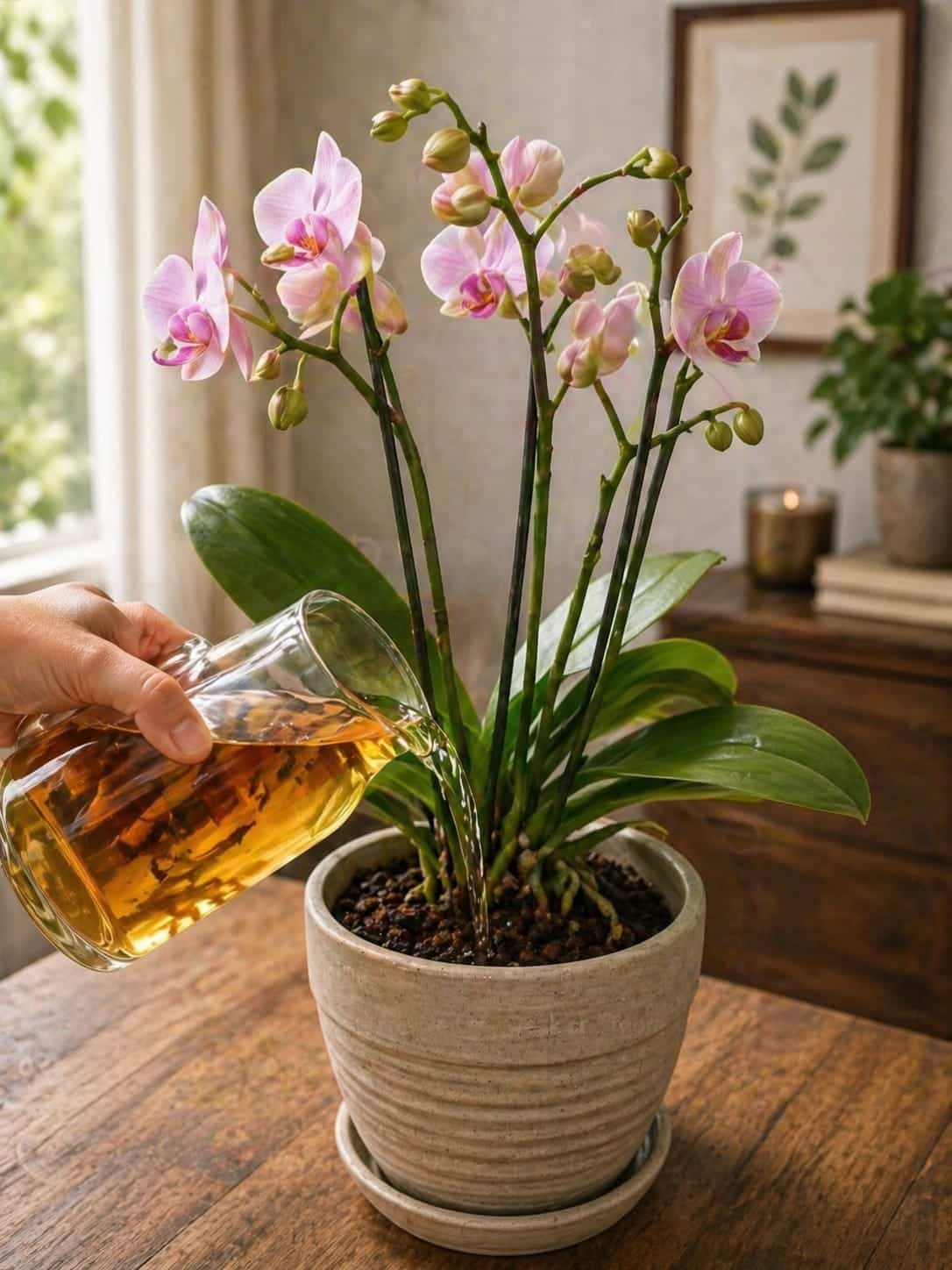
Can Golden Water Make an Orchid Rebloom?
Golden water cannot force an orchid to rebloom by itself. Reblooming depends on light, root health, leaf strength, maturity, and sometimes a slight nighttime temperature drop.
Many Phalaenopsis orchids need bright indirect light to build enough energy for a new spike. If your orchid is in a dark corner, it may grow leaves slowly but refuse to bloom again. Moving it to a brighter indirect location often helps more than any tonic.
Healthy roots are also essential. If roots are rotten or missing, the plant should focus on recovery, not flowers. A weak plant may bloom poorly or drop buds.
Once the orchid has healthy leaves and roots, gentle feeding can support future blooms. The golden liquid may be part of that routine, but it is not the main trigger.
Can Banana Peel Tea Replace Orchid Fertilizer?
No. Banana peel tea should not fully replace orchid fertilizer. Banana peels may contain small amounts of potassium and other minerals, but they do not provide a complete balanced nutrient profile. Orchids need more than potassium to grow well.
A proper orchid fertilizer is more reliable for long-term care. Banana peel tea can be used occasionally as a homemade supplement, but not as the only feeding method.
If you want strong roots, healthy leaves, and repeat blooms, use a balanced orchid fertilizer weakly during active growth. Use banana tea only as a light bonus if your orchid tolerates it.
Simple care is better than relying on one kitchen ingredient.
Can You Put Banana Peels Directly in the Orchid Pot?
No. This is one of the biggest mistakes with banana peel plant tricks. Banana peel pieces can rot inside orchid bark. They can smell bad, grow mold, attract fungus gnats, and make the potting mix break down faster.
Orchid pots are not compost bins. Outdoor compost piles can handle fruit scraps because they have airflow, microbes, and space. A small indoor orchid pot cannot process banana peels safely around delicate roots.
If you use banana peels, soak them briefly, strain the liquid, dilute it, and throw the peel pieces into compost. Only the weak liquid should be used on the orchid.
Can You Use Honey Water for Orchids?
Honey water is not recommended. It may look golden and natural, but honey contains sugar. Sugar in orchid bark can encourage bacteria, mold, and pests. It can also leave sticky residue.
Plants do not absorb honey the way people imagine. Orchids need mineral nutrients, not sweet syrup. If you want a golden liquid, use weak banana peel tea or diluted orchid fertilizer instead.
Avoid honey, sugar, syrup, molasses, fruit juice, and sweet drinks in orchid pots.
Can You Use Coffee or Coffee Grounds?
Coffee and coffee grounds are not ideal for orchids. Coffee grounds can compact the bark, hold moisture, and grow mold. Coffee liquid can be too strong and may leave residue.
Orchids need an airy potting mix. Anything that makes the mix dense or stale can hurt the roots. Coffee grounds belong in outdoor compost in small amounts, not in a Phalaenopsis orchid pot.
For a safe amber rinse, stick with weak tea, weak banana peel tea, or orchid fertilizer.
Can You Use Cinnamon Water?
Cinnamon is sometimes used dry on cut orchid wounds, such as a trimmed flower spike or a cut rhizome area. But cinnamon water is not a regular orchid tonic. It can be drying and should not be poured through healthy roots as a feeding routine.
If you use cinnamon, use it carefully and only where appropriate. Do not use it as the golden watering trick.
For regular watering, orchids prefer plain water and weak fertilizer.
Can You Use Turmeric Water?
Turmeric water is sometimes promoted online as a plant hack because it has a golden color. However, it is not a standard orchid fertilizer and can stain roots, bark, pots, and furniture. It may also leave residue in the potting mix.
It is better to avoid turmeric water for orchids. The golden color may look attractive, but it does not mean the liquid is useful for orchid roots.
Use safe, mild, and predictable options instead.
Can You Use Rice Water?
Fresh diluted rice water is sometimes used for houseplants, but it is not the best first choice for orchids. Rice water contains starch, and starch can encourage microbial growth if used too often or left in damp bark.
If used at all, it should be fresh, strained, heavily diluted, and rare. But for orchids, weak fertilizer is more predictable and banana peel tea creates the amber look more naturally.
Never use cooked rice water with salt, oil, or seasoning.
What If the Golden Liquid Smells Bad?
Do not use it. A bad smell means the liquid is no longer fresh. Fermented banana water, old tea, or stale fertilizer mix can introduce problems into the pot.
Fresh orchid water should smell clean or very mild. If it smells sour, rotten, alcoholic, or unpleasant, discard it.
If you accidentally used bad-smelling liquid, flush the orchid pot with plain room-temperature water if it drains well. Let it drain completely. If the bark later smells sour, repot into fresh orchid mix.
What If Fungus Gnats Appear After Using It?
Fungus gnats are a sign that the potting mix is staying too damp or has too much organic residue. Homemade liquids can contribute if they are too strong or used too often.
Stop using the golden liquid. Let the bark dry more between waterings. Use yellow sticky traps to catch adult gnats. Make sure no fruit pieces are in the pot. If the bark is old and decomposed, repot into fresh orchid mix.
In the future, use weaker liquid, less often, and always let the pot drain fully.
What If Orchid Roots Turn Brown After Using It?
Brown roots may mean rot, old age, fertilizer burn, or residue buildup. First, stop using the amber liquid. Remove the orchid from its decorative pot and inspect the roots.
Healthy roots should be firm. Rotten roots are mushy or hollow. If many roots are rotten, remove the orchid from the pot, trim dead roots with sterile scissors, and repot into fresh bark.
If only a few root tips are affected and the rest of the plant looks healthy, flush the pot with plain water and reduce feeding.
Strong homemade liquids can damage roots. This is why dilution is so important.
Best Potting Mix for Orchids
The best potting mix for most moth orchids is a chunky orchid bark mix. It should allow air to move around the roots while holding some moisture.
A good orchid mix may include:
- Medium orchid bark
- Perlite
- Charcoal
- Coconut husk chips
- A small amount of sphagnum moss if your home is very dry
Do not use regular dense potting soil for Phalaenopsis orchids. It holds too much water and can suffocate the roots.
If your orchid mix is old, crumbly, sour-smelling, or compacted, repotting is more important than any golden water trick. Old bark breaks down and holds too much moisture.
Best Pot for Orchids
Orchids do best in pots with drainage and airflow. Clear plastic orchid pots are popular because you can see the roots and judge moisture more easily. Many clear pots also have side holes or bottom holes for drainage.
Decorative ceramic pots are fine as outer pots, but they should not hold standing water. Always remove the inner pot for watering or empty the outer pot after watering.
The pot should fit the root system. A pot that is too large holds too much wet bark. Orchids often prefer a snug pot with fresh airy mix.
Good drainage makes the golden tea trick much safer.
How to Know When Your Orchid Needs Water
Check the roots. In a clear pot, silvery roots usually mean the orchid is dry and ready for watering. Green roots usually mean moisture is still present. Also check the bark and the weight of the pot.
If the bark is still damp, wait. If the pot feels heavy, wait. If the roots look green, wait. If the roots look silvery and the pot is light, water.
Do not water only because a calendar says so. Orchids dry at different speeds depending on the room, pot, bark type, and season.
The golden tea trick should follow the same rule: use it only when watering is actually needed.
Best Light for Orchid Blooms
Light is one of the biggest secrets to orchid blooming. Phalaenopsis orchids need bright indirect light. They do not want harsh direct afternoon sun, but they do need enough brightness to build energy.
An east-facing window is often ideal. A bright north-facing window can work. A south or west window may need a sheer curtain. If the room is too dark, a grow light can help.
If your orchid has dark green leaves and never reblooms, it may need more light. If the leaves are yellowish or scorched, the light may be too strong.
The golden liquid may support growth, but light gives the orchid the energy to flower.
How to Encourage a New Flower Spike
After the orchid finishes blooming, focus on leaves and roots. A new flower spike usually comes after the plant has stored enough energy. Give bright indirect light, proper watering, and weak fertilizer during active growth.
For many Phalaenopsis orchids, a slight nighttime temperature drop can encourage spike formation. This does not mean cold damage. It means a gentle difference between day and night temperatures.
Do not force a weak orchid to bloom. If the roots are poor, focus on recovery. A healthy orchid will bloom better and hold flowers longer.
Golden tea can be used occasionally during growth, but the real rebloom formula is light, roots, patience, and stable care.
How to Care for an Orchid While It Is Blooming
When an orchid is blooming, keep care steady. Avoid sudden changes. Do not move it from a bright room to a dark room. Do not place it near a heater, air conditioner, or cold draft. Do not let the pot sit in water.
Water when the roots become silvery and the bark is nearly dry. Use room-temperature water. Avoid the crown. Let the pot drain fully.
You can use weak fertilizer or a very weak amber rinse, but do not overfeed. Flowers need stability more than extra food.
If buds are still developing, be especially careful. Buds can drop when the plant experiences stress.
What to Do After the Flowers Fade
When orchid flowers fade, remove them as they drop. Then look at the flower spike. If it stays green, you can leave it or cut it above a node to encourage a side branch. If it turns brown and dry, cut it near the base with clean scissors.
After blooming, check the roots and potting mix. If the bark is old or compacted, repot. If roots are healthy, continue normal care and light feeding during active growth.
This is a good time to use a gentle golden water routine, because the plant may be entering a growth stage. But if you repot, wait a few weeks before using homemade supplements.
How to Clean Orchid Leaves
Orchid leaves can collect dust, which reduces shine and blocks light. Clean them with a soft damp cloth and plain water. Wipe gently from the base to the tip while supporting the leaf.
Do not use banana tea, honey water, milk, oil, or leaf shine products on orchid leaves. These can leave residue and attract dust.
Clean leaves help the plant photosynthesize better, which supports future blooming. A shiny orchid leaf is usually a clean, healthy leaf.
How to Flush the Potting Mix
If you use fertilizer or homemade amber water, flushing is helpful. Flushing means running plain water through the potting mix to rinse away buildup.
Take the orchid to the sink. Pour room-temperature water through the bark for several seconds. Let it drain fully. Avoid the crown. Empty the saucer or outer pot.
Flush once a month if you feed regularly. This helps keep the root zone clean and prevents fertilizer salts or organic residue from accumulating.
Flushing is one of the simplest ways to keep orchids healthy long term.
Signs the Golden Orchid Tea Trick Is Working
If the trick is working, the orchid should remain healthy and stable. The roots should stay firm. The bark should smell fresh. The leaves should remain firm and glossy. New roots may appear over time, often with green or reddish growing tips.
If the orchid is blooming, the buds should continue opening normally. Flowers should not suddenly wilt because of the treatment. The pot should dry at a normal pace after watering.
Do not expect instant new blooms. Look for slow, steady signs: healthy roots, firm leaves, and new growth.
Signs You Should Stop Using It
Stop using golden water if the bark smells sour, fungus gnats appear, roots become mushy, leaves turn limp, buds drop suddenly after watering, or the pot stays wet too long.
Return to plain water. Flush the pot. Check the roots. Repot if the bark is old or rotten.
A good orchid trick should support the plant quietly. If it creates smell, pests, or root stress, it is not worth continuing.
Common Mistakes With the Golden Orchid Tea Trick
Using It Too Strong
Dark banana peel water or strong tea can leave residue. Keep the liquid pale and diluted.
Using It Too Often
Homemade orchid rinses should not be used every week. Occasional use is safer.
Leaving Banana Pieces in the Pot
Banana peels rot in orchid bark. Always strain them out.
Using Sweet Liquids
Honey, sugar, juice, and sweet tea can attract pests and mold.
Pouring Into the Crown
Liquid trapped in the crown can cause rot. Pour onto the bark only.
Letting the Pot Sit in Liquid
Always drain completely and empty the outer pot or saucer.
Using It on Rotten Roots
Root rot needs trimming and repotting, not more liquid.
A Safe Golden Orchid Tea Routine
Here is a simple routine you can follow:
- Choose weak banana peel tea, weak unsweetened tea, or diluted orchid fertilizer.
- Make sure the liquid is fresh and room temperature.
- Strain homemade liquids completely.
- Dilute until the color is pale amber.
- Use only when the orchid needs watering.
- Pour through the bark, not into the crown.
- Let the pot drain fully.
- Empty the saucer or decorative pot.
- Use homemade golden water only once every four to six weeks.
- Flush with plain water regularly.
This routine gives you the beauty of the trick without risking the orchid’s roots.
Frequently Asked Questions
What is the golden liquid used on orchids?
It is usually diluted banana peel tea, weak unsweetened tea water, or a mild orchid fertilizer solution.
Can banana peel water make orchids bloom?
It may support the plant slightly, but it does not force blooms. Orchids bloom from healthy roots, good light, proper care, and maturity.
How often should I use banana peel tea on orchids?
Use it no more than once every four to six weeks, and only when the orchid needs watering.
Can I put banana peels directly into the orchid pot?
No. Banana peels can rot, smell, and attract pests. Use only strained, diluted liquid.
Can I use honey water?
No. Honey contains sugar and can encourage mold, bacteria, and pests in orchid bark.
Can I use tea water on orchids?
Only very weak, unsweetened tea water occasionally. Do not use sweetened, flavored, lemon, or milk tea.
Can golden water fix root rot?
No. Root rot requires trimming dead roots and repotting into fresh orchid mix.
Should I pour the liquid over the leaves?
No. Pour it through the bark mix only. Keep the crown and leaves dry.
Can I use this while the orchid is blooming?
Yes, but only weakly and rarely. Stable care is more important during bloom.
What is better than homemade golden water?
Bright indirect light, healthy roots, fresh bark, drainage, airflow, and weak orchid fertilizer are more reliable for long-term success.
Final Thoughts
The golden orchid tea trick is beautiful because it makes orchid care feel special. A warm amber liquid poured gently through the bark looks like a secret bloom tonic, especially when the orchid is covered in pink flowers and swelling buds. It is easy to understand why plant lovers are drawn to it.
The safest way to use this trick is to keep it weak, fresh, and occasional. Use diluted banana peel tea, weak unsweetened tea water, or properly diluted orchid fertilizer. Never use thick, fermented, sugary, sticky, or sour liquids. Never leave banana peel pieces in the pot. Never let the orchid sit in leftover liquid.
Golden water can support a healthy orchid, but it cannot replace proper care. Orchids need bright indirect light, airy bark mix, healthy roots, drainage, and stable watering. They rebloom when they have enough energy, strong roots, and the right conditions. No homemade trick can force a weak orchid to flower.
If your orchid is healthy, this amber routine can be a gentle bonus. If your orchid is struggling, check the roots first. Rotten roots need trimming. Old bark needs replacing. Soggy pots need better drainage. Once the roots are healthy, gentle feeding can help the plant grow stronger.
Used wisely, the golden orchid tea trick can become a lovely part of your routine. It encourages you to slow down, check the roots, water carefully, and care for the plant with intention. Keep the liquid pale, keep the pot draining, keep the crown dry, and let the orchid do what it does best: grow quietly, gather strength, and reward you with graceful blooms that make your home feel alive.