Snake plants are the kind of houseplant that almost everyone recommends to beginners. They are bold, upright, sculptural, and famously easy to keep alive. Their sword-shaped leaves stand tall in living rooms, bedrooms, offices, hallways, and bright corners, giving any space a clean, modern, tropical look without needing constant attention.
But even the toughest snake plant can become sleepy indoors. It may stay alive for years but barely grow. The leaves may look firm but dull. The plant may stop making pups. The soil may seem tired. The pot may look dry on top but still heavy underneath. Many snake plant owners eventually ask the same question: why is my plant surviving but not thriving?
That is where the simple white pour trick catches attention.
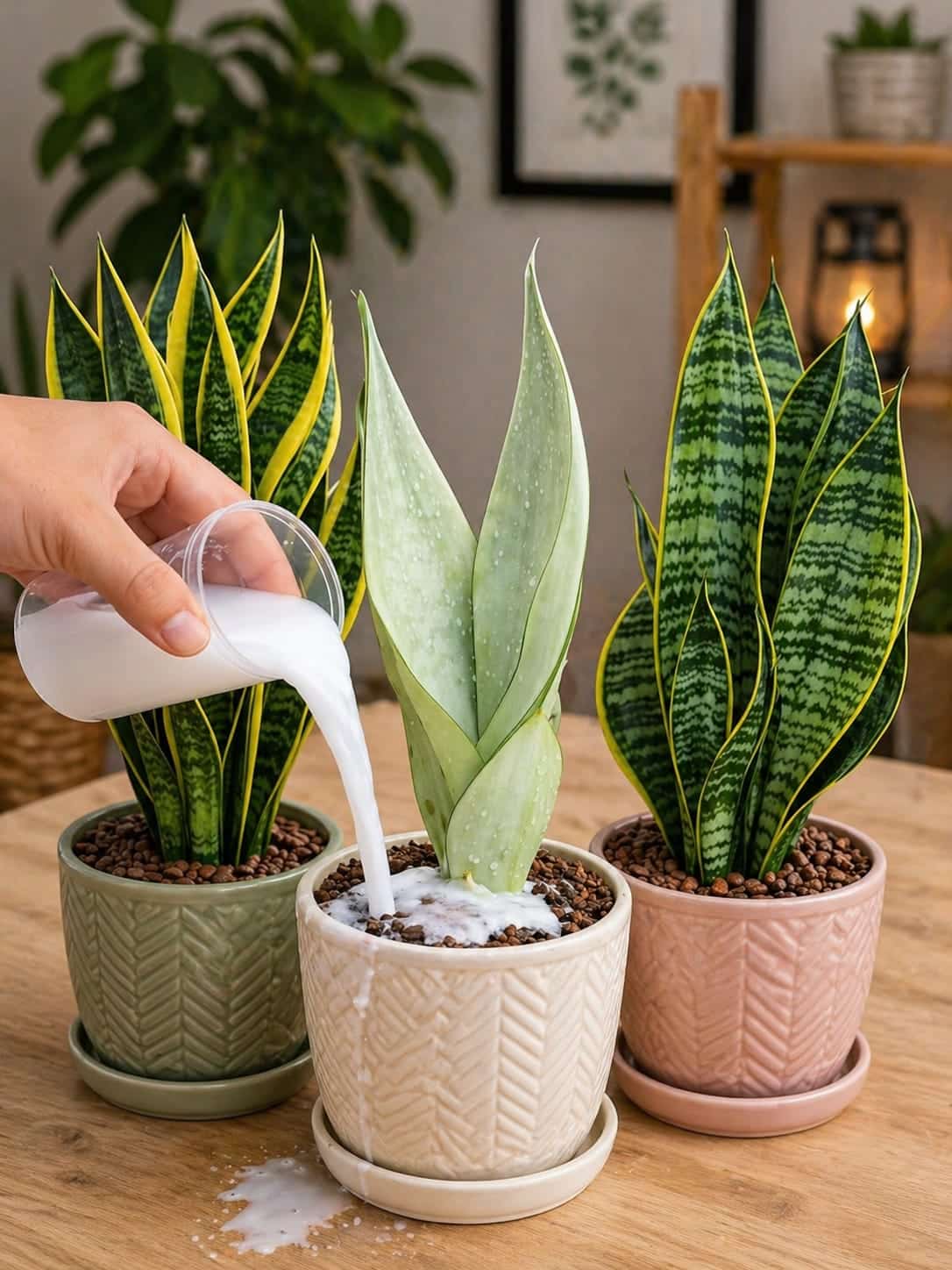
In the image, a milky white liquid is being poured around the base of a pale snake plant while two other snake plants stand nearby in decorative pots. The white liquid spreads over the top layer of the potting mix, making the trick look like a secret indoor plant tonic. It looks simple, dramatic, and almost magical: one gentle pour, and the plant seems ready to wake up.
So what is this white pour?
The safest and most useful version of this trick is not thick milk, cream, or any heavy kitchen liquid. The best version is a very diluted white root-zone rinse, usually made from rice water, a tiny amount of milk diluted heavily in water, or a pale diluted succulent fertilizer. The goal is to give the snake plant a mild refresh during active growth without soaking the roots, souring the soil, or causing pests.
Snake plants are succulent-like plants. They store water in their thick leaves and underground rhizomes. They do not like wet soil. They do not need frequent feeding. They do not want heavy organic liquids sitting around their roots. For this trick to be safe, the white pour must be thin, gentle, occasional, and used only when the soil is dry enough to be watered.
Used correctly, the white pour can become a simple seasonal routine to support stronger roots, cleaner soil moisture movement, and fresh growth. Used incorrectly, it can cause sour smells, mold, fungus gnats, yellow leaves, and root rot. The difference is dilution and timing.
In this article, you will learn exactly what the white pour snake plant trick is, why people use it, how to make a safe version, when to apply it, when to avoid it, and what your snake plant really needs if you want it to grow tall, upright, and healthy indoors.
What Is the Simple White Pour Snake Plant Trick?
The simple white pour snake plant trick is a gentle watering method where a pale, milky-looking liquid is poured around the soil surface of a snake plant as an occasional root-zone refresh. It is usually made from one of three things: diluted rice water, extremely diluted milk water, or a weak liquid plant feed that looks white or cloudy when mixed.
The idea behind the trick is to wake up a slow-growing indoor snake plant by giving it a light nutrient or mineral boost. Many indoor snake plants grow slowly because they are kept in low light, old soil, or overly dry conditions for long periods. A mild occasional rinse can support the plant during the warmer growing season, especially if the plant is already healthy.
However, this trick is not a replacement for good care. It will not fix root rot. It will not make a plant grow in a dark corner. It will not revive mushy leaves. It will not force pups overnight. It is simply a small support method.
The white pour should be used like a weak plant tonic, not like a full watering with thick liquid. It should be watery, not creamy. It should drain through the pot. It should not sit on the soil in a thick layer. It should never be poured into a pot without drainage.
The best way to think about it is this: the white pour is a gentle wake-up drink for a healthy but slow snake plant, not medicine for a dying one.
Why Snake Plants “Fall Asleep” Indoors
Snake plants are often called low-light plants, but that label can be misleading. They can tolerate low light, but they grow much better in bright indirect light. A snake plant in a dim corner may survive for years, but it may barely produce new leaves or pups.
Indoors, snake plants often slow down for several reasons. The room may be too dark. The soil may be old and compacted. The pot may be too large and holding moisture for too long. The plant may not have been fed in years. The roots may be crowded, damaged, or inactive. The temperature may be cool. The plant may simply be resting during winter.
When a snake plant is “sleepy,” it usually still looks alive. The leaves may remain upright, but growth is almost frozen. No new shoots appear. The leaf color may look less vibrant. The plant may seem stuck.
This is where many people start trying homemade tricks. The white pour can be one of those tricks, but it works only when the basic conditions are right. If the plant is in poor light, the best wake-up trick is better light. If the soil is wet, the best trick is drying and better drainage. If the soil is old, the best trick is repotting.
The white pour works best after the plant already has decent light, drainage, and healthy roots.
What Is the White Liquid Made Of?
There are several possible versions of the white liquid. The safest options are fresh diluted rice water, very diluted milk water, or weak succulent fertilizer.
Rice water is made by rinsing uncooked rice in water. The water turns cloudy white because of starch and tiny particles released from the rice. When heavily diluted and used fresh, it can act as a mild root-zone rinse. It is one of the gentler homemade options.
Milk water is made by adding a tiny amount of plain milk to a large amount of water. Some plant owners like it because milk contains calcium and small amounts of other nutrients. But milk is risky if used too strongly. It can sour, smell, and attract pests. If used at all, it must be extremely diluted.
Weak liquid fertilizer is often the most predictable option. Some fertilizers look pale or cloudy when mixed with water. A cactus or succulent fertilizer diluted to half or quarter strength is usually safer than random kitchen mixtures.
The unsafe versions include straight milk, cream, yogurt water, sugar water, coconut milk, powdered milk, rice water that has fermented, or anything with salt, oil, sweetener, or flavoring. These can create problems in indoor pots.
For most snake plant owners, fresh diluted rice water is the easiest homemade version, while weak succulent fertilizer is the most reliable plant-care version.
The Safest White Pour Recipe: Fresh Diluted Rice Water
Rice water is popular because it creates the white look without using dairy. It is simple, cheap, and easy to make. But it must be fresh and diluted. Do not use old fermented rice water for snake plants. Do not use cooked rice water that contains salt, butter, oil, or seasoning.
Ingredients
- 1/4 cup uncooked white rice
- 2 cups clean water for rinsing
- 2 extra cups clean water for dilution
- A bowl
- A strainer
Instructions
- Place the uncooked rice in a clean bowl.
- Add 2 cups of clean water.
- Swirl the rice with your hand for 20 to 30 seconds.
- Strain the cloudy water into a separate container.
- Add 2 more cups of clean water to dilute it.
- Use it immediately.
- Discard any leftovers.
The final liquid should look lightly cloudy, not thick. If it feels slippery, starchy, or heavy, dilute it more. The goal is a faint white rinse, not a paste.
This rice water can be used once every six to eight weeks during spring or summer, but only when the snake plant soil is fully dry and ready for watering.
The Milk Water Version: Use With Extra Caution
Milk water is the version many people imagine when they see a white pour in plant photos. It looks dramatic and creamy, and it gives the impression of feeding the plant with calcium. But snake plants do not need milk, and too much milk can quickly cause problems.
Straight milk should never be poured into a snake plant pot. It can sour in the soil, smell bad, attract fungus gnats, and encourage mold. Even diluted milk should be used rarely.
Safe Milk Water Recipe
- 1 teaspoon plain unsweetened milk
- 4 cups clean water
- A small pitcher
Instructions
- Add 1 teaspoon of plain milk to 4 cups of water.
- Stir well.
- Make sure the mixture looks barely cloudy.
- Use only a small amount around the soil edge.
- Let the pot drain completely.
- Do not use again for at least two to three months.
If the liquid looks like milk, it is too strong. It should look like cloudy water. If the soil smells sour afterward, stop using milk water completely and return to plain water.
For beginners, rice water or weak fertilizer is safer than milk water.
The Fertilizer Version: The Most Predictable White Pour
If your goal is real plant nutrition, a diluted cactus or succulent fertilizer is more predictable than homemade liquids. Snake plants do not need heavy feeding, but they can benefit from light feeding during active growth.
Choose a fertilizer made for succulents, cacti, or indoor foliage plants. Mix it weaker than the label recommends, especially for indoor snake plants. A half-strength or quarter-strength solution is usually enough.
Some fertilizers may look cloudy or pale when mixed, giving the same white-pour look. This option is less likely to sour than milk and more nutritionally balanced than rice water.
Use fertilizer only during spring and summer, when the plant is actively growing. Do not fertilize in winter if the plant is resting. Do not fertilize a sick or rotting plant.
When Should You Use the White Pour?
The best time to use the white pour is during the active growing season, usually spring and summer. This is when snake plants are most likely to produce new leaves and pups. A mild occasional rinse can support that natural growth cycle.
Use it only when the soil is dry. This is extremely important. The white pour should count as a watering. It should not be added to already damp soil. Snake plants are much more likely to suffer from too much moisture than too little.
Before using the white pour, push your finger into the soil or use a wooden skewer. If the mix is still damp below the surface, wait. If the pot feels heavy, wait. If the plant is in low light or the season is cold, wait.
The white pour is best for a healthy snake plant that is dry, stable, and ready for a light watering. It is not for a plant sitting in wet soil.
When Should You Avoid the White Pour?
Avoid the white pour if your snake plant has yellow mushy leaves, soft bases, a rotten smell, damp soil, fungus gnats, or a pot without drainage. These are warning signs that the plant already has moisture problems.
Avoid it during winter unless your plant is growing actively under bright light. In winter, snake plants often use water slowly, and extra liquid can stay in the soil too long.
Avoid using it after repotting if roots were cut or disturbed. Give the plant time to settle before adding any homemade rinse.
Avoid it if the plant is in a decorative pot with no drainage holes. Homemade liquids must be able to drain away. If they sit at the bottom, they can turn sour and damage roots.
Avoid thick mixtures. If the liquid is creamy, sticky, or smells like food, do not use it.
How to Apply the White Pour Correctly
Application matters. The white pour should go into the soil, not over the leaves, and not into the tight center of the plant.
- Check that the soil is dry.
- Make sure the pot has drainage holes.
- Prepare a weak, fresh white liquid.
- Pour slowly around the outer soil surface.
- Avoid pouring directly into the leaf bases.
- Use less than you would use for a full heavy watering.
- Allow excess liquid to drain from the bottom.
- Empty the saucer immediately.
- Do not water again until the soil dries out completely.
If any white liquid splashes onto the leaves, wipe it off with a damp cloth. Do not let milk water or rice water dry on the leaves because it can leave residue.
The plant should not sit in a puddle. The soil surface should not remain coated in a thick white layer. If the liquid pools on top, the mixture is too thick or the soil is too compacted.
Why Drainage Is Essential
Snake plants need drainage holes. This is one of the most important rules of snake plant care. Without drainage, water collects at the bottom of the pot, even if the top looks dry. This hidden moisture can rot roots and rhizomes.
The white pour is especially risky in no-drainage pots because rice water or milk water can sit at the bottom and turn sour. Once that happens, the plant may develop yellow leaves, soft bases, or a bad smell.
If your decorative pot has no drainage, use it as a cover pot. Keep the snake plant in a nursery pot with holes. Remove the nursery pot for watering, let it drain fully, and then place it back inside the decorative pot.
No homemade trick can replace drainage. Drainage is the safety system that keeps snake plant roots alive.
Why the Soil Must Be Fast-Draining
Snake plants grow best in gritty, airy soil. Regular potting soil alone may hold too much moisture, especially in indoor conditions. A dense mix can cause root rot even if you water carefully.
A good snake plant mix can include:
- 2 parts cactus or succulent mix
- 1 part perlite or pumice
- 1 part coarse sand, fine bark, lava rock, or small gravel
This kind of mix drains quickly and leaves air around the roots. It also helps prevent the white pour from sitting too long in the pot.
If your snake plant soil is dark, heavy, and slow to dry, fix the soil before using any trick. Repotting into a gritty mix will help more than rice water, milk water, or fertilizer.
The white pour is safest when the soil is already breathable.
Can the White Pour Wake Up a Pale Snake Plant?
The plant in the center of the image is a pale snake plant variety. Some snake plants are naturally light green, silvery, or creamy because of their variety. A pale leaf color does not always mean the plant is unhealthy.
If your snake plant is naturally pale, the white pour will not make it dark green. The color is genetic. However, proper care can keep the leaves firm, clean, and attractive.
If a normally dark snake plant is becoming pale, the cause may be low light, overwatering, nutrient deficiency, or root stress. In that case, the first step is to check light and roots. A mild white pour may help only if the plant is healthy enough to use it.
Do not use the white pour as a color-changing treatment. Use it as a gentle seasonal support only.
Continue to Page 2
Continue to page 2 for more details about this article and the key points many readers miss on the first page.