Can the White Pour Encourage New Pups?
Snake plant pups come from underground rhizomes. These rhizomes spread through the soil and send up new shoots when the plant has enough energy. The white pour may support the plant slightly, but it will not force pups overnight.
If you want more pups, focus on the real pup triggers:
- Bright indirect light
- Healthy rhizomes
- Fast-draining soil
- A pot with drainage
- Careful watering
- A slightly snug pot
- Light feeding during active growth
A snake plant in a dark corner may survive but produce few pups. A snake plant in bright indirect light with healthy roots is much more likely to multiply.
The white pour can be part of a growth routine, but light and root health are far more important.
Can the White Pour Make Leaves Taller?
The white pour cannot magically make existing leaves taller. Once a leaf has matured, it will not suddenly stretch higher. New leaves may grow taller if the plant has good light, healthy roots, and enough energy.
Different snake plant varieties also have different mature heights. Some are naturally tall. Others stay compact. A dwarf variety will not become a giant just because it receives rice water or milk water.
For stronger future leaves, give the plant bright indirect light and avoid overwatering. Feed lightly during active growth if needed. Keep the soil gritty and the roots healthy.
The best growth results happen slowly over months, not overnight.
Can the White Pour Make Leaves Shinier?
The white pour should not be used as a leaf shine treatment. It belongs in the soil, not on the leaves. If poured or splashed on leaves, it may leave a cloudy film.
Snake plant leaves become shinier when they are clean. Dust makes them look dull. To clean them, use a soft damp cloth and wipe from the base to the tip. Support the leaf gently with one hand while wiping with the other.
Do not use milk, oil, mayonnaise, or thick homemade shine mixtures on the leaves. These can attract dust and pests.
If you want the plant to look instantly better, clean the leaves with plain water. If you want long-term shine, keep the plant healthy.
What If the White Pour Spills on the Table?
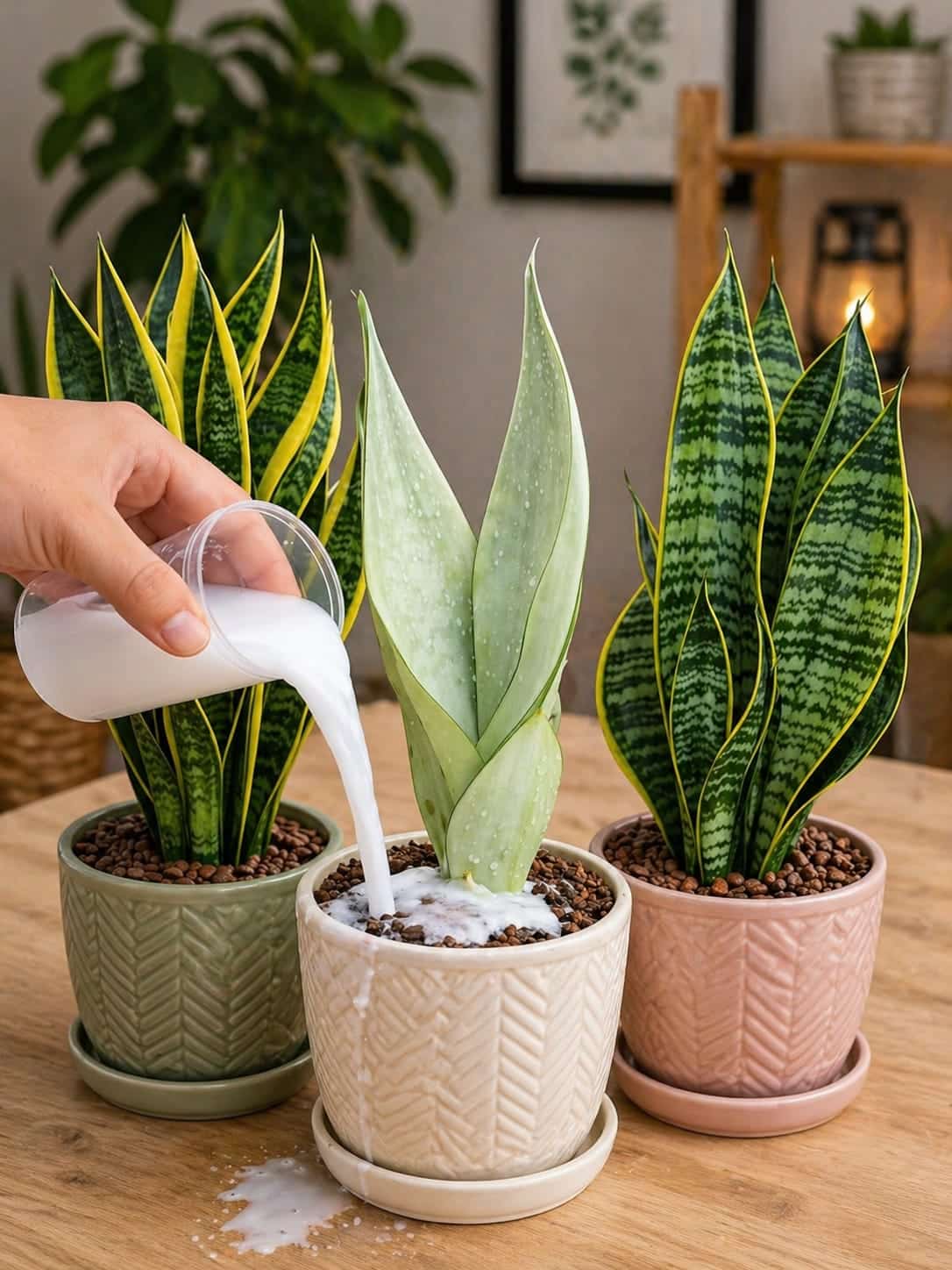
In the image, some white liquid has spilled onto the wooden surface. In real life, this should be cleaned immediately. Rice water and milk water can leave residue, and milk water can smell if left on furniture.
Always water plants on a tray, saucer, sink, or waterproof mat. If using a white pour, be extra careful because it is more visible than plain water and may leave marks.
After watering, wipe the pot and table. Check the saucer. Do not let any liquid sit under the pot. This protects furniture and prevents odors.
A plant trick should not damage your table. Clean application matters.
What If the Soil Smells Sour After Using It?
A sour smell means the mixture was too strong, used too often, or the soil stayed wet too long. Stop using the white pour immediately.
First, remove any visible residue from the soil surface. Let the pot dry completely. Move the plant to brighter indirect light and improve airflow. Do not water again until the soil is dry.
If the smell remains, remove the plant from the pot and inspect the roots and rhizomes. Trim any soft or rotten parts with clean tools. Repot into fresh gritty soil.
Do not add baking soda, perfume, cinnamon water, or more homemade liquids to cover the smell. Fix the moisture problem.
What If Mold Appears on the Soil?
Mold can appear if the white pour is too organic or the soil stays damp. Milk water and rice water can both encourage surface growth if misused.
If you see mold, stop the trick. Scrape off the top layer of soil and replace it with fresh dry mix. Let the plant dry more between waterings. Improve light and airflow.
If mold returns repeatedly, the potting mix may be too dense or the pot may not drain well. Repotting into a gritty mix is the best solution.
A tiny bit of surface mold may not kill the plant, but it is a sign that conditions are too damp for a snake plant.
What If Fungus Gnats Appear?
Fungus gnats are tiny flying insects that often appear when potting soil stays too moist. Homemade liquids can make the problem worse if they leave organic residue in the soil.
If gnats appear after the white pour, stop using it. Let the soil dry deeply. Use yellow sticky traps to catch adult gnats. Remove decaying material from the soil surface.
If the infestation continues, repot the snake plant into fresh gritty soil. Check the roots while repotting.
Do not fight gnats by adding more kitchen ingredients. The main solution is drier, cleaner soil.
What If Leaves Turn Yellow After the White Pour?
Yellow leaves after using the white pour may mean the soil stayed too wet or the mixture was too strong. Check the base of the yellow leaf. If it is soft or mushy, root or rhizome rot may be starting.
Stop watering. Let the soil dry. If several leaves are yellowing, remove the plant from the pot and inspect the roots. Healthy roots and rhizomes are firm. Rotten ones are soft, dark, or smelly.
Trim away rot and repot into fresh dry gritty soil. Do not use the white pour again until the plant has fully recovered, and maybe not at all.
One older yellow leaf may be natural aging, but multiple yellow leaves are a warning sign.
What If Leaves Become Soft or Mushy?
Soft or mushy leaves are usually a serious sign of rot. Snake plants should feel firm. If the leaves are soft at the base, the rhizome may be damaged.
Do not add any more liquid. Remove the plant from the pot. Cut away rotten leaves and rhizome sections with clean tools. Let healthy cut sections dry for a day if needed, then repot into dry gritty mix.
After repotting, water very carefully. If the plant lost many roots, wait several days before watering. Keep it in bright indirect light.
The white pour should never be used on a mushy snake plant.
How Much White Pour Should You Use?
Use less than you think. A small snake plant needs only a small amount. A large pot may need more, but the liquid should still be diluted and should drain away.
For a small pot, a few tablespoons may be enough. For a medium pot, use about 1/4 to 1/2 cup. For a large pot, use enough to lightly moisten the root zone, but do not flood the soil.
If the liquid runs down the sides, pools on top, or spills out heavily, you may be using too much or pouring too fast.
Remember, snake plants prefer dry conditions. The white pour is not meant to soak the pot every week. It is an occasional light watering.
How Often Should You Repeat the Trick?
For rice water, once every six to eight weeks during active growth is enough. For milk water, once every two to three months at most is safer. For diluted succulent fertilizer, once a month during spring and summer may be enough, depending on the product and plant condition.
Do not use the white pour weekly. Do not use it every time you water. Do not combine multiple white-pour recipes at once.
Plain water should remain the main watering method. The white pour is a special occasional step, not the foundation of care.
If your plant is growing well without it, you may not need it at all.
Best Light After Using the White Pour
After using the white pour, place the snake plant in bright indirect light. Better light helps the plant use water more efficiently and reduces the risk of soil staying damp too long.
A bright window is ideal. Morning sun can be fine. Harsh direct afternoon sun may burn some varieties if they are not used to it, so introduce stronger light gradually.
If the plant is in a dark room, avoid the white pour. Low light slows water use. The soil may stay damp too long, especially after a homemade rinse.
Light is one of the real reasons snake plants wake up. The white pour should support light-based growth, not replace it.
Best Pot Type for This Trick
Terracotta pots are excellent for snake plants because they breathe and dry faster. Ceramic pots with drainage can also work well. Plastic pots are fine if the soil is gritty and watering is careful.
The pot should have drainage holes. A saucer is useful, but it must be emptied after watering.
If the pot has a decorative top layer of clay pebbles or stones, make sure you can still check soil moisture. Decorative toppings can sometimes hide damp soil underneath. For snake plants, it is important to know when the mix is truly dry.
The white pour is safest in a pot that drains quickly and dries predictably.
Should You Remove Decorative Pebbles Before Using It?
If your snake plant has decorative pebbles on top, you can still use the white pour, but be cautious. Pebbles can make it harder to see whether residue remains on the soil. They can also slow surface drying slightly.
For the cleanest application, move some pebbles aside and pour the liquid directly onto the soil. After it drains, replace the pebbles. If any white liquid dries on the pebbles, rinse or wipe them.
Do not create a thick sealed layer over the soil. Snake plant roots need airflow, and the soil surface should not stay constantly damp.
Can the White Pour Replace Repotting?
No. If the soil is old, compacted, sour, or slow to drain, the white pour will not fix it. In fact, it may make the problem worse by adding more organic material to tired soil.
Snake plants do not need frequent repotting, but they do benefit from fresh gritty mix when the old soil breaks down. If water sits on the surface, the pot smells bad, or the plant has not been repotted for years, consider repotting.
A proper repot gives roots oxygen, removes old compacted soil, and allows you to check rhizome health. That is much more powerful than any homemade liquid.
Use the white pour only after the root environment is already healthy.
Can the White Pour Replace Fertilizer?
Rice water and milk water should not fully replace fertilizer. They are mild homemade rinses, not balanced plant food. Snake plants do not need much fertilizer, but when they do need nutrients, a proper cactus or succulent fertilizer is more reliable.
If your plant is in fresh soil and good light, it may need very little feeding. If it has been in the same pot for years and growth is slow, light feeding during the growing season can help.
Use fertilizer weakly. Too much fertilizer can cause brown tips, salt buildup, and root stress.
The white pour is a fun occasional routine. Fertilizer is a controlled nutrient source. They are not the same thing.
How to Wake Up a Snake Plant Without Any White Pour
If you do not want to use homemade liquids, you can still wake up a snake plant with simple care improvements.
- Move it to brighter indirect light.
- Check that the pot has drainage holes.
- Repot into gritty soil if the mix is heavy.
- Water only when the soil is dry.
- Clean dust from the leaves.
- Feed lightly in spring or summer.
- Let the plant become slightly snug in the pot.
- Keep it warm and away from cold drafts.
These steps are more important than the white pour. In many cases, better light alone can wake up a snake plant that has been sitting still for months.
How to Tell If the Trick Is Working
If the white pour is working safely, the plant should remain firm and stable. The soil should dry normally. There should be no sour smell, no mold, no gnats, and no yellow mushy leaves.
Over the next few weeks or months, you may notice fresh growth from the center or new pups emerging from the soil. The leaves may look cleaner and stronger if you also improve light and wipe away dust.
Do not expect dramatic overnight changes. Snake plants are slow growers. A good result is steady health, not instant transformation.
The best sign is new growth that appears firm, upright, and well-colored.
Signs You Should Stop Immediately
Stop using the white pour if any of these happen:
- The soil smells sour
- Mold appears on the surface
- Fungus gnats show up
- Leaves turn yellow quickly
- Leaf bases become soft
- The pot stays wet too long
- The liquid leaves sticky residue
- The plant looks worse after treatment
If you see these signs, return to plain water only. Let the plant dry out. Check the roots if symptoms are serious. Repot if needed.
A good trick should not create problems. If it does, skip it.
Common Mistakes With the White Pour Trick
Using Straight Milk
Straight milk is too strong and can sour in the pot. Always dilute heavily or avoid milk completely.
Using Fermented Rice Water
Old rice water can smell and feed unwanted microbes. Use fresh rice water only.
Using the Trick on Wet Soil
This is the most common mistake. The soil must be dry before applying any liquid.
Pouring Into the Leaf Bases
Liquid trapped in the tight leaf bases can encourage rot. Pour around the outer soil instead.
Using a Pot Without Drainage
Drainage is essential. Without it, the white pour can collect at the bottom and sour.
Repeating Too Often
Snake plants do not need frequent special treatments. Use rarely.
Expecting Instant Growth
Snake plants grow slowly. Results take time.
A Safe Monthly Snake Plant Wake-Up Routine
If you want to make this trick part of a complete routine, here is a safe approach:
- Check the plant’s light. Move it brighter if needed.
- Wipe dust from the leaves with a damp cloth.
- Check the soil moisture deeply.
- Remove dead leaves or debris from the pot.
- Look for new pups or soft spots.
- If the soil is dry and it is growing season, use a weak white pour.
- Let the pot drain fully.
- Empty the saucer.
- Wait until the soil dries completely before watering again.
- Use plain water the next several waterings.
This routine keeps the trick gentle and prevents overuse.
Frequently Asked Questions
What is the white liquid poured on snake plants?
It is usually diluted rice water, very weak milk water, or a pale diluted succulent fertilizer. The safest homemade version is fresh diluted rice water.
Can I pour milk on my snake plant?
Do not pour straight milk. If using milk at all, use only 1 teaspoon of plain milk in 4 cups of water and apply rarely.
Can rice water help snake plants?
Fresh diluted rice water may act as a mild occasional root-zone rinse, but it will not replace proper light, soil, drainage, or fertilizer.
How often should I use the white pour?
Use rice water once every six to eight weeks during active growth. Use milk water even less often. Plain water should be used most of the time.
Can the white pour make snake plants produce pups?
It may support a healthy plant slightly, but pups mainly come from bright light, healthy rhizomes, a snug pot, and correct watering.
Can I use the white pour in winter?
It is better to avoid it in winter unless the plant is actively growing in bright warm conditions.
Can I use it if the soil is wet?
No. Only use it when the soil is dry and the plant is ready for watering.
What should I do if the soil smells sour afterward?
Stop using the white pour, let the soil dry, remove any residue, and repot if the smell continues.
Can this fix root rot?
No. Root rot requires trimming rotten roots or rhizomes and repotting into fresh gritty soil.
What is better than the white pour?
Bright indirect light, fast-draining soil, drainage holes, careful watering, and occasional weak succulent fertilizer are more important for long-term snake plant health.
Final Thoughts
The simple white pour snake plant trick is popular because it looks dramatic and easy. A pale liquid poured around the base of a slow indoor snake plant gives the impression of a secret growth booster. It feels natural, homemade, and satisfying. But the real success of this trick depends on using it carefully.
The safest white pour is fresh diluted rice water, very weak succulent fertilizer, or extremely diluted milk water used rarely. It should be thin and watery, not thick or creamy. It should be applied only when the soil is dry. It should drain completely from a pot with drainage holes. It should never sit in the saucer, collect in the leaf bases, or be repeated every week.
Snake plants are tough, but their roots and rhizomes can rot if kept wet. That is why the white pour must always respect the plant’s dry-loving nature. If the soil smells sour, mold appears, gnats arrive, or leaves soften, stop immediately and return to plain water care.
The real way to wake up a snake plant is to give it bright indirect light, gritty fast-draining soil, a slightly snug pot, and careful watering. The white pour can be a small seasonal bonus, but it is not the main reason a snake plant grows. Healthy roots, good light, and patience matter far more.
Used wisely, this trick can make your plant-care routine feel fresh and intentional. It can support a healthy plant during active growth and encourage you to pay closer attention to the soil, roots, and leaves. Used too strongly, it can create problems. Keep it weak, occasional, and clean.
With the right balance, your snake plant can stay upright, bold, and beautiful indoors. It may produce new pups, stronger leaves, and a fuller shape over time. The white pour may catch the eye, but steady care is what truly wakes the plant up.