How to Propagate Pothos Cuttings for a Fuller Pot
Pothos propagation is easy. Cut a vine just below a node. The node is the little bump where a leaf and aerial root may grow. Each cutting should have at least one node and one leaf.
Place cuttings in water until roots are a few inches long, or plant them directly into moist potting mix. Once rooted, tuck them back into the base of the mother plant. This fills empty spaces and creates a fuller look.
After adding cuttings, a light top-dressing can help cover the nodes and support rooting. Keep the mix lightly moist while cuttings establish, but not soggy.
This method is especially useful for climbing pothos because it creates more vines to train up the support.
How Often Should You Use the Rich Soil Trick?
Use this trick every three to six months, depending on how fast your pothos grows and how the soil looks. If the surface becomes compacted, crusty, or low in the pot, a refresh can help.
Do not add layer after layer forever without removing old material. If you keep adding soil repeatedly, the pot can become too full and stems may become buried. Before each new top-dressing, remove a little old surface mix.
Once every few months is enough. Pothos grows well with steady, moderate care. Too much richness can lead to overly wet soil or fertilizer buildup.
If the plant has been in the same pot for several years, a full repot may be better than repeated top-dressing.
When Does Pothos Need a Full Repot Instead?
A top-dressing is useful, but it does not replace repotting forever. Your pothos may need a full repot if the roots are circling tightly, water runs straight through without soaking, the soil smells sour, the plant dries out too quickly, or the potting mix has broken down.
It may also need repotting if the plant is top-heavy and the support is unstable. A climbing pothos can become heavy over time, especially when attached to a large pole or branch.
When repotting, choose a pot only slightly larger than the current one. Use a chunky, well-draining mix. Keep the support stable and avoid damaging attached vines.
Top-dressing is for maintenance. Repotting is for major renewal.
Best Light for Climbing Pothos
Pothos grows best in bright indirect light. It can tolerate lower light, but growth will slow, and variegation may fade. If you want large leaves and strong climbing growth, give the plant more brightness.
Place it near a window with filtered light. An east-facing window is often excellent. A north-facing window can work if bright. A south or west window may need a sheer curtain to prevent leaf scorch.
If the plant is far from natural light, use a grow light. This can make a big difference for climbing pothos, especially in winter.
The rich soil trick works better when the plant has enough light to use the nutrients. In low light, rich soil may stay wet and growth may remain slow.
Best Watering Routine After Top-Dressing
After adding fresh mix, be careful with watering. The new layer may hold moisture differently from the old mix. Always check the soil before watering.
Water when the top inch or two feels dry. Pour slowly until water drains from the bottom. Empty the saucer. Do not let the pot sit in water.
Pothos likes slightly moist soil, but it does not like soggy roots. If the leaves droop and the soil is dry, water. If the leaves yellow and the soil is wet, wait and check roots.
Climbing pothos on a pole may dry a bit faster if the support absorbs moisture, but the pot size and soil mix matter most.
Should You Fertilize After Adding Rich Soil?
If your top-dressing includes worm castings or compost, you may not need fertilizer immediately. Give the plant time to use the fresh material.
During spring and summer, you can fertilize lightly with a balanced houseplant fertilizer once a month or every six weeks. Use half strength if the plant is indoors and not growing very fast.
Do not fertilize heavily right after adding compost or worm castings. Too much nutrition can lead to salt buildup, leaf burn, or weak growth.
In fall and winter, reduce feeding unless the plant is under strong grow lights and actively growing.
Can This Trick Attract Fungus Gnats?
It can if the material is too wet, too rich, or unfinished. Fungus gnats love damp organic surfaces. If you add wet compost and then keep the pot moist, gnats may appear.
To avoid gnats, use clean finished material, mix it with perlite or bark, and avoid overwatering. Let the top layer dry slightly between waterings. Remove fallen leaves from the soil surface.
If gnats appear, stop adding organic material. Let the surface dry more. Use yellow sticky traps. If the problem continues, replace the top layer or repot.
A good top-dressing should smell earthy and fresh, not wet and sour.
Can This Trick Cause Mold?
Mold may appear if the top layer stays too damp or if unfinished compost is used. A little harmless surface fungus can appear in rich organic mixes, but it is still a sign that moisture and airflow should be improved.
To prevent mold, use a thin layer, keep the mix airy, improve airflow, and avoid overwatering. Do not pile wet compost around the stems.
If mold appears, scrape off the affected top layer and replace it with a drier mix containing more perlite or bark. Let the pot dry slightly before watering again.
For indoor pothos, clean and airy is better than heavy and rich.
How to Keep the Wooden Support Healthy
If your pothos is growing on a natural wooden branch, keep an eye on the support. Wood can look beautiful, but if it stays constantly wet, it may rot or grow mold. The bottom of the wood should be stable in the pot, but it should not sit in soggy soil all the time.
Use well-draining soil and avoid overwatering. If the wood develops mold, wipe it gently and improve airflow. If it becomes soft or unstable, replace it.
When tying pothos stems to wood, use soft twine and avoid cutting into the stems. As the plant grows, adjust ties to prevent damage.
A healthy support helps the plant climb safely.
How to Encourage Aerial Roots
Pothos aerial roots help the plant attach to supports. They appear as small brown bumps or root-like growths along the vine nodes. To encourage them, keep the support slightly humid and position nodes against it.
A moss pole can be misted lightly or watered from the top. A wooden branch does not hold moisture the same way, but rough texture helps roots grip. You can gently tie nodes against the support so they stay in contact.
Good humidity and bright indirect light also help. If the air is very dry, aerial roots may remain small.
Do not force roots to attach. Give them contact and time.
How to Make a Pothos Look Like an Indoor Tree
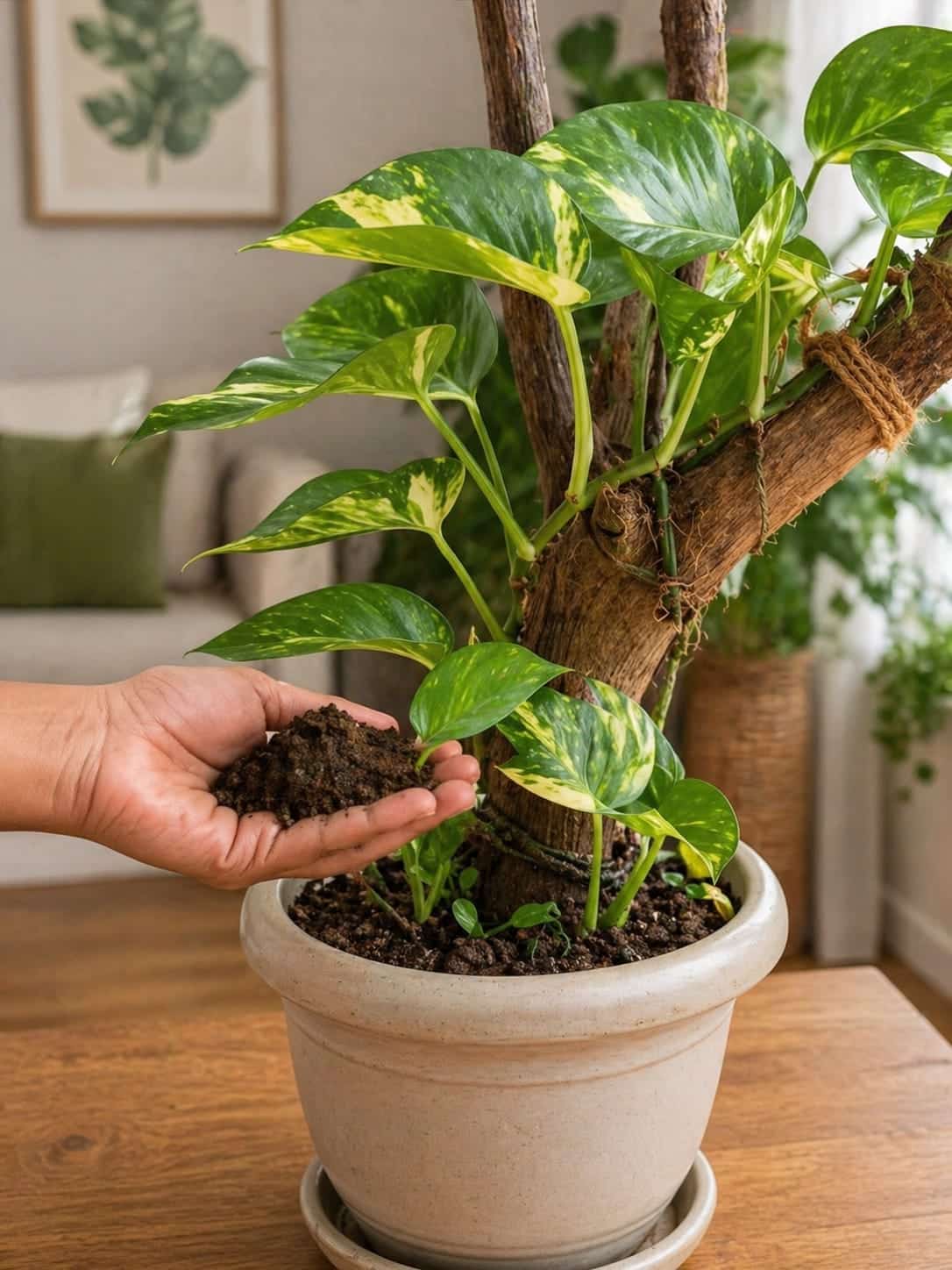
The image shows a pothos styled almost like a small indoor tree, with a thick central support and vines climbing upward. To create this look, choose a sturdy branch, moss pole, or coir pole and place it firmly in the pot. Plant several pothos cuttings or vines around the base. Train the stems upward and tie them gently.
As the vines grow, keep wrapping or tying them to the support. Prune long trailing sections and root them back into the pot for fullness. Add a light top-dressing every few months to refresh the base.
Over time, the pothos will create a leafy vertical display. The leaves will face outward, and the plant will look fuller than a simple trailing vine.
This is one of the best ways to make ordinary pothos look expensive and mature.
Common Mistakes With the Rich Soil Trick
Using Heavy Outdoor Soil
Outdoor soil can compact and bring pests indoors. Use indoor potting mix instead.
Adding Too Thick a Layer
A thick layer can bury stems and hold too much moisture. Keep it thin.
Using Unfinished Compost
Unfinished compost can smell, mold, and attract gnats. Use only finished, clean material.
Watering When the Soil Is Already Wet
Always check moisture first. Top-dressing does not mean the plant must be watered immediately.
Packing the Soil Down
Do not press the new mix tightly. Roots need air.
Ignoring Light
Fresh soil cannot help much if the plant is in a dark corner.
Never Repotting
Top-dressing is helpful, but old broken-down soil eventually needs replacing.
Signs the Trick Is Working
If the trick is working, your pothos should look stable and healthy. The soil surface should look fresh, not soggy. The plant should continue producing new leaves. Over time, vines may grow more strongly, and the base may look fuller.
You may see new shoots from the soil or stronger growth along the climbing stems. Leaves may become glossier if the plant is also receiving good light and proper watering.
The improvement will be gradual. Pothos grows quickly compared with many houseplants, but new growth still takes time. Look for healthy new leaves, not instant transformation.
Signs You Should Stop or Repot
Stop top-dressing and consider repotting if the soil smells sour, fungus gnats appear, mold spreads repeatedly, leaves yellow quickly, stems become mushy near the soil, or the pot stays wet too long.
These signs mean the root zone may not be healthy. Adding more rich material could make things worse. Remove the plant from the pot if needed and inspect the roots. Healthy roots are firm and light-colored. Rotten roots are dark, mushy, or smelly.
Repot into fresh airy mix and reduce watering until the plant recovers.
A Simple Monthly Routine for Climbing Pothos
To keep a climbing pothos looking beautiful, follow this easy routine:
- Check the ties and loosen any that are tight.
- Guide new vines toward the support.
- Remove yellow or damaged leaves.
- Wipe dusty leaves with a damp cloth.
- Check the soil moisture before watering.
- Rotate the pot for even light.
- Mist or moisten the moss pole if using one.
- Inspect for pests under leaves and near nodes.
- Add a light top-dressing every few months if needed.
- Prune and propagate long vines to keep the base full.
This routine does more than one handful of soil alone. It supports the whole plant and keeps the climbing display attractive.
Frequently Asked Questions
What is the handful of soil trick for pothos?
It is a top-dressing method where fresh potting mix, worm castings, compost, perlite, or bark are added to the top layer of the pot to refresh the root zone.
Can I add compost to pothos?
Yes, but only a small amount of fully finished compost. Mix it with potting soil and perlite so it does not become too dense.
Can I use garden soil?
Garden soil is not recommended for indoor pothos because it can compact and may bring pests indoors.
How often should I top-dress pothos?
Every three to six months is enough for most plants. Remove some old surface mix before adding more.
Will this make pothos leaves bigger?
It can support growth, but bigger leaves also require bright indirect light, healthy roots, and a climbing support.
Will this make pothos grow faster?
It may help if the plant needs fresh nutrients, but light, watering, and root health are more important.
Should I water after adding the soil?
Only water if the existing soil is dry enough. Do not water automatically if the pot is already moist.
Can top-dressing cause fungus gnats?
It can if the material is too wet or unfinished. Use clean, airy material and avoid overwatering.
Can this replace repotting?
No. Top-dressing helps maintain the plant between repottings, but old compacted soil eventually needs replacing.
What is the best mix for pothos top-dressing?
A mix of indoor potting soil, worm castings, perlite, and fine bark works well because it is rich but breathable.
Final Thoughts
The handful of rich soil trick is one of the simplest ways to refresh a climbing pothos without disturbing the entire plant. It is especially useful for pothos growing on a pole, branch, or large support because those plants can be difficult to repot often. A small top-up of fresh, airy, nutrient-rich mix can renew the soil surface, support feeder roots, and help the base of the plant stay healthy and full.
The secret is using the right material. Do not use heavy outdoor dirt, unfinished compost, or wet kitchen scraps. Use a clean indoor blend made from potting mix, worm castings, perlite, and fine bark. Keep the layer thin. Do not bury stems deeply. Do not water if the soil is already damp.
This trick works best when combined with good pothos care. Give the plant bright indirect light. Train vines gently up the support. Keep the potting mix lightly moist but never soggy. Prune bare vines and propagate cuttings back into the pot for fullness. Check the support and ties regularly.
A climbing pothos can become one of the most beautiful plants in your home. With its glossy variegated leaves, strong vines, and natural support, it can look like a miniature indoor jungle. The handful of rich soil may seem small, but it helps refresh the foundation that supports all that growth.
Used wisely, this simple trick can keep your pothos looking fuller, fresher, and more vibrant. It is not a miracle, but it is a smart maintenance habit. Give the roots a breathable refresh, give the vines something to climb, and your pothos can reward you with lush leaves and a stunning vertical display for years to come.