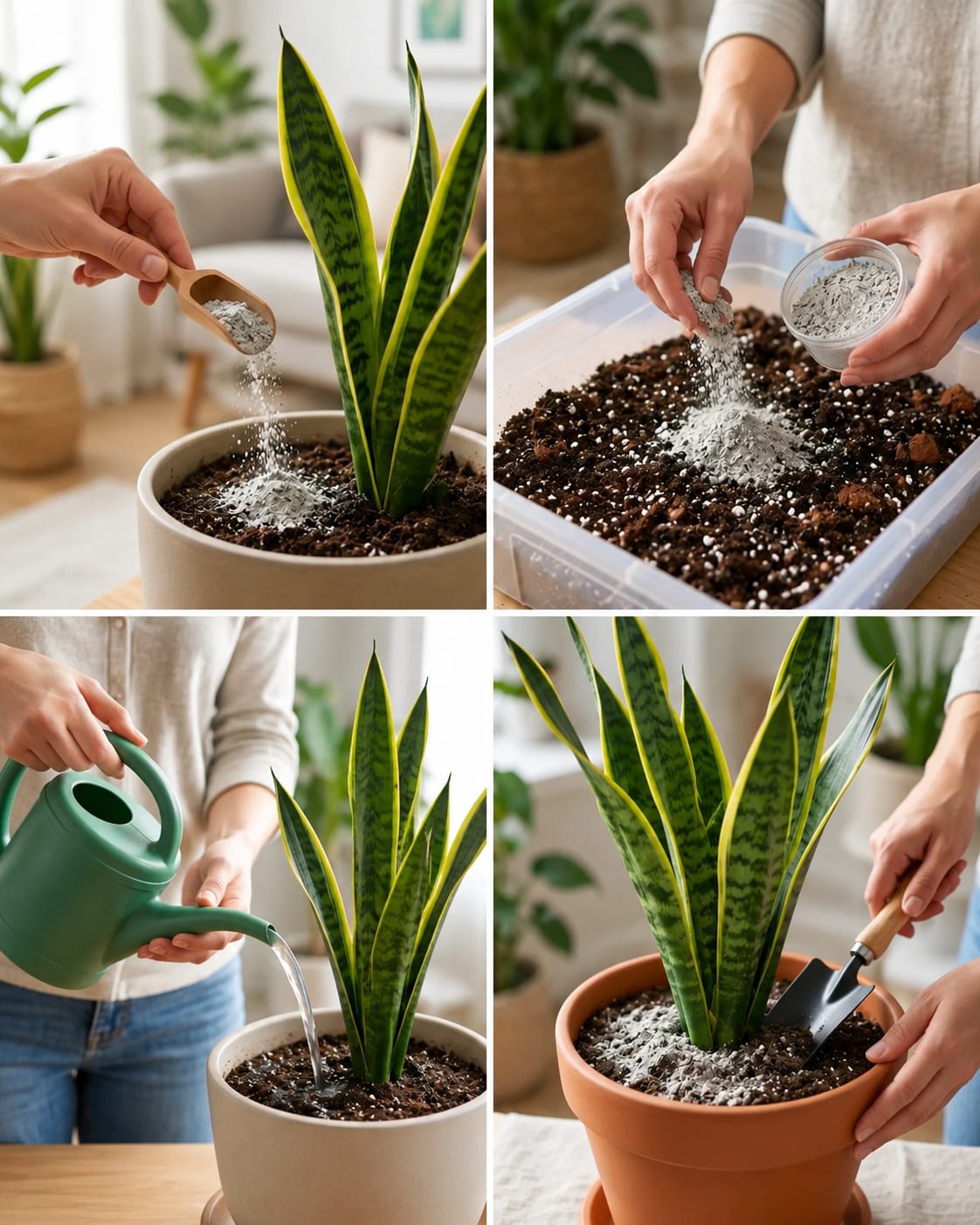
Snake plants are among the most reliable and stylish houseplants for indoor spaces. Their upright sword-shaped leaves, bold green patterns, and yellow-edged varieties make them perfect for living rooms, bedrooms, offices, entryways, shelves, and bright corners. They are easy to care for, tolerant of neglect, and naturally architectural, which is why they are so popular in modern home decor.
Even though snake plants are tough, they still need the right balance of soil, water, light, and nutrients to look their best. Many plant lovers try simple natural soil-care routines to keep their snake plants firm, green, and actively producing new pups. One popular idea is using a light white powder amendment around the soil surface, then watering it in carefully.
This routine can be helpful when done correctly, but it must be used with caution. The powder should be plant-safe, mild, and applied sparingly. Too much powder can compact the soil, disturb drainage, or create mineral buildup. Snake plants do not need heavy feeding. They grow best with light support, dry periods between watering, and a loose potting mix that allows air to reach the roots.
What the White Powder Routine Means
The white powder used in natural plant-care routines is often a gentle soil amendment such as finely crushed eggshell powder, a small amount of garden lime, diatomaceous earth, or a mineral-rich additive. For snake plants, the safest natural option for beginners is usually finely crushed clean eggshell powder used in very small amounts.
Eggshell powder contains calcium carbonate, which breaks down slowly in soil. It does not act like instant fertilizer, but it can support long-term soil mineral balance when used carefully. Some growers also use diatomaceous earth on the soil surface for pest prevention, but it should stay dry to be most useful and should not be inhaled during application.
The key is moderation. A light sprinkle is enough. Snake plants prefer simple care and can suffer when too many ingredients are added to the pot.
Why Snake Plants Need Light Feeding
Snake plants are slow-growing succulents. Their thick leaves store water, and their root systems are adapted to survive in conditions where moisture is not constant. Because they grow slowly, they do not need frequent fertilizer or heavy soil amendments.
Too much feeding can cause weak growth, brown leaf tips, or root stress. A small amount of support during active growth is usually enough. The goal is not to force fast growth but to maintain strong leaves and healthy roots over time.
How to Prepare Eggshell Powder
If you choose eggshell powder, prepare it properly before using it around your plant.
- Rinse eggshells well to remove egg residue.
- Let them dry completely.
- Bake them briefly at low heat to remove moisture.
- Crush them with a mortar, grinder, or rolling pin.
- Make the powder as fine as possible.
- Store it in a clean dry jar.
Clean, dry powder is safer than wet shell pieces. Large pieces break down very slowly and can look messy on the soil surface.
How Much Powder to Use
For a small snake plant, use only a small pinch. For a medium pot, use about one-quarter to one-half teaspoon. For a large pot, one teaspoon is usually enough.
Do not pour a thick layer across the entire surface. Too much powder can form a crust, block air movement, and make the potting mix less breathable.
Sprinkle the powder lightly around the outer soil area, away from the center crown of the plant.
How to Apply It Correctly
Apply the powder when the soil is dry or nearly dry. Use a small spoon or your fingers to sprinkle it evenly over the top layer. Then gently mix it into the upper half inch of soil with a small trowel, chopstick, or spoon.
Keep the powder away from the base of the leaves. Snake plant crowns should remain dry and clean. If powder collects tightly around the leaf bases, gently brush it away.
After applying, water lightly only if the plant is already due for watering.
Watering After the Powder Routine
Snake plants should never be watered heavily just because a powder was added. Water only when the soil has dried well.
When watering, pour slowly around the soil until moisture reaches the root zone. Allow excess water to drain completely from the bottom of the pot. Empty the saucer afterward.
If the plant sits in water, the roots can rot. Good drainage matters more than any plant trick.
How Often to Repeat This Routine
This routine should be occasional. Once every 2 to 3 months during spring and summer is enough. During winter or low-light months, avoid adding extra amendments because the plant grows more slowly.
Snake plants do better with underfeeding than overfeeding. If the plant is already healthy, firm, and growing well, it may not need any powder at all.
The Best Soil for Snake Plants
Snake plants need a fast-draining soil mix. Regular heavy potting soil often holds too much moisture, especially indoors.
A good snake plant mix may include:
- Cactus or succulent soil
- Perlite
- Pumice
- Coarse sand
- Small bark chips
- A small amount of regular potting mix
The soil should feel loose and airy. When watered, it should drain quickly instead of staying wet for many days.
Why Drainage Is Essential
Snake plants are highly sensitive to overwatering. A pot without drainage holes is one of the biggest risks.
Always use a container with drainage. If you love a decorative pot without holes, place the snake plant in a nursery pot with drainage and set that inside the decorative container. Remove extra water after watering.
Healthy roots need oxygen. Constantly wet soil pushes oxygen out and creates the perfect condition for rot.
Light for Stronger Growth
Snake plants tolerate low light, but they grow better in bright indirect light. Low light can keep the plant alive, but growth may become very slow.
For stronger leaves and more pups, place the plant near a bright window. Morning sun or filtered afternoon light can work well. Avoid sudden harsh direct sun if the plant has been living in shade, because leaves may scorch.
A brighter location often improves growth more than any homemade amendment.
Watering the Right Way
The best watering rule for snake plants is simple: let the soil dry thoroughly between waterings.
Check the soil with your finger or a wooden stick. If the soil still feels damp below the surface, wait. If it feels dry and the pot is lighter, water thoroughly and let it drain.
In winter, watering may be needed only occasionally. In warm bright conditions, the plant may need water more often. Always check the soil instead of following a strict calendar.
Signs of a Healthy Snake Plant
A healthy snake plant usually has:
- Firm upright leaves
- Clear green patterning
- Strong yellow edges on variegated types
- No mushy bases
- Dry, clean soil surface
- New pups appearing over time
- Stable growth
If your plant shows these signs, your routine is working well.
Signs of Overwatering
Overwatering is the most common snake plant problem. Watch for these signs:
- Soft leaves
- Mushy leaf bases
- Yellowing leaves
- Bad smell from soil
- Leaves falling over
- Black spots near the base
- Soil staying wet too long
If these appear, stop watering and inspect the roots. The plant may need fresh dry soil and removal of damaged sections.
When Not to Use White Powder
Do not use the powder routine if your snake plant is already stressed. Avoid it when the plant has root rot, wet soil, fungus gnats, soft leaves, or recently damaged roots.
Adding amendments to unhealthy soil can make problems worse. First fix drainage, watering, and soil structure. Once the plant is stable, occasional light amendments can be considered.
Can This Help Snake Plants Grow More Pups?
A powder routine alone will not force pups to appear. Snake plant pups develop from underground rhizomes when the plant has enough energy and healthy roots.
To encourage pups, focus on:
- Bright indirect light
- A snug pot
- Fast-draining soil
- Careful watering
- Warm temperatures
- Light feeding during active growth
When these conditions are right, pups are more likely to appear naturally.
Why Pot Size Matters
Snake plants often grow better in slightly snug pots. A pot that is too large holds excess soil, and excess soil holds extra moisture. This can lead to root problems.
Choose a pot only slightly larger than the root ball. Repot only when the plant is crowded, unstable, or pushing strongly against the container.
A snug pot also helps the plant look neat and upright.
Continue to Page 2
Continue to page 2 for more details about this article and the key points many readers miss on the first page.