- Watering – Balance Is Everything
Christmas cacti like consistent moisture but hate soggy roots. Overwatering is a common mistake that prevents blooming.
Phase Watering Instructions
Spring & Summer (growth) Keep soil evenly moist. Water when top inch feels dry.
Early Autumn (bud induction) Slightly reduce watering. Allow top inch to dry out more.
After buds appear Keep soil consistently moist – do not let it dry completely.
During bloom Water normally. Avoid getting water on flowers.
After blooming (rest period) Reduce watering for 4–6 weeks.
Pro tip: Use room‑temperature, filtered water. Cold water can shock the roots.
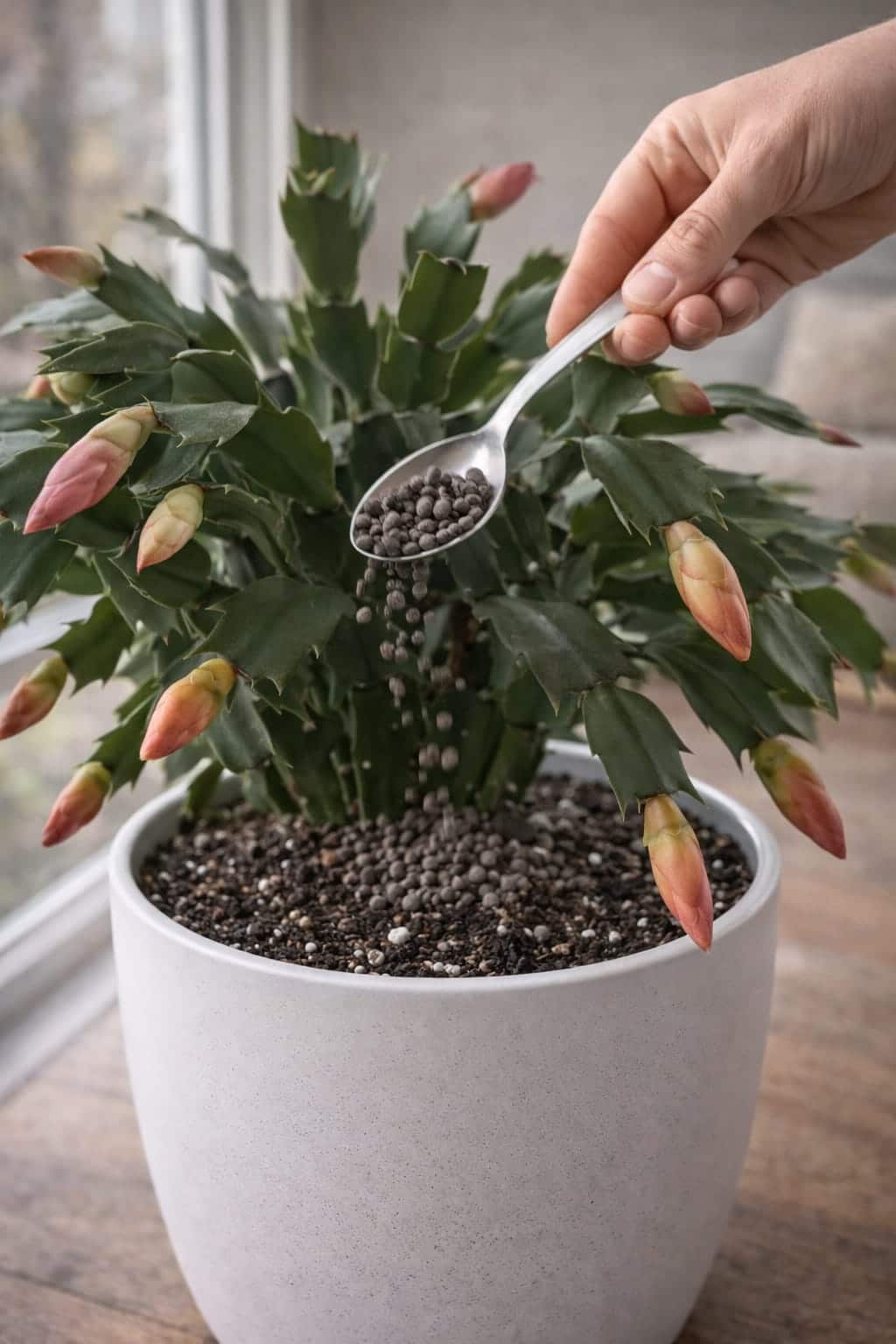
- Fertilizer – Feed for Flowers
A balanced fertilizer helps, but timing is crucial.
Time Fertilizer Frequency
Spring & Summer (active growth) Balanced liquid fertilizer (e.g., 20-20-10) at half strength Every 4–6 weeks
Early Autumn (before bud induction) High‑phosphorus fertilizer (e.g., 10-30-20) once One application
During bud formation & blooming Stop fertilizing None
After blooming (rest) None For 4–6 weeks
Pro tip: Too much nitrogen promotes leafy growth, not flowers. Switch to a bloom‑booster fertilizer in early fall.
When Do Christmas Cacti Bloom? A Realistic Timeline
Timeframe What Happens
Spring & Summer Active growth – new segments appear.
Early October Start dark treatment and cool nights (50–55°F).
Late October – Early November Buds begin to form at the tips of segments.
Mid‑November – December Buds open into spectacular flowers.
January Bloom period ends. Rest the plant.
With proper care, blooms can last 4–6 weeks, brightening your home through the holidays.
Why Your Christmas Cactus Isn’t Blooming – Common Problems & Solutions
Even with good intentions, things can go wrong. Here are the most common reasons your Christmas cactus refuses to bloom – and how to fix them.
- Light Level Issues
Problem Solution
Too much direct sun Move to bright, indirect light.
Too little light Place closer to a window or add a grow light.
Light at night Ensure 12–14 hours of complete darkness during bud induction.
- Inadequate Darkness
Even a small amount of artificial light (hallway lamp, TV, streetlight) can disrupt bud formation
Fix: Cover the plant with a box or move it to a dark closet every night for 6–8 weeks. Be consistent.
- Temperature Fluctuations
Sudden temperature changes – drafts, heaters, or open windows – can cause bud drop.
Fix: Keep the plant away from doors, vents, and radiators. Maintain a stable environment.
- Lack of Nutrients (or Wrong Type)
Too much nitrogen (from a high‑N fertilizer) encourages leaf growth, not flowers. No fertilizer at all leaves the plant without energy.
Fix: Use a balanced fertilizer in spring/summer, then switch to a high‑phosphorus bloom booster in early fall. Stop fertilizing once buds appear.
- Overwatering or Underwatering
Both extremes stress the plant.
Fix: Water when the top inch of soil feels dry. During bud induction, let it dry out a little more. After buds appear, keep soil consistently moist.
- Moving the Plant During Budding
Once buds form, even a small change in location (light, temperature) can cause them to drop.
Fix: Once you see buds, do not move the plant. Keep it in the same spot until flowers open.
How Many Times a Year Will a Christmas Cactus Bloom?
Under ideal conditions, a Christmas cactus can bloom twice a year – once in late November/December and again in early spring (March/April). Some well‑cared‑for plants may even produce a third bloom in early summer.
However, in less‑than‑ideal conditions, it may only bloom once a year or even less frequently. The key is providing the right seasonal cues: long nights and cool nights in autumn, then a rest period after blooming.
Pro tip: After the first bloom fades, give the plant a 4–6 week rest (reduce water, no fertilizer). Then resume normal care, and you may get a second bloom in spring.
Pro Tips for Bigger, Better Blooms
· Prune after blooming – Remove 1–2 segments from the ends of branches to encourage branching and more flowers next year.
· Use a humidity tray – Christmas cacti like moderate humidity (50–60%). A pebble tray helps.
· Don’t repot before blooming – Repotting can stress the plant and delay flowering. Repot in spring after blooming.
· Be patient – If you start the dark treatment in early October, buds should appear by early November. Give it time.
Printable Christmas Cactus Bloom Checklist
☐ In spring/summer: bright indirect light, water when top inch dry, feed balanced fertilizer every 4–6 weeks.
☐ In early October: start dark treatment – 12–14 hours of complete darkness each night.
☐ Also in October: provide cool nights (50–55°F / 10–13°C).
☐ Reduce watering slightly during bud induction.
☐ After 6–8 weeks, small buds appear – stop dark treatment.
☐ Once buds appear, keep soil consistently moist, return to normal room temp.
☐ Do not move the plant once buds form.
☐ After blooming, cut back on water for 4–6 weeks (rest period).
☐ Prune lightly after rest to encourage branching.
Frequently Asked Questions (FAQs)
Q: How many times a year will a Christmas cactus bloom?
A: Typically twice – once in late November/December and again in early spring. Some may bloom three times with optimal care.
Q: Can I make my Christmas cactus bloom at a different time (like Easter)?
A: Yes – count back 8–10 weeks from your desired bloom date. Start the dark/cool treatment at that time.
Q: Why are my Christmas cactus buds falling off before opening?
A: Bud drop is usually caused by environmental stress: moving the plant, temperature swings, drafts, overwatering, or underwatering. Keep conditions stable.
Q: Should I fertilize my Christmas cactus while it’s blooming?
A: No – stop fertilizing when buds appear. Resume after blooming.
Q: How long do Christmas cactus flowers last?
A: Each flower lasts 5–7 days, but because buds open sequentially, the overall bloom period can last 4–6 weeks.
Q: Can I put my Christmas cactus outside in summer?
A: Yes – place it in a shady spot (no direct sun). Bring inside before temperatures drop below 50°F. Outdoor light and humidity can boost growth.
Q: Is the Christmas cactus toxic to pets?
A: No – it’s non‑toxic to cats and dogs according to the ASPCA. However, ingestion may cause mild stomach upset.
Q: Why are my Christmas cactus leaves turning purple or red?
A: This is usually a sign of stress – too much direct sun, cold temperatures, or phosphorus deficiency. Move to indirect light and check temperature.
Final Thoughts – Your Holiday Tradition Starts Now
Getting your Christmas cactus to bloom in time for the holidays isn’t about luck – it’s about understanding the plant’s natural rhythm. By providing bright indirect light in spring and summer, cool nights and long darkness in autumn, and consistent watering and proper feeding, you can enjoy spectacular blooms year after year.
Don’t be discouraged if it doesn’t work perfectly the first time. Adjust your routine, be patient, and soon your Christmas cactus will become a cherished holiday tradition.
Now it’s your turn! Have you tried getting your Christmas cactus to bloom? What worked – or didn’t? Drop a comment below – I’d love to hear your experience.
And if you found this guide helpful, share it with a friend who loves Christmas cacti. Pin it for later, and subscribe to our newsletter for more plant care wisdom.
Stay dark, stay cool, and enjoy those holiday blooms. 🌵🌸✨