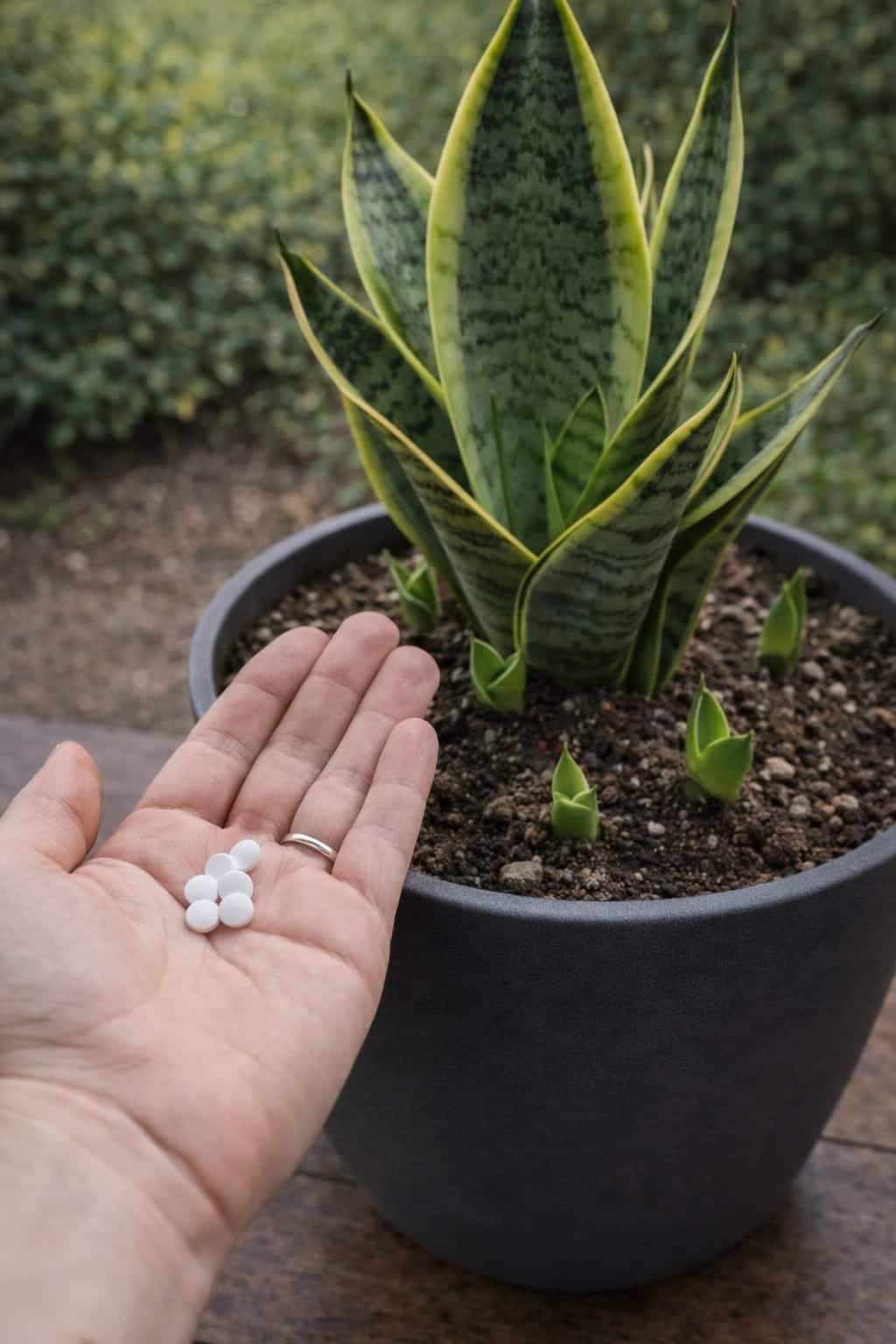
💧 How Gardeners Use Nutrient Tablets – Step by Step
Plant enthusiasts usually place the tablets directly in the soil where they dissolve gradually. This controlled approach helps avoid the risks associated with over‑fertilizing.
Typical Method
- Choose the right tablet – look for slow‑release houseplant fertilizer tablets (e.g., 10-10-10 or 14-14-14). Avoid high‑nitrogen lawn fertilizers.
- Insert one or two tablets into the soil surface – about 1–2 inches deep, near the edge of the pot.
- Place them a few centimeters away from the plant base – avoid direct contact with the stem or roots.
- Water the plant normally – moisture activates the slow release.
- Replace tablets only every few weeks or months – follow package directions (usually every 3–6 months).
Important Tips
· Do not overdo it – one or two tablets per pot (6‑inch) is plenty. More is not better.
· Use only during spring and summer – the plant is actively growing. Avoid in fall and winter.
· Do not place tablets on dry soil – they need moisture to dissolve. Water after inserting.
Pro tip: If you prefer liquid fertilizer, use it at quarter strength once a month. But slow‑release tablets are more convenient and harder to overdo.
⚠️ Common Snake Plant Care Mistakes (Even with Tablets)
Even though snake plants are hardy, improper care can still affect their health. The tablets will not fix these problems.
Frequent Mistakes to Avoid
Mistake Why It’s Harmful Correct Approach
Overwatering Root rot, yellow leaves Let soil dry completely between waterings.
Heavy fertilizer use Burns roots, brown tips Use slow‑release tablets or very diluted liquid.
Pots without drainage Water pools, roots rot Always use pots with drainage holes.
Soil that retains too much moisture Suffocates roots Use cactus/succulent mix with perlite.
Extremely dark growing environments Weak growth, no pups Move to bright, indirect light.
Snake plants prefer light feeding and well‑draining soil. The tablets are a supplement – not a substitute for good care.
🪴 Ideal Conditions for Healthy Snake Plants (Long‑Term Success)
For consistent growth and strong leaves, snake plants usually perform best under the following conditions. The tablets can help, but these fundamentals matter far more.
Factor Ideal Condition Why It Matters
Light Bright, indirect (east/west window) Encourages strong growth and color
Soil Fast‑draining cactus/succulent mix Prevents root rot
Water Infrequent – let soil dry completely Protects roots
Temperature Warm indoor environment (18–30°C / 65–86°F) Stable growth
Feeding Light slow‑release nutrients (optional) Supports foliage development
Under good conditions, mature plants may also produce new offsets (baby shoots) around the base – a sign of a happy, healthy snake plant.
How to Use Slow‑Release Tablets Safely – A Simple Plan
If you want to try this method, follow this safe routine.
- Choose a balanced slow‑release tablet (e.g., 10-10-10 or 14-14-14) labeled for indoor plants.
- Apply in spring – the start of the growing season.
- Insert 1–2 tablets per 6‑inch pot, about 1 inch deep, near the edge.
- Water normally – the tablets need moisture to activate.
- Do not reapply for 3–6 months – read the package directions.
- Observe your plant – if you see brown tips or white crust on soil, you’re using too many.
Pro tip: If you’re unsure, use half the recommended dose. Snake plants are not heavy feeders.
Snake Plant Care Overview – Quick Reference
Factor Ideal Condition Why It Matters
Light Bright, indirect Encourages strong growth
Soil Fast‑draining mix (cactus + perlite) Prevents root rot
Water Infrequent – let soil dry completely Protects roots
Temperature Warm indoor environment Stable growth
Feeding Light slow‑release nutrients (optional) Supports foliage development
White tablets Occasional (spring/summer only) Gentle, long‑term supplement
Frequently Asked Questions (FAQs)
Q: Why are snake plants popular houseplants?
A: They are durable, low maintenance, and visually striking. Their upright leaves complement modern interiors.
Q: How often should snake plants be watered?
A: Usually every 2–3 weeks depending on indoor conditions. Always check that the soil is completely dry before watering.
Q: Can snake plants grow in low light?
A: Yes, although growth may slow. For best health and potential blooms, provide bright indirect light.
Q: Why do snake plant leaves turn yellow?
A: Often caused by excessive watering (overwatering). Check soil moisture and roots.
Q: Do snake plants need fertilizer often?
A: Very light feeding is usually enough. Slow‑release tablets once or twice a year are plenty.
Q: Can snake plants produce flowers?
A: Yes, mature plants may bloom under ideal conditions – bright light, slight drought stress, and a root‑bound pot.
Q: What soil mix works best for snake plants?
A: A fast‑draining succulent or cactus mix, or regular potting soil amended with 30% perlite.
Q: When should snake plants be repotted?
A: Every few years when roots outgrow the container. Snake plants like to be slightly root‑bound.
Q: Are snake plants beginner‑friendly?
A: Yes, they are among the easiest indoor plants. They forgive neglect.
Q: Do snake plants produce new baby plants?
A: Yes, they often produce small offsets (pups) near the base, especially when slightly root‑bound.
Printable Snake Plant Care Checklist (with Tablets)
☐ Place in bright, indirect light (east/west window)
☐ Use a pot with drainage holes (terracotta preferred)
☐ Fill with fast‑draining cactus/succulent soil (add perlite)
☐ Water only when soil is completely dry (check with finger)
☐ Water deeply, then empty saucer
☐ Do not water again for 2–4 weeks (depending on light)
☐ Insert 1–2 slow‑release tablets in spring (optional)
☐ Do not use tablets in fall/winter
☐ Wipe leaves with damp cloth monthly
☐ Inspect roots annually – repot if root‑bound or soil degraded
☐ Be patient – slow growth is normal
Final Thoughts – Gentle Support, Strong Fundamentals
Small white tablets (slow‑release fertilizer) can be a convenient, gentle way to provide balanced nutrients to your snake plant over time. But they are not a substitute for good care. The real keys to a healthy snake plant are:
· Bright, indirect light – more light = stronger growth.
· Well‑draining soil – cactus mix with perlite.
· Infrequent watering – let soil dry completely.
· Warm, stable temperatures – no cold drafts.
· Light feeding – tablets or diluted liquid, once or twice a year.
If your snake plant is struggling, don’t reach for tablets first. Check the soil, adjust your watering, and move it to a brighter spot. Once those basics are right, a few slow‑release tablets can give it a gentle nudge – but they’re never the cure.
With patience and the right care, your snake plant will reward you with strong, upright leaves and maybe even a few pups.
Now it’s your turn! Have you tried slow‑release tablets on your snake plant? What results did you see? Drop a comment below – I’d love to hear your experience.
And if you found this guide helpful, share it with a friend who loves snake plants. Pin it for later, and subscribe to our newsletter for more practical plant care.
Stay dry, stay bright, and watch your snake plant thrive. 🌿✨