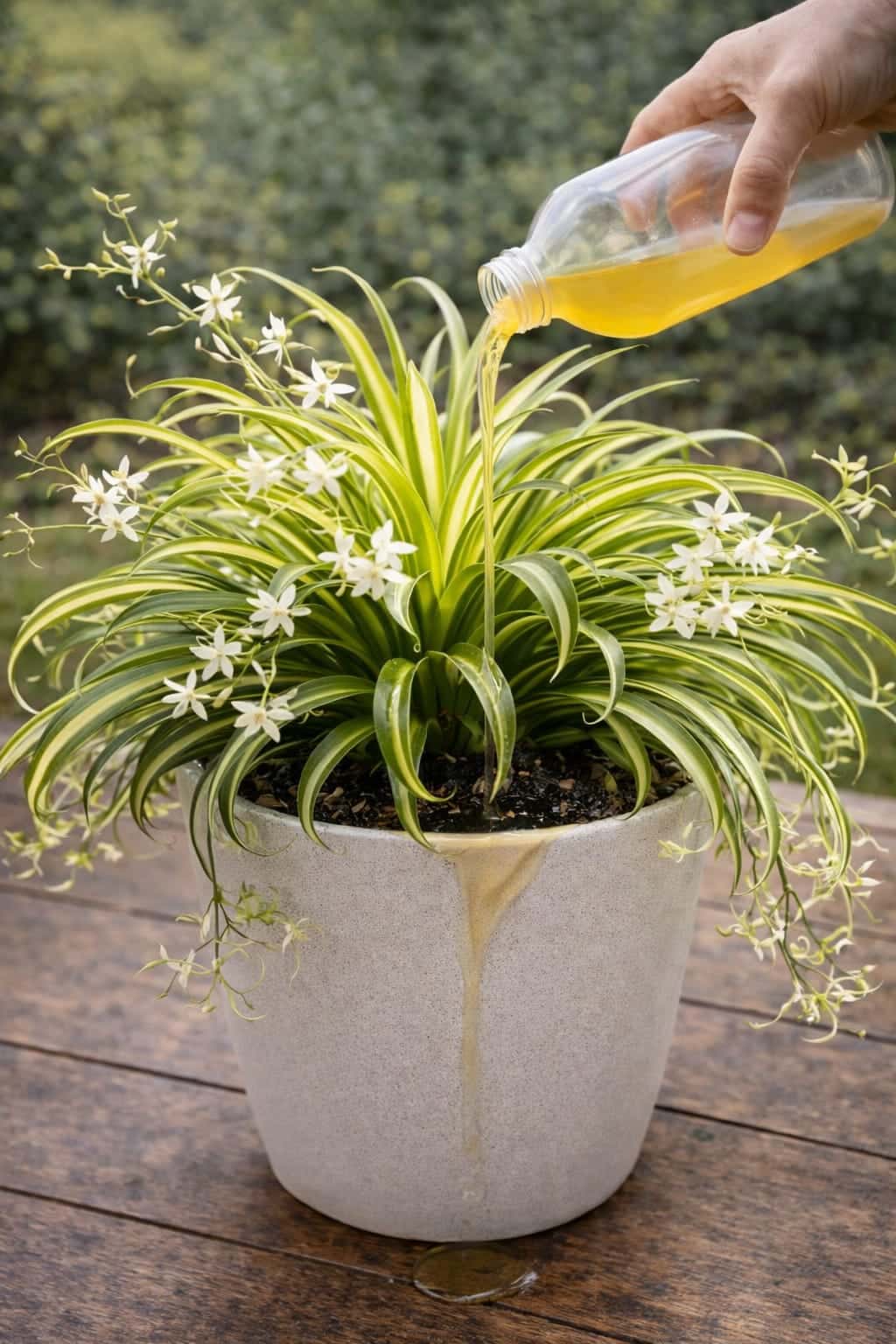
What to Avoid
· Using full‑strength fertilizer – burns roots and causes brown tips.
· Applying more than once a week – overfeeding leads to salt buildup.
· Pouring on leaves – can cause spots or attract pests.
· Using on already wet soil – wait until the top inch is dry.
Pro tip: If you notice brown leaf tips or a white crust on the soil, you’re over‑fertilizing. Flush the soil with plain water and reduce the frequency.
⚠️ Common Spider Plant Care Mistakes (That Golden Liquid Won’t Fix)
Despite being resilient plants, spider plants can still suffer from improper care. The golden liquid is a supplement – it will not fix these problems.
Frequent Problems to Avoid
Mistake Why It’s Harmful Correct Approach
Overwatering Root rot, yellow leaves Let top inch of soil dry before watering.
Poor drainage containers Waterlogged roots Use pots with drainage holes.
Excess fertilizer buildup Brown tips, salt crust Flush soil; use diluted fertilizer sparingly.
Low light conditions Slow growth, pale leaves Move to bright indirect light.
Allowing salts to accumulate Root damage Use filtered water; flush soil occasionally.
Spider plants thrive best in light, well‑draining soil and bright indirect light. Get these basics right before reaching for any liquid supplement.
🪴 Ideal Growing Conditions for Spider Plants (Long‑Term Success)
Healthy spider plants usually grow best when the following conditions are maintained. The golden liquid can be a small boost, but these fundamentals matter far more.
Factor Ideal Condition Why It Matters
Light Bright, indirect (east/west window) Encourages strong leaves and spiderettes
Water Moderate – water when top inch dries Prevents root stress
Soil Light, well‑draining potting mix (add perlite) Protects roots
Temperature Indoor room temp (60–75°F / 15–24°C) Stable growth
Feeding Occasional light liquid feeding (spring/summer) Supports healthy foliage
Humidity Average indoor humidity (40–60%) Tolerates normal levels
Under the right conditions, spider plants often produce long cascading leaves and baby plantlets (spiderettes) – the hallmark of a happy spider plant.
How to Use Golden Liquid Safely – A Simple Plan
If you want to try this method, follow this safe routine.
- Choose a golden liquid – diluted compost tea, seaweed extract, or a mild balanced fertilizer (e.g., 5-5-5 at half strength).
- Dilute heavily – quarter strength is even safer.
- Ensure soil is slightly moist – water with plain water first.
- Apply once every 3–4 weeks during spring and summer only.
- Do not apply in fall and winter – the plant rests.
- Observe your plant – if leaves become greener and more vigorous, continue. If you see brown tips, reduce frequency or strength.
Pro tip: If you make compost tea, use it within 24 hours. It loses potency and can develop harmful bacteria if stored.
Spider Plant Care Overview – Quick Reference
Factor Ideal Condition Why It Matters
Light Bright, indirect Encourages strong leaves
Water Moderate – water when top inch dries Prevents root stress
Soil Well‑draining (potting soil + perlite) Protects roots
Temperature Indoor room temp Stable growth
Feeding Occasional light liquid feeding Supports healthy foliage
Golden liquid Diluted, once every 3–4 weeks (spring/summer) Gentle nutrient boost
Frequently Asked Questions (FAQs)
Q: Why do spider plants produce babies (spiderettes)?
A: Spiderettes are natural offshoots used for reproduction. They allow the plant to spread and colonize new areas. In good conditions, a mature spider plant can produce many babies
Q: How often should spider plants be watered?
A: Usually when the top inch of soil begins to dry. In typical indoor conditions, every 7–10 days. Reduce watering in winter.
Q: Can spider plants grow in low light?
A: Yes, but growth may slow, and they may produce fewer spiderettes. For best results, provide bright indirect light.
Q: Why do spider plant leaf tips turn brown?
A: Often from mineral buildup (fluoride/chlorine in tap water), inconsistent watering, or over‑fertilizing. Use filtered water and flush soil occasionally.
Q: Should spider plants be fertilized often?
A: Light feeding occasionally is usually enough – once a month in spring/summer with a diluted balanced fertilizer
Q: Can spider plants grow outdoors?
A: Yes, in mild climates with indirect light (morning sun, afternoon shade). Bring indoors before frost.
Q: Are spider plants easy for beginners?
A: Yes, they are very beginner‑friendly. They forgive neglect and are easy to propagate.
Q: How often should they be repotted?
A: Every 2–3 years if roots become crowded (growing out of drainage holes). Spider plants like to be slightly root‑bound.
Q: Do spider plants like humidity?
A: They tolerate normal indoor humidity well. Low humidity may cause brown tips; a pebble tray can help.
Q: What soil mix works best for spider plants?
A: A light indoor plant mix with good drainage – add 20% perlite to regular potting soil.
Printable Spider Plant Care Checklist (with Golden Liquid)
☐ Place in bright, indirect light (east/west window)
☐ Use a pot with drainage holes
☐ Fill with well‑draining potting soil (add perlite)
☐ Water when top inch of soil is dry
☐ Water thoroughly, then empty saucer
☐ Use filtered or distilled water to prevent brown tips
☐ Dilute golden liquid (compost tea or mild fertilizer) to quarter strength
☐ Apply once every 3–4 weeks in spring/summer only
☐ Do not feed in fall/winter
☐ Wipe leaves with damp cloth monthly
☐ Remove yellow or brown leaves as needed
☐ Repot every 2–3 years when root‑bound
☐ Propagate spiderettes for new plants
Final Thoughts – Gentle Support, Strong Growth
The “golden liquid” trend is not magic. Diluted compost tea, seaweed extract, or a mild balanced fertilizer can provide a gentle nutrient boost to your spider plant. But it will never replace the fundamentals: bright indirect light, well‑draining soil, proper watering, and occasional repotting.
If your spider plant is struggling, don’t reach for a bottle first. Check the soil, adjust your watering, and move it to a brighter spot. Once those basics are right, a little golden liquid every few weeks can give it a gentle nudge – but it’s never the cure.
With patience and the right care, your spider plant will reward you with cascading leaves, delicate white flowers, and plenty of baby spiderettes to share.
Now it’s your turn! Have you tried a golden liquid on your spider plant? What results did you see? Drop a comment below – I’d love to hear your experience.
And if you found this guide helpful, share it with a friend who loves spider plants. Pin it for later, and subscribe to our newsletter for more practical plant care.
Stay bright, stay consistent, and watch your spider plant thrive. 🌿✨