Repotting New Rooted Cuttings
Once a cutting has rooted and produced new growth, it can eventually be moved into a small pot. The pot should have drainage holes and should not be too large. A small rooted cutting in a large pot can sit in wet soil for too long.
Use a cactus or succulent mix with extra perlite or pumice. Handle the new roots gently because they can be delicate. Keep the new plant at the correct depth and avoid burying the young shoot too deeply.
After repotting, water lightly if needed and allow the mix to dry between waterings. New rooted cuttings should not be treated like mature large plants yet. They need careful moisture control while they establish.
Best Care After Rooting
After the cutting roots, continue providing bright indirect light and dry-friendly soil. Water only when the mix has dried well. Avoid strong fertilizer until the young plant is established and showing active growth.
Once the plant is growing steadily, a very diluted cactus or succulent fertilizer can be used during spring or summer. It should be mild and occasional. Young snake plants are not heavy feeders.
Keep the plant clean and stable. Do not move it constantly. A young snake plant grows slowly, but with patience it can become a strong decorative plant.
Indoor Decor Value
Snake plant propagation has strong decor value because the process can be displayed neatly on a windowsill, plant shelf, or propagation table. A small pot with clean soil and upright cuttings can look minimal and modern when arranged properly.
Once the new plant grows, it can become a compact accent for desks, shelves, bedrooms, and small apartment corners. Snake plants are especially useful in spaces where vertical structure is needed without a large footprint.
The decorative value depends on cleanliness. Moldy soil, rotting cuttings, excess powder, or messy containers reduce the premium look. A clean propagation setup feels intentional and stylish.
Room-by-Room Styling
In the kitchen, snake plant cuttings can sit near a bright window while they root. The setup should stay clean and away from food preparation areas if powder or soil is being handled. A small terracotta pot can look warm and natural.
In the living room, rooted cuttings can be styled on a plant shelf or side table once they are stable. Their upright form pairs well with books, pottery, woven baskets, and modern decor. A simple pot keeps the look clean.
In a home office, a small snake plant cutting can become a calm desk plant once established. It adds greenery without needing much space. Bright indirect light and controlled watering keep it looking tidy.
In a bedroom, a young snake plant can create a minimal fresh accent. It should not sit in a dark corner while rooting because low light slows growth and keeps soil damp longer. A bright filtered spot is better.
Office and Commercial Styling
Snake plants are widely used in commercial interior landscaping because they are structured, durable, and visually clean. Propagated plants can eventually be used in reception areas, office corners, meeting rooms, hotel-style interiors, boutique displays, and staged properties.
For commercial propagation, labeled rooting hormone powder and clean tools are better than unknown homemade powders. Professional plant care should be predictable, clean, and safe. Cuttings should be managed in a tidy propagation area, not in decorative displays until they are rooted.
A premium commercial snake plant display should have firm leaves, clean soil, no standing water, and no visible propagation mess. Once rooted and established, the plant can be styled in a ceramic, terracotta, stone-effect, or modern planter.
Product and Tool Guide
Helpful materials for snake plant cutting propagation include a healthy snake plant leaf, clean sharp knife or scissors, rubbing alcohol for tool cleaning, labeled rooting hormone powder, fast-draining cactus or succulent mix, perlite, pumice, a small pot with drainage holes, and a narrow-spout watering can. A plant label can help mark the cutting direction.
If using a homemade dry powder, it should be plant-safe and used lightly. However, labeled rooting hormone is more predictable for rooting support. Unknown powder should not be used. Clean tools and dry-friendly soil are more important than the powder itself.
The best propagation setup is simple. A clean cut, correct direction, callused base, light powder, airy soil, bright indirect light, and careful watering create the safest conditions for success.
Care Timeline After Planting
During the first 24 hours, keep the cutting stable and avoid overwatering. If the soil is slightly moist, leave it alone. Place the pot in bright indirect light. Do not pull the cutting out to check it.
During the first week, watch for softening, darkening, or sour smell. Keep the soil on the dry side. A firm cutting is a good sign. No visible growth is normal at this stage.
After two to six weeks, roots may begin forming depending on warmth, light, and cutting condition. After several months, a new pup may appear from the soil. This is the real sign that propagation is progressing. Patience is essential.
Professional Styling Note
In high-end indoor horticulture, snake plant is valued because it offers bold architectural foliage with very little visual clutter. It works beautifully in modern apartment decor, bedroom styling, office plant design, commercial plant displays, luxury home staging, and polished property presentation.
Propagation can be part of that premium plant-care story when it is clean and controlled. A white powder should never appear messy, excessive, or unknown. A refined propagation setup should look intentional, with clean cuts, tidy soil, and healthy upright cuttings.
A beautiful snake plant display begins with healthy roots. Whether growing from a mature rhizome or a leaf cutting, the foundation is drainage, oxygen, light, and restraint. Powder can support the process, but simple proper care creates the strongest result.
Final Thoughts
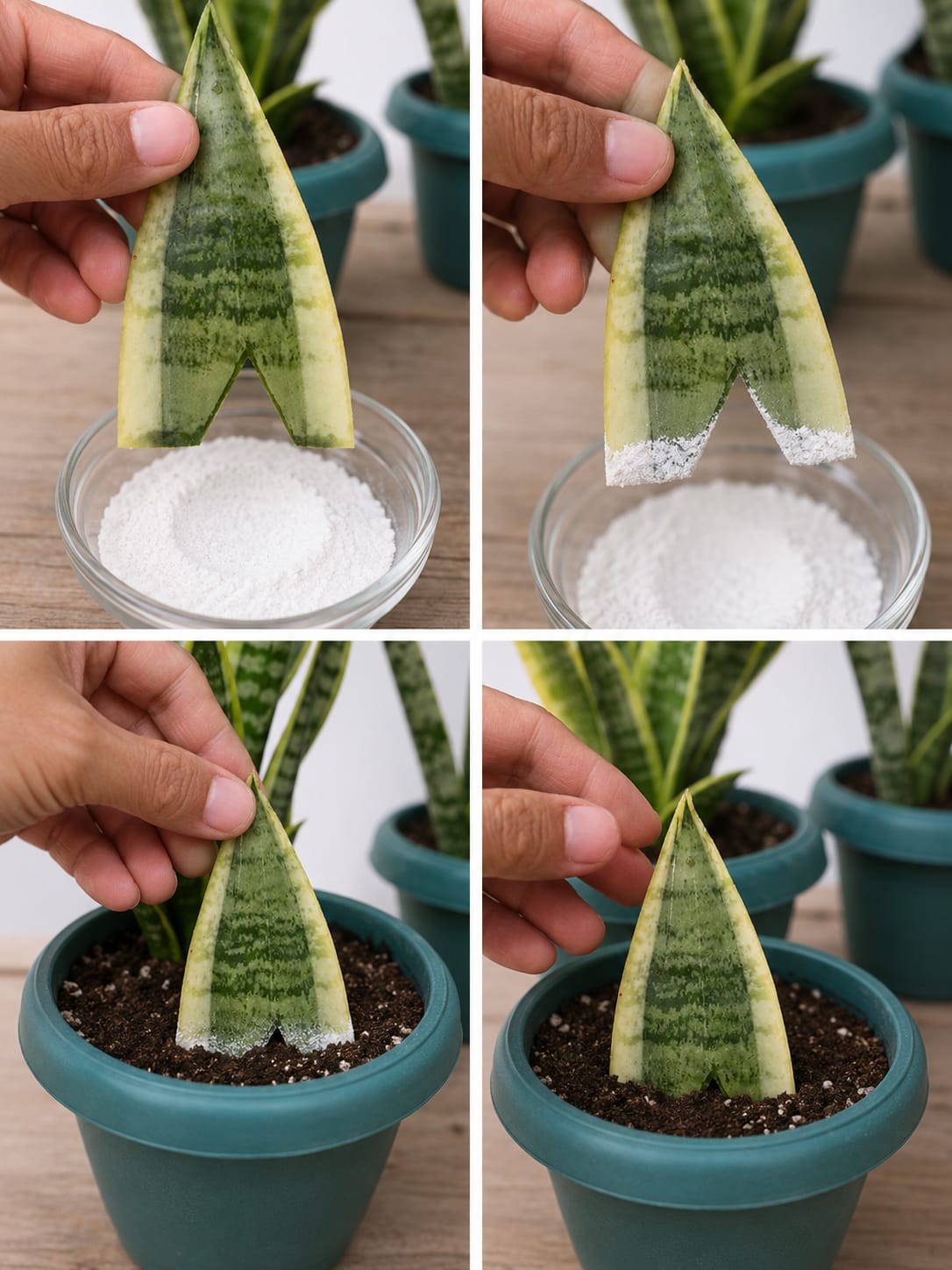
Gardeners dip snake plant cuttings in white powder before planting because it may support cleaner rooting, reduce rot risk, and encourage root development. The powder is usually rooting hormone powder or another plant-safe dry treatment. It should be used only as a light coating on the bottom cut end after the cutting has had time to callus.
The real foundation of snake plant propagation is correct cutting direction, clean tools, dry callusing, fast-draining cactus or succulent mix, a pot with drainage holes, bright indirect light, and careful watering. Unknown white powders, household powders, salt, sugar, baking soda, flour, and cleaning products should never be used. Too much moisture is the biggest enemy of snake plant cuttings.
With clean care and the right propagation routine, snake plant cuttings can become strong young plants suitable for windowsills, desks, plant shelves, bedrooms, home offices, modern apartments, commercial interior landscaping, luxury home staging, and polished property presentation. Healthy roots, firm leaves, tidy soil, and patient care will always create a better result than heavy powder use or risky propagation shortcuts.