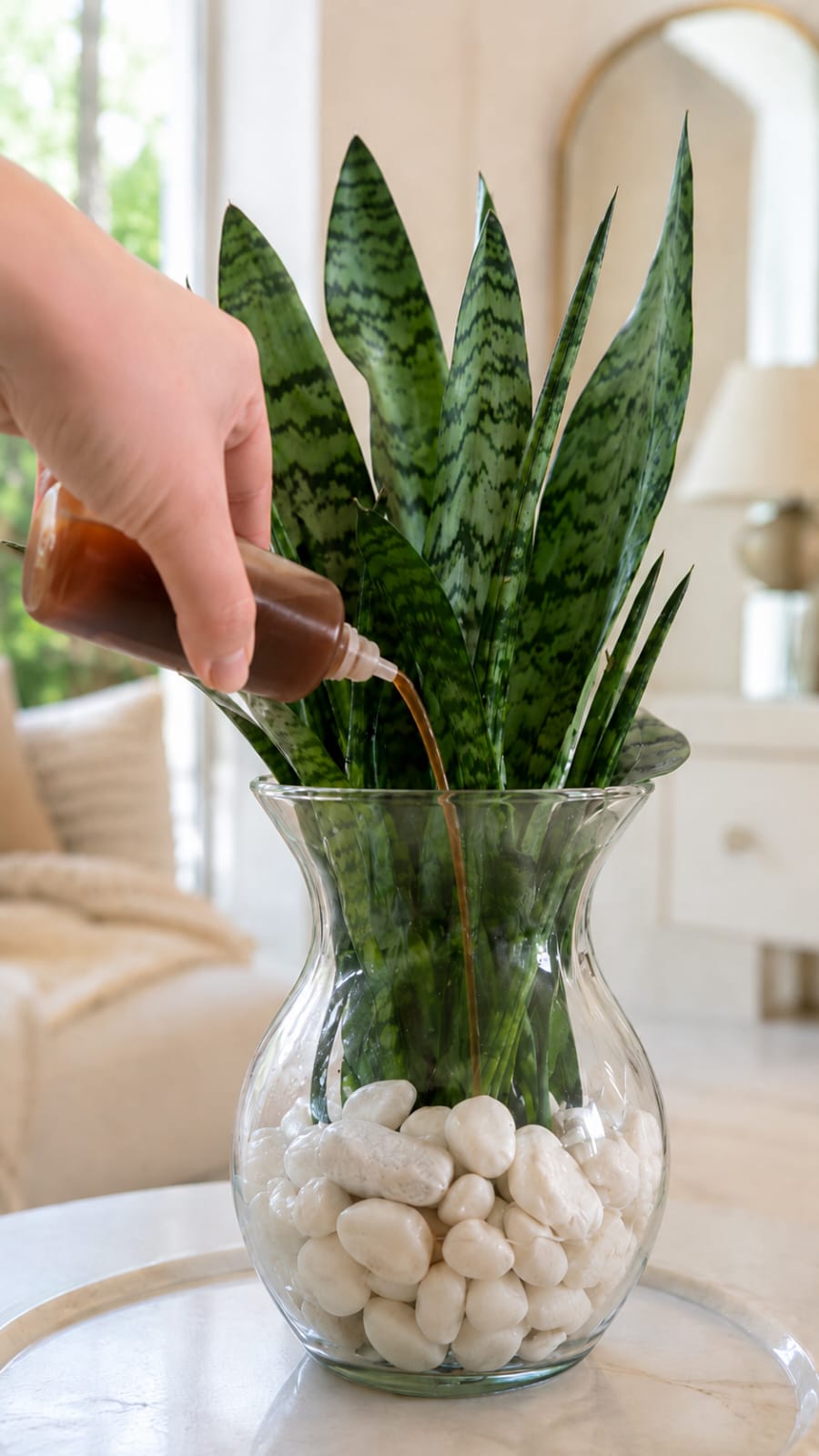
A healthy snake plant can make an indoor room feel cleaner, calmer, and more refined without needing a complicated care routine. Its upright leaves bring structure, its green patterned surface adds natural contrast, and its low-maintenance reputation makes it one of the most practical houseplants for apartments, bedrooms, home offices, entryways, and modern living rooms. When a snake plant is arranged in a clear glass vase with white stones at the base, the whole display can look more polished, more modern, and more expensive than a basic nursery pot.
That is why the glass vase snake plant water-rooting trick is so interesting for homeowners who want a cleaner indoor plant arrangement. The idea is simple: snake plant cuttings or young divisions are placed inside a clear glass vase, white decorative pebbles are used around the base for support, and a controlled amount of water is added to help the lower stem or root area stay hydrated while the plant settles into the arrangement. The purpose is not to force instant growth or create a miracle result. The goal is to create a clean water-rooting or semi-hydro style setup that supports the plant while also making it look like a refined indoor decor feature.
This trick needs to be explained carefully because snake plants can survive in water for a period of time, but they are still vulnerable to rot if the setup is dirty, stagnant, or poorly managed. A glass vase with white stones can look beautiful, but the plant still needs clean water, stable support, enough bright indirect light, and regular checking around the base. If the water stays stale, if the lower leaves sit too deeply in water, or if the plant begins to soften, the arrangement can decline quickly.
The safest way to understand this method is to treat it as a controlled water-rooting and styling trick, not as a permanent solution for every snake plant. Some homeowners use this kind of setup to root young snake plant sections, refresh a plant display, or create a modern arrangement without visible soil. It may help create a cleaner look, but it works best when the plant is healthy, the water is changed regularly, the stones are clean, and the container is placed in bright indirect light.
What the Glass Vase Snake Plant Trick Is
The glass vase snake plant trick is a water-based or semi-hydro-style arrangement method. Instead of placing the snake plant directly into a normal soil pot, the lower part of the plant is positioned in a clear glass vase. White pebbles or decorative stones are added around the base to help hold the plant upright and create a clean finished look. A small amount of water is then added so the base can stay hydrated without drowning the entire plant.
This method is often used for young snake plant divisions, rooted sections, or cuttings that are being encouraged to develop roots. It can also be used as a decorative indoor arrangement when the grower is willing to maintain the water carefully. The clear container makes the setup look light, modern, and clean, while the white stones add brightness and stability.
The most important detail is that this is not the same as planting a snake plant in a regular potting mix. Water setups need a different routine. The water must stay clean. The base of the plant must be checked often. The stones should not trap decaying material. The plant should not be left in dirty, cloudy, stagnant water for long periods.
Why White Pebbles Are Used Around the Base
White pebbles are used in this trick for both support and styling. A young snake plant or cutting can lean inside a smooth glass vase if there is nothing around the base to hold it in place. White stones help anchor the lower section and keep the leaves upright. This gives the plant a cleaner, more stable shape.
The decorative value is also important. White pebbles create a bright contrast against the green snake plant leaves. They make the arrangement look clean, calm, and intentional. Instead of seeing loose soil, tangled roots, or an unfinished base, the viewer sees a polished stone layer that fits naturally into modern home decor.
However, white pebbles should not be treated as fertilizer. They do not feed the plant the way indoor plant fertilizer or a complete hydroponic nutrient solution would. Their main role is structural and decorative. They help hold the plant and improve the display, but the plant still depends on clean water, good light, and careful maintenance.
Why This Trick Uses Water Instead of Soil
Water is often used for snake plant propagation because it makes the rooting process easier to watch and control. When a cutting or young division is placed in water, the grower can see whether the base is staying healthy, whether roots are beginning to form, and whether the water needs to be changed. This can be helpful for beginners who want to understand what is happening below the surface.
A water-based setup can also create a cleaner decorative look. There is no loose soil on the table, no potting mix spilling over the edge, and no dusty top layer. A clear glass vase with white pebbles can look more like a styled interior arrangement than a typical plant pot.
Still, water is not automatically safer than soil. A snake plant can rot in water if the base is submerged too deeply, if the water becomes stale, or if the plant section was already damaged. This trick works best when the water is kept shallow, fresh, and clean.
Why Clean Water Matters So Much
Clean water is one of the most important parts of this trick. In a soil pot, extra water can move through drainage holes. In a glass vase, water remains inside the container until the grower changes it or the plant uses it. If the water becomes cloudy, smells bad, or collects decaying material, the plant base may become stressed.
For a snake plant water setup, the water should usually be changed regularly. The exact timing depends on the room temperature, light, container size, and plant condition, but the goal is always the same: avoid stale water around the base. If the water looks cloudy or develops odor, it should be replaced sooner.
Clean water helps protect the lower plant tissue and keeps the arrangement looking fresh. It also improves the decorative value because a glass vase looks best when the water is clear and the stones are clean.
How to Build the Glass Vase Snake Plant Trick More Safely
The safer version of this trick starts with a healthy snake plant section. The leaves should be firm, upright, and free from soft or rotting areas. If a cutting is used, the cut end should be clean and allowed to dry slightly before being placed in water. This can help reduce the chance of rot at the base.
The glass vase should be clean before use. The white pebbles should be rinsed well to remove dust and residue. Dirty stones can make the water cloudy and reduce the polished look of the arrangement. Once the stones are clean, they can be placed at the bottom of the vase to create a support layer.
The plant should be positioned upright, and more pebbles can be added gently around the base. The stones should support the plant without crushing the base or packing too tightly around the crown. A small amount of water should be added so the lower base or roots can reach moisture, but the leaves should not be deeply submerged.
Snake Plant Glass Vase Setup Table
| Setup Element | Why It Matters | Best Use for Snake Plants |
|---|---|---|
| Clear glass vase | Creates a clean modern display and makes the base easier to monitor | Best for decorative water-rooting or short-term indoor styling |
| White decorative pebbles | Help stabilize the plant and create a bright finished look | Useful around the base as a support and styling layer |
| Clean water | Supports the lower base while reducing stale conditions | Should be changed regularly to keep the setup fresh |
| Healthy snake plant cutting or division | Starts the arrangement with stronger plant material | Best when leaves are firm and the base is not rotting |
| Bright indirect light | Helps the plant maintain energy without overheating the container | Ideal for indoor water arrangements |
| Careful water level | Reduces the risk of leaf base rot | Keep water near the lower base or roots, not high around the leaves |
Why the Water Level Should Stay Controlled
The water level is one of the biggest safety details in this trick. Snake plant leaves and crowns do not like sitting too deeply in water. If the water rises too high around the leaf bases, trapped moisture can lead to soft tissue, yellowing, or rot.
A controlled water level keeps the lower root area hydrated without soaking the entire plant base. If the plant already has roots, the water should reach the roots rather than cover too much of the leaves. If the plant is still rooting, only the lower cut end or base should sit in water.
This is why the glass vase should not be filled carelessly. More water does not mean better growth. With snake plants, too much water can be more dangerous than too little. The best setup is clean, shallow, controlled, and monitored.
Why This Trick Works Best With Young Snake Plant Divisions
Young snake plant divisions often work well in this type of arrangement because they already have a compact shape and can be supported easily by white pebbles. A small division can look unfinished in a large soil pot, but inside a glass vase with a clean stone layer, it can look intentional and decorative.
If the division already has roots, it may settle into the arrangement more easily. If it is a cutting without roots, patience is needed. Snake plant cuttings can take time to root, and not every cutting responds at the same speed. The process should be slow and steady rather than rushed.
This trick is less suitable for a plant section that is already mushy, damaged, or weak. A glass vase can make problems easier to see, but it does not fix unhealthy plant tissue. Healthy starting material gives the setup a much better chance of success.
Why This Trick Is Not the Same as a Normal Potted Snake Plant
A snake plant in soil and a snake plant in water need different care routines. In soil, the plant depends on a well-draining cactus mix, a pot with drainage, and careful watering. In water, the plant depends on clean water, proper water level, light, and regular maintenance. The root environment is completely different.
That is why this trick should not be treated casually. A glass vase arrangement can look elegant, but it needs attention. Water should not be allowed to become stale. The base should be checked for softness. The stones should be kept clean. The plant should receive enough light to stay strong.
For long-term growth, many homeowners eventually move rooted snake plant sections into a well-draining soil mix. Others keep them in water longer as a decorative display, but that requires consistent care and sometimes a more complete nutrient plan.
Soil Setup vs Water Vase Setup Table
| Care Style | Main Benefit | Main Risk |
|---|---|---|
| Well-draining soil pot | Supports long-term root growth with a familiar care routine | Can cause root rot if the mix is dense or the pot has poor drainage |
| Glass vase with water | Creates a clean modern look and allows root monitoring | Can cause rot if water becomes stagnant or too deep |
| Nursery pot inside decorative container | Combines drainage with a styled outer display | Extra water must be emptied after watering |
| White pebble top layer over soil | Creates a clean surface and reduces mess | Can hide wet soil if the grower does not check moisture |
| Hydro-style water arrangement | Can look very refined indoors | Needs clean water and sometimes nutrient support |
| Self-watering pot | Can support watering consistency for some plants | May keep snake plant roots too wet if not managed carefully |
How Often to Change the Water
A snake plant water arrangement usually looks best when the water is changed before it becomes cloudy. Fresh water helps reduce odor, residue, and stagnant conditions around the base. In many homes, changing the water about once a week can be a reasonable starting point, but the plant should be watched carefully.
If the room is warm, the container is small, or the water becomes cloudy sooner, it may need to be changed more often. If the water stays clean and the plant looks stable, the routine may be adjusted. The important point is not to let the arrangement sit ignored for long periods.
When changing the water, the vase can be rinsed gently and the lower base checked. If anything feels soft, dark, or unpleasant, the plant may need attention before the problem spreads. Clean water is one of the easiest ways to keep the trick looking fresh and safe.
How Indoor Plant Fertilizer Fits Into a Water Arrangement
A snake plant in water may eventually need more than plain water if it is kept that way for a long time. Soil naturally holds some nutrients, but a water vase does not offer the same nutrient reserve. For long-term water arrangements, a very diluted indoor plant fertilizer or hydroponic plant nutrient may be considered carefully, depending on the plant’s condition.
However, fertilizer should be used lightly. Snake plants are slow growers and do not need heavy feeding. Too much fertilizer in a small water container can create buildup, cloudiness, or stress. If fertilizer is used, it should be diluted more than normal and applied only when the plant is healthy and actively growing.
For many homeowners, the simpler approach is to use the glass vase method for rooting or styling, then eventually move the plant into a well-draining cactus mix once roots are established. That gives the plant a more traditional long-term growing environment.
Snake Plant Water and Fertilizer Support Table
| Support Option | What It May Help With | Important Caution |
|---|---|---|
| Clean fresh water | Supports the base or roots in a water arrangement | Change regularly to avoid stale conditions |
| Very diluted indoor plant fertilizer | May support long-term growth if the plant stays in water | Use lightly because too much can stress the plant |
| Hydroponic plant nutrient | Can provide more complete nutrient support for water setups | Use only in very small amounts and monitor water clarity |
| White decorative pebbles | Stabilize the plant and improve the clean display | Rinse before use and avoid packing too tightly around the base |
| Well-draining cactus mix | Supports long-term soil growth after rooting | Use when transitioning the plant from water to soil |
| Moisture meter | Helps after transferring the plant to soil | Useful for preventing overwatering in the new pot |
How to Move a Water-Rooted Snake Plant Into Soil
If the snake plant develops roots in water and the homeowner wants to move it into soil, the transition should be gentle. Water roots can be more delicate than soil-grown roots, so the plant should not be pushed into dense potting soil. A loose, well-draining cactus mix or houseplant drainage mix is a safer choice.
The new pot should have drainage holes. The plant should be positioned upright, and the roots should be covered gently without packing the soil too tightly. After planting, the soil can be lightly watered, then allowed to dry appropriately. Overwatering right after transfer can increase stress.
The plant may take time to adjust. It should be kept in bright indirect light and watched for softening, leaning, or yellowing. A slow transition is better than forcing the plant into a wet, heavy potting mix.
Why Root Rot Prevention Is Important in This Trick
Root rot is one of the biggest risks with snake plants in water or closed containers. It usually happens when the base stays wet in stale conditions or when damaged tissue begins to break down. In a glass vase, this can happen if the water is too deep, too dirty, or left unchanged for too long.
Root rot treatment begins by removing the plant from the wet environment and checking the base. Any soft, mushy, or dark damaged tissue may need to be trimmed with clean tools. The plant may need time to dry before being placed back into clean water or moved into fresh well-draining soil.
White pebbles do not prevent root rot by themselves. They support the plant and improve the look, but clean water, proper water level, healthy plant tissue, and good light are what protect the setup.
Common Snake Plant Water Setup Problems and Better Support Options
| Problem | Possible Cause | Better Support Choice |
|---|---|---|
| Cloudy water | Stale water, dirty pebbles, or decaying plant material | Change water, rinse stones, and check the plant base |
| Soft leaf base | Too much water, stagnant conditions, or rot beginning | Lower the water level, trim damaged tissue, and refresh the setup |
| Slow rooting | Low light, cold room, weak cutting, or normal slow growth | Move to bright indirect light and be patient |
| Yellowing leaves | Stress, poor light, too much water, or declining base | Check the base, refresh water, and improve placement |
| Algae in the vase | Strong light hitting standing water | Clean the vase and use bright indirect light instead of harsh sun |
| Leaning plant | Loose stones or weak support around the base | Add clean pebbles gently without packing the crown too tightly |
Why White Pebbles Make the Arrangement Look More Refined
White pebbles give the snake plant arrangement a clean, bright, and modern finish. They hide the lower base, create contrast with the green leaves, and make the glass vase feel more designed. This is one reason the trick works so well for indoor styling. It turns a simple plant section into a decorative arrangement.
The white stones also make the plant look more intentional. Instead of appearing like a temporary cutting in a jar, the arrangement looks like a finished decor piece. This can work beautifully on a side table, console, bathroom counter, bedroom dresser, or home office shelf.
The important caution is that styling should not hide plant problems. If the water becomes cloudy or the base begins to soften, the arrangement should be corrected. A beautiful setup still needs healthy plant conditions underneath.
Best Glass Vase and Container Choices for This Trick
The container is both a care choice and a design choice. A snake plant arrangement looks best when the vase supports the upright shape of the leaves. A wider base can help stabilize the plant, while a narrower neck can help keep the leaves gathered. Clear glass gives a clean modern look, but it also makes water quality visible, which can help with maintenance.
A glass vase with a rounded bottom and open top can create a soft, elegant shape. A taller cylinder vase can make the plant look more architectural. A smaller glass container may work for young cuttings, but it can become unstable if the leaves are tall. The container should match the size of the plant.
For homeowners who want a more practical long-term option, a decorative ceramic pot with a draining inner pot may be easier to manage. Glass vase arrangements are beautiful, but they require more water care than standard potted plants.
Glass Vase and Pot Comparison Table
| Container Type | Best Feature | What to Watch For |
|---|---|---|
| Clear glass vase | Creates a clean, modern, high-end display | Needs regular water changes and careful water level |
| Rounded glass vase | Softens the upright shape of snake plant leaves | Can be hard to clean if the opening is narrow |
| Tall cylinder vase | Supports a strong architectural look | Needs enough base weight to avoid tipping |
| Decorative ceramic pot | Offers a refined look with easier soil growing | Needs drainage or a removable inner pot |
| Plastic nursery pot | Practical, lightweight, and usually drains well | May need an outer container for a more polished look |
| Self-watering pot | Can help some plants with consistency | May keep snake plant roots too wet if not managed carefully |
Indoor Lighting and Plant Grow Lights for Water-Rooted Snake Plants
Snake plants can tolerate lower light, but they often look cleaner and stronger in brighter indoor positions. Bright indirect light helps the plant maintain energy, support root development, and hold a more upright shape. In a water setup, good light also helps the plant use water more effectively.
For homes without strong natural light, plant grow lights can be useful. This is especially helpful in apartments, offices, shaded rooms, and winter conditions. A plant grow light should be used as gentle support, not as harsh exposure. It should not be placed too close to the leaves or the glass vase because too much heat can stress the plant and warm the water.
Good lighting also improves the decorative effect of the arrangement. The leaves look clearer, the white pebbles look brighter, and the glass container feels more polished. The goal is bright, calm, indirect light that supports both plant health and home styling.
Continue to Page 2
Continue to page 2 for more details about this article and the key points many readers miss on the first page.