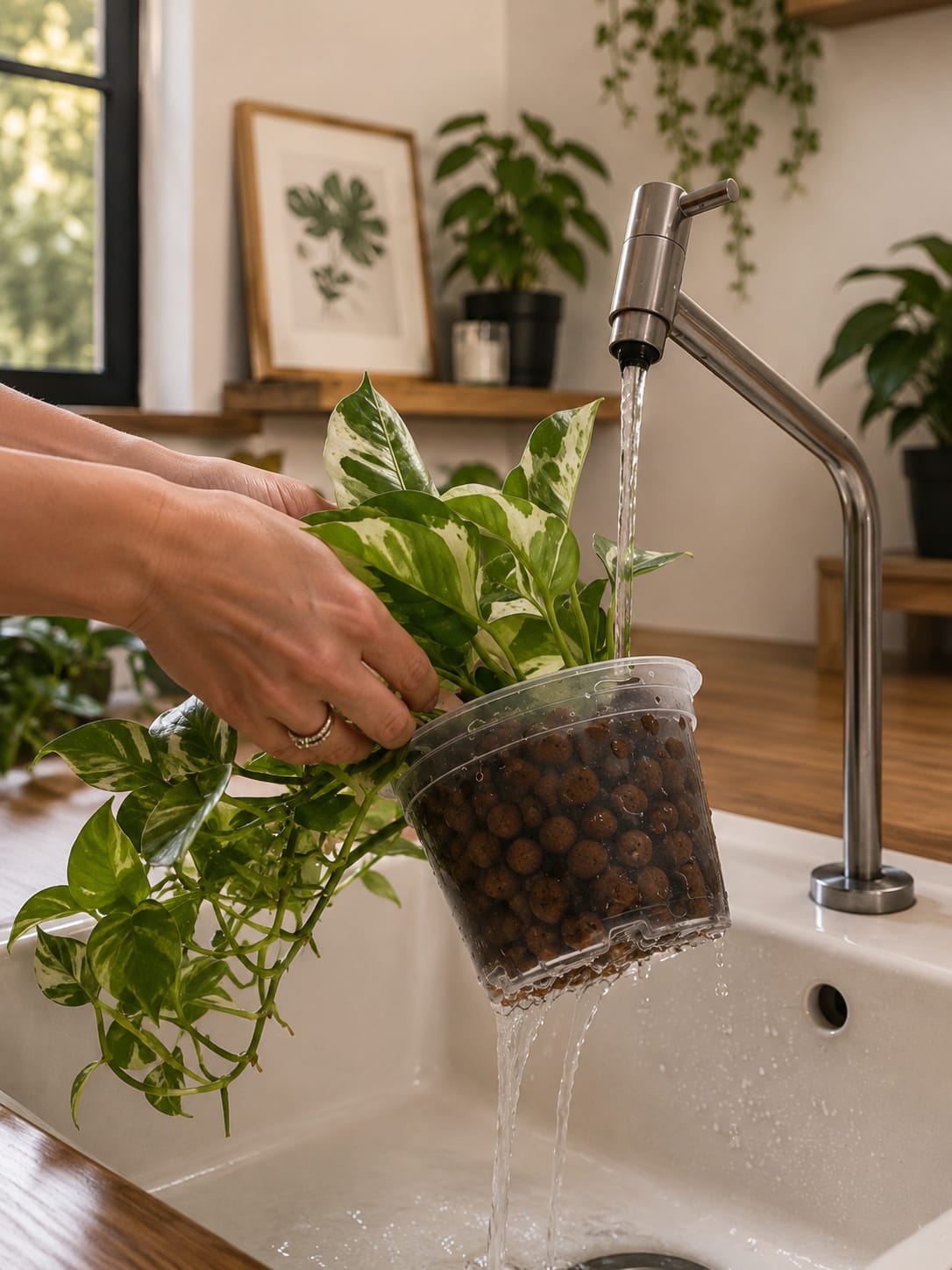
A healthy N’Joy pothos can make an indoor space feel instantly fresher, brighter, and more professionally styled. Its soft trailing vines, creamy white variegation, and compact heart-shaped leaves bring a clean botanical look that works beautifully in modern homes, minimalist apartments, bright dining rooms, and wellness-inspired interiors. It is one of those indoor plants that feels relaxed and elegant at the same time.
But as beautiful as pothos plants are, traditional soil setups can sometimes create problems for homeowners who want both easy plant care and a polished home decor look. Soil can become compacted, messy, unevenly moist, or difficult to manage indoors. A plant may look full above the pot while the root system below is struggling with old soil, poor airflow, or inconsistent watering.
That is why more indoor plant lovers are moving N’Joy pothos into semi-hydro growing systems using LECA, also known as lightweight expanded clay aggregate. This method uses clay pebbles instead of regular potting soil, creating a cleaner and more breathable root environment. When paired with a transparent inner pot and a neutral ceramic cover pot, the entire setup feels organized, modern, and premium.
The process usually begins by rinsing the plant thoroughly, cleaning old residue from the roots and container, preparing the decorative planter, adding clean water, and placing the semi-hydro pot into a stylish cover pot. The result is not just a healthier-looking pothos. It is a refined indoor plant display that can elevate the whole room.
What Plant Is Being Used?
The plant appears to be an N’Joy pothos, a beautiful variegated pothos variety known for its green-and-white leaves. Compared with standard golden pothos, N’Joy pothos often has a more compact leaf shape and a crisp variegated pattern that makes it especially attractive for interior styling.
N’Joy pothos is popular because it works well in many indoor spaces, including:
- Modern living rooms
- Minimalist apartments
- Bright kitchen shelves
- Home office corners
- Bedroom plant displays
- Dining table styling
- Luxury indoor plant shelves
Its trailing growth habit makes it ideal for softening shelves, cabinets, plant stands, and ceramic planters. The white variegation also adds brightness, which helps the plant stand out beautifully against neutral interiors.
Why N’Joy Pothos Is Perfect for Modern Indoor Decor
N’Joy pothos fits perfectly into modern interior design because it has a clean, refined look. The leaves are decorative without being overwhelming, and the trailing vines create movement without making the space feel messy.
This plant works especially well with:
- White curtains
- Warm wood furniture
- Cream ceramic planters
- Minimalist shelves
- Neutral wall colors
- Natural light interiors
- Soft organic modern decor
In luxury home decor, plants are often used to soften clean architectural lines and add natural texture. N’Joy pothos does this beautifully because its variegated leaves create visual interest while still feeling calm and elegant.
Why Homeowners Are Choosing Semi-Hydro for Pothos
Semi-hydro growing has become increasingly popular because it offers a cleaner alternative to traditional soil. Instead of growing the plant in organic potting mix, the roots are supported by clay pebbles. These pebbles hold moisture while also allowing airflow around the root system.
For homeowners, this can make plant care feel more organized and visually appealing. Semi-hydro setups often look cleaner on tables, shelves, and plant stands because there is no loose soil spilling around the pot.
Many homeowners choose semi-hydro pothos setups because they can help with:
- Cleaner indoor plant maintenance
- Better airflow around the roots
- Less soil mess around furniture
- A more modern botanical display
- Easier root inspection
- A polished luxury decor appearance
This is especially useful for people who love indoor gardening but want their home to stay clean, organized, and stylish.
What LECA Does for the Root System
LECA stands for lightweight expanded clay aggregate. It is made from clay that has been heated and expanded into small round pebbles. These clay balls are popular in semi-hydro plant care because they provide structure without compacting like soil.
LECA helps support the plant by:
- Holding the roots in place
- Creating air pockets around the root system
- Reducing dense soil pressure
- Allowing water to move through the container
- Keeping the setup visually tidy
- Supporting cleaner long-term maintenance
It is important to understand that LECA does not feed the plant by itself. It is a growing medium, not a fertilizer. For long-term growth, many semi-hydro plants eventually need a gentle hydroponic nutrient routine. But the structure and cleanliness of LECA make it very appealing for indoor plant styling.
Why Cleaning the Plant First Matters
Before placing pothos into a semi-hydro setup, cleaning is one of the most important steps. The plant and container are usually rinsed thoroughly to remove old residue, loose soil, dust, and any buildup around the roots or pot.
This matters because semi-hydro systems work best when the environment is clean from the beginning. If old organic material remains trapped inside the setup, it can break down and create cloudy water, unpleasant smells, or unhealthy root conditions.
Cleaning helps remove:
- Old soil particles
- Loose organic debris
- Dust from the leaves and stems
- Residue from the container
- Material that could decay inside the pot
A cleaner start gives the plant a better chance to adapt and makes the final display look much more premium.
Why Transparent Inner Pots Are Useful
A transparent inner pot is one of the smartest details in this kind of plant setup. It allows the homeowner to see what is happening inside the container without disturbing the plant.
This is helpful because it makes it easier to monitor:
- Water level
- Root condition
- LECA moisture
- Possible algae growth
- Root development
- Overall plant stability
For indoor plant owners who want a more controlled routine, transparent pots can reduce guesswork. They are especially useful for semi-hydro plants because moisture management is different from traditional soil watering.
Why a Decorative Cover Pot Improves the Whole Look
The outer ceramic planter gives the arrangement its polished home decor look. A simple cream or white ribbed ceramic pot can make even a common pothos feel like a designer plant display.
This combination works well because the transparent inner pot handles the practical growing system, while the outer pot handles the visual design. The result feels both functional and elegant.
A neutral ceramic cover pot helps the plant look:
- Cleaner
- More intentional
- More expensive
- More modern
- Better matched with home decor
- Less like a basic nursery plant
This is one of the easiest ways to turn an ordinary indoor plant into a luxury home decor feature.
Why Watering Is Different in Semi-Hydro Planters
Watering a pothos in LECA is different from watering a pothos in soil. In soil, water spreads through organic material and slowly evaporates or drains away. In LECA, water sits in a reservoir and moves through the clay pebbles, allowing the roots to access moisture while still receiving oxygen.
This system works best when the water level is controlled. The goal is not to completely drown the root system. Instead, the lower part of the LECA holds moisture while the upper root zone still has access to air.
A good semi-hydro watering routine usually includes:
- Using clean water
- Keeping the reservoir controlled
- Rinsing the setup when needed
- Checking the water level regularly
- Avoiding stagnant water
- Watching the roots and leaves for stress signals
With the right balance, pothos can adjust well and continue growing beautifully.
Why Fresh Water Makes the Setup Look More Premium
Fresh water is important for both plant health and visual appearance. Semi-hydro planters are often more visible than soil pots, especially when transparent containers are used. Cloudy water or dirty residue can quickly make the setup look neglected.
Fresh water helps maintain:
- Cleaner roots
- Better visual clarity
- Reduced odor risk
- Less residue buildup
- A more polished indoor display
For homeowners who use plants as part of luxury interior styling, cleanliness matters. A healthy plant in a clean container looks far more refined than a plant sitting in messy or neglected conditions.
Why N’Joy Pothos Looks Beautiful on a Dining Table
A N’Joy pothos in a cream ceramic pot can look especially beautiful on a wooden dining table. The combination of natural wood, soft green foliage, white variegation, and a neutral planter creates a warm but clean aesthetic.
This style works because it blends several high-value decor elements:
- Natural wood texture
- Soft greenery
- Neutral ceramic finish
- Clean plant care presentation
- Minimalist interior styling
- Organic modern design
Instead of feeling like clutter, the plant becomes a living centerpiece. It adds softness and freshness while keeping the table visually calm.
How Semi-Hydro Pothos Supports Cleaner Home Living
Many homeowners are attracted to semi-hydro systems because they support a cleaner lifestyle. Traditional soil can spill, create dust, attract pests, or leave stains around furniture. LECA systems are not completely maintenance-free, but they often feel much tidier indoors.
This is useful in:
- Small apartments
- Bright kitchens
- Minimalist living rooms
- Dining areas
- Home offices
- Bedrooms
- Plant shelves near furniture
For people who want greenery without mess, semi-hydro planters offer a more organized approach.
Why Bright Indirect Light Is Important
N’Joy pothos has white variegation, which means it usually benefits from brighter indirect light than fully green pothos varieties. The white parts of the leaves do not photosynthesize as strongly as green sections, so the plant needs enough gentle brightness to support healthy growth.
Bright indirect light helps maintain:
- Stronger variegation
- Fuller vines
- Healthier leaves
- Better recovery after repotting
- More balanced growth
Direct harsh sunlight can scorch the leaves, especially near hot windows. Very low light can cause slow growth and weaker variegation. A bright room with filtered light is usually the best option.
Why Homeowners Love Trailing Plants for Luxury Decor
Trailing plants bring movement into a room. They soften shelves, tables, plant stands, and window areas in a way that hard decor objects cannot. This is why pothos remains one of the best plants for modern interior design.
Trailing vines can make a room feel:
- More relaxed
- More layered
- More organic
- More welcoming
- More professionally styled
When the vines are healthy and arranged naturally, the plant creates a soft luxury effect that feels effortless.
Why the Two-Pot Method Works So Well
The two-pot method is one of the best systems for indoor semi-hydro plants. It uses one practical inner pot and one decorative outer pot. The inner pot handles root support and water management. The outer pot completes the decor look.
This system allows the homeowner to:
- Lift the plant out when needed
- Check water levels more easily
- Rinse the inner container
- Keep the decorative pot clean
- Maintain a high-end appearance
- Avoid placing ugly nursery pots directly on display
It is a simple system, but it makes indoor plant care feel much more organized.
Common Mistakes to Avoid With Semi-Hydro N’Joy Pothos
Although pothos is adaptable, mistakes can still happen during the transition into LECA. Most problems come from poor cleaning, stagnant water, or incorrect light conditions.
Common mistakes include:
- Leaving old soil trapped around the roots
- Using dirty LECA without rinsing it first
- Keeping the roots too deeply submerged
- Forgetting to refresh the water
- Placing the plant in very low light
- Ignoring yellowing leaves during adjustment
- Using an oversized decorative pot with no control over water level
- Expecting instant growth immediately after transition
Some adjustment is normal when changing a plant’s growing system. The goal is to provide stable conditions and let the roots adapt gradually.
How to Tell If the Plant Is Adjusting Well
A pothos that is adjusting successfully to semi-hydro should remain mostly firm and hydrated. It may pause growth briefly, but it should not collapse dramatically.
Good signs include:
- Leaves staying firm
- No strong odor from the pot
- Roots staying light and healthy
- New roots forming over time
- Vines staying flexible
- New leaves appearing after adjustment
Warning signs include mushy stems, foul smell, rapid yellowing, or roots turning soft and dark. If those signs appear, the water level, cleanliness, and root condition should be checked.
Why This Setup Works So Well for Plant Shelves
A semi-hydro N’Joy pothos looks beautiful on a plant shelf because it creates contrast with other foliage types. The variegated leaves add brightness, while the trailing vines create movement.
It pairs well with:
- Monstera plants
- Peace lilies
- Snake plants
- Philodendrons
- Neon pothos
- Scindapsus
- Syngonium
When placed among other plants, N’Joy pothos helps break up solid green foliage and adds a more curated designer look.
Continue to Page 2
Continue to page 2 for more details about this article and the key points many readers miss on the first page.