Can Lemon Kill Fungus Gnats? – No, Use Better Methods
Lemon is not a reliable fungus gnat treatment. The scent may discourage some insects briefly, but fungus gnats are usually attracted to moist organic soil. If you leave lemon in the pot too long, you may actually make gnats worse. For natural fungus gnat control for houseplants, use proven methods.
To control fungus gnats, let the top layer of soil dry more between waterings, remove decaying organic matter, use yellow sticky traps, and consider a proper biological control such as mosquito bits or beneficial nematodes if the problem is serious.
Do not rely on lemon slices as your main pest control.
Can Lemon Freshen Sour Soil? – Temporarily, But Fix the Cause
Lemon can mask odor briefly, but it does not truly fix sour soil. Sour soil is usually caused by overwatering, poor drainage, compacted mix, or rotting roots. If the soil smells bad, the solution is to improve the soil conditions, not cover the smell. This how to fix sour potting soil guide will help.
If the smell is mild and only on the surface, removing debris, loosening the top layer, and improving airflow may be enough. If the smell is deep and rotten, repot the plant.
Can Lemon Feed Plants? – No, It Is Not Fertilizer
Lemon is not a proper fertilizer. It contains small amounts of nutrients, but not enough to feed a plant in a balanced way. It is acidic and aromatic, but it does not provide the complete nutrition plants need. The best natural fertilizer for houseplants is a balanced formula used at weak strength.
If your weak plant needs nutrients, use a diluted balanced fertilizer after the plant stabilizes. Do not feed a plant that is actively rotting, wilting severely, or recovering from root damage.
Can Lemon Make Soil Too Acidic? – Yes, With Overuse
Yes, too much lemon can make the soil surface more acidic. Many houseplants tolerate slightly acidic soil, but concentrated lemon juice or repeated lemon slices can create imbalance. This is especially risky in small pots because there is not much soil to buffer the acidity.
That is why the lemon should be a short surface trick, not a repeated soil treatment.
Should You Squeeze Lemon Juice Into Plant Soil? – Never
No. Do not pour lemon juice directly into plant soil. Lemon juice is much stronger than a slice sitting briefly on the surface. It can irritate roots, alter pH too quickly, and damage sensitive plants.
If you want to use lemon, use one thin slice temporarily and remove it. Do not squeeze juice into the pot.
Should You Mix Lemon With Water for Plants? – Risky for Most Houseplants
For most houseplants, lemon water is unnecessary and can be risky if too strong. Some people add a few drops of lemon to water for acid-loving plants, but this requires careful pH control. For general houseplant recovery, plain water is safer.
If you do not measure pH, avoid lemon water as a regular watering solution.
What to Do If the Plant Is Very Weak – Emergency Recovery Plan
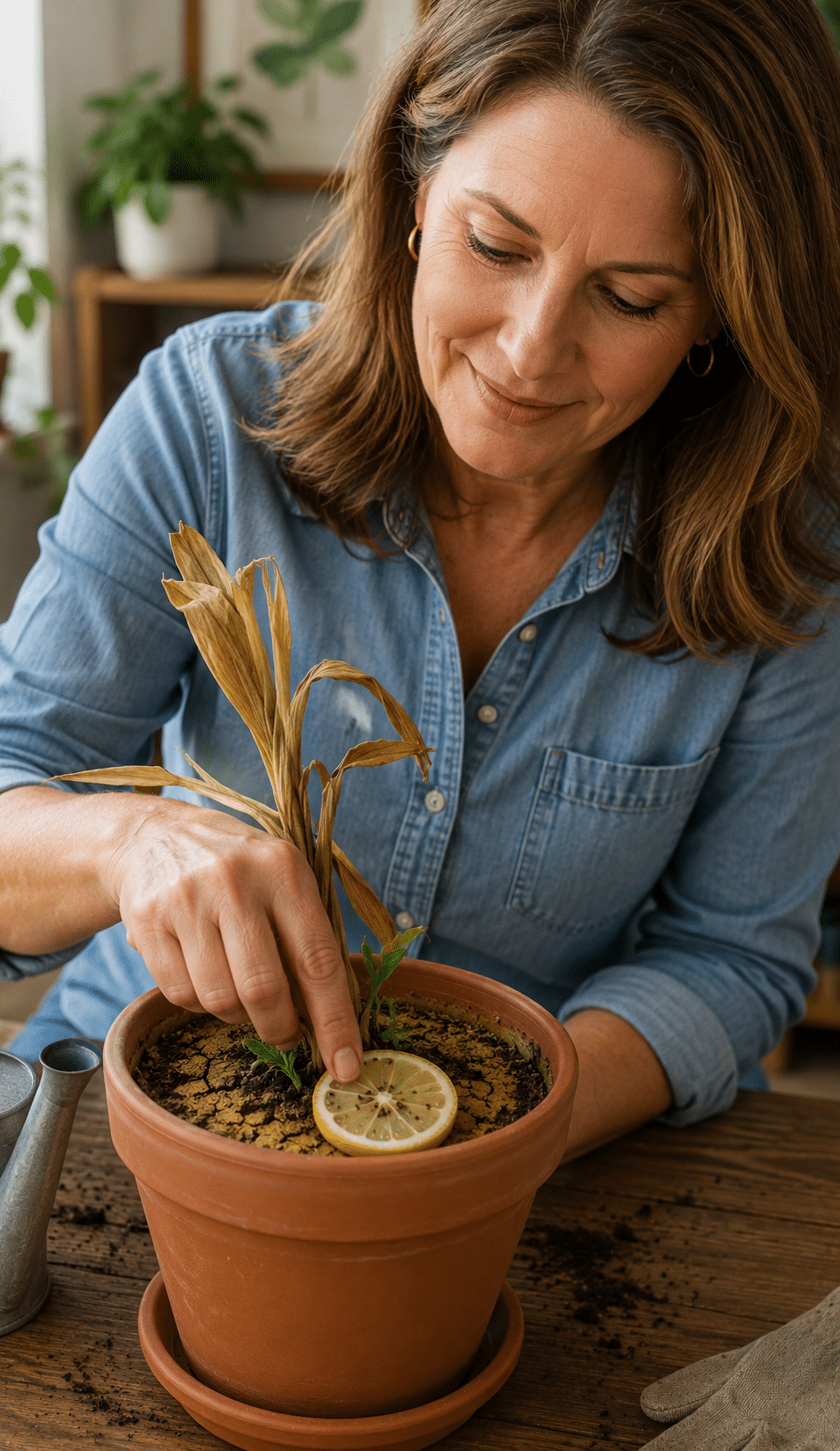
If your plant looks like the one in the image, with mostly dry leaves but some new green shoots, focus on recovery rather than feeding. This how to revive a dying houseplant guide is your first step.
Recovery Steps
- Cut away fully dead leaves.
- Protect any green shoots.
- Check whether the soil is wet or dry.
- Check drainage holes.
- Remove crusty surface soil if needed.
- Place in bright indirect light.
- Water only according to the plant’s needs.
- Avoid fertilizer for 2 to 4 weeks.
- Watch for new growth.
- Repot only if the soil is rotten, compacted, or pest-infested.
A recovering plant needs stability. Too many tricks at once can shock it.
How to Tell If a Weak Plant Is Overwatered – Symptoms and Fixes
Overwatering is one of the most common causes of weak potted plants. The plant may look wilted even though the soil is wet. This overwatered plant symptoms guide will help you diagnose.
Signs of Overwatering
- Wet soil that does not dry
- Yellow leaves
- Mushy stems
- Sour smell
- Fungus gnats
- Black or brown roots
- Leaves falling off easily
If your plant is overwatered, do not add lemon or fertilizer. Let the soil dry, improve airflow, and check the roots if the plant continues to decline.
How to Tell If a Weak Plant Is Underwatered – Symptoms and Fixes
Underwatered plants often have dry, crispy leaves and soil pulling away from the pot edges. This underwatered plant recovery guide will help.
Signs of Underwatering
- Dry soil
- Crispy leaves
- Drooping stems
- Pot feels very light
- Soil shrinks from the pot sides
- Water runs through without soaking
If the soil is extremely dry and hydrophobic, bottom watering may help. Place the pot in a tray of water for 20 to 30 minutes, then let it drain fully.
How to Fix Crusty Soil Surface – Soil Refresh Method
The image shows a soil surface that looks dry, crusty, and compacted. This can prevent water and air from moving properly. This how to fix hard soil on houseplants method is simple.
Surface Refresh Method
- Remove dead leaves and debris.
- Use a fork to gently loosen the top half inch.
- Remove any hard crust if it lifts easily.
- Add a thin layer of fresh potting mix.
- Water carefully if the plant needs it.
- Avoid heavy fertilizer until new growth strengthens.
This method is often more helpful than lemon alone.
When Repotting Is Better Than Lemon – Signs You Need Fresh Soil
Sometimes the plant needs a full soil reset. Lemon slices are not enough when the potting mix is failing. This when to repot houseplants guide helps you decide.
Repot If:
- The soil smells rotten
- The plant has root rot
- The soil is compacted like clay
- Water cannot soak in
- There are many fungus gnats
- The pot has no drainage
- Roots are circling tightly
- The plant has been in the same soil for years
Repotting can stress a weak plant, so do it gently. Use fresh appropriate soil and avoid fertilizing immediately afterward.
How to Repot a Weak Plant Safely – Gentle Transplanting
- Prepare a pot with drainage.
- Choose the right potting mix for the plant type.
- Remove the plant gently.
- Shake away loose old soil.
- Trim only dead or rotten roots.
- Place the plant at the same depth.
- Fill around roots with fresh mix.
- Water lightly if needed.
- Keep in bright indirect light.
- Do not fertilize for several weeks.
After repotting, the plant may pause before growing. That is normal.
Better Natural Ways to Freshen Plant Soil – Safer Alternatives
Lemon is only one option, and it is not always the best. Other safer soil-freshening methods include. This natural soil freshener alternatives for houseplants guide offers safe options.
- Removing dead leaves from the soil
- Replacing the top inch of old soil
- Improving airflow around the pot
- Using a pot with drainage
- Adding perlite to improve aeration
- Using activated charcoal in appropriate mixes
- Flushing mineral buildup with plain water
- Watering less often
These methods address the actual conditions that create stale soil.
Should You Add Cinnamon With Lemon? – Use Sparingly
Cinnamon is another popular plant trick. Some people sprinkle cinnamon on soil because it has a reputation for discouraging mold. However, too much cinnamon can dry out the soil surface and irritate tender roots or shoots. If you use cinnamon, use only a tiny dusting and never pile it around the stem. This cinnamon for houseplant soil tip is optional.
Do not combine multiple strong kitchen tricks on a weak plant. Lemon, cinnamon, vinegar, baking soda, and coffee all at once can stress the plant more.
Should You Add Baking Soda? – No
No. Baking soda is not a fertilizer and can add sodium to the soil. Sodium buildup can damage plants. Do not sprinkle baking soda into potted plants as a recovery trick.
Should You Add Vinegar? – Never
No. Vinegar is too strong for general plant use and can damage roots. It is sometimes used as a weed killer in outdoor contexts, which tells you how risky it can be for potted plants. Do not use vinegar on a weak houseplant.
Should You Add Sugar? – No
No. Sugar can attract ants, gnats, mold, and bacteria. Plants make their own sugars through photosynthesis. Adding sugar to soil does not help weak plants recover.
Should You Use Coffee Grounds? – Not Recommended Directly
Coffee grounds can compact indoor soil and attract gnats if used directly. They are better composted first. Do not pile coffee grounds around a weak potted plant.
How to Support New Shoots on a Weak Plant – Protecting New Growth
When a weak plant produces new green shoots, that is a good sign. Those shoots are the future of the plant. Protect them. This how to care for new plant shoots guide will help.
New Shoot Care
- Do not cover them with lemon slices
- Do not pour fertilizer directly on them
- Keep soil lightly appropriate for the plant
- Give bright indirect light
- Remove dead growth that shades them
- Avoid repotting unless necessary
- Keep pests away
New shoots are tender. Gentle care matters.
How to Water a Recovering Plant – Proper Moisture Management
A recovering plant should not be watered randomly. Watering depends on the plant type and soil condition. This how to water stressed plants for recovery guide will help.
For tropical plants, water when the top inch begins to dry. For succulents, wait until the soil is fully dry. For ferns, keep the soil more evenly moist. For bulbs or rhizomes, avoid soaking if the top growth has died back.
If you do not know the plant type, use a cautious approach: check the soil before watering, avoid standing water, and keep the plant in bright indirect light while you identify it.
How Light Helps Recovery – The Most Important Factor
Light is plant energy. A weak plant cannot rebuild without enough light. However, stressed plants can burn in harsh direct sun. Bright indirect light is usually the safest recovery position. Providing optimal light for plant recovery accelerates healing.
Place the plant near a bright window but protect it from strong afternoon sun. If the room is dark, use a grow light. Fertilizer and lemon tricks cannot replace light.
How Humidity Helps Some Weak Plants – Tropical Plant Recovery
Many tropical plants recover better with moderate humidity. Dry air can make leaf edges crisp and slow new growth. You can increase humidity by grouping plants, using a pebble tray, or running a humidifier. This how to increase humidity for houseplants guide will help.
Do not mist constantly if the plant has fungal issues. Wet leaves and poor airflow can create new problems.
How to Know If the Lemon Trick Is Working – Positive Signs
The lemon trick itself will not create dramatic visible recovery. Instead, look for signs that your overall care routine is working. These are signs of successful plant recovery.
Good Signs
- New green shoots remain firm
- No sour soil smell
- No fungus gnats
- Soil surface looks cleaner
- Plant stops declining
- New leaves slowly emerge
- Stems feel firmer
If the plant continues to decline, the problem is deeper than stale soil smell.
What If Mold Appears on the Lemon Slice? – Emergency Fix
Remove it immediately. Mold means the lemon is decomposing. Throw the slice away, remove any affected topsoil, improve airflow, and avoid using lemon again for a while.
Mold on the lemon does not always mean the plant is doomed, but it does mean the slice stayed too long or the environment is too damp.
What If Ants or Gnats Appear? – Pest Control
Remove the lemon and stop using food-based tricks. Let the top layer of soil dry more between waterings if the plant allows it. Use sticky traps for gnats. Check whether the soil is staying too wet. This natural pest control for houseplants guide will help.
If the infestation is severe, replace the top layer of soil or repot.
What If Leaves Keep Turning Brown? – Ongoing Stress
Brown leaves may mean the plant is still stressed. Check watering, light, humidity, root health, and soil condition. Lemon will not reverse brown leaves. This why plant leaves turn brown and how to fix it guide will help.
Cut off fully dead leaves so the plant can focus on new growth. But do not remove every leaf if some are still partly green and helping the plant photosynthesize.
Quick Lemon Slice Method – Step-by-Step Summary
Use this method only as a short-term soil freshener:
- Remove dead leaves from the pot.
- Loosen the top half inch of soil gently.
- Cut one thin lemon slice.
- Remove seeds.
- Place the slice on the soil surface away from stems.
- Leave for 12 to 24 hours only.
- Remove before it molds or rots.
- Do not bury it.
- Do not repeat often.
Quick Plant Recovery Checklist – Essential Tips
- Remove dead foliage
- Protect green shoots
- Check soil moisture
- Check drainage holes
- Smell the soil for rot
- Loosen crusty surface soil
- Use lemon only briefly if desired
- Give bright indirect light
- Water correctly
- Avoid fertilizer until stable
Short Caption for This Trick
“To use the lemon slice trick safely, place one thin lemon slice on the surface of the soil for only 12 to 24 hours, then remove it before it molds or rots. Do not bury lemon in the pot and do not squeeze lemon juice into the soil. This trick may briefly freshen stale soil odor, but real plant recovery comes from removing dead leaves, checking drainage, improving light, loosening compacted soil, and watering correctly – this natural soil freshener is a gentle helper, not a miracle cure.”
Frequently Asked Questions – Lemon Slice for Weak Plants Q&A
Can I put lemon slices in plant soil?
You can place one thin lemon slice on the soil surface for a short time, but do not bury it. Remove it within 12 to 24 hours.
Does lemon help weak plants recover?
Lemon may freshen the soil surface briefly, but it does not cure the plant. Recovery depends on proper watering, light, drainage, soil health, and root condition.
Can lemon kill fungus gnats?
No, lemon is not a reliable fungus gnat treatment. If left too long, it may attract pests instead.
Can I pour lemon juice into plant soil?
No. Lemon juice can be too acidic and may damage roots. Use plain water for regular watering.
How long should I leave lemon on soil?
Leave it for 12 to 24 hours only. Remove sooner if it starts to mold, dry out, or smell bad.
Can lemon slices act as fertilizer?
No. Lemon is not a complete fertilizer. It should not replace proper plant nutrition.
Why does my plant soil smell bad?
Bad soil odor usually comes from overwatering, poor drainage, compacted soil, or root rot. Lemon may mask the smell briefly but will not fix the cause.
Can I use lemon on succulents?
It is better to avoid lemon slices on succulents, cacti, jade plants, snake plants, and aloe. These plants prefer dry soil and are more sensitive to excess organic moisture.
What should I do if the lemon grows mold?
Remove it immediately, discard it, remove any moldy surface soil, and improve airflow. Do not use lemon again until the plant is stable.
What is the best way to help a weak potted plant?
Remove dead growth, check the roots and drainage, refresh the soil surface, give bright indirect light, water correctly, and avoid heavy fertilizer until the plant shows stable new growth.
Final Thoughts – The Smart Homeowner’s Guide to Using Lemon Slices
The lemon slice trick is simple, attractive, and easy to try, but it must be used with realistic expectations. A lemon slice can freshen the surface of a potted plant for a short time, but it is not a miracle cure. It does not repair roots, reverse dead leaves, or replace good plant care. In fact, if it is buried or left too long, it can create mold, attract gnats, and make the soil worse. This natural plant care method is best used as an occasional supplement, not a primary treatment.
The smart way to use lemon is temporary and careful. Place one thin slice on the soil surface, away from the stem, for 12 to 24 hours. Then remove it. Do not squeeze juice into the pot. Do not bury the slice. Do not repeat the trick constantly. Following this complete houseplant recovery guide will give you the best results.
The real recovery routine is more important: cut away dead leaves, protect new shoots, check soil moisture, improve drainage, loosen compacted soil, provide bright indirect light, and water according to the plant’s needs. If the soil smells rotten or the roots are damaged, repotting may be necessary. If the plant is producing new green growth, be patient and support that growth gently. These professional indoor plant care secrets will help you succeed with all your weak plants.
Smart homeowners use lemon slices not as a magic solution, but as a small part of a larger plant-care reset. When combined with proper care, the lemon trick can help freshen the pot and remind you to give the plant the attention it needs. With time, clean soil, careful watering, and better light, a weak potted plant may begin to recover from the base and send out new leaves again. Start your plant recovery journey today with the right fundamentals.