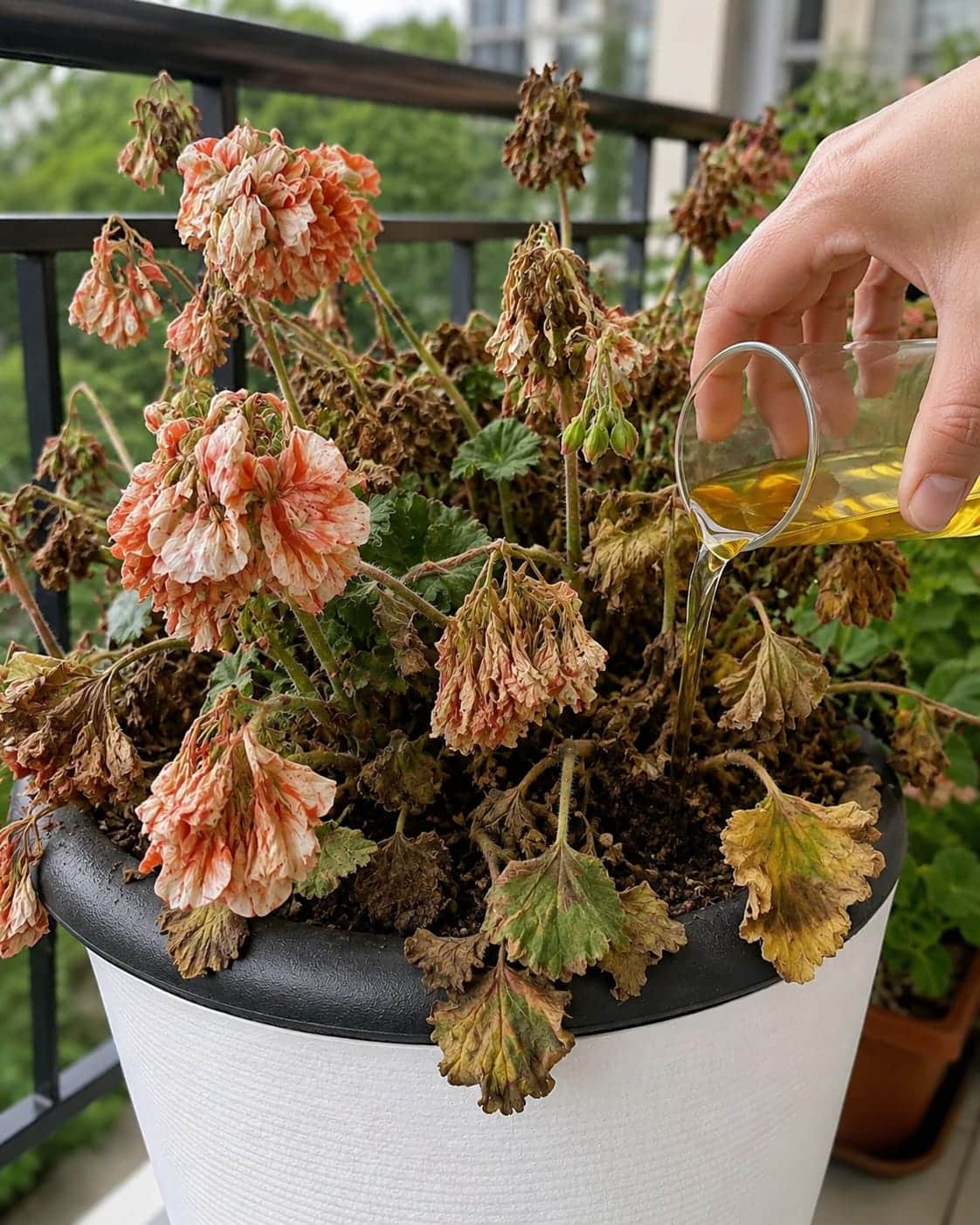
How Often Should You Use This Tonic?
Use this golden tonic no more than once every 3 to 4 weeks during active growth. Geraniums benefit from nutrients, but too much homemade liquid can create soil problems. Most waterings should still be plain water.
If the plant is severely stressed, use plain water first after pruning. Wait until it shows signs of stability before applying any tonic.
Why Drainage Is Essential for Geranium Recovery
Geraniums hate sitting in soggy soil. Even if the plant is thirsty, the pot still needs drainage. A decorative pot without drainage can trap water at the bottom, causing roots to rot while the top soil appears dry.
Check the pot carefully. It should have drainage holes. If it does not, repot the geranium into a container with holes or use a nursery pot inside the decorative pot.
Good drainage prevents:
- Root rot
- Sour soil
- Yellow leaves
- Weak stems
- Fungus gnats
- Mold on the soil surface
Best Soil for Potted Geraniums
Geraniums prefer a light, well-draining potting mix. Heavy soil holds too much moisture and can suffocate roots. A good mix should dry slightly between waterings while still holding enough moisture for the plant.
Simple Geranium Soil Mix
- 2 parts quality potting mix
- 1 part perlite
- 1 part compost or coco coir
If the current soil is compacted, sour, or full of dead roots, repotting may be necessary. Feeding bad soil will not solve the problem.
When to Repot a Weak Geranium
Repotting can help if the geranium has been in the same soil for a long time, if the pot has poor drainage, or if the root ball is compacted.
Repot if:
- The soil smells sour
- The pot has no drainage
- Water runs off without soaking in
- The plant dries out extremely fast
- Roots circle tightly around the pot
- The soil stays wet for many days
- Fungus gnats are present
When repotting, choose a pot only slightly larger. A very large pot can hold too much wet soil.
How to Repot a Weak Geranium
- Water lightly the day before if the soil is bone dry.
- Remove the geranium gently from the pot.
- Shake off old compacted soil.
- Trim dead or mushy roots.
- Place fresh mix into a draining pot.
- Set the geranium at the same depth as before.
- Fill around the roots with fresh soil.
- Water lightly with plain water.
- Wait 2 weeks before using homemade tonic.
Never fertilize heavily immediately after repotting a stressed plant. Give the roots time to adjust.
How Much Sun Do Geraniums Need?
Geraniums need plenty of light to bloom well. On a balcony, they often do best with morning sun and some protection from extreme afternoon heat. Indoors, they need the brightest window you can provide.
For strong blooms, aim for:
- 4 to 6 hours of bright light daily
- Morning sun if possible
- Protection from scorching heat during summer afternoons
- Good airflow
If your geranium has green leaves but no flowers, it may need more light. If the leaves scorch and flowers collapse quickly, it may need protection during the hottest part of the day.
How to Water Geraniums Correctly
Geraniums prefer a wet-dry rhythm. They like to be watered thoroughly, then allowed to dry slightly before the next watering.
Simple Watering Routine
- Touch the top inch of soil.
- If it feels dry, water.
- Water slowly until moisture reaches the roots.
- Let excess water drain out.
- Empty the saucer.
- Wait before watering again.
Do not water just because the flowers look tired at midday. In hot weather, flowers may droop temporarily from heat. Check the soil before watering.
How to Deadhead Geraniums for More Blooms
Deadheading is one of the best ways to keep geraniums blooming. A wilted flower head will not become beautiful again. Removing it encourages the plant to produce new buds.
Deadheading Steps
- Find the spent flower cluster.
- Follow the stem down to where it joins the plant.
- Snap or cut the stem off at the base.
- Remove any yellow leaves nearby.
- Repeat every few days during bloom season.
This single habit can make a huge difference in how full and fresh geraniums look.
How to Encourage New Growth After a Geranium Declines
After pruning and correcting care, new growth usually appears from leaf nodes or near the base. The plant may look bare for a while, but do not panic. Give it time.
To encourage new growth:
- Place the plant in bright light
- Water only when the top soil dries
- Remove dead flowers and leaves
- Use a mild tonic only occasionally
- Feed lightly with balanced fertilizer during active growth
- Protect from extreme heat
- Improve airflow
Should You Use Regular Fertilizer Too?
Yes, but carefully. Geraniums are flowering plants and benefit from balanced feeding during the growing season. A homemade tonic is not a complete fertilizer. It can support the plant, but it does not provide perfectly balanced nutrition.
Use a balanced liquid fertilizer or a bloom-support fertilizer at half strength every 3 to 4 weeks during active growth. Do not use fertilizer and homemade tonic on the same day. Alternate them.
Simple Feeding Schedule
- Week 1: Plain water
- Week 2: Half-strength fertilizer
- Week 3: Plain water
- Week 4: Golden tonic, if the plant is healthy enough
If the plant is weak or recently repotted, wait before feeding.
Can You Spray the Golden Tonic on Leaves?
No. It is better to apply this tonic to the soil only. Homemade banana or onion peel liquids can leave residue on leaves and flowers. Wet leaves in poor airflow can also encourage disease.
If leaves are dusty, clean them with plain water. If flowers are wilted, remove them rather than spraying them.
What If the Plant Looks Completely Dead?
If all stems are brown, brittle, and dry, the plant may be dead. But if some stems are still green inside, it may recover.
To test:
- Scratch a stem lightly with your fingernail.
- If it is green underneath, it is alive.
- If it is brown and dry all the way through, cut it back.
- Check several stems.
- If no green remains anywhere, the plant may not recover.
If there is green growth at the base, prune back dead material and give the plant time.
Common Mistakes With Weak Geraniums
Watering Too Much
Many people see wilted leaves and immediately add water. If the soil is already wet, this can make things worse.
Leaving Dead Flowers on the Plant
Old flower heads make the plant look worse and use energy. Remove them often.
Using Strong Homemade Mixtures
Thick banana water, coffee, milk, or unstrained kitchen scraps can sour in pots. Keep homemade treatments weak and clean.
Keeping the Plant in Shade
Geraniums need strong light to bloom. A shady balcony may keep them alive but not flowering well.
Using a Pot Without Drainage
No tonic can fix water trapped at the bottom of a pot.
Signs Your Geranium Is Recovering
Recovery will not happen overnight, but you can look for encouraging signs.
Good signs include:
- New green leaves appearing
- Stems becoming firmer
- Soil drying normally
- No sour smell
- New buds forming
- Leaves staying upright
- Color returning to new growth
Old damaged leaves may continue to fall. Focus on the new growth.
Signs You Should Stop Using the Tonic
Stop using the golden tonic if you notice:
- Sour smell from the pot
- Mold on the soil
- Fungus gnats
- Leaves yellowing faster
- Soil staying wet too long
- Stems turning black or mushy
- Plant collapsing after watering
If these happen, return to plain water and check the roots.
Quick Recovery Plan for the Geranium in the Image
The geranium in the image needs more than tonic. It needs a full recovery routine.
Day 1
- Remove all dead flower heads
- Cut off brown leaves
- Check soil moisture
- Check drainage holes
- Move to bright light with airflow
Day 2 to Day 7
- Water only if the top inch is dry
- Do not feed heavily
- Watch for new green growth
- Protect from extreme afternoon heat
Week 2
- Trim any remaining dead stems
- Repot if soil smells sour or stays wet
- Use plain water after repotting
Week 3 or 4
- If the plant is stable, apply a diluted golden tonic
- Use only a small amount
- Let the pot drain fully
Quick Recipe Card
Gentle Golden Geranium Recovery Tonic
Ingredients
- 1 small piece banana peel
- Small handful dry onion skins, optional
- 500 ml hot water
- 2 liters clean water for dilution
Instructions
- Cut banana peel into small pieces.
- Add dry onion skins if desired.
- Pour 500 ml hot water over the ingredients.
- Let cool completely.
- Strain very well.
- Dilute with 2 liters clean water.
- Apply to soil only when the top inch is dry.
- Use 1/2 to 1 cup for a medium pot.
- Let the pot drain fully.
- Repeat no more than once every 3 to 4 weeks.
Short Caption for Social Media
Geranium Recovery Trick 🌸🌿: If your potted geranium looks dry, wilted, and tired, do not start by drowning it. First remove dead flowers and yellow leaves, check drainage, and place it in bright light. Then use a gentle golden tonic made from a small piece of banana peel and a few onion skins steeped in hot water, strained, and diluted well. Pour only onto slightly dry soil and let the pot drain fully. This can support new growth, but pruning, sunlight, drainage, and balanced watering are the real keys to bringing geraniums back.
Frequently Asked Questions
Can banana peel water help geraniums?
Yes, mild banana peel water may support geraniums when strained and diluted. Do not leave banana peel pieces in the pot.
Can onion peel water help geraniums?
A weak onion peel tea can be used occasionally as a gentle soil refresh, but it should be strained and diluted before use.
Can this golden tonic revive a dead geranium?
No. It can support a stressed but living plant. If all stems and roots are dead, the tonic cannot revive it.
Should I remove wilted geranium flowers?
Yes. Deadheading is one of the best ways to encourage more blooms and make the plant look healthier.
How often should I use this tonic?
Use it no more than once every 3 to 4 weeks during active growth.
Can I pour the tonic on leaves and flowers?
No. Apply it to the soil only. Avoid wetting flowers and leaves with homemade liquids.
Why are my geranium leaves turning yellow?
Yellow leaves can come from overwatering, underwatering, poor drainage, low light, heat stress, or old leaves naturally aging.
Do geraniums need full sun?
Geraniums bloom best with strong bright light, usually several hours daily. In very hot climates, morning sun and afternoon protection are ideal.
Should I fertilize geraniums?
Yes, during active growth. Use a balanced or bloom-support fertilizer at half strength every few weeks, but do not overfeed.
What should I do if the soil smells bad?
Stop using homemade liquids, check drainage, remove dead material, and repot if the soil is sour or compacted.
Final Thoughts
The golden tonic trick can be a helpful part of geranium recovery, but only when used with common sense. A weak geranium does not need heavy feeding, strong homemade mixtures, or constant watering. It needs cleaning, pruning, light, drainage, and a careful watering rhythm.
Start by removing every dead flower head and yellow leaf. Check whether the soil is dry or soggy. Make sure the pot drains. Give the plant bright light and airflow. If the roots are healthy and the stems still have green life, the geranium can often recover with patience.
Then, once the plant is stable, use the golden tonic as a gentle boost. Keep it weak. Strain it completely. Dilute it well. Apply it only to the soil when the plant is ready for watering. Let the pot drain fully. Use it rarely.
With the right care, even a tired balcony geranium can produce fresh green leaves, stronger stems, and new flower clusters. The old blooms will not return, but new ones can. That is the real beauty of geranium care: once the plant is cleaned up and supported properly, it often has the strength to surprise you with another round of color.