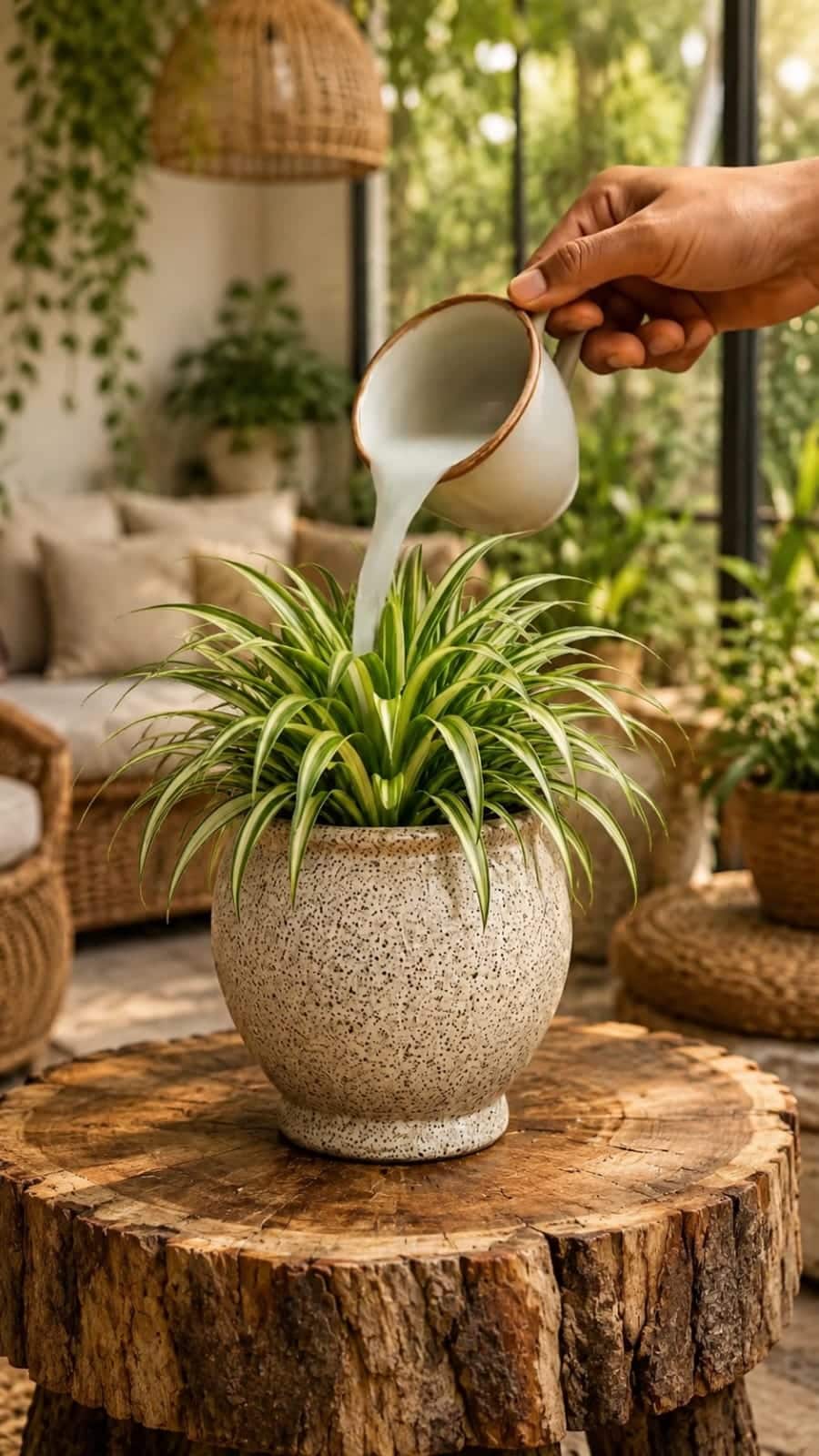
How to Encourage Spider Plant Babies
Many homeowners love spider plants because they produce baby plantlets. These usually appear when the plant is mature, healthy, and receiving enough light.
To encourage spider plant babies:
- Give bright indirect light
- Avoid overfeeding with nitrogen
- Let the plant become slightly snug in its pot
- Keep watering consistent
- Maintain moderate humidity
- Be patient with young plants
A spider plant that is too young may not produce babies yet. A plant kept in very low light may also produce fewer plantlets.
Should You Fertilize Spider Plants?
Yes, but lightly. Spider plants do not need heavy feeding. A balanced houseplant fertilizer diluted to half strength once a month during spring and summer is usually enough.
Too much fertilizer can cause brown tips and salt buildup. If you use a milky tonic, do not use fertilizer at the same time. Keep the routine simple.
Simple Feeding Schedule
- Plain water most of the time
- Half-strength fertilizer once a month during spring and summer
- Milky rice-water tonic once every 4 to 6 weeks if desired
- Plain water flush occasionally
- Little or no feeding in winter
Can You Pour the Tonic on the Leaves?
No. Do not pour or spray milky liquid on spider plant leaves. It can leave residue, attract dust, and make the leaves look dull. Apply the tonic only to the soil.
To clean spider plant leaves, use plain water. You can gently rinse the plant in the sink or wipe leaves with a damp cloth. Let the leaves dry in indirect light.
Signs Your Spider Plant Likes the Routine
Spider plants respond gradually. Do not expect dramatic changes overnight. Watch for steady improvement over several weeks.
Good signs include:
- Leaves look firmer
- New leaves appear from the center
- Variegation stays bright
- Soil smells fresh
- No mold appears
- No fungus gnats appear
- The plant keeps a fuller shape
Signs You Should Stop Using the Tonic
Stop using the milky tonic if you notice:
- Sour smell from the soil
- White mold on the surface
- Fungus gnats
- Leaves yellowing after use
- Soil staying wet too long
- Soft crown or base
- More brown tips appearing quickly
If any of these happen, return to plain water and check drainage.
What to Do If the Soil Smells Sour
Sour soil is a warning sign. It usually means the pot is staying too wet or organic material is breaking down badly.
To fix it:
- Stop using homemade tonics.
- Let the soil dry slightly.
- Check drainage holes.
- Remove dead leaves and debris.
- Improve airflow.
- Repot if the smell continues.
Do not cover a bad smell with more milk, coffee, citrus, or any other kitchen liquid. Fix the root cause.
How to Repot a Spider Plant
Spider plants can become root-bound. A slightly snug pot is fine, but if the plant dries out too quickly or roots are pushing out of the drainage holes, repotting may help.
Step 1: Choose a Pot One Size Larger
Do not jump to a huge pot. A pot that is too large holds too much wet soil.
Step 2: Remove the Plant Gently
Slide the plant out of the old pot. Spider plant roots can be thick and tuber-like, so handle them gently.
Step 3: Loosen the Roots Slightly
If roots are circling tightly, loosen them with your fingers.
Step 4: Add Fresh Soil
Use a loose, well-draining mix. Place the plant at the same depth it was growing before.
Step 5: Water With Plain Water
After repotting, use plain water first. Wait a few weeks before using any homemade tonic.
How to Propagate Spider Plant Babies
If your spider plant produces babies, you can grow new plants easily.
Water Propagation
- Cut a baby plantlet with small roots or root bumps.
- Place the base in a small glass of water.
- Keep leaves above the water.
- Change water every few days.
- Plant in soil when roots grow longer.
Soil Propagation
- Place the baby plantlet on moist potting mix.
- Keep it attached to the mother plant if possible.
- Pin it gently to the soil.
- Wait for roots to establish.
- Cut the runner after the baby is rooted.
Do not use milky tonic on fresh baby plants right away. Use plain water until they are established.
Common Spider Plant Problems
Brown Tips
Often caused by dry air, water minerals, inconsistent watering, or too much fertilizer.
Yellow Leaves
Can come from overwatering, poor drainage, low light, or old leaves naturally aging.
Pale Leaves
May mean too much direct sun, not enough nutrients, or low light depending on the overall plant condition.
No Babies
The plant may be too young, in low light, overfed, or not mature enough.
Soft Base
This can indicate rot. Check the roots and reduce watering.
Quick Recipe Card
Gentle Milky Spider Plant Tonic
Ingredients
- 1 tablespoon fresh rice water
- 1 cup clean water
- Optional: 3 to 5 drops plain milk
Instructions
- Rinse a spoonful of uncooked rice in clean water.
- Save 1 tablespoon of the cloudy rinse water.
- Mix it into 1 cup of clean room-temperature water.
- Add only a few drops of milk if desired.
- Use fresh the same day.
- Apply only when the top inch of soil is slightly dry.
- Pour a small amount around the soil.
- Let the pot drain fully.
- Use once every 4 to 6 weeks at most.
Short Caption for Social Media
Spider Plant Care Hack 🌿🥛: For fuller, fresher leaves, use a very gentle milky tonic instead of straight milk. Mix 1 tablespoon of fresh rice water into 1 cup of clean water, then add only a few drops of plain milk if desired. Pour a small amount onto the soil only when the plant is due for watering, and let the pot drain completely. Use this once every 4 to 6 weeks at most. Bright indirect light, good drainage, and steady watering are still the real secrets to a lush spider plant.
Frequently Asked Questions
Can I pour milk on a spider plant?
Straight milk is not recommended. It can sour, attract gnats, and create mold. If milk is used at all, add only a few drops to a full cup of water.
Is rice water good for spider plants?
Fresh diluted rice water can be used occasionally as a mild tonic, but it should not replace proper watering, light, or fertilizer.
How often should I use this milky tonic?
Use it no more than once every 4 to 6 weeks during active growth.
Can this tonic make my spider plant grow babies?
Not directly. Baby plantlets usually appear when the plant is mature, healthy, and receiving bright indirect light.
Why does my spider plant have brown tips?
Brown tips often come from inconsistent watering, low humidity, minerals in tap water, or too much fertilizer.
Should I spray the tonic on the leaves?
No. Milky liquids can leave residue. Apply the tonic only to the soil.
What light is best for spider plants?
Bright indirect light is best. Too much direct sun can scorch leaves, while low light can slow growth.
Does a spider plant need fertilizer?
Yes, but lightly. Use a balanced houseplant fertilizer at half strength during spring and summer.
What should I do if the soil smells sour?
Stop using homemade liquids, check drainage, remove debris, and repot if the soil remains stale or soggy.
Can I use this tonic on baby spider plants?
Wait until baby plants are established. Young plantlets should be watered with plain water first.
Final Thoughts
The milky tonic trick can be a gentle, attractive part of spider plant care when it is used correctly. It should never mean pouring straight milk into the pot. The safe version is weak, fresh, and heavily diluted. Rice water is usually the gentler base, and milk should be optional and used only in a few drops.
Spider plants become fuller and greener because their roots are healthy, their light is right, and their watering routine is balanced. They need bright indirect light, a pot with drainage, loose soil, occasional feeding, and a little patience. A homemade tonic can support that routine, but it should never replace it.
Use the tonic only when the top inch of soil is slightly dry. Pour a small amount around the soil. Let the pot drain. Watch for any signs of sour smell, mold, or gnats. If the plant responds well, continue using it rarely. If problems appear, stop immediately and return to plain water.
With steady care, your spider plant can stay fresh, full, arching, and decorative indoors. Its striped leaves will brighten the room, its baby plantlets will add charm, and its easygoing nature will keep rewarding you season after season.