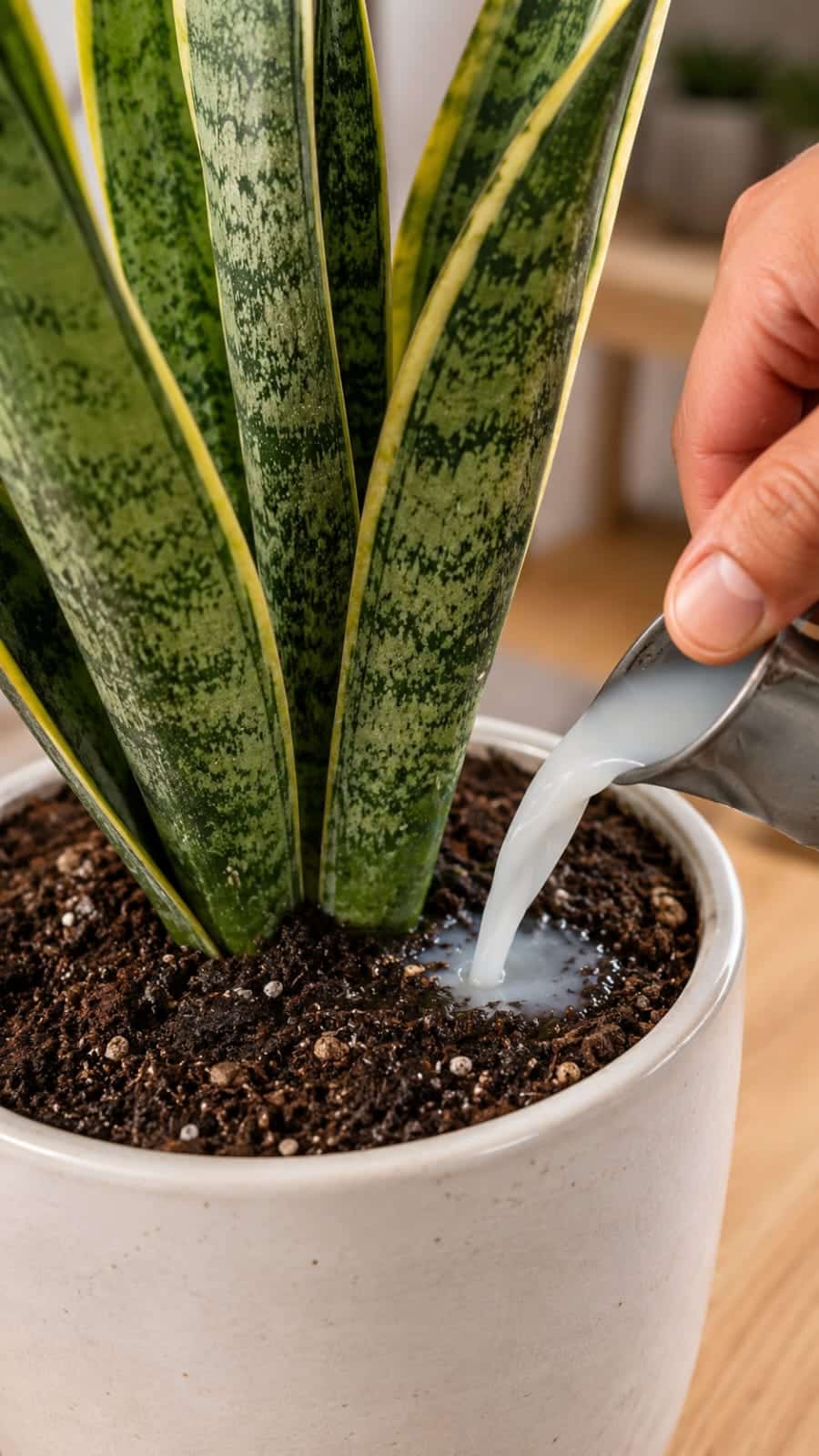
What Really Keeps Snake Plant Leaves Upright?
The tonic may be interesting, but upright leaves come from proper care. The most important factors are light, soil, watering, and root health.
Bright Light
Snake plants tolerate low light, but they grow stronger in bright indirect light. In very dim areas, leaves may become weaker and growth may slow dramatically.
Dry Soil Between Waterings
Leaves stay firm when roots are healthy. Roots stay healthy when they get oxygen. Constant wet soil removes oxygen and invites rot.
Good Drainage
A decorative pot without drainage can quietly damage a snake plant. Always use a drainage hole or keep the plant in a nursery pot inside a cover pot.
Proper Pot Size
A pot that is too large holds too much wet soil around the roots. Snake plants often prefer a snug pot.
Signs Your Snake Plant Likes the Routine
- Leaves stay firm and upright
- New shoots appear from the soil
- No sour smell develops
- Soil dries within a reasonable time
- Leaf color remains rich
- No mushy bases appear
Warning Signs After Using the Tonic
Stop using the tonic if you notice:
- Sour smell from the soil
- White mold on the surface
- Fungus gnats
- Soft leaves
- Yellowing at the base
- Soil staying wet too long
- Brown mushy roots
If this happens, remove the plant from the pot, check the roots, and repot into dry, fast-draining soil if needed.
Best Soil Mix for Snake Plants
Use a gritty, fast-draining mix. A simple recipe is:
- 2 parts cactus or succulent mix
- 1 part perlite or pumice
- 1 part coarse orchid bark or coarse sand
This mix drains faster than regular potting soil and helps prevent root rot.
Best Watering Method for Snake Plants
- Wait until the soil is dry.
- Water deeply with plain water or a very diluted tonic.
- Let excess drain out.
- Empty the saucer.
- Do not water again until dry.
This simple method is better than frequent small sips.
Can Milk Help Snake Plants?
Milk is risky in pots. Although milk contains calcium, it also contains proteins, fats, and sugars that can spoil. If used too strongly, it can create odor, mold, and pest problems. For snake plants, plain water and occasional diluted fertilizer are safer.
If you use milk at all, use only a few drops mixed into a full cup of water. Never pour straight milk into snake plant soil.
Can Rice Water Help Snake Plants?
Diluted fresh rice water is safer than milk, but it should still be used moderately. It may provide a very mild supplement, but it is not a complete fertilizer. Always dilute it and use it fresh.
Short Caption for This Trick
Smart homeowners are using a very diluted milky rice-water tonic on snake plants as an occasional soil refresh, but the secret is using it carefully. Mix 1 tablespoon of fresh rice water into 1 cup of plain water, pour only a small amount onto dry soil, and let the pot drain completely. Never pour straight milk into snake plant soil, and never use this trick when the soil is already wet. Snake plants stay upright and beautiful from bright light, fast-draining soil, and careful watering—not from heavy homemade liquids.
Frequently Asked Questions
What is the white liquid being poured on the snake plant?
It can be interpreted as diluted rice water or a very weak milk-water tonic. Rice water is usually the safer option.
Can I pour milk on my snake plant?
Straight milk is not recommended. It can sour, smell bad, and attract pests. If used at all, it should be only a few drops diluted in a full cup of water.
How often should I use this tonic?
Use it no more than once every 6 to 8 weeks during active growth. Skip it in winter.
Can this make snake plant leaves stand upright?
Not directly. Upright leaves come from healthy roots, bright light, proper watering, and good drainage.
Should I use it on wet soil?
No. Only use it when the soil is dry and the plant is due for watering.
What should I do if the soil smells sour?
Stop using homemade tonics. Let the plant dry, check the roots, and repot if the soil is rotten or compacted.
Is rice water better than milk for snake plants?
Yes, fresh diluted rice water is usually safer and less likely to spoil than milk.
Final Thoughts
The milky tonic trick can look beautiful and natural, but snake plants require restraint. These plants do not want rich, wet soil. They do not need constant feeding. They grow best when their roots are allowed to breathe and dry between waterings.
If you want to try this trick, make it weak, fresh, and rare. Use diluted rice water instead of straight milk. Apply only to dry soil. Pour gently around the outer root zone. Let the pot drain fully. Then wait until the soil dries again.
The real secret to a strong snake plant is not the milky liquid alone. It is bright indirect light, a fast-draining mix, a pot with drainage, and careful watering. When those basics are right, your snake plant can stay upright, bold, and decorative indoors for years.