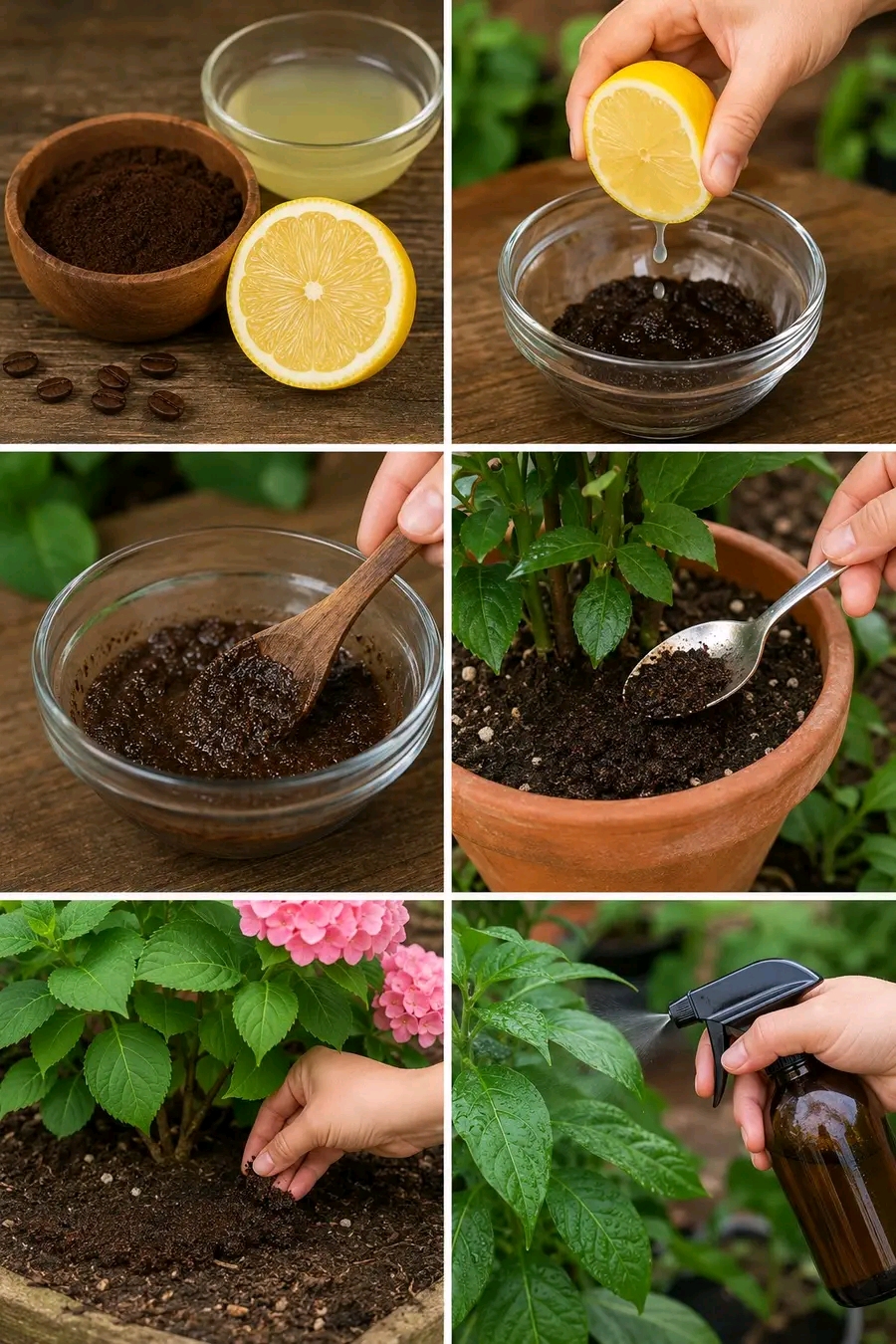
Common Mistakes With Coffee and Lemon Hydrangea Care
One common mistake is using too much lemon juice. Strong acidity can irritate roots and leaves. Another mistake is piling fresh coffee grounds thickly on the soil surface. This can compact, mold, and attract gnats. A third mistake is expecting instant blue blooms. Color change takes time and depends on the hydrangea variety.
A fourth mistake is treating coffee grounds as complete fertilizer. They are not complete plant food. A fifth mistake is spraying lemon mixtures in hot sun. This can mark leaves. A sixth mistake is applying homemade mixtures to a plant that is already stressed by heat, drought, or soggy soil.
A seventh mistake is ignoring soil testing. Without knowing the soil pH, gardeners may overcorrect and stress the plant. Guessing is less safe than testing.
What to Do If Problems Appear
If the soil surface becomes moldy after adding coffee grounds, remove the affected layer and replace it with fresh potting mix or clean mulch. Improve airflow and avoid adding more organic residue. If fungus gnats appear, let the surface dry slightly and use sticky traps to monitor adults.
If leaves curl, yellow, or brown after a lemon mixture, stop using it and flush the soil gently with plain water if the pot drains well. Keep the plant out of harsh sun while it recovers. Avoid additional fertilizer until the plant stabilizes.
If the hydrangea wilts repeatedly, check moisture, pot size, and light exposure. Wilting may come from heat or dry soil, not lack of tonic. If the soil is wet and the plant wilts, root problems may be present. The root zone must be corrected first.
Safer Alternatives for Acid-Loving Hydrangeas
For gardeners who want to support acid-loving soil, a soil test is the best first step. After testing, a controlled soil acidifier can be used according to directions if acidity is needed. Pine bark, peat-based mixes, or products made for acid-loving plants can also support a suitable environment when used correctly.
For bloom color adjustment, use products designed for hydrangeas rather than random kitchen mixtures. Follow the label and make changes slowly. Too much soil amendment can harm roots. Patience is necessary because flower color changes gradually over new growth cycles.
For general plant health, focus on watering, light, pruning, and balanced fertilizer. These are more reliable than coffee and lemon treatments. A hydrangea with strong roots and correct light will always perform better than one treated with unstable mixtures but kept in poor conditions.
Final Thoughts
A coffee and lemon mixture may look like a simple hydrangea color and growth hack, but it must be used with caution. Coffee grounds can add organic matter when composted, but fresh grounds can compact, mold, and attract fungus gnats. Lemon juice is acidic, but it is not a controlled soil amendment and can irritate roots or leaves when used strongly. Together, they should never be applied as a thick paste or frequent treatment.
The real foundation of healthy hydrangea growth is bright suitable light, consistent moisture, rich well-draining soil, drainage holes in containers, balanced feeding, correct pruning, good airflow, and soil pH management based on testing. If bloom color is the goal, identify the hydrangea type first and adjust soil slowly with appropriate products. If plant health is the goal, protect the root zone and avoid unstable kitchen residues.
With careful care and clean styling, hydrangeas can remain stunning flowering plants for patios, balconies, porches, garden beds, terrace corners, shaded entries, cottage gardens, and premium outdoor displays. Strong roots, lush leaves, full blooms, tidy soil, and balanced maintenance will always create a more beautiful result than relying on risky homemade shortcuts.