How Often to Change the Water
For most indoor anthurium water displays, changing the water every one to two weeks is a good starting point. In warmer rooms or bright windows, water may need to be refreshed more often. If fertilizer or powder is added, the water should be watched closely for cloudiness.
Change the water sooner if:
- It becomes cloudy
- It smells unpleasant
- Algae appears
- Roots feel slimy
- The water level drops too low
- The plant looks stressed
When changing water, rinse the roots gently. Do not scrub healthy roots aggressively. Remove only dead, mushy, or decaying material.
Light Requirements for Bright Blooms
Anthuriums need bright indirect light to bloom well. They can survive in medium light, but flowering may slow down if the room is too dim. A bright window with filtered sunlight is ideal. Morning light can be helpful, but harsh afternoon sun can scorch the leaves and heat the water too much.
Good light placements include:
- Near an east-facing window
- A few feet from a bright south-facing window
- Behind sheer curtains
- On a bright bathroom shelf
- Near a kitchen window with filtered light
- In a bright office corner
If the plant produces leaves but no blooms, low light may be the reason. Anthuriums need enough energy to create flowers, and that energy comes from light.
Humidity and Temperature
Anthuriums enjoy warm, humid conditions. Dry air can lead to brown edges, curled leaves, and slower growth. A water display may naturally add a little humidity around the plant, but it may not be enough in very dry homes.
Helpful humidity tips include:
- Keep the plant away from heaters
- Avoid cold drafts
- Group it with other plants
- Place it in a bright bathroom if light is available
- Use a pebble tray nearby
- Run a small humidifier in dry rooms
The best temperature range is warm and stable. Cold windowsills during winter can stress the roots, especially when the plant is growing in water.
Feeding an Anthurium in Water
An anthurium growing in water may need gentle feeding because plain water does not contain enough nutrients for long-term growth. However, feeding should be light. Too much fertilizer can damage roots quickly in water culture.
A safe feeding approach includes:
- Use a diluted houseplant fertilizer
- Feed only during active growth
- Use less than the label recommends
- Do not fertilize every time you change the water
- Flush with plain water between feedings
- Stop feeding if roots look stressed
If the white powder is a fertilizer or mineral product, additional liquid fertilizer may not be needed at the same time. Combining multiple products can cause buildup.
Signs the Trick Is Working
A healthy anthurium in water will not transform overnight. Improvements are usually gradual. The best signs are clean roots, firm leaves, and stable new growth.
Positive signs include:
- Roots stay firm and pale
- New root tips appear
- Leaves remain glossy
- The plant stands upright
- New leaves emerge
- Blooms last longer
- The water stays clear between changes
Do not judge the method after only one or two days. Anthuriums need time to adjust, especially after being moved from soil to water.
Warning Signs to Watch For
Even a beautiful setup can fail if the roots start to rot. Water culture makes it easier to notice problems early because the roots are visible.
Warning signs include:
- Brown mushy roots
- Bad smell from the water
- Yellowing leaves
- Wilting despite water being present
- Black spots at the base
- Cloudy water that returns quickly
- Soft stems
- Leaves losing shine
If these signs appear, remove the plant, rinse the roots, trim damaged areas, clean the container, and restart with fresh water. If the base is rotting, the plant may need to be moved back to a proper airy potting mix instead of water.
How to Style Anthurium in Home Decor
Anthurium plants are perfect for indoor styling because they have a naturally elegant shape. The glossy leaves reflect light, and the colorful spathes create a focal point. A water-based display makes the plant feel even more modern.
Beautiful styling ideas include:
- Place a red anthurium near warm wood tones
- Use a clear glass jar for a clean hydroponic look
- Pair white anthuriums with minimalist decor
- Use pink anthuriums in a soft bedroom setting
- Place the plant near a bathroom mirror for a spa effect
- Style it on a kitchen windowsill with herbs or small plants
- Use a glass container on a desk for a fresh office accent
The best containers are simple. Anthuriums already have strong color, so the container should support the look instead of competing with it.
Best Rooms for This Display
This kind of anthurium setup works best in rooms with natural light and stable warmth. Because the roots are visible, it also looks best in clean, uncluttered spaces.
Good rooms include:
- Living room
- Bedroom
- Bathroom with a window
- Kitchen windowsill
- Home office
- Entryway table
- Dining room sideboard
- Plant shelf near filtered light
A red anthurium looks especially beautiful near neutral colors, cream curtains, wooden shelves, terracotta accents, black metal stands, and glass decor. The red blooms create contrast without needing extra decoration.
Anthurium Care Table
| Care Factor | Best Choice | Why It Matters |
|---|---|---|
| Light | Bright indirect light | Supports glossy leaves and better blooming |
| Water setup | Clean water with roots only submerged | Prevents crown rot and keeps roots healthy |
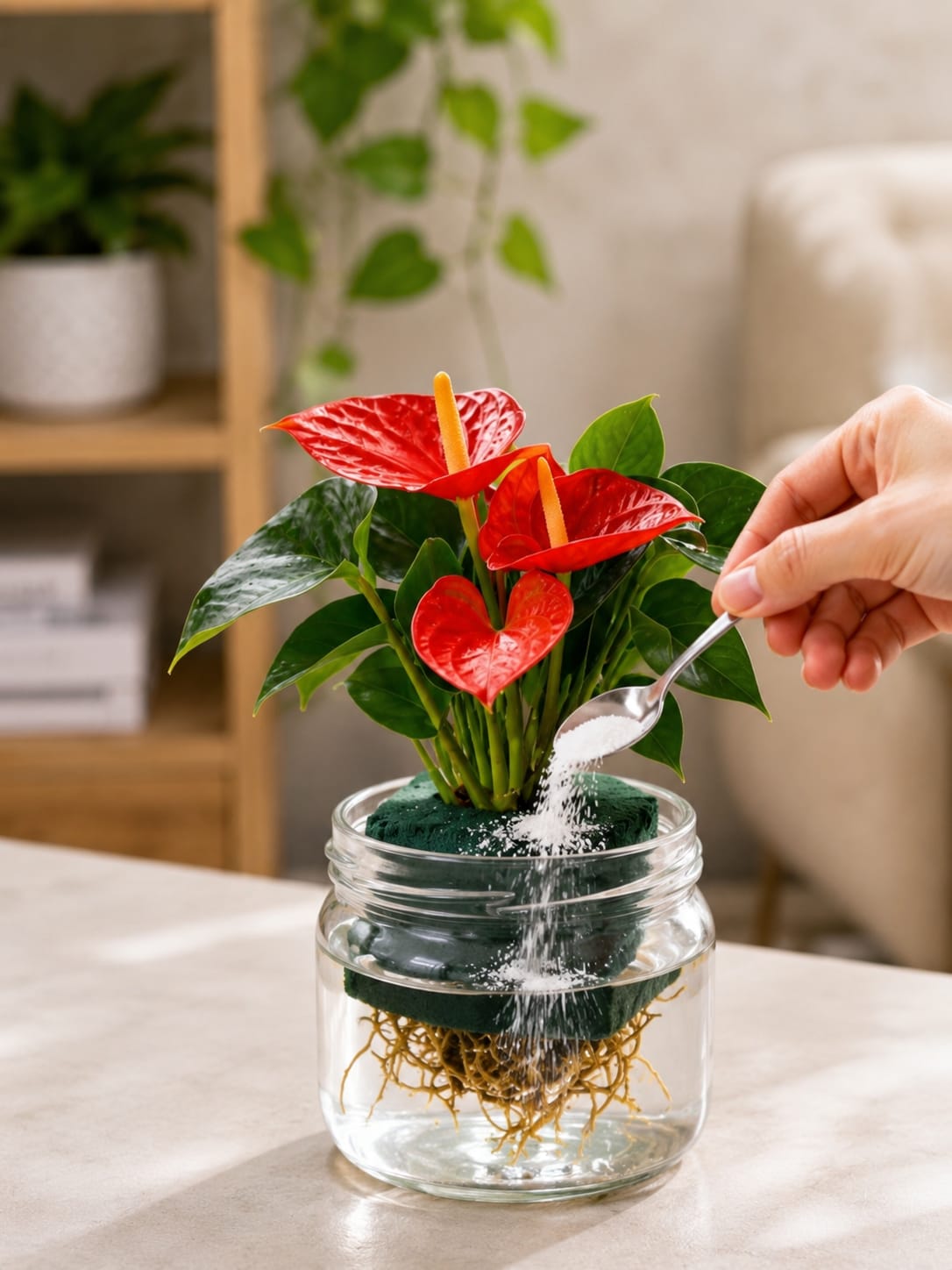
| White powder | Very small amount of plant-safe product | Avoids buildup and root stress |
| Container | Clear glass jar or bowl | Shows roots and creates a modern display |
| Humidity | Medium to high | Prevents dry leaf edges |
| Feeding | Light diluted fertilizer during growth | Supports flowers without burning roots |
Frequently Asked Questions
Can anthurium grow in water permanently?
Yes, anthuriums can adapt to water culture when the roots are cleaned, the crown stays above water, and the water is changed regularly. Some plants adapt better than others, so monitoring is important.
What is the white powder used for?
The exact powder should always be confirmed before use. In plant care, white powders may be used as mineral amendments, rooting support products, mild fertilizers, or water-conditioning additives. Only plant-safe products should be used.
Should the powder touch the roots directly?
It is safer to use a very small amount around the support layer or water surface rather than packing powder directly against tender roots. Too much direct contact can irritate roots depending on the product.
Why are my anthurium roots turning brown in water?
Brown roots may be old soil roots adjusting, but mushy or smelly roots are a sign of rot. Remove damaged roots and refresh the water immediately.
How do I make anthurium bloom more?
Give it bright indirect light, warmth, humidity, clean roots, and gentle feeding during the growing season. Low light is one of the biggest reasons anthuriums stop blooming.
Can I use milk, salt, baking soda, or random white powder?
No. Random household ingredients can damage roots, attract bacteria, or create buildup. Use only products that are clearly safe for plants.
Final Thoughts
A small amount of white powder around an anthurium water display can look like a simple secret for better growth, but the real success comes from the full care system. Anthuriums need clean roots, bright indirect light, gentle feeding, stable warmth, and fresh water. The powder should never replace proper care, and it should never be used heavily or blindly.
When done carefully, this method can create a beautiful indoor plant feature. The roots become part of the design, the clear container adds a fresh modern look, and the colorful anthurium blooms bring warmth and elegance to the room. With the right balance, the plant becomes more than a houseplant. It becomes a living centerpiece that adds color, texture, and natural beauty to the home.