Keeping Snake Plant Leaves Clean
Dust can collect on snake plant leaves and dull their natural pattern. Wipe the leaves gently with a soft damp cloth. Support each leaf while cleaning so it does not bend or crack. Clean leaves help the plant absorb light and improve the indoor display.
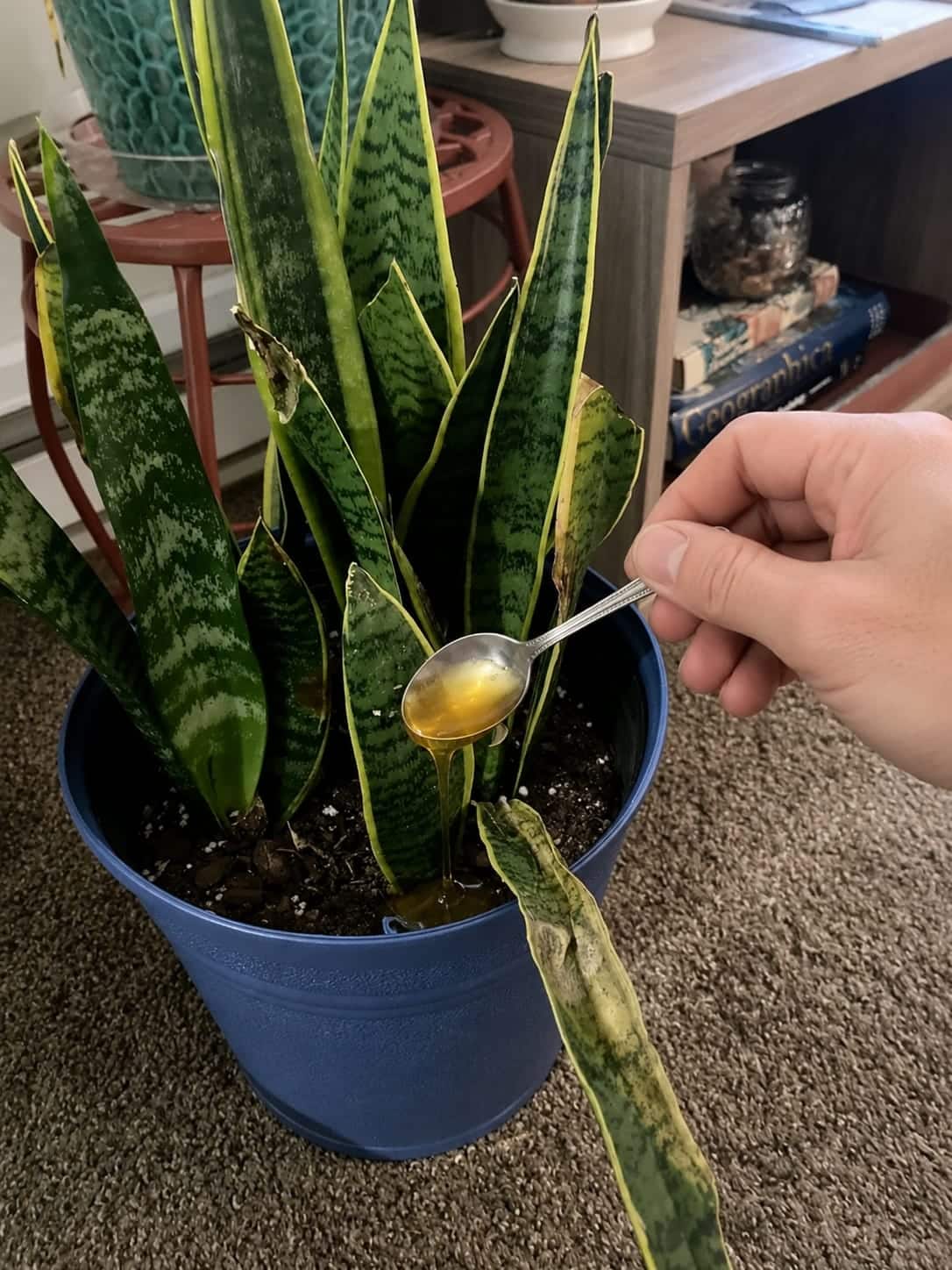
If sticky amber liquid splashes onto the leaves, wipe it away immediately. Sticky residue can attract dust and leave marks. Damaged leaves should be kept clean and dry, not coated.
Avoid oily leaf shine products. They can attract dust and make the plant look artificial. Plain water and a soft cloth are enough.
Indoor Styling for a Recovering Snake Plant
A recovering snake plant can still look beautiful with the right styling. A blue, white, black, terracotta, or stone-style pot can help the plant feel intentional even while it heals. Remove badly damaged leaves, clean the pot, and keep the soil surface tidy.
Place the plant where it receives bright indirect light and has enough space around the leaves. Avoid tight corners where leaves rub against furniture or walls. Physical rubbing can create more damaged patches.
For a premium display, focus on clean lines and healthy growth. A smaller number of firm upright leaves looks better than a crowded plant with rotting or broken foliage. Recovery can be part of the plant’s long-term styling.
Common Mistakes With Sticky Plant Tonics
One common mistake is using honey or syrup because it looks natural. Natural does not always mean safe for indoor pots. Another mistake is adding sticky liquid to wet soil. This increases the risk of rot and pests. A third mistake is trying to fix brown leaves with a tonic instead of identifying the cause.
A fourth mistake is leaving damaged mushy leaves attached. Rotten tissue can spread problems. A fifth mistake is using dense soil with no drainage. A sixth mistake is feeding a plant that is already stressed.
Snake plants are easy because they prefer simple care. Too much attention, especially with homemade mixtures, can cause more problems than neglect.
Better Alternatives for Snake Plant Recovery
If the goal is root recovery, inspect the rhizomes and repot into fast-draining soil. If the goal is stronger leaves, provide bright indirect light and avoid overwatering. If the goal is fewer brown tips, review water quality, fertilizer strength, and physical damage. If the goal is more pups, support healthy rhizomes with stable care.
If the plant is soft, check the roots. If the soil smells sour, repot. If the plant is dry and wrinkled, water properly with plain water. If leaves are torn, trim only what is necessary. These steps solve real problems more safely than sticky amber liquid.
A snake plant recovering from damage needs patience. New growth may take weeks or months. The plant will not repair old scars, but it can produce healthier new leaves when conditions improve.
Final Thoughts
A sticky amber liquid around a damaged snake plant may look like a simple rescue trick, but it should be used carefully. The mixture could be honey water, syrup, molasses water, banana peel liquid, compost tea, diluted fertilizer, or another homemade tonic. Some fresh weak mixtures may be tolerated rarely, but sugary, sticky, fermented, or unknown liquids can sour the soil, attract fungus gnats, leave residue, and damage roots.
The real foundation of snake plant recovery is firm rhizomes, bright indirect light, fast-draining soil, drainage holes, infrequent room-temperature watering, clean leaves, stable warmth, and gentle feeding only after the plant is healthy. If the soil is wet, do not add more liquid. If the leaves are soft, check the roots. If the soil smells bad, repot. If the plant is healthy but scarred, be patient and wait for new growth.
With careful recovery and clean styling, snake plants can return to being beautiful indoor plants for living rooms, bedrooms, home offices, apartments, entryways, bright windowsills, commercial interiors, luxury home staging, and premium plant displays. Strong upright leaves, healthy rhizomes, tidy soil, and balanced maintenance will always create a safer and more elegant result than relying on risky sticky tonic shortcuts.