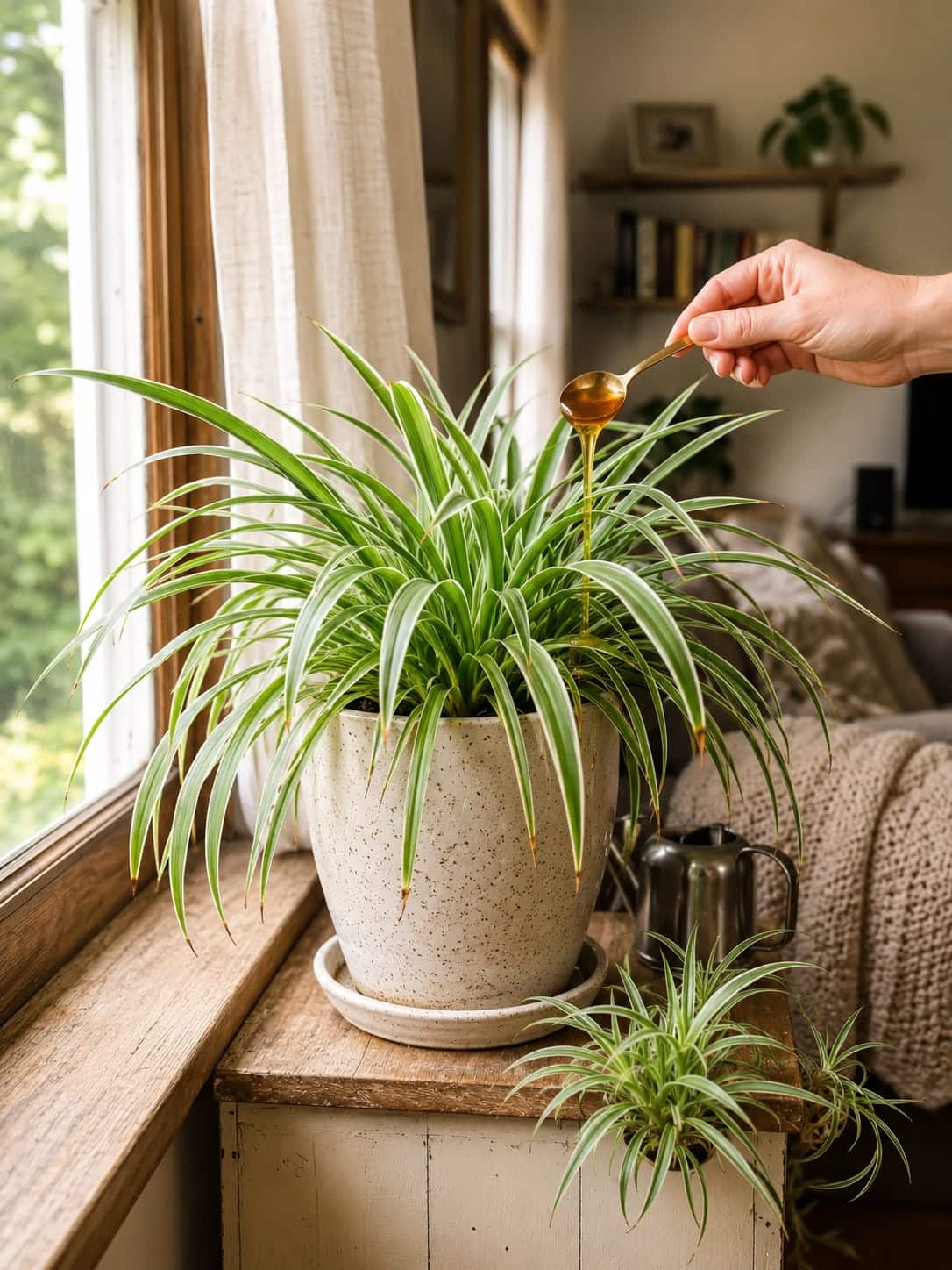
What to Do If Honey Was Already Added
If only a tiny amount of diluted honey water was used once and the plant looks healthy, stop using it and return to plain water. Let the soil dry to a normal level before watering again. Watch for gnats, odor, mold, or yellowing leaves.
If a thick spoonful of honey or syrup was poured directly into the soil, gently remove the sticky area from the surface if possible. Replace that top layer with fresh potting mix. Avoid watering heavily unless the pot drains well, because water can spread the sticky residue deeper into the soil.
If the soil begins to smell sour or gnats appear, repotting may be safer. Remove old contaminated soil, inspect the roots, and replant in fresh airy mix. After repotting, keep care simple with plain water until the plant stabilizes.
Cleaning Spider Plant Leaves
Spider plant leaves are narrow and numerous, so dust can collect along the stripes. Dust can dull the variegation and make the plant look tired. Wipe leaves gently when practical, or rinse the plant lightly in a sink or shower if the pot drains well. Let the leaves dry in bright indirect light afterward.
If sticky amber liquid splashes onto the leaves, wipe it away immediately. Honey, syrup, or molasses residue can attract dust and leave marks. Spider plant foliage should look fresh, clean, and naturally bright.
Avoid oily leaf shine products. Spider plant leaves are thin and do not need coatings. Plain water is enough for cleaning.
Grooming for a Fuller Display
Grooming makes a spider plant look much fuller. Remove fully dead leaves from the base. Trim brown tips if they bother you visually. Cut away weak, yellowing, or broken leaves with clean scissors. This helps the healthy leaves stand out and keeps the plant looking intentional.
Do not remove too many healthy leaves at once. The plant needs foliage to produce energy. Groom gradually. If the plant has many runners, decide whether to keep them for a cascading display or root some babies for a fuller pot.
A clean spider plant often looks healthier immediately, even before new growth appears. Styling and grooming are part of good plant care.
Humidity and Airflow
Spider plants tolerate average indoor humidity, but very dry air can contribute to brown tips. If the room is dry, especially in winter, a humidifier or plant grouping can help. However, humidity should not mean soggy soil. Roots still need oxygen.
Airflow also matters. A plant near a bright window should not sit in a cold draft. A plant in a crowded corner should have enough space for leaves and soil surface to dry normally. Stagnant damp conditions can encourage mold and gnats.
Balanced humidity, airflow, and light help spider plants stay fresh and vibrant without needing sticky tonics.
Indoor Decor and Styling Ideas
Spider plants are perfect for cozy natural styling. Their arching leaves look beautiful beside windows, on shelves, in hanging baskets, on plant stands, or on side tables. A speckled ceramic pot creates a handmade look. Terracotta adds warmth. A white pot feels clean and bright. A woven basket creates a relaxed home style.
Place the plant where the leaves can arch freely. If the plant is too close to a wall or curtain, the tips may bend or brown from friction. A raised stand or windowsill gives the leaves space to fall naturally.
For a premium indoor display, keep the pot clean, remove dead tips, wipe the windowsill, and avoid sticky spills on the soil or furniture. A clean, bright spider plant looks more luxurious than one covered in homemade residue.
Common Mistakes With Sticky Spider Plant Tonics
One common mistake is using honey because it looks natural. Natural does not always mean safe in an indoor pot. Another mistake is using syrup or molasses repeatedly. Sweet liquids can attract pests and leave residue. A third mistake is adding tonic to wet soil.
A fourth mistake is using tonic to fix low light. No liquid can replace brightness. A fifth mistake is overfeeding to force baby plants. Too much fertilizer can cause brown tips. A sixth mistake is ignoring drainage and saucer water.
Spider plants are easy because they respond well to simple care. Too many homemade treatments can make the root zone less healthy.
Better Alternatives for Fuller, Vibrant Leaves
If the goal is fuller leaves, provide bright indirect light and water consistently. If the goal is more baby plants, let the plant mature and keep it in good light. If the goal is fewer brown tips, review water quality, fertilizer strength, humidity, and watering rhythm. If the goal is stronger roots, use fresh airy soil and a pot with drainage.
If the plant is pale, improve light. If it is drooping, check soil moisture. If it smells sour, repot. If it has gnats, reduce damp soil and remove organic residue. These steps solve real problems more safely than honey or syrup.
A spider plant usually becomes fuller through steady care, grooming, and patience. Brightness, drainage, clean soil, and proper watering are the real boosters.
Final Thoughts
A sticky amber liquid around a spider plant may look like a simple trick for fuller, vibrant leaves, but it should be used carefully. The mixture could be honey water, syrup, molasses water, banana peel liquid, compost tea, diluted fertilizer, or another homemade tonic. Some fresh weak mixtures may be tolerated rarely, but sugary, sticky, fermented, or unknown liquids can sour the soil, attract fungus gnats, leave residue, and damage roots.
The real foundation of spider plant health is bright indirect light, evenly moist but not soggy soil, drainage holes, fresh airy potting mix, clean leaves, gentle feeding during active growth, and regular grooming. If the soil is wet, do not add more liquid. If the plant has brown tips, review water quality and fertilizer strength. If the plant is slow, improve light. If the plant is healthy, keep the routine simple.
With patient care and clean styling, spider plants can remain beautiful indoor plants for living rooms, bedrooms, home offices, kitchens, apartments, bright windowsills, hanging baskets, commercial interiors, luxury home staging, and premium plant displays. Fuller leaves, healthy plantlets, tidy soil, and balanced maintenance will always create a safer and more elegant result than relying on risky sticky tonic shortcuts.