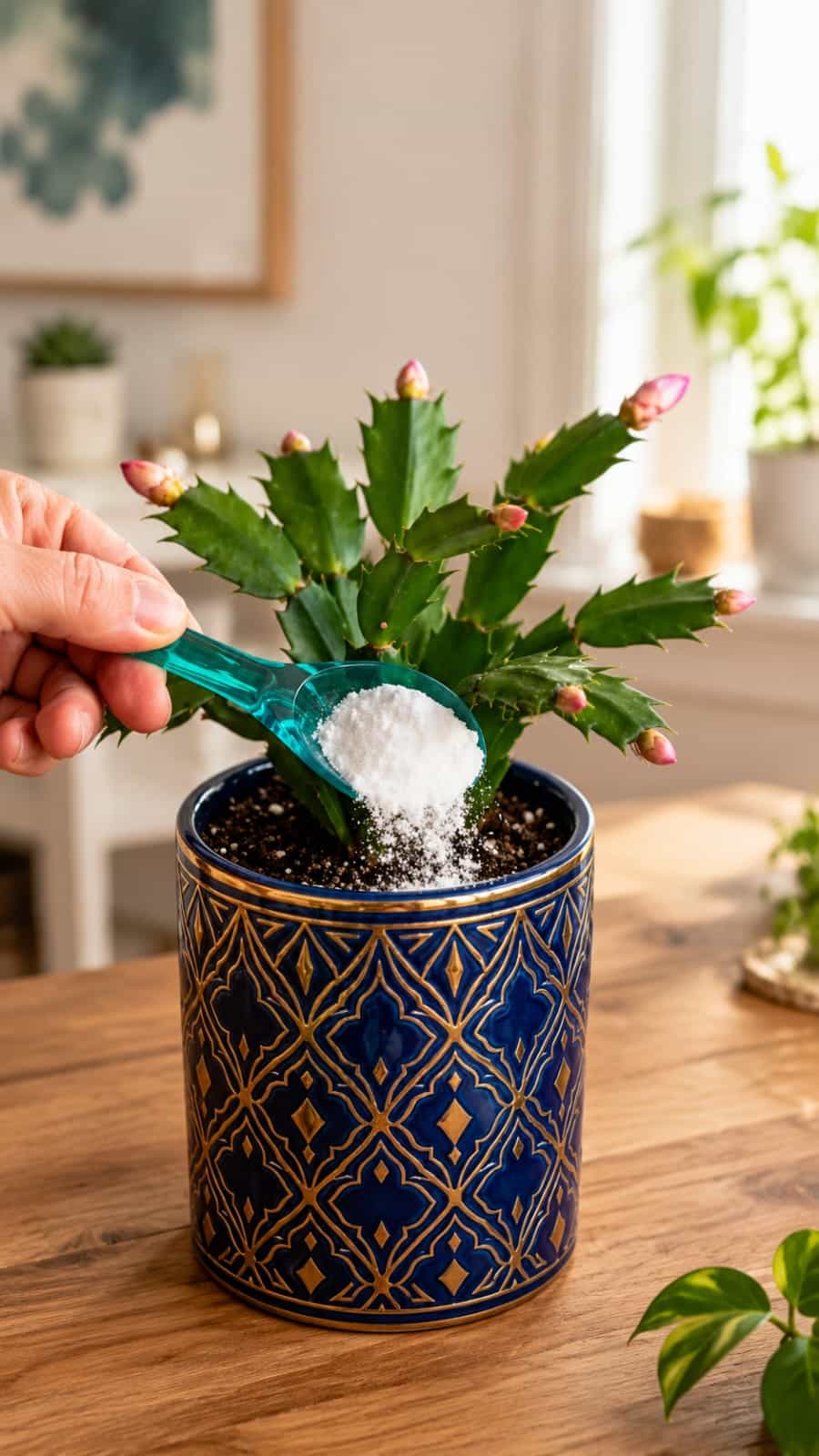
Christmas cactus is one of the most beautiful indoor flowering plants for homeowners who want bright seasonal blooms, soft green segmented stems, a cozy holiday display, and a long-lasting houseplant that can become more impressive every year. It fits beautifully in living rooms, bedrooms, apartments, home offices, bright kitchens, plant shelves, windowsills, dining tables, commercial interiors, luxury home staging, and warm festive indoor plant styling. When healthy, it produces arching green stems and colorful buds that can make a simple pot feel full of life.
Many plant lovers become curious when they see a white powder being added around a Christmas cactus. This type of powder is often described online as a simple trick for stronger roots, more buds, brighter flowers, fewer pests, and cleaner soil. The white powder may be perlite, baking soda, crushed eggshells, Epsom salt, powdered fertilizer, diatomaceous earth, limestone, cornstarch, or another homemade amendment. Because many white powders look similar, the exact ingredient matters. Christmas cactus is not a desert cactus with the same care needs as many spiny cacti. It is a tropical forest cactus, and its roots can be sensitive to heavy powders, strong salts, poor drainage, and soil that stays wet too long.
The safest way to understand this method is to treat any white powder as a targeted soil amendment, not a guaranteed bloom booster. A Christmas cactus does not produce buds because random powder is poured into the pot. It blooms best when it receives bright indirect light, a draining pot, airy soil, careful watering, stable warmth, a short-day cool period before blooming, and gentle feeding during active growth. If the plant already has buds, the best care is calm and consistent. Sudden changes, heavy feeding, overwatering, and strong powders can cause buds to drop before they open.
Why Christmas Cactus Needs Different Care Than Desert Cactus
Christmas cactus is often misunderstood because of the word cactus. Unlike many desert cacti, it naturally grows in tropical forest environments where moisture, humidity, and filtered light are common. It does not want to sit in dry sand for months, but it also does not want wet compacted soil. The best care is balanced: lightly moist soil during active growth, excellent drainage, and enough airflow around the roots.
The plant grows from flat green segments rather than thick woody stems. These segments store some moisture, but they can wrinkle if the plant becomes too dry and soften if the roots become too wet. The roots are not large and aggressive. They prefer a breathable mix that holds moisture briefly, then drains. Heavy powders can interfere with this balance if they clog the surface or dissolve into salts.
When the plant is preparing to bloom, it becomes even more sensitive to sudden stress. Moving it too much, overwatering, underwatering, adding strong fertilizer, or changing temperature quickly can lead to bud drop. For this reason, any powder treatment should be avoided when the plant is already covered in buds unless you know exactly what the material is and why it is needed.
What the White Powder Might Be
The white powder may be perlite. Perlite is one of the safer white materials because it improves drainage and airflow when mixed into potting soil. However, perlite is most useful when blended through the soil during repotting. Pouring a heavy layer on top does not fix compacted soil below the surface.
The powder may be crushed eggshells. Eggshell powder is often promoted for calcium, but it breaks down slowly and does not create instant blooms. Used heavily, it can create a chalky layer on the soil. Christmas cactus does not usually need eggshell powder to flower.
The powder may be Epsom salt. Epsom salt contains magnesium and sulfur, but it should not be used randomly. Too much can create salt buildup and stress the roots. Brown edges, weak blooms, or poor growth are not automatically signs of magnesium deficiency.
The powder may be baking soda. Baking soda is risky for Christmas cactus soil because it contains sodium and can affect soil balance. It is not a routine plant fertilizer. Adding baking soda can create root stress and should be avoided.
The powder may be diatomaceous earth. It is sometimes used dry on soil surfaces for pest management, but it loses effectiveness when wet. Because Christmas cactus soil is watered regularly, it can become clumpy and messy. It should be handled carefully and not inhaled as dust.
The powder may also be fertilizer granules. If it is fertilizer, measurement matters. A Christmas cactus does not need strong feeding, especially while budding or blooming. Too much fertilizer can burn roots and cause weak or stressed growth.
Why Baking Soda Is Not a Good Christmas Cactus Booster
Baking soda is often shown in simple home-care tricks, but it is not a safe routine fertilizer for Christmas cactus. It can add sodium to the soil, and sodium buildup can stress roots. A plant that is already sensitive to watering changes may react badly when the soil chemistry is changed suddenly.
Some people use baking soda in certain garden sprays, but that does not mean it belongs in the potting mix of a Christmas cactus. Soil treatments stay around the roots. If too much is used, the plant may develop weak growth, dull segments, root stress, or bud drop.
If the goal is more blooms, baking soda is not the answer. The real bloom triggers are proper light, cooler nights, short daylight periods before flowering, and a healthy root system. These factors matter far more than powder shortcuts.
Can Eggshell Powder Help Christmas Cactus?
Eggshell powder is popular because it sounds natural and gentle. It contains calcium carbonate, but it breaks down slowly. In an indoor pot, especially one watered carefully, eggshell powder may sit on the surface for a long time without giving the plant useful nutrition. It may also create a pale crust that makes the soil look messy.
Christmas cactus does not usually fail to bloom because it lacks eggshell calcium. It usually fails to bloom because it does not receive the right light and temperature rhythm, or because the plant is stressed by water, soil, or root issues. A calcium source is not a magic holiday bloom trigger.
If eggshell powder is used at all, it should be very finely ground and used sparingly. For most indoor Christmas cactus plants, a balanced diluted fertilizer is more predictable and cleaner.
Why Epsom Salt Should Be Used Carefully
Epsom salt is sometimes recommended for greener plants, but it should not be added unless there is a clear reason. Christmas cactus can be sensitive to fertilizer salts. If the soil already contains mineral buildup, adding more can worsen root stress. This may show up as limp segments, dull growth, or poor blooming.
If a magnesium supplement is truly needed, it should be diluted carefully and used rarely. It should not be poured as a thick white powder directly into the pot. A measured approach is much safer than a heavy scoop.
For most Christmas cactus plants, a weak balanced houseplant fertilizer during active growth is enough. Stop heavy feeding as the plant enters its bloom-setting period. The plant needs rhythm, not constant feeding.
When Perlite Is Actually Helpful
Perlite can be very useful for Christmas cactus when mixed into the soil. It helps keep the potting mix airy and reduces the chance of soggy roots. Since Christmas cactus likes moisture but dislikes compact wet soil, perlite can help create the right balance.
The best way to use perlite is during repotting. Blend it with a quality indoor potting mix and possibly fine orchid bark or coco coir. The result should feel light, loose, and breathable. Water should move through the mix instead of sitting at the bottom.
If the current soil is dense, old, or sour-smelling, surface powder will not solve the deeper issue. Repotting into a fresh airy mix is usually more effective.
Best Soil for Christmas Cactus
Christmas cactus grows best in a light, well-draining mix that still holds a little moisture. A good blend may include indoor potting mix, perlite, fine orchid bark, and coco coir. The soil should not be as dry and gritty as a desert cactus mix, but it should also not be heavy garden soil.
If the soil stays wet for many days, the roots may suffer. If it dries out too quickly and becomes hard, the plant may wrinkle and fail to support buds. The goal is an airy mix that allows consistent moisture without waterlogging.
Old soil can break down and compact. If the plant has been in the same pot for several years, repotting after blooming may refresh the root zone. Avoid repotting while the plant is covered in buds unless there is an emergency, because disturbance can cause bud drop.
Drainage Holes Are Essential
A Christmas cactus pot should have drainage holes. This is one of the simplest ways to protect the roots. When water enters the pot, extra moisture must be able to escape. A decorative pot without drainage can trap water and create hidden root rot.
A beautiful blue ceramic pot, holiday planter, white pot, terracotta container, or woven basket can still be used, but the plant should sit in a draining inner pot or a decorative pot with proper drainage. Always empty the saucer after watering. The plant should never sit in standing water.
No white powder can replace drainage. If the pot traps moisture, the plant remains at risk no matter what is sprinkled on the surface.
Watering Christmas Cactus Correctly
Christmas cactus prefers a more even watering rhythm than snake plant or desert cactus. Water when the top part of the soil begins to dry, but before the plant becomes severely shriveled. During active growth and budding, the plant appreciates consistent moisture. During cooler rest periods, it needs less water.
When watering, use room-temperature water and water thoroughly until excess drains. Empty the saucer. Do not water lightly every day because that can keep the surface damp while the deeper roots remain unevenly hydrated. A full watering followed by partial drying is better.
If powder has been added, be careful. Water may dissolve it and carry it into the roots. If the powder is unknown, remove it before watering. A clean watering routine is safer than washing mystery powder into the root zone.
Why Bud Drop Happens
Bud drop is one of the most frustrating Christmas cactus problems. The plant may form beautiful buds, then suddenly drop them before they open. This can happen from sudden temperature changes, moving the plant, inconsistent watering, very dry air, low light, overwatering, underwatering, or strong fertilizer at the wrong time.
Adding white powder while the plant is budding can also create stress if it changes soil moisture or nutrient balance. A plant in bud should be kept stable. Avoid major changes. Keep watering consistent, protect it from drafts, and do not move it repeatedly from room to room.
Once buds form, the best care is gentle and steady. Let the plant finish blooming before doing repotting, heavy pruning, or soil amendments.
Best Light for Christmas Cactus Blooms
Christmas cactus grows best in bright indirect light. Too much direct sun can redden or burn the segments. Too little light can lead to weak growth and fewer flowers. A bright window with filtered light is ideal. Morning light is usually gentler than harsh afternoon sun.
For bloom formation, Christmas cactus often needs shorter days and longer nights before flowering. Cool nights and uninterrupted darkness can encourage buds. If the plant sits under bright artificial light every evening, it may not receive the darkness signal it needs.
If the plant grows well but does not bloom, light rhythm may be the issue. A powder will not replace the seasonal conditions that trigger flowering.
Temperature and Bloom Timing
Christmas cactus usually responds well to cooler nights before bloom season. It does not need freezing conditions. It simply benefits from a stable cooler period and longer nights. Sudden cold drafts, however, can damage buds and stress the plant.
Keep the plant away from heating vents, fireplaces, air conditioners, and drafty doors. A steady room with bright indirect light is better than a location with constant temperature swings.
Once buds appear, keep the plant in a stable place. Avoid moving it from a cool room to a hot room or from low light to harsh sun. Stability helps flowers open properly.
Feeding Christmas Cactus Safely
Christmas cactus can be fed gently during active growth, usually after blooming and through spring and summer. A balanced houseplant fertilizer diluted to a weak strength can support healthy segments and future flower formation. Heavy fertilizer is not needed.
Stop or reduce feeding before the bloom-setting period. Too much fertilizer at the wrong time may encourage leaf growth instead of buds, or it may stress roots. A plant covered in buds should not be heavily fertilized.
If the white powder is fertilizer, follow the label carefully. Do not pour a full scoop into the pot unless the product specifically says it is safe. Concentrated fertilizer can burn roots and damage the plant.
When White Powder Should Be Avoided Completely
White powder should be avoided if you do not know exactly what it is. It should also be avoided if the plant is in bud, the soil is wet, the pot has no drainage, fungus gnats are present, mold is growing, the plant is limp, or the soil smells sour. These signs suggest the root zone may be sensitive or stressed.
It should also be avoided in winter when the plant is resting or blooming. During this time, the plant should not receive heavy amendments. Calm care is more important than experiments.
Do not use baking soda, table salt, sugar, flour, cornstarch, heavy Epsom salt, strong fertilizer powder, unknown kitchen powder, or any scented household powder in Christmas cactus soil. If it is not meant for plants, keep it away from the pot.
What to Do If Too Much Powder Was Added
If only a small amount of known perlite was added, it is usually not a problem. If an unknown powder was added, gently remove as much as possible from the soil surface. Do not water it deeper into the pot. Replace the removed surface with fresh airy potting mix if needed.
If the powder was baking soda, salt, fertilizer, or anything that may dissolve strongly, remove the top layer of soil immediately. If the plant begins to wilt, yellow, drop buds, or show stress, consider repotting after the bloom period, or sooner if root damage seems severe.
If the soil smells bad or develops mold after powder use, repotting may be necessary. Remove old contaminated soil, inspect the roots, trim damaged roots with clean tools, and replant in a fresh airy mix.
How to Keep Christmas Cactus Segments Healthy
Healthy Christmas cactus segments should feel firm and slightly flexible. They should not be mushy, shriveled, or heavily scarred. If segments become wrinkled, the plant may be too dry or the roots may be damaged and unable to absorb water. If segments become soft and translucent, overwatering may be the problem.
Remove dead or mushy segments with clean tools. Do not remove too much healthy growth at once. After pruning, keep the plant in bright indirect light and avoid overwatering. Healthy new growth can appear when the plant is stable.
If powder lands on the segments, wipe it away gently. Fine powder can settle into the joints and make the plant look dusty. A clean plant display is more attractive and healthier.
How to Encourage Fuller Growth
Fuller Christmas cactus growth comes from good light, proper pruning, healthy roots, and time. After blooming, you can lightly prune the plant by twisting or cutting between segments. This can encourage branching and create a fuller shape over time.
Do not prune heavily while the plant is preparing to bloom or while buds are forming. Pruning is best after the bloom cycle. The removed segments can often be propagated if they are healthy.
Fullness does not come from powder alone. It comes from a strong plant that is allowed to branch naturally under stable care.
Propagating Christmas Cactus Safely
Christmas cactus is easy to propagate from healthy segments. Let a cutting with a few segments dry briefly so the cut end can callus. Then place it in a lightly moist airy mix. Do not bury it deeply. Keep it in bright indirect light and avoid soaking the soil.
Powder is not required for propagation. Some growers may dust a cut lightly with cinnamon, but it should be minimal and kept away from living root tissue. Clean cuts and correct moisture are more important.
Once the cutting roots, it can be grown into a fuller pot. Planting several rooted cuttings together can create a dense display over time.
Cleaning and Styling the Plant
Christmas cactus segments can collect dust, especially indoors. Dust dulls the green color and makes the plant look tired. Wipe gently with a soft damp cloth if needed. Do not soak the plant or leave water sitting in the joints for long periods.
If white powder spills onto the pot, table, or leaves, clean it immediately. Powder residue can make a beautiful plant look messy. A festive plant should look fresh, bright, and intentional.
Avoid oily leaf shine products. Christmas cactus segments do not need coatings. Plain water and gentle wiping are enough.
Indoor Decor and Styling Ideas
Christmas cactus looks beautiful in decorative ceramic pots, holiday containers, terracotta planters, white minimalist pots, blue patterned pots, and woven baskets. Its arching segmented stems soften a room, while its blooms add seasonal color. A plant in bud can become a natural centerpiece for a table, shelf, windowsill, or entry display.
Place the plant where it receives bright indirect light and can be enjoyed without being disturbed. A living room table, plant stand, bedroom dresser, kitchen window, or office shelf can work well. Avoid placing it where people brush against the buds or where heat vents dry it out.
For a premium display, keep the pot clean, the soil tidy, and the plant stable. Avoid visible powder piles. Healthy green segments and open blooms are the real decoration.
Continue to Page 2
Continue to page 2 for more details about this article and the key points many readers miss on the first page.