Cleaning Leaves and Stems
Leaves should be kept clean so they can absorb light properly. Wipe broad leaves with a soft damp cloth. For narrow leaves, rinse gently if the plant can handle it, but avoid soaking the crown. Clean foliage makes the plant look healthier and more decorative.
If powder lands on the leaves or stems, wipe it away. Powder can settle in leaf folds and attract moisture. If it becomes wet, it may create residue that looks messy or encourages rot in tight spaces.
Avoid oily shine products. Healthy leaves are naturally glossy when the plant has good light and clean water.
Common Mistakes With Water-Grown Plants
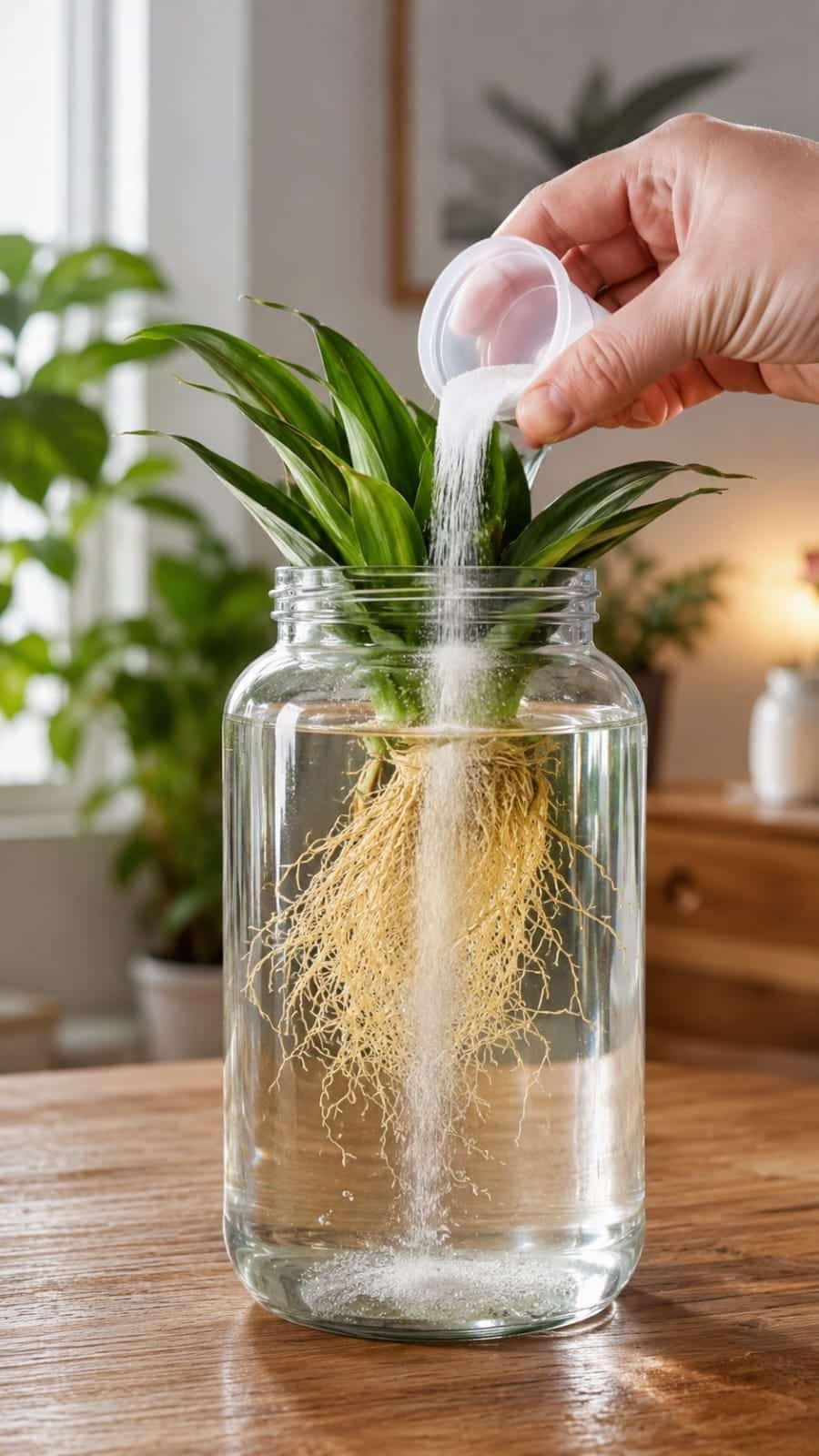
One common mistake is adding sugar or powders to encourage growth. This often makes the water dirty rather than making the roots stronger. Another mistake is leaving the same water for too long. Stale water can cause odor and root problems.
A third mistake is submerging too much of the stem or crown. Only roots should sit in water. A fourth mistake is placing the jar in harsh direct sun until the water heats up. A fifth mistake is using strong fertilizer in a jar with no soil buffer.
Water-grown plants are simple when the setup is clean. Healthy cuttings, clear water, bright indirect light, and regular maintenance are usually enough.
Better Alternatives to White Powder
If the goal is stronger roots, change the water regularly and provide bright indirect light. If the goal is faster growth, keep the plant warm and use a very weak liquid fertilizer only when needed. If the goal is cleaner water, wash the jar and avoid organic additives. If the goal is a fuller display, group several healthy cuttings together.
If the roots are slimy, rinse and trim them. If the water smells bad, clean the jar. If leaves are yellowing, check light and root health. If growth is slow, be patient and improve brightness. These steps solve real problems more safely than unknown powder.
A water-grown plant rewards cleanliness. The jar should look fresh, not cloudy. The roots should be visible, not buried in sediment. The leaves should be supported by light and clean water, not random additives.
Final Thoughts
A white powder poured into a jar of water-grown roots may look like a simple root booster, but it should be used carefully. The powder could be rooting hormone, powdered fertilizer, sugar, salt, baking soda, eggshell powder, rice powder, cornstarch, calcium powder, or another unknown material. Some products have limited uses when measured correctly, but many powders can cloud the water, feed bacteria, burn roots, create residue, or damage the crown.
The real foundation of healthy water-grown houseplants is clean water, regular water changes, bright indirect light, stable warmth, healthy roots, clean jars, crowns kept above the waterline, and very gentle feeding only when the plant is established and actively growing. If the water is cloudy, change it. If roots are slimy, rinse and trim. If the powder is unknown, remove it. If the plant is healthy, keep the routine simple.
With patient care and clean styling, water-grown plants can become beautiful indoor displays for living rooms, bedrooms, kitchens, home offices, apartments, bright windowsills, bathroom shelves, commercial interiors, luxury home staging, and premium plant displays. Clear water, strong pale roots, glossy leaves, and balanced maintenance will always create a safer and more elegant result than relying on risky white powder shortcuts.