Common Mistakes
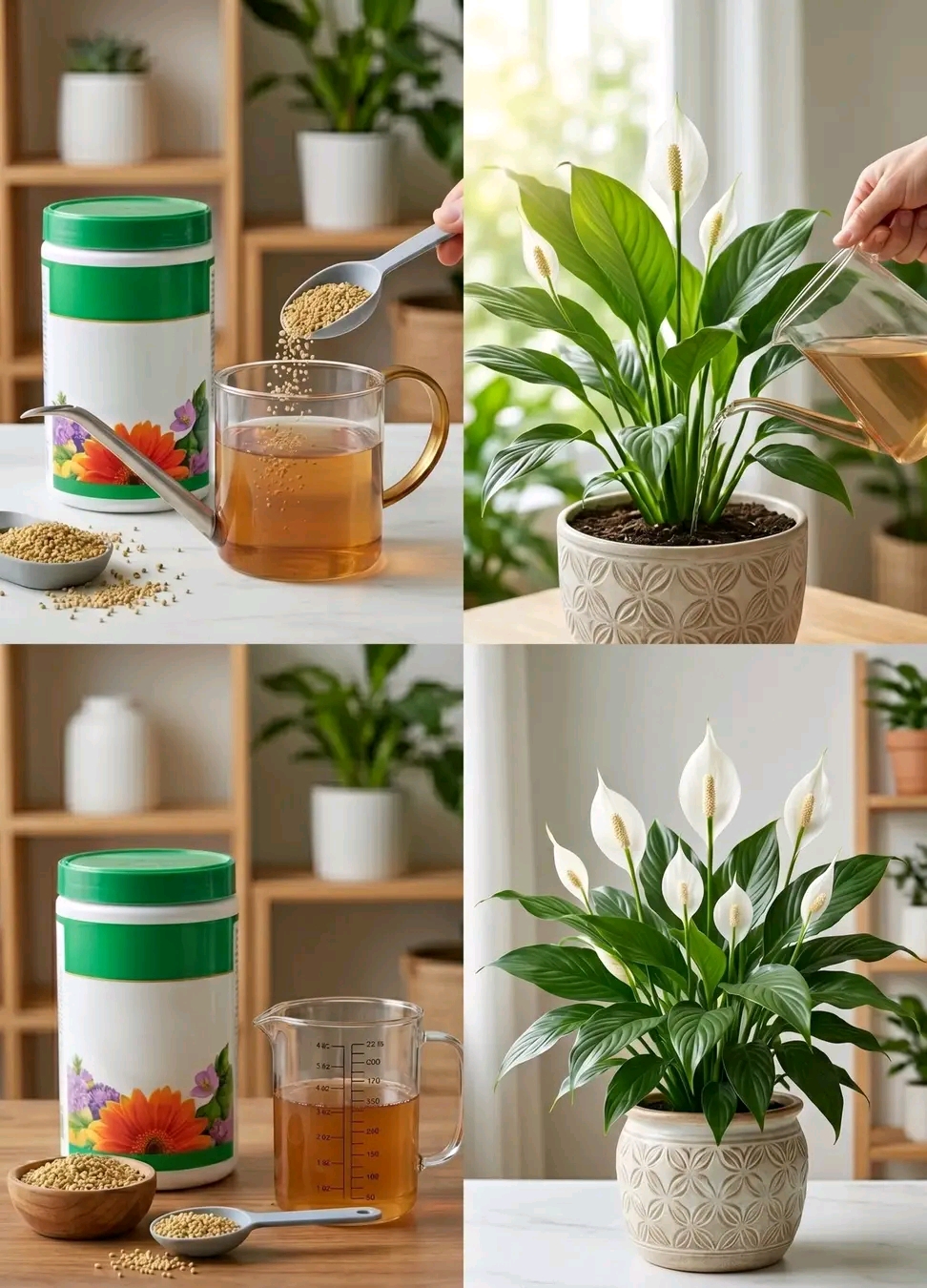
One common mistake is mixing fertilizer by guessing instead of measuring. Peace lilies are sensitive, so the amount should be controlled. A spoonful that looks small may still be too much for a small pot.
Another mistake is feeding a weak plant. If the peace lily is drooping from root rot or soggy soil, fertilizer will not help. The roots need oxygen first.
A third mistake is pouring tonic too close to the crown. The liquid should go into the soil around the root zone, not directly into the tight base of the stems.
How to Keep Leaves Clean and Elegant
Peace lily leaves look best when they are clean and glossy. Dust can dull the foliage and reduce light absorption. Wipe leaves gently with a damp cloth. Avoid oily leaf shine products because they can leave residue.
Remove yellow or damaged leaves at the base with clean scissors. This keeps the plant tidy and helps the display look polished. Dead flowers can also be removed once they turn green or brown.
A clean pot, fresh soil surface, and healthy white blooms create the premium look. Fertilizer should support this appearance quietly, not leave visible crust or odor.
Indoor Decor Value
Peace lilies have strong indoor decor value because they combine deep green leaves with elegant white blooms. They look calm, clean, and refined in many interiors. A textured cream, white, stone, ceramic, or woven planter can make the plant look even more expensive.
They work beautifully on side tables, plant stands, entry consoles, office corners, bedroom shelves, and bright living room areas. Their upright white blooms add height without looking messy.
The decorative value depends on healthy care. A peace lily with brown tips, soggy soil, or fertilizer crust will not look premium. Gentle feeding, clean leaves, and proper light create the strongest display.
Final Thoughts
A light brown root tonic can support a peace lily only when it is mild, measured, and used correctly. It should be made from a safe fertilizer or plant food, diluted well, applied only when the soil needs watering, and allowed to drain fully. It should never be strong, sour, unknown, or used on a plant with wet soil and weak roots.
The real foundation of bigger peace lily blooms is bright indirect light, healthy roots, breathable soil, drainage holes, steady moisture, and gentle feeding during active growth. If the plant is not blooming, light and root health should be checked before increasing fertilizer.
With clean care and the right presentation, peace lily can remain a graceful decorative accent for living rooms, bedrooms, home offices, kitchens, modern apartments, commercial interior landscaping, luxury home staging, and polished property presentation. Healthy roots, glossy leaves, white blooms, and careful feeding will always create a stronger result than heavy fertilizer shortcuts.