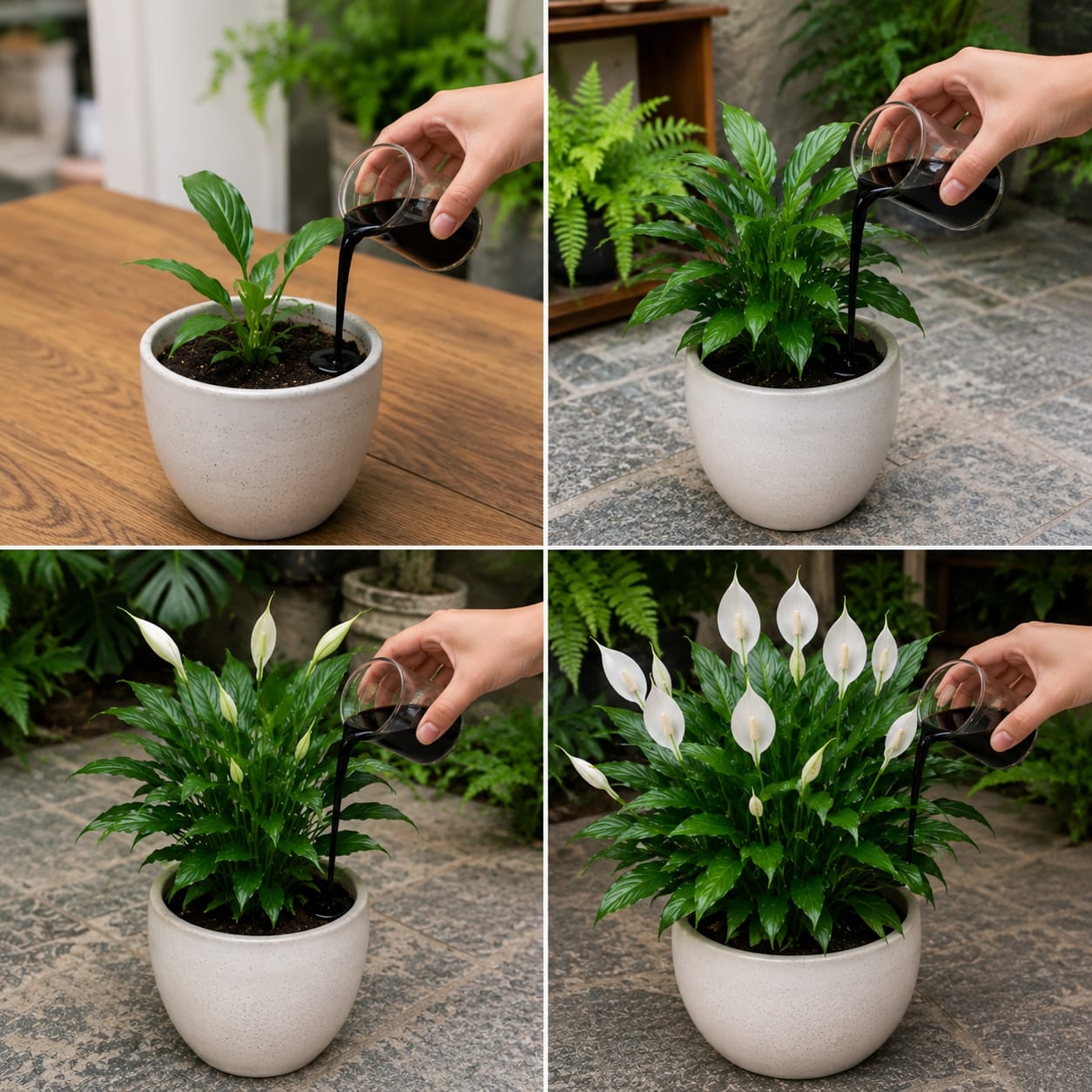
Why the Pot Surface Should Stay Clean
A dark tonic can make the soil surface look wet and shiny for a while, but the display should not remain messy. The soil surface should dry appropriately between watering. If the surface stays black, sticky, or sour-smelling, the plant is being kept too wet or the mixture is too rich. This can reduce the premium look and invite pests.
A clean soil surface also makes it easier to notice problems. Fungus gnats, mold, fertilizer crust, and root exposure are easier to identify when the pot is not covered with residue. In luxury indoor plant care, cleanliness is part of plant health. A plant can be lush and still look unprofessional if the pot surface is messy.
If the soil surface becomes crusted or sticky after using a tonic, remove the top layer and replace it with fresh potting mix. Then return to plain water for a while. The plant does not need constant treatment to remain beautiful.
Common Mistakes With Dark Root Tonics
One common mistake is using the tonic too often. Even mild organic liquids can build up in indoor soil. Another mistake is making the mixture too strong. Peace lilies prefer weak feeding. A third mistake is pouring the liquid into already wet soil. Extra moisture can suffocate roots and cause yellow leaves.
A fourth mistake is using kitchen liquids that contain sugar, dairy, or coffee without understanding the risks. Natural materials can spoil. A fifth mistake is feeding a plant with root rot. Damaged roots cannot use nutrients well, and feeding may worsen the stress.
A sixth mistake is expecting blooms without enough light. The plant needs bright indirect light to flower. A dark tonic may support nutrition, but light creates the energy needed for blooms. If a peace lily is not blooming, improve light before increasing feeding.
Simple Recovery Plan for a Weak Peace Lily
If a peace lily looks weak after a dark tonic, stop using the mixture. Check the soil moisture. If the soil is wet, do not water again. Improve airflow and allow the top layer to dry. If the soil smells sour, remove the plant and inspect the roots. Healthy roots should be firm. Rotten roots may be brown, black, soft, or smelly.
Trim damaged roots with clean tools and repot into fresh airy soil. Use a pot with drainage holes. Keep the plant in bright indirect light and water carefully. Do not feed immediately after repotting. Give the plant time to recover and wait for new growth before using any fertilizer again.
If the plant is simply not blooming but otherwise healthy, move it to brighter indirect light and maintain a steady watering routine. Clean the leaves, remove old blooms, and feed lightly during active growth. Most peace lilies respond better to stable care than to repeated hacks.
Professional Plant-Care Note
In professional indoor plant care, peace lily is valued for its calm white blooms, glossy leaves, and ability to soften interior spaces. It is often used in modern apartment decor, office plant design, commercial interior landscaping, luxury home staging, and premium property presentation. A large healthy peace lily can make a room feel fresh, peaceful, and well cared for.
Professional-looking results come from clean roots, clean leaves, controlled watering, and correct placement. Any tonic or fertilizer should be used invisibly and responsibly. The plant should never smell sour, attract gnats, or show residue. The most elegant peace lily displays look naturally healthy, not overtreated.
A dark root tonic can be useful only when it supports a good routine. It should never become the routine itself. The routine is light, drainage, soil, moisture control, gentle feeding, and grooming.
Final Thoughts
A dark root tonic may support a peace lily when it is fresh, diluted, plant-safe, and used sparingly during active growth. It may be compost tea, worm casting tea, humic acid, seaweed extract, or weak liquid fertilizer. Each option has different strengths and risks, so the ingredient should always be known. Unknown, sour, sugary, sticky, or concentrated liquids should be avoided.
The real foundation of lush peace lily leaves and stunning blooms is bright indirect light, healthy roots, airy potting mix, drainage holes, steady moisture, clean foliage, warm indoor conditions, and gentle feeding. If the plant is not blooming, light is usually more important than a tonic. If the plant is drooping or yellowing, root health should be checked before feeding.
With careful maintenance and elegant styling, peace lily can remain a beautiful indoor feature for living rooms, bedrooms, home offices, bright kitchens, entryways, modern apartments, commercial interiors, luxury home staging, and premium indoor plant displays. Healthy roots, glossy leaves, graceful white blooms, clean soil, and patient care will always create a stronger result than risky shortcuts.