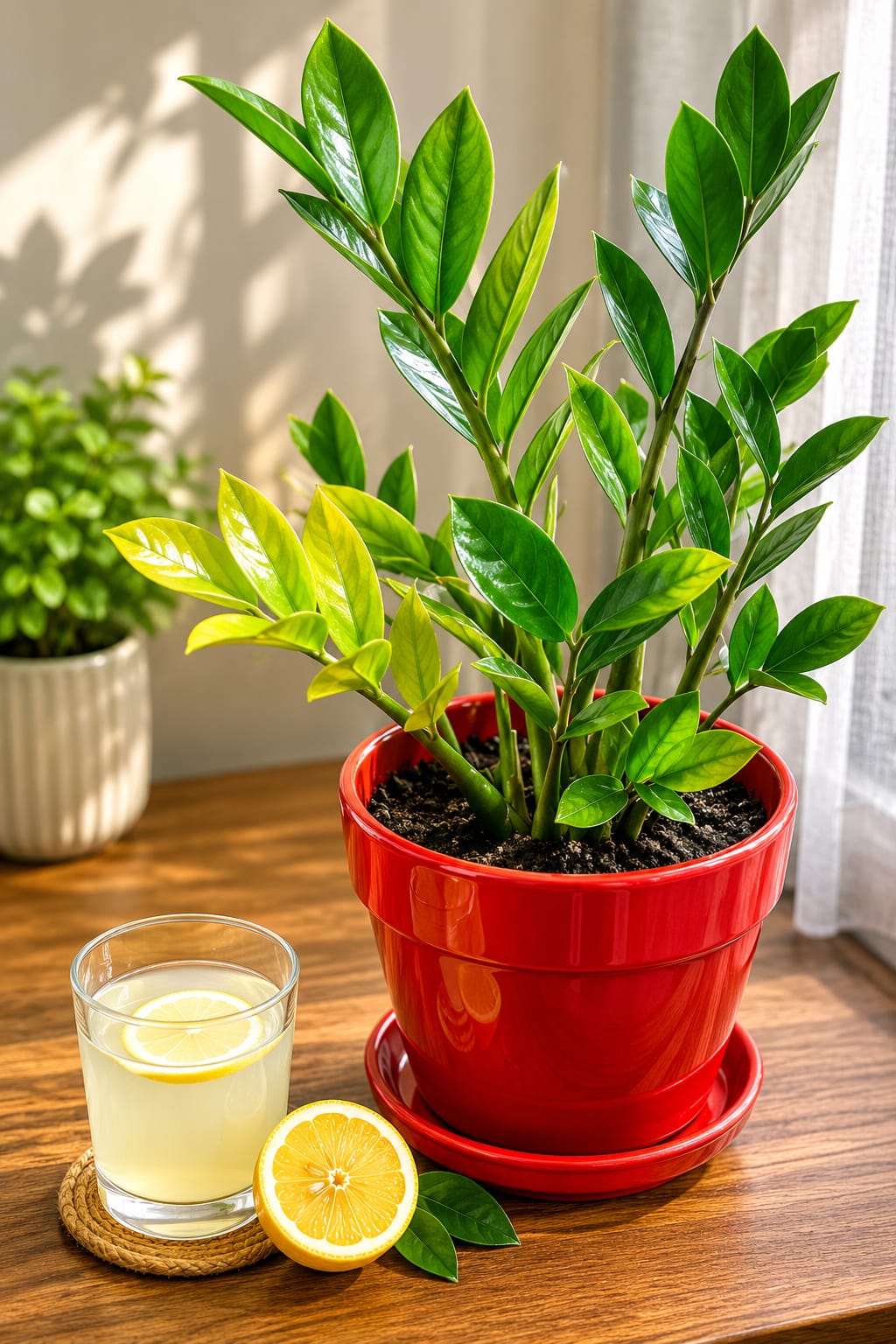
Best Soil for ZZ Plants
ZZ plants need soil that drains well and does not stay wet too long. Heavy potting soil can hold moisture around the rhizomes and increase the risk of rot.
A good ZZ plant soil mix can include:
- Indoor potting mix
- Perlite
- Pumice
- Orchid bark
- Coarse sand
- A small amount of coco coir or peat-based mix
The final mix should feel loose and airy. Water should pass through easily. If the soil becomes compacted like mud, it is time to repot into a lighter mix.
Signs Your ZZ Plant Needs Repotting
A ZZ plant does not need frequent repotting, but old soil can become compacted over time. Repotting may help more than any tonic if the root environment is poor.
Signs the plant may need repotting include:
- Water sits on top of the soil for too long
- Soil feels hard and compacted
- Roots are circling tightly
- Rhizomes are pushing against the pot
- Growth has stopped for a long time
- The pot dries unevenly
- There is a sour smell from the soil
Repot only into a slightly larger pot. A pot that is too large can hold too much moisture and increase the chance of root problems.
How to Make a ZZ Plant Look More Refined Indoors
A ZZ plant has a naturally polished look, but the right styling can make it look much more expensive. The pot, placement, and surrounding decor matter.
For a refined indoor display:
- Choose a ceramic or matte planter
- Use a pot color that contrasts with the foliage
- Clean the leaves regularly
- Remove dead yellow leaflets
- Keep the soil surface tidy
- Place it near natural light
- Use a tray, stand, or riser
- Avoid clutter around the plant
A red pot can create a bold decorative look, especially near a window. A white pot creates a clean minimalist look. A black pot makes the green leaves look deeper and more dramatic. A terracotta pot gives a warm natural style.
Best Rooms for ZZ Plant Decor
ZZ plants are versatile because they do not need constant attention. Their upright form suits small and large rooms.
Beautiful placements include:
- Living room corners
- Bedroom windowsills
- Office desks
- Entryway tables
- Hallway consoles
- Bathroom shelves with enough light
- Dining room sideboards
- Apartment balcony-adjacent windows
The plant looks best where its upright stems have space to show. Avoid hiding it behind curtains or crowding it with too many small plants.
What to Do With Yellow ZZ Leaves
Yellow leaves usually do not turn green again. Once a leaflet has fully yellowed, it can be removed to keep the plant looking clean. But do not remove too many leaves at once unless they are clearly dead or damaged.
Before removing yellow leaves, check the cause:
- If soil is wet, stop watering and let it dry
- If roots smell bad, inspect the rhizomes
- If the plant is in low light, move it brighter
- If the soil is compacted, consider repotting
- If only old lower leaves yellow, it may be natural aging
Use clean scissors to remove yellow leaflets or damaged stems. Clean cuts reduce the chance of infection.
Can Lemon Water Save a Dying ZZ Plant?
No. A lemon-based tonic cannot save a ZZ plant that is rotting. If the plant has mushy stems, black rhizomes, foul-smelling soil, or collapsing growth, the plant needs a root inspection, not a tonic.
For a rotting ZZ plant:
- Remove the plant from the pot.
- Check the rhizomes and roots.
- Cut away mushy or black sections with clean tools.
- Let healthy parts dry briefly.
- Repot into fresh, airy soil.
- Use a pot with drainage.
- Wait before watering again.
Adding any liquid to a rotting plant can make the problem worse.
Simple ZZ Plant Care Table
| Care Factor | Best Choice | Why It Matters |
|---|---|---|
| Light | Bright indirect light | Supports fresher color and stronger stems |
| Water | Only when soil is dry | Prevents rhizome and root rot |
| Soil | Loose, fast-draining mix | Keeps roots oxygenated |
| Pot | Drainage holes required | Allows excess water to escape |
| Lemon tonic | Very diluted and rare | Prevents root stress from acidity |
| Leaf care | Plain water wipe | Keeps foliage glossy and refined |
Frequently Asked Questions
Can I pour lemon juice directly on a ZZ plant?
No. Pure lemon juice is too strong and can damage the root zone. If using a lemon-based tonic, it should be extremely diluted with water.
How much lemon should I use?
Use only a few drops in a liter of water. The mix should be very weak. Strong acidic mixtures can stress the plant.
Will lemon water make yellow leaves green again?
No. Fully yellow leaves usually do not turn green again. The goal is to correct the cause and support healthier future growth.
Can I spray lemon water on ZZ plant leaves?
No. It is better to clean ZZ leaves with plain water and a soft cloth. Lemon can leave residue or cause spotting.
How often should I use a lemon-based tonic?
Rarely. Once every 6 to 8 weeks at most, and only if the plant is healthy, the soil is dry, and the pot drains well.
What is the best way to make a ZZ plant look glossy?
Wipe the leaves with a damp cloth, provide bright indirect light, avoid overwatering, and keep the plant dust-free. Do not use heavy oils on the leaves.
Final Thoughts
A light lemon-based root tonic can sound like a simple secret for a fresher ZZ plant, but it must be used carefully. ZZ plants are strong because they store water in underground rhizomes, and that also means they can suffer quickly if the soil becomes too wet or unbalanced.
The safest version of this trick is very diluted, used rarely, and applied only to dry, well-draining soil. It should never be poured strong, never sprayed on the leaves, and never used as a rescue treatment for a rotting plant.
The real path to a cleaner, fresher, more refined ZZ plant is a balanced routine: bright indirect light, dry soil between waterings, a fast-draining mix, a pot with drainage, clean leaves, and simple styling. When those basics are right, a ZZ plant can become one of the most elegant and low-maintenance indoor plants in the home.