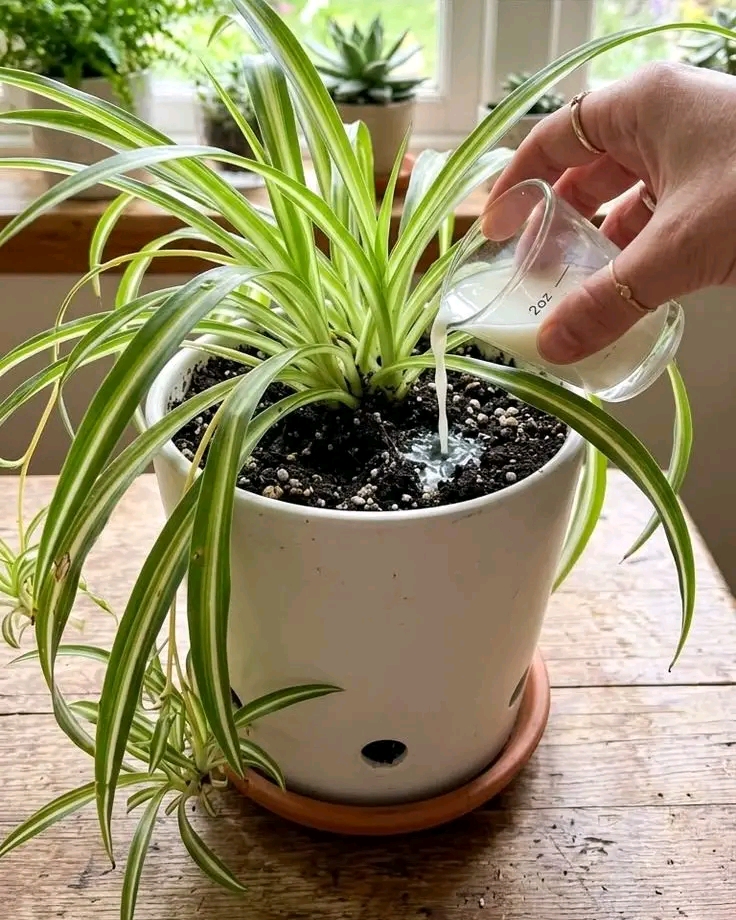
What to Do If Too Much White Liquid Was Added
If too much white liquid was poured into the pot, flush the soil with clean room-temperature water. Let water run through the pot and out of the drainage holes. This helps remove residue. Empty the saucer afterward.
If the pot has no drainage, remove the plant and repot it into a proper draining container. No-drainage pots are risky, especially after organic liquids are added.
If the soil smells sour or feels sticky, repot into fresh airy mix. Check the roots and trim any rotten sections with clean scissors. Keep the plant in bright indirect light and use plain water until it stabilizes.
Repotting a Weak Spider Plant
Repotting can help if the plant is root-bound, the soil is old, or the potting mix smells bad. Remove the plant gently from the pot and inspect the roots. Healthy spider plant roots are usually thick, pale, and firm. Damaged roots may be soft, dark, or smelly.
Trim damaged roots and place the plant into fresh well-draining potting mix. Choose a pot only slightly larger than the old one. Do not bury the crown deeply. The leaf bases should remain above the soil surface.
After repotting, water carefully and let the pot drain fully. Avoid fertilizer and homemade liquids until the plant shows stable new growth. Recovery is easier when the routine stays simple.
How to Flush Mineral Buildup
If brown tips are caused by minerals or fertilizer salts, flushing can help. Use clean water and pour it slowly through the soil until it drains from the bottom. This helps carry away some soluble buildup.
Flushing should be done only in a pot with drainage. If there is no drainage, minerals and water remain trapped. Repotting is better in that case.
After flushing, let the pot drain completely. Use filtered or rested water going forward if possible. This may help reduce future brown tips and support cleaner growth.
Indoor Decor Value
Spider plants have strong indoor decor value because their arching leaves create soft movement and fresh greenery. They look beautiful in hanging baskets, white ceramic pots, terracotta planters, plant stands, windowsills, and bright shelves.
A spider plant with baby plantlets can soften a room and make it feel more natural. It works well in cozy interiors, modern apartments, office spaces, kitchens, and bedroom corners. Its flowing shape contrasts nicely with upright plants like snake plants and ZZ plants.
The decorative value depends on cleanliness. White liquid residue, sour soil, fungus gnats, or brown tips can make the plant look neglected. Clean leaves, trimmed tips, fresh soil, and a simple planter create a more premium look.
Room-by-Room Styling
In the living room, a spider plant can sit on a plant stand, side table, shelf, or hanging basket. Its long leaves add movement and softness. Bright indirect light helps the plant stay full and colorful.
In the bedroom, spider plant creates a calm and fresh accent. Avoid strong-smelling homemade liquids in bedroom plants. Plain clean water and tidy soil are better for a relaxing space.
In a home office, spider plant works well near a bright window or on a shelf. It adds greenery without looking heavy. Trim brown tips so the display looks professional and clean.
In the kitchen, spider plant can thrive near filtered light. However, avoid using kitchen liquids too casually. Food-based treatments can attract pests if used too often.
Office and Commercial Styling
Spider plants can work well in commercial interior landscaping because they look friendly, fresh, and easy to maintain. They fit reception areas, office shelves, wellness corners, waiting rooms, boutique displays, and staged homes.
For professional spaces, white liquid treatments are usually not ideal. They can create odor, residue, and inconsistent results. Professional plant care should focus on drainage, clean water, proper light, fresh soil, and controlled feeding.
A premium commercial spider plant should have clean leaves, trimmed tips, no sour smell, no sticky residue, no fungus gnats, and a planter that matches the space. The care routine should be invisible and reliable.
Product and Tool Guide
Helpful materials for spider plant care include filtered water, a pot with drainage holes, fresh indoor potting mix, perlite, clean scissors, a soft cloth, a narrow-spout watering can, and diluted balanced houseplant fertilizer for spring and summer. A hanging basket or plant stand can improve the display.
If a white liquid is used, helpful materials include a clean measuring cup, clean water, and a very small amount of the chosen liquid. The mixture should be thin, fresh, unsweetened, unsalted, and heavily diluted. It should never smell sour or feel sticky.
The best toolkit is simple. Better water, drainage, bright indirect light, fresh soil, and careful feeding will do more for spider plant growth than most homemade liquids.
Care Timeline After Using White Liquid
During the first 24 hours, make sure the pot drains fully and no liquid remains in the saucer. Check that the liquid did not collect in the crown or leaf bases. Wipe any spills from the pot and leaves.
During the first week, watch for sour smell, mold, fungus gnats, sticky residue, or limp leaves. Do not repeat the treatment quickly. Use plain water for the next normal watering if needed.
After two to four weeks, new growth should look stronger if the care routine is correct. Existing brown tips will not heal, but fewer new brown tips should appear. After several months of stable care, the spider plant can become fuller, cleaner, and more decorative.
Professional Styling Note
In high-end indoor horticulture, spider plants are valued for their soft movement, easy growth, and fresh green appearance. They work beautifully in modern apartment decor, bedroom styling, home office greenery, hanging basket displays, commercial plant design, luxury home staging, and polished property presentation.
However, the premium look depends on clean care. White liquid should never create sour smell, residue, mold, or sticky soil. A refined spider plant display should look fresh, healthy, and naturally full. The care routine should support the plant without becoming visible or messy.
A beautiful spider plant depends on healthy roots, clean water, bright indirect light, drainage holes, balanced moisture, and gentle feeding. Homemade white liquid may look like a quick boost, but the strongest results come from correcting the real cause of stress.
Final Thoughts
A light white liquid can be used around a spider plant only with caution. It may be diluted milk water, rice water, or another mild homemade liquid, but it should never be thick, sweetened, salted, flavored, fermented, or poured into the crown. Spider plants need clean moisture, fresh air around the roots, and balanced care more than heavy homemade tonics.
The safest recovery and growth plan is to use filtered or rested water, provide bright indirect light, keep the pot draining well, refresh old soil when needed, water consistently without waterlogging, trim brown tips cleanly, and feed only lightly during active growth. If the plant has mold, fungus gnats, sour soil, or weak roots, skip the white liquid and fix the root zone first.
With clean care and the right presentation, spider plant can remain a graceful decorative accent for living rooms, bedrooms, home offices, kitchens, bright windowsills, hanging baskets, modern apartments, commercial interior landscaping, luxury home staging, and polished property presentation. Healthy roots, fresh leaves, controlled watering, and simple consistent care will always create a stronger display than risky white-liquid shortcuts.