Common Mistakes With Blooming Snake Plants
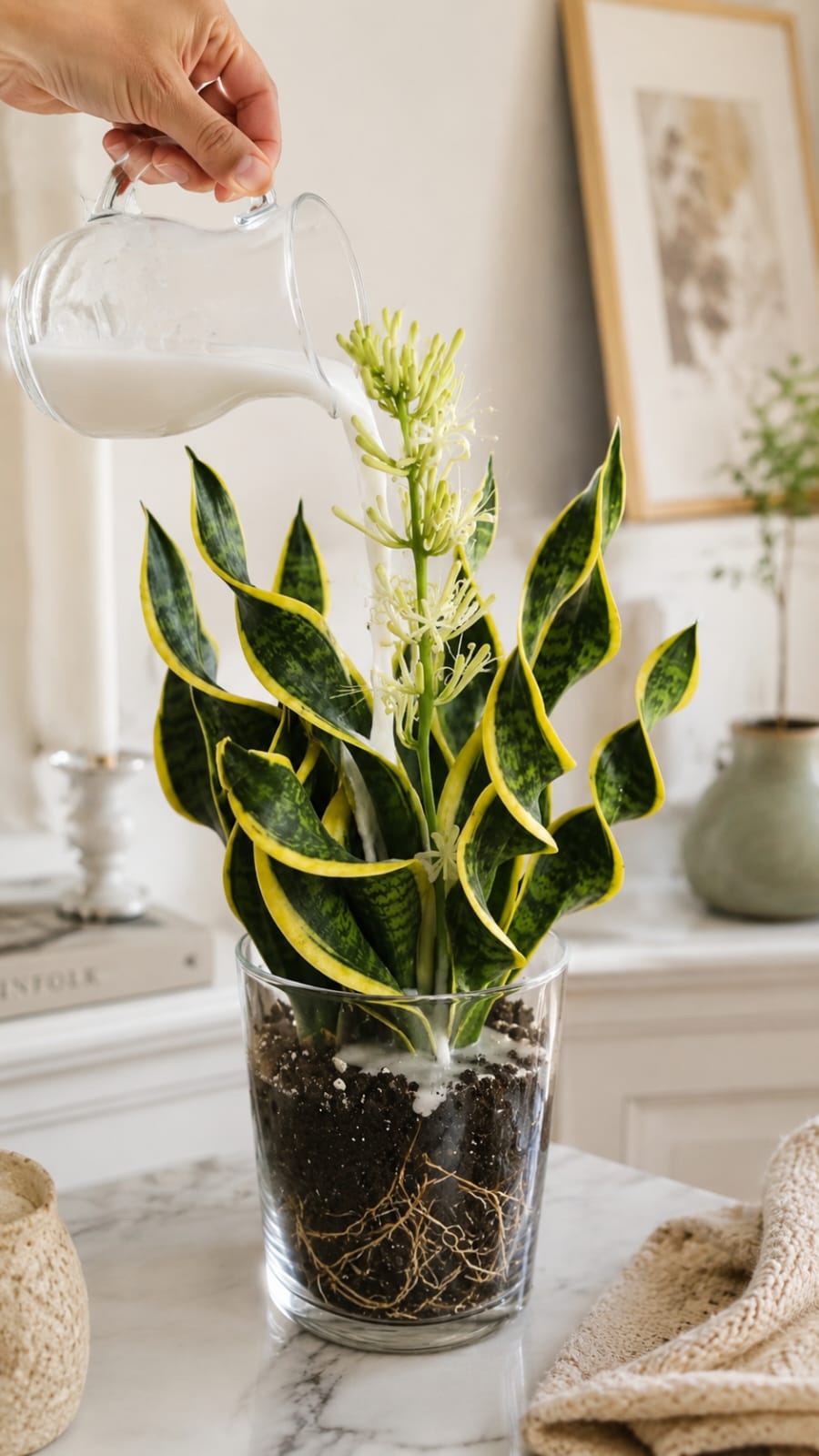
One common mistake is watering more often after the plant blooms. The plant still needs dry soil between waterings. Another mistake is pouring liquid into the center of the leaves. This can trap moisture and cause rot. A third mistake is using thick milk or rice water that leaves residue.
A fourth mistake is feeding strongly during flowering. Snake plants do not need heavy fertilizer. A fifth mistake is assuming a bloom means the plant is stressed and needs treatment. Sometimes a mature healthy plant simply blooms under good conditions. A sixth mistake is keeping the plant in a pot without drainage.
A seventh mistake is expecting repeated blooms from homemade tonics. Snake plant flowering is unpredictable. Good care increases plant health, but it does not guarantee constant flowering.
What to Do If Problems Appear
If the soil smells sour after using a white liquid, stop immediately. Remove any residue from the soil surface and allow the pot to dry. If the smell remains, repot into fresh gritty mix. Sour soil means organic material may be breaking down poorly.
If fungus gnats appear, reduce moisture and remove damp organic residue. Sticky traps can help monitor adults, but the real solution is a cleaner, drier root zone. Avoid homemade liquids until the issue is gone.
If leaves become soft or yellow, inspect the roots and rhizomes. Do not add more liquid or fertilizer. Remove rotten sections if needed and repot into fresh dry mix. Recovery depends on restoring a healthy root environment.
Final Thoughts
A light white root tonic around a blooming snake plant may look like a simple way to support stronger roots and elegant flowers, but it should be used carefully. The liquid may be diluted milk water, rice water, weak fertilizer, or another homemade mixture. Each option has different risks. Thick, spoiled, fermented, sugary, salty, oily, or unknown liquids should never be poured into a snake plant pot.
The real foundation of snake plant health is firm rhizomes, fast-draining soil, drainage holes, bright indirect light, infrequent watering, clean leaves, warm stable conditions, and very gentle feeding during active growth. Blooming usually comes from maturity, light, and root health, not from one dramatic treatment. If the soil is wet or sour, avoid all tonics and fix the potting mix first.
With patient care and clean styling, a blooming snake plant can become a rare and beautiful indoor display for living rooms, bedrooms, home offices, apartments, bright windowsills, entryways, commercial interiors, luxury home staging, and premium plant displays. Strong roots, upright leaves, a graceful flower stalk, tidy soil, and balanced maintenance will always create a more elegant result than relying on risky homemade shortcuts.